タグ
軌道力学
7 件の記事
![Example encounter.[2]In the planet's frame of reference, the space probe leaves with the exact same speed at which it had arrived. But when observed in the reference frame of the Solar System (fixed to the Sun), the benefit of this maneuver becomes apparent. Here it can be seen how the probe gains speed by tapping energy from the speed of the planet as it orbits the Sun. (If the trajectory is designed to pass in front of the planet instead of behind it, the gravity assist can be used as a braking maneuver rather than accelerating.) Because the mass of the probe is many orders of magnitude smaller than that of the planet, while the result on the probe is quite significant, the deceleration reaction experienced by the planet, according to Newton's third law, is utterly imperceptible.](/images/e3/67/e367c784a28bd69f02fded5e336759cdbacb3a28af2abee7c9583277a6053255.gif)
Gravity Assist(スイングバイ)の仕組みと宇宙探査への応用
Gravity Assistスイングバイ重力アシスト軌道力学
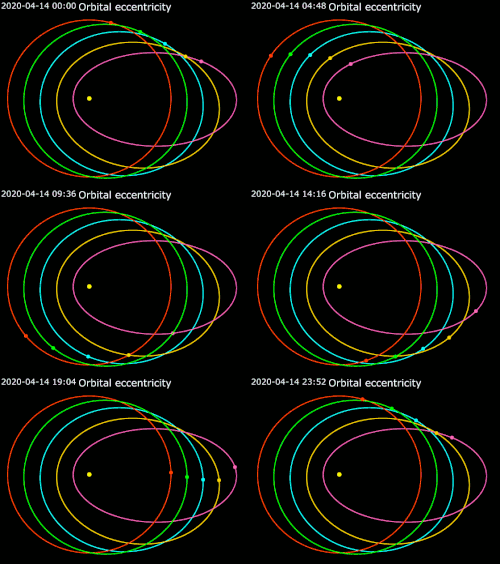
軌道力学の基礎天体の運行を支配する物理法則
軌道力学ケプラーの法則ニュートン力学一般相対性理論
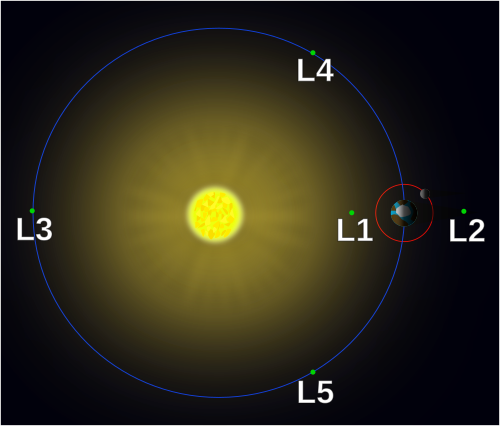
ラグランジュ点宇宙の「重力の均衡点」とその活用
ラグランジュ点軌道力学ジェイムズ・ウェッブ宇宙望遠鏡L1
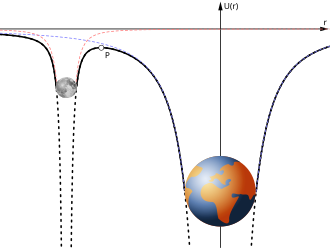
ヒル圏天体の重力支配領域とその力学
ヒル圏重力圏ラグランジュ点軌道力学
📖
軌道投入のメカニズム宇宙機が天体を周回するための技術と手法
軌道投入オービター軌道力学減速燃焼
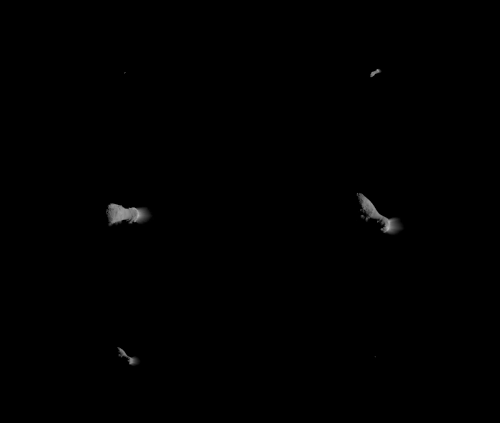
フライバイ(接近通過)の仕組みと宇宙探査における役割
フライバイ宇宙探査スイングバイ惑星接近
ラグランジュ点宇宙の「重力の均衡点」とその活用
ラグランジュ点軌道力学ジェイムズ・ウェッブ宇宙望遠鏡L1