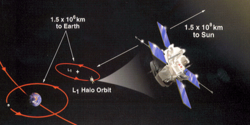
宇宙空間には、2つの大きな天体が互いに回り合っているとき、その重力と遠心力が絶妙に打ち消し合い、物体が安定して留まれる特別な地点が存在します。これをラグランジュ点と呼びます。この地点は、燃料を最小限に抑えて宇宙機を維持できるため、現代の天文学や宇宙探査において極めて重要な戦略的拠点となっています。
例えば、太陽と地球の系におけるラグランジュ点は、太陽風の観測や深宇宙の探査に最適です。これらの地点を理解することは、人類がどのようにして宇宙望遠鏡を配置し、効率的に宇宙を観測しているかを知る鍵となります。
Key Facts
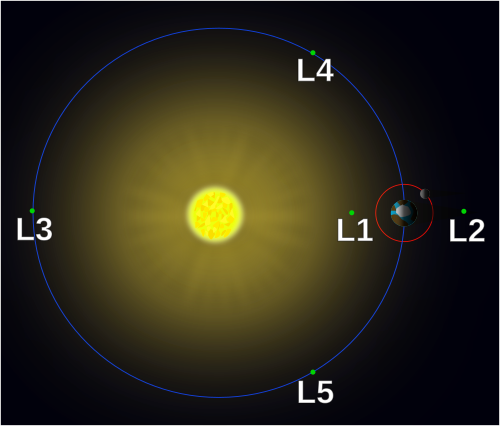
- 5つの地点: 任意の2天体系には、L1からL5まで合計5つのラグランジュ点が存在する。
- 重力の均衡: 2つの天体の引力と、回転系における遠心力が釣り合う場所である。
- 戦略的配置: L1は太陽観測、L2は深宇宙観測(赤外線望遠鏡など)に最適。
- 安定性の違い: L4とL5は比較的安定しており、天然の小惑星が集まりやすい。
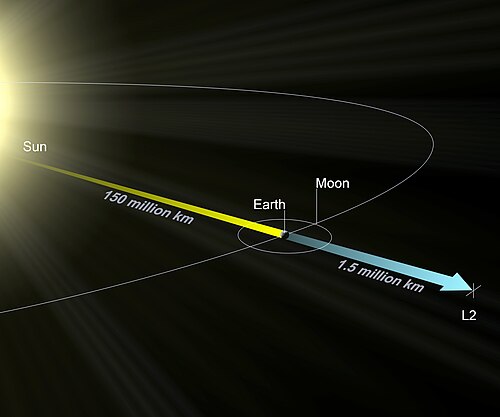
- 距離の目安: 太陽ー地球系のL1およびL2は、地球から約150万kmの距離にある。
ラグランジュ点の仕組みと種類
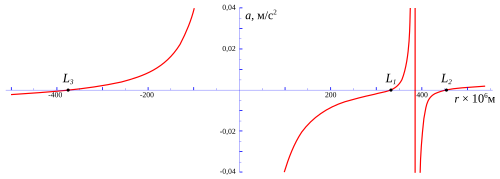
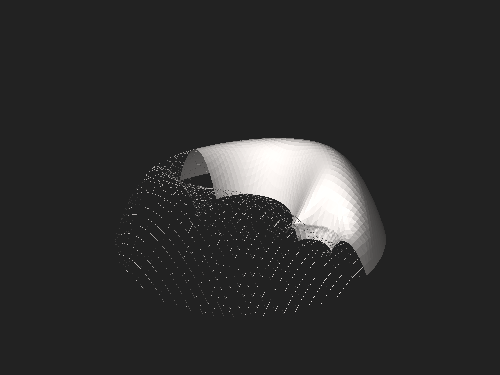
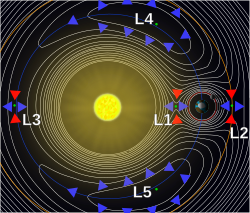
ラグランジュ点は、天体力学における「三体問題」の一つの解として導き出されます。2つの巨大な質量(M1とM2)があるとき、その周囲には重力的なポテンシャルの谷や山ができ、特定の場所で力が相殺されます。
L1点:天体間の直線上の均衡点
L1点は、2つの天体のちょうど間に位置します。通常、太陽に近い物体は地球より公転周期が短くなりますが、L1点では地球の引力が太陽の引力を一部打ち消すため、公転周期が地球と完全に一致します。この特性を利用し、太陽を常に正面に捉え続けるDSCOVRのような太陽風観測衛星が配置されています。
L2点:外側の直線上の均衡点
L2点は、小さい方の天体(地球など)のさらに外側に位置します。ここでは、2つの天体の合算された引力が、その地点の遠心力と釣り合います。地球の影に隠れやすく、かつ太陽・地球・月を同時に背にできるため、熱の影響を排除したいジェイムズ・ウェッブ宇宙望遠鏡(JWST)や、2027年運用予定のナンシー・グレース・ローマン宇宙望遠鏡の拠点として最適です。
L3点:反対側の均衡点
L3点は、主星(太陽)を挟んで、地球のほぼ正反対側に位置します。地球からは太陽に隠れて見えないため、実用的な観測拠点としての利用は限定的です。
L4点とL5点:正三角形の頂点
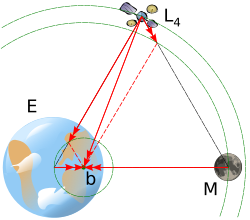
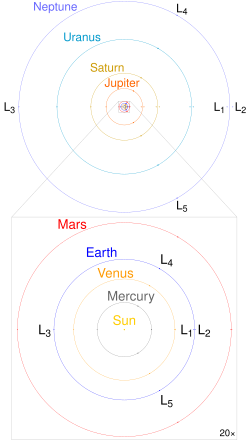
L4とL5は、2つの天体と正三角形を描く位置にあります。これらは他の点とは異なり、ポテンシャルの「山」のような状態で、力学的に安定しています。そのため、宇宙の塵や小惑星が自然に集まりやすく、太陽ー地球系では「トロヤ小惑星」と呼ばれる2010 TK 7や2020 XL 5などが確認されています。
![Visualization of the relationship between the Lagrange points (red) of a planet (blue) orbiting a star (yellow) counterclockwise, and the effective potential in the plane containing the orbit (grey rubber-sheet model with purple contours of equal potential).[20]Click for animation.](/images/40/94/409417454935dc6dec0c8dd8587bff6c996ba5694f582441ad2b97e03bfa0e22.png)
軌道維持と実用的な運用
理論上のラグランジュ点は「点」ですが、実際の宇宙機は完全にその一点に留まるのではなく、その周囲を回るハロー軌道やリサージュ軌道を描きます。これは、L1点などで地球が太陽を遮って通信不能になるのを避けたり、L2点で太陽光パネルに常に光を当てたりするためです。
また、L1やL2付近では、2つの天体の見かけの大きさが非常に似通って見えるという興味深い視覚的特徴があります。これは、潮汐力の関係が距離の3乗に比例することに起因しています。
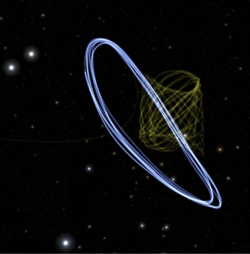
太陽系におけるラグランジュ点の距離一覧
以下は、主要な天体ペアにおけるL1、L2、L3の概算距離です。計算は円軌道を想定しています。
| 天体ペア | 軌道長半径 (SMA) | L1距離 (主星から) | L2距離 (主星から) | L3距離 (主星から) |
|---|---|---|---|---|
| 地球ー月 | 0.3844 × 10⁹m | 0.32639 × 10⁹m | 0.4489 × 10⁹m | -0.38168 × 10⁹m |
| 太陽ー地球 | 149.598 × 10⁹m | 148.11 × 10⁹m | 151.1 × 10⁹m | -149.6 × 10⁹m |
| 太陽ー火星 | 227.94 × 10⁹m | 226.86 × 10⁹m | 229.03 × 10⁹m | -227.94 × 10⁹m |
| 太陽ー木星 | 778.34 × 10⁹m | 726.45 × 10⁹m | 832.65 × 10⁹m | -777.91 × 10⁹m |
Frequently Asked Questions
ラグランジュ点に物体を置くと、燃料なしでずっと留まれますか?
L4とL5は比較的安定していますが、L1、L2、L3は不安定な均衡点です。そのため、実際にはわずかな軌道修正(ステーションキーピング)を行うための燃料が必要です。
なぜジェイムズ・ウェッブ宇宙望遠鏡はL2に配置されたのですか?
L2点では、太陽、地球、月がすべて同じ方向に位置するため、一つのサンシールド(遮光板)でこれらすべての熱と光を遮断でき、極低温での赤外線観測が可能になるからです。
L4やL5に小惑星が集まるのはなぜですか?
これらの点は重力的に安定した領域であるため、周囲を漂う塵や小惑星が捕獲されやすく、自然に蓄積される傾向があるためです。
L1点にあるDSCOVR衛星は何をしていますか?
太陽と地球の間に位置することで、地球に向かってくる太陽風をリアルタイムで観測し、宇宙天気予報や地球の気候モニタリングを行っています。
ハロー軌道とは何ですか?
ラグランジュ点の周囲を円を描くように回る軌道のことです。点に直接留まるのではなく、周囲を回ることで、地球による遮蔽を避け、通信や電力確保を安定させることができます。
References
- Actually (25 + 3√69)/2 ≈ 24.9599357944 (sequence A230242 in the )
📸 フォトギャラリー