広大な太陽系を旅する宇宙探査機にとって、最大の課題は「燃料」と「速度」です。目的地に到達するために必要な膨大なエネルギーをすべてロケット燃料で賄うことは現実的ではありません。そこで活用されるのが、天体の重力を利用して加速や減速を行うGravity Assist(重力アシスト)、通称「スイングバイ」という高度な航法技術です。
重力アシストの基本原理
重力アシストとは、探査機が惑星などの天体に接近し、その重力に引かれて軌道を変えることで、太陽を中心とした視点から見て速度を変化させる手法です。天体自身の公転速度の一部を「盗む」ことで、燃料を消費せずに速度を得ることができます。
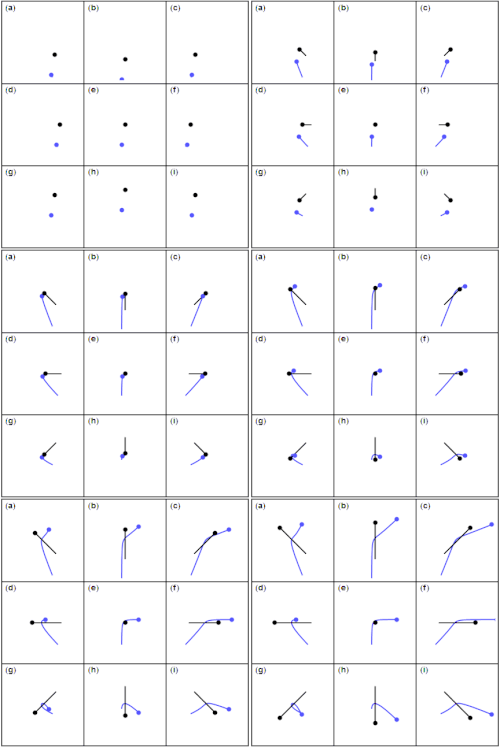
この現象を身近な例で例えると、走行中の列車に向かってテニスボールを投げつける状況に似ています。プラットフォームに立つ観測者から見て、時速50kmで走る列車に時速30kmでボールを投げると、列車の運転手には時速80kmでボールが近づいてきます。ボールが列車で跳ね返ると、運転手からは再び時速80kmで遠ざかるように見えますが、プラットフォームの観測者から見ると、列車の速度が加算され、ボールは時速130kmで飛び去ることになります。
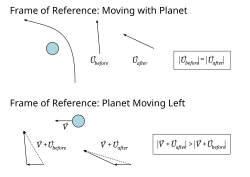
![Example encounter.[2]In the planet's frame of reference, the space probe leaves with the exact same speed at which it had arrived. But when observed in the reference frame of the Solar System (fixed to the Sun), the benefit of this maneuver becomes apparent. Here it can be seen how the probe gains speed by tapping energy from the speed of the planet as it orbits the Sun. (If the trajectory is designed to pass in front of the planet instead of behind it, the gravity assist can be used as a braking maneuver rather than accelerating.) Because the mass of the probe is many orders of magnitude smaller than that of the planet, while the result on the probe is quite significant, the deceleration reaction experienced by the planet, according to Newton's third law, is utterly imperceptible.](/images/e3/67/e367c784a28bd69f02fded5e336759cdbacb3a28af2abee7c9583277a6053255.gif)
宇宙空間でも同様のことが起こります。探査機が惑星の背後を通過するように設計されれば加速し、逆に惑星の前方を通過すればブレーキ(減速)として機能します。惑星の質量に比べれば探査機は極めて小さいため、ニュートンの第3法則に基づき惑星側にも反作用は及びますが、その影響は無視できるほど微小です。
Key Facts
- エネルギー源: 惑星の公転速度を利用して、探査機の速度を増減させる。
- 多目的利用: 加速だけでなく、減速や軌道傾斜角の変更にも利用可能。
- 燃料節約: 推進剤を大量に消費することなく、遠方の天体への到達や太陽系脱出を可能にする。
- 歴史的背景: 1920年代から1930年代にかけて、フリードリヒ・ザンダーやユーリ・コンドリュチュクらによって理論的に示唆されていた。
宇宙探査における具体的な活用事例
重力アシストは、多くの歴史的なミッションを成功に導きました。特に外惑星への探査では不可欠な技術となっています。
外惑星への加速と太陽系脱出
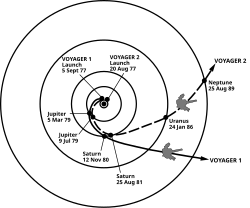
NASAのパイオニア10号は、1973年に初めてこの効果を利用して太陽系脱出速度に達しました。その後、ボイジャー1号と2号は木星や土星のスイングバイを繰り返すことで加速し、太陽の重力を振り切って星間空間へと向かいました。
![Plot of Voyager 2's heliocentric velocity against its distance from the Sun, illustrating the use of gravity assist to accelerate the spacecraft by Jupiter, Saturn and Uranus. To observe Triton, Voyager 2 passed over Neptune's north pole resulting in an acceleration out of the plane of the ecliptic and reduced velocity away from the Sun.[1]](/images/45/91/4591f5f7190c4443b935f83f6e9083c45360faa90633bd7ed06a9089169be4d8.webp)
複雑な軌道変更と減速
加速だけでなく、目的地で停止(軌道投入)するために速度を落とす必要がある場合も重力アシストが使われます。水星探査機メッセンジャーは、地球、金星、水星のフライバイを計6回繰り返し、燃料を節約しながら水星周回軌道に入るための減速を行いました。
また、太陽の極地方を調査したユリシーズは、木星の重力を利用して、惑星が並ぶ黄道面から大きく外れた垂直に近い軌道へと方向転換しました。
近年の高度なミッション
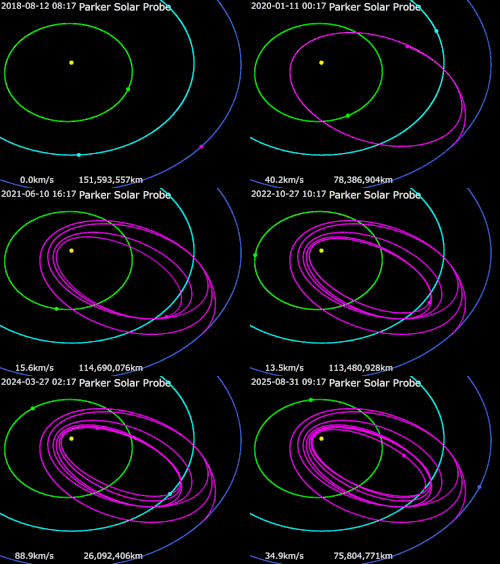
最新の探査機でもこの技術は進化し続けています。パーカー・ソーラー・プローブは金星での重力アシストを繰り返し、太陽に極限まで接近する軌道を形成しています。また、欧州宇宙機関(ESA)とJAXAの共同ミッションであるベピコロンボは、地球、金星、水星を巧みに利用して水星へと向かっています。
主要ミッションの重力アシスト活用まとめ
| 探査機名 | 利用した天体 | 主な目的・結果 |
|---|---|---|
| ボイジャー1・2号 | 木星、土星 | 外惑星探査および太陽系脱出 |
| ガリレオ | 金星、地球 | 木星への到達(複数回のアシスト) |
| カッシーニ | 金星、地球、木星、タイタン | 土星到達および複雑な軌道変更 |
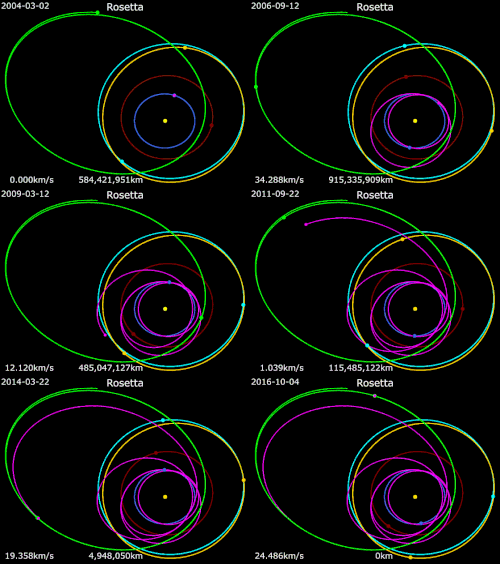
| ロゼッタ | 地球、火星 | 彗星67Pへの接近・追随 |
| パーカー・ソーラー・プローブ | 金星 | 太陽への極限接近(減速・軌道調整) |
| ベピコロンボ | 地球、金星、水星 | 水星周回軌道への投入 |
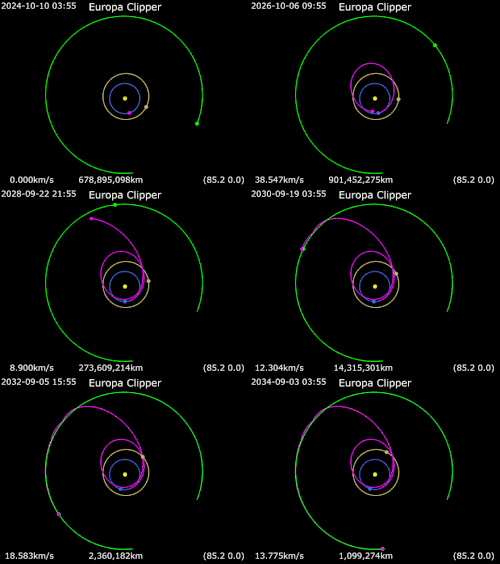
| エウロパ・クリッパー | 火星、地球 | 木星の衛星エウロパ探査への加速 |
Frequently Asked Questions
重力アシストを行うと惑星の速度は変わりますか?
理論上は変わります。物理法則(作用・反作用の法則)により、探査機が加速した場合、惑星はわずかに減速します。しかし、惑星の質量が探査機に比べて圧倒的に大きいため、その速度変化は測定不可能なほど極めて小さいものです。
なぜ燃料を使わずに加速できるのですか?
探査機単体で見れば速度は変わっていないように見えますが、太陽を中心とした座標系で見ると、惑星が公転によって持っている運動エネルギーの一部を譲り受ける形になるため、結果として太陽に対する速度が増加します。
重力アシストで減速させることは可能ですか?
はい、可能です。惑星の公転方向に対して前方(進行方向)を通過するように軌道を設計することで、惑星にエネルギーを返し、探査機の速度を落とすことができます。これは水星探査などのように、高速で接近した後に軌道に留まる必要があるミッションで重要です。
重力アシストを何度も繰り返す理由は?
一度のアシストで得られる速度変化には限界があるためです。また、目的地までの距離や、到達時に必要な速度、あるいは軌道の角度を精密に調整するために、複数の天体を経由する複雑なルートが設計されます。
References
- In 1938, when Kondratyuk submitted his manuscript "To whoever will read in order to build" for publication, he dated the manuscript 1918–1919, although it was apparent that the manuscript had been revised at various times. See page 49 of NASA Technical Translation F-9285 (1 November 1965).
📸 フォトギャラリー