タグ

自転軸

8 件の記事

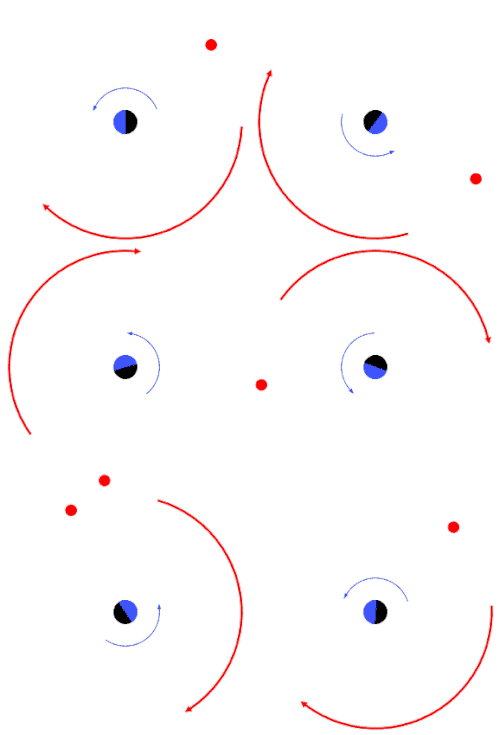
Retrograde orbit: the satellite (red) orbits in the direction opposite to the rotation of its primary (blue/black)

逆行運動のメカニズム天文学における回転と公転の方向性

逆行順行天文学公転方向
Retrograde orbit: the satellite (red) orbits in the direction opposite to the rotation of its primary (blue/black)

逆行運動のメカニズム天文学における回転と公転の不思議

逆行運動順行公転周期自転軸
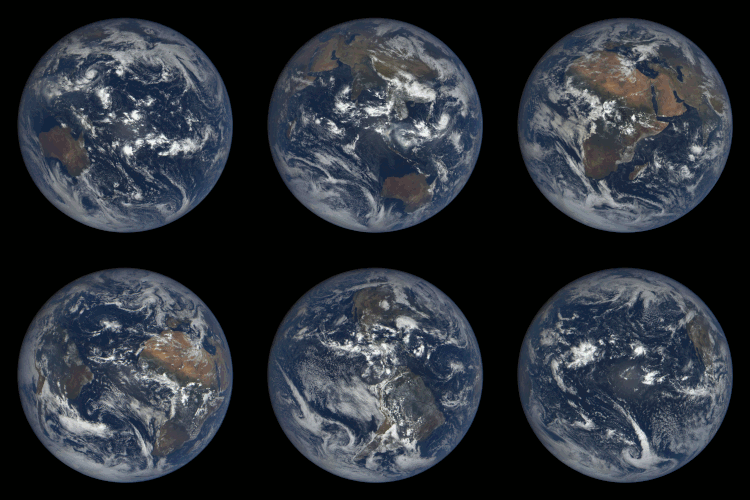
Earth's rotation imaged by Deep Space Climate Observatory, with axis tilt

天体の自転周期恒星日と太陽日の違いから惑星の回転まで

自転周期恒星日太陽日差動回転
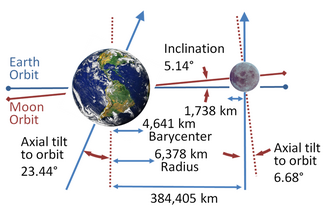
Orbital inclination and rotation. When the Moon is 5.14° north of the ecliptic, its north pole is tilted 6.68° away from the Earth. The orientation of the plane containing the vectors normal to the orbits and the Moon's rotational axis rotates 360° with a period of about 18.6 years, whereas the Earth's axis precesses with a period of around 26,000 years, so the line-up of this illustration (a major lunar standstill) occurs only once every 18.6 years.

カッシーニの法則月の自転軸と公転軌道の不思議な関係

カッシーニの法則月の自転公転軌道カッシーニ状態
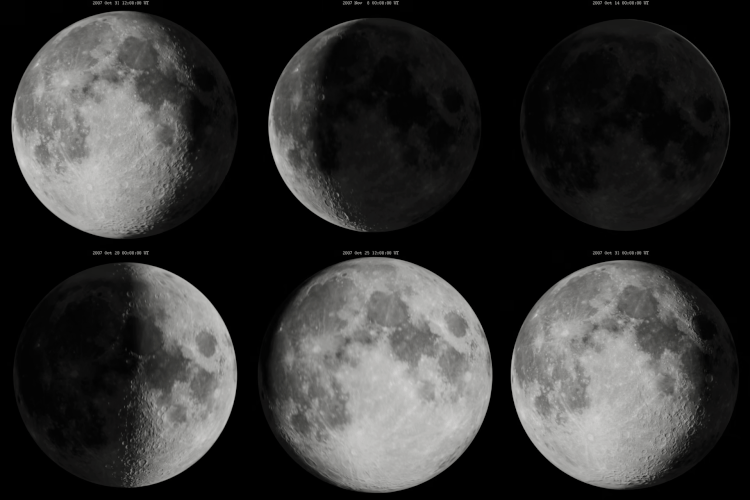
Over one lunar month more than half of the Moon's surface can be seen from the surface of the Earth.

月面の揺れ「秤動(ひょうどう)」の仕組みと種類

秤動天文学潮汐ロック
Earth's rotation imaged by Deep Space Climate Observatory, with axis tilt

天体の自転周期恒星日と太陽日の違いから惑星の回転まで

自転周期恒星日太陽日差動回転
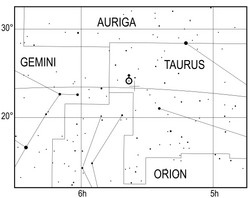
Position of Uranus (marked with a cross) on 13 March 1781, the date of its discovery

天王星の謎に迫る横倒しの氷巨星が持つ特異な世界

天王星氷巨星ウィリアム・ハーシェル太陽系
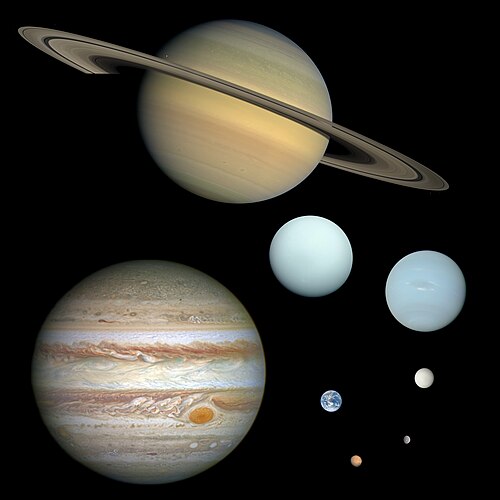
The eight planets of the Solar System with size to scale (up to down, left to right): Saturn, Jupiter, Uranus, Neptune (outer planets), Earth, Venus, Mars, and Mercury (inner planets)

惑星の定義と太陽系の構造天文学的視点から見る世界の成り立ち

惑星太陽系IAU定義準惑星