The eight planets of the Solar System with size to scale (up to down, left to right): Saturn, Jupiter, Uranus, Neptune (outer planets), Earth, Venus, Mars, and Mercury (inner planets)
← ホームへ戻る
惑星太陽系IAU定義準惑星系外惑星

惑星の定義と太陽系の構造:天文学的視点から見る世界の成り立ち

🗓 2026年8月10日

夜空に輝く星々の中で、背景の恒星とは異なる動きを見せる天体たちがいます。私たちはそれらを「惑星」と呼びますが、科学的な視点から見ると、その定義は時代とともに進化してきました。かつては単に「彷徨うもの」とされていた天体たちが、現代では厳格な基準に基づいて分類されています。

現代の天文学において、惑星とは一般的に、恒星やその残骸、あるいは褐色矮星の周囲を公転する、十分な質量を持って球形になった巨大な天体を指します。ただし、それ自体が恒星であってはならないという条件があります。
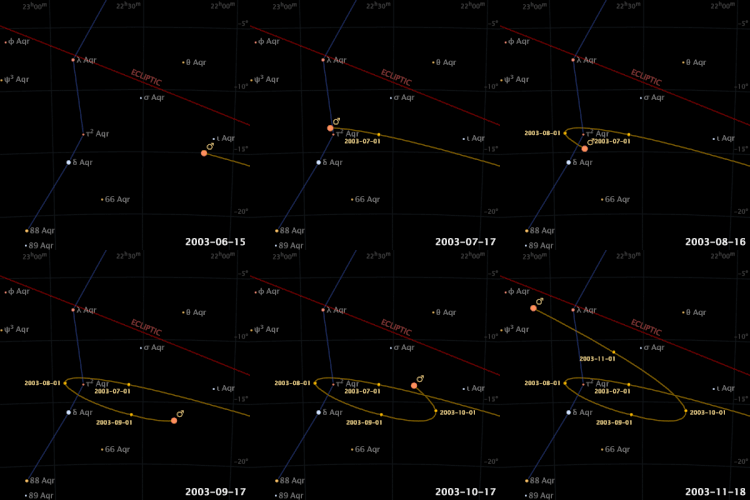
The motion of 'lights' moving across the sky is the basis of the classical definition of planets: wandering stars.

Key Facts

  • 太陽系の惑星数: 現在の定義では、地球型4惑星と巨大惑星4惑星の計8つ。
  • 惑星の形成: 星雲説に基づき、ガスや塵の円盤(原始惑星系円盤)の中で物質が重力で集まる「集積」プロセスを経て誕生したとされる。
  • IAUの定義: 2006年に国際天文学連合(IAU)が策定。太陽を公転し、十分な質量で球形であり、かつ軌道周辺から他の天体を排除していることが条件。
  • 準惑星: 冥王星やエリスのように、球形ではあるが軌道周辺の掃除が不十分な天体の分類。

惑星の歴史的変遷と名称の由来

「惑星」という言葉は、ギリシャ語で「彷徨う者」を意味する「planḗtai」に由来します。古代の人々は、太陽や月、そして肉眼で見える5つの光る点(水星、金星、火星、木星、土星)が星々の間を移動することに注目しました。
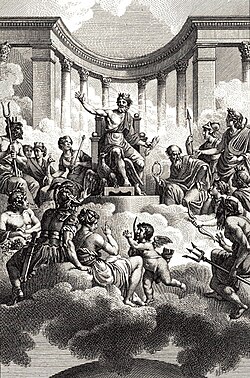
The Greek gods of Olympus, after whom the Solar System's Roman names of the planets are derived

歴史的に、これらの天体は神話や宗教と深く結びついてきました。多くの文化で天体は神々と同一視され、その伝統は現代の命名規則にも受け継がれています。また、かつては地球が宇宙の中心であるとする「天動説」が信じられていましたが、16世紀から17世紀にかけて「地動説」が普及したことで、地球自身も一つの惑星として認識されるようになりました。
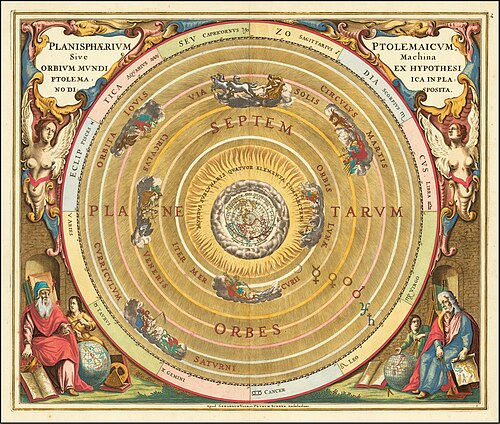
1660 illustration of Claudius Ptolemy's geocentric model

望遠鏡の登場により、人類の視界は劇的に広がりました。地球以外の衛星や、天王星、海王星といった遠方の氷惑星、さらには小惑星帯のケレスやカイパーベルトの冥王星などが発見され、惑星の概念は拡張し続けました。
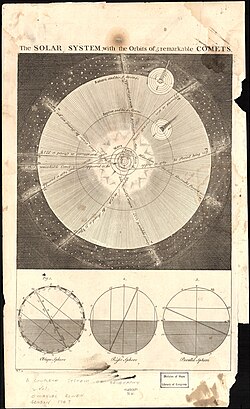
True-scale Solar System poster made by Emanuel Bowen in 1747. At that time, Uranus, Neptune, and the asteroid belts had all not yet been discovered.

太陽系の構成と分類

現在の太陽系は、性質によって大きく2つのグループに分けられます。水星、金星、地球、火星からなる地球型惑星(岩石主体の小型惑星)と、木星、土星、天王星、海王星からなる巨大惑星(ガスや氷を主成分とする大型惑星)です。
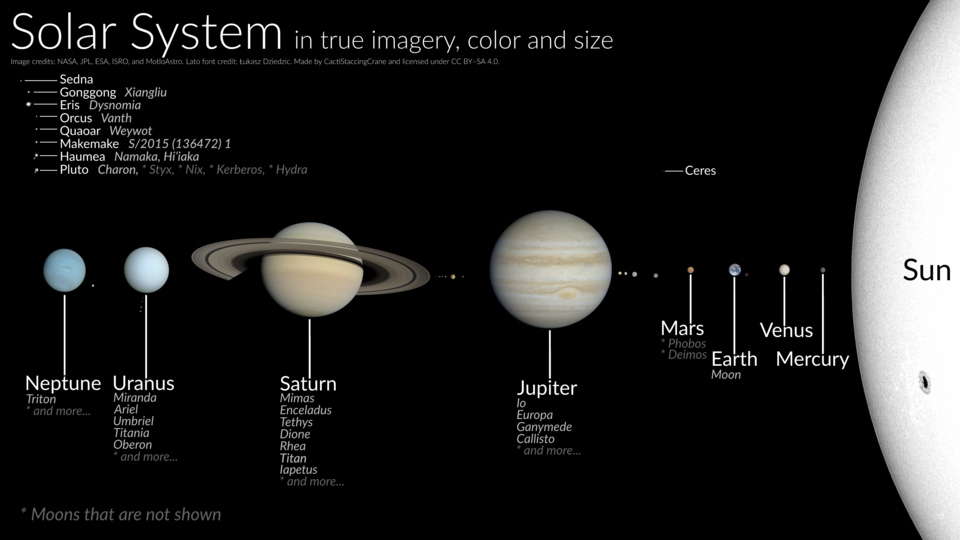
The Sun's, planets', dwarf planets' and moons' size to scale, labelled. Distance of objects is not to scale. The asteroid belt lies between the orbits of Mars and Jupiter, the Kuiper belt lies beyond Neptune's orbit.

準惑星と衛星惑星

2006年、IAUは惑星の定義を厳格化し、冥王星、ケレス、エリスなどは「準惑星」という新しいカテゴリーに分類されました。一方で、惑星に匹敵する質量を持ち、自らの重力で球形になった衛星(衛星惑星)も存在します。例えば、地球の月や木星のガニメデ、土星のタイタンなどがこれに当たります。

The planetary-mass moons to scale, compared with Mercury, Venus, Earth, Mars, and Pluto. Sub-planetary Proteus and Nereid (about the same size as Mimas) have been included for comparison. Unimaged Dysnomia (intermediate in size between Tethys and Enceladus) is not shown; it is in any case probably not a solid body.[91]

太陽系外惑星の探査

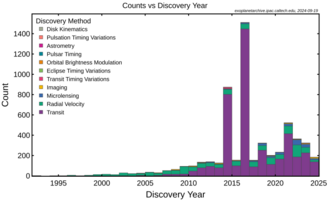
私たちの太陽系以外にも、他の恒星を回る「系外惑星」が数多く発見されています。2023年までのデータによれば、検出数は年々増加しており、宇宙には多様な環境を持つ惑星が遍在していることが明らかになっています。
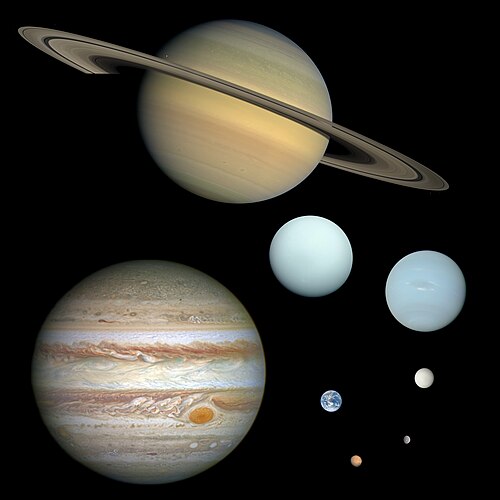
The eight planets of the Solar System with size to scale (up to down, left to right): Saturn, Jupiter, Uranus, Neptune (outer planets), Earth, Venus, Mars, and Mercury (inner planets)
Exoplanet detections per year

惑星を形作る物理的・動的特性

惑星の個性を決定づけるのは、その軌道と物理的な構造です。軌道は離心率(楕円の度合い)や傾斜角によって定義されます。例えば、冥王星の軌道は海王星に比べて非常に細長く、黄道面に対しても大きく傾いています。
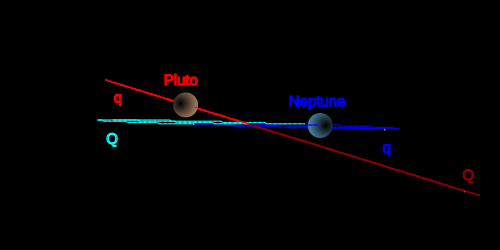
The orbit of the planet Neptune compared to that of Pluto. Note the elongation of Pluto's orbit in relation to Neptune's (eccentricity), as well as its large angle to the ecliptic (inclination).

自転と軸の傾き

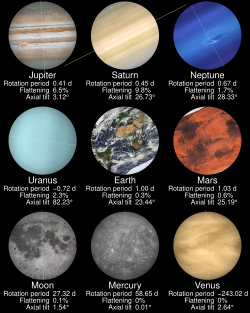
惑星の自転周期や自転軸の傾き(地軸の傾き)は、その惑星の気候に大きな影響を与えます。地球の軸は約23.4度傾いており、これが四季を生み出しています。この傾きは一定ではなく、約41,000年の周期で変動しています。
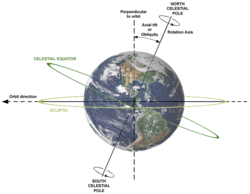
Earth's axial tilt is about 23.4°. It oscillates between 22.1° and 24.5° on a 41,000-year cycle and is currently decreasing.
Comparison of the rotation period (sped up 10 000 times, negative values denoting retrograde), flattening and axial tilt of the planets and the Moon (SVG animation)

内部構造と大気・磁気圏

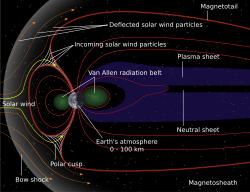
惑星の内部は、密度に応じて層状に分かれる「分化」が起こります。例えば木星のような巨大惑星は、岩石の核を深い金属水素の層が覆う構造をしています。また、多くの惑星は独自の大気を持ち、地球のように強力な磁気圏を持つことで、宇宙放射線から表面を保護しています。
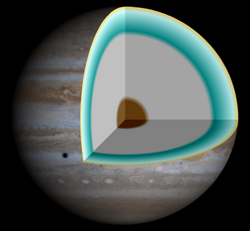
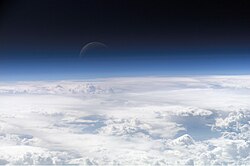
Illustration of the interior of Jupiter, with a rocky core overlaid by a deep layer of metallic hydrogen
Earth's atmosphere
Earth's magnetosphere (diagram)

さらに、土星に見られるような壮大な環(リング)を持つ天体もあり、これらは氷や岩石の粒子で構成されています。
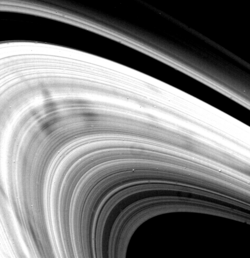
The rings of Saturn

惑星の基本データまとめ

太陽系における主要な天体分類の比較
分類 主な天体 主な特徴 構成成分
地球型惑星 地球、火星など 小型で高密度、固体表面あり 岩石・金属
巨大惑星 木星、海王星など 超大型、低密度、強い重力 水素、ヘリウム、氷
準惑星 冥王星、ケレスなど 球形だが軌道上の掃除が不十分 岩石、氷
衛星惑星 月、タイタンなど 惑星を公転する球形の衛星 多様(岩石〜氷)
The Sun, the planets, their moons, and several trans-Neptunian objects

Frequently Asked Questions

なぜ冥王星は惑星から外れたのですか?

2006年に国際天文学連合(IAU)が定めた新定義において、「自身の軌道周辺から他の天体を排除していること(軌道掃除)」という条件を満たしていなかったためです。現在は「準惑星」に分類されています。

惑星はどうやって誕生するのですか?

「星雲説」という理論が有力です。宇宙のガスや塵の雲が重力で崩壊して中心に恒星ができ、その周囲にできた回転する円盤の中で、物質が衝突・合体を繰り返す「集積」というプロセスを経て惑星が成長します。

「系外惑星」とは何のことですか?

私たちの太陽系以外の恒星(太陽以外の星)の周囲を公転している惑星のことです。観測技術の向上により、地球に似た環境を持つ可能性のある惑星が次々と発見されています。

惑星の「軸の傾き」はなぜ重要なのですか?

軸の傾きがあることで、公転に伴い太陽光が当たる角度が変化し、季節の変化が生まれます。もし傾きがなければ、多くの惑星で季節の変化は起こりません。

衛星惑星と普通の衛星は何が違うのですか?

衛星惑星とは、十分な質量を持っているため、自らの重力によって球形(楕円体)を維持できるほど大きな衛星のことを指します。小さな衛星は不規則な形をしていますが、衛星惑星は惑星に近い物理的特性を持っています。

References

  1. Here, "Earth-sized" means 1–2 Earth radii, and "habitable zone" means the region with 0.25 to 4 times Earth's stellar flux (corresponding to 0.5–2 AU for the Sun). Data for like the Sun is not available. This statistic is an extrapolation from data on .
  2. See .
  3. Margot's parameter is not to be confused with the π≈3.14159265 ... .
  4. In Korean, these names are more often written in rather than Chinese characters, e.g. 명왕성 for Pluto. In Vietnamese, are more common than directly reading these names as , e.g. sao Thuỷ rather than Thuỷ tinh for Mercury. Pluto is not sao Minh Vương but sao Diêm Vương " star".

📸 フォトギャラリー

The eight planets of the Solar System with size to scale (up to down, left to right): Saturn, Jupiter, Uranus, Neptune (outer planets), Earth, Venus, Mars, and Mercury (inner planets)
The Sun's, planets', dwarf planets' and moons' size to scale, labelled. Distance of objects is not to scale. The asteroid belt lies between the orbits of Mars and Jupiter, the Kuiper belt lies beyond Neptune's orbit.
Exoplanet detections per year
The orbit of the planet Neptune compared to that of Pluto. Note the elongation of Pluto's orbit in relation to Neptune's (eccentricity), as well as its large angle to the ecliptic (inclination).
Earth's axial tilt is about 23.4°. It oscillates between 22.1° and 24.5° on a 41,000-year cycle and is currently decreasing.
Comparison of the rotation period (sped up 10 000 times, negative values denoting retrograde), flattening and axial tilt of the planets and the Moon (SVG animation)
Illustration of the interior of Jupiter, with a rocky core overlaid by a deep layer of metallic hydrogen
Earth's atmosphere
Earth's magnetosphere (diagram)
The rings of Saturn
The motion of 'lights' moving across the sky is the basis of the classical definition of planets: wandering stars.
1660 illustration of Claudius Ptolemy's geocentric model
True-scale Solar System poster made by Emanuel Bowen in 1747. At that time, Uranus, Neptune, and the asteroid belts had all not yet been discovered.
The planetary-mass moons to scale, compared with Mercury, Venus, Earth, Mars, and Pluto. Sub-planetary Proteus and Nereid (about the same size as Mimas) have been included for comparison. Unimaged Dysnomia (intermediate in size between Tethys and Enceladus) is not shown; it is in any case probably not a solid body.[91]
The Greek gods of Olympus, after whom the Solar System's Roman names of the planets are derived
The Sun, the planets, their moons, and several trans-Neptunian objects