太陽系で最も内側を公転する水星は、その小さな体躯に似合わぬ複雑な個性を秘めた惑星です。地球の約38%の半径しか持たないこの天体は、太陽からの強烈な熱と放射線にさらされながら、独自の進化を遂げてきました。かつては月のような死んだ世界だと思われていましたが、近年の探査によって、ダイナミックな地質活動や意外な氷の存在が明らかになっています。
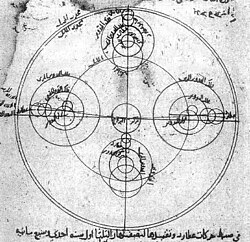
古くから天文学者たちの関心を集めてきた水星は、その公転周期の短さと、観測の難しさから謎に包まれていました。古代の天文学者たちは、複雑な周転円を用いてその不規則な動きを説明しようと試行錯誤を繰り返してきました。

Key Facts
- 太陽系最小の惑星でありながら、密度は非常に高く、巨大な鉄の核を持っている。
- 極端な温度差があり、表面温度はマイナス173℃から427℃まで激しく変動する。
- 大気がほぼ存在しない「外圏(エクソスフィア)」という極めて希薄なガス層を持つ。
- 自転と公転の共鳴により、2回の公転の間に1.5回の自転を行うという特殊なリズムを持つ。
- 北極の永久影領域には、太陽の熱が届かないため水氷が存在している。
物理的特性と内部構造
水星の最大の特徴は、その驚異的な密度にあります。平均密度は5.427 g/cm³に達し、これは地球に次ぐ太陽系内での高密度です。この理由は、惑星の大部分を占める巨大な金属核にあります。最新の研究では、この核の中心に固体の内核が存在することが示唆されており、惑星の形成過程で激しい衝突によりマントルが剥ぎ取られた可能性が議論されています。
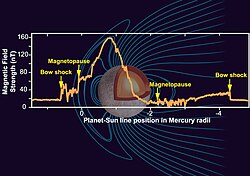
また、水星は小さなサイズながら独自の磁場を保持しています。これは内部の液体核によるダイナモ作用の結果と考えられており、太陽風から惑星を保護する役割を果たしています。
過酷な表面地質と地形
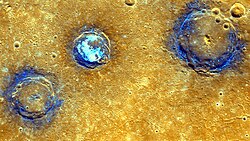
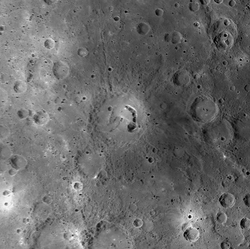
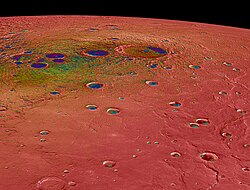
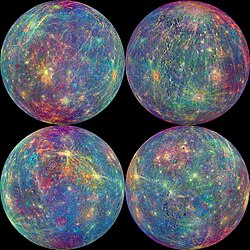
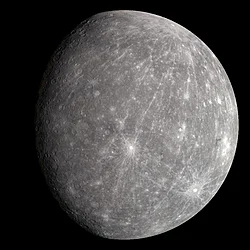
水星の表面は、月と同様に無数のクレーターで覆われています。特に「カローリス盆地」のような巨大な衝突盆地は、惑星全体の地質に大きな影響を与えました。また、表面には火山活動によって形成されたと思われる平原が広がっており、オレンジ色に強調された画像ではその広がりが顕著に見て取れます。
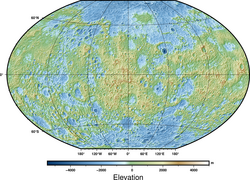
さらに、水星には「断崖(ルペス)」と呼ばれる大規模な構造線が存在します。これは惑星内部が冷却され、全体的に収縮したことで表面にシワが寄ったように形成された圧縮地形です。カーネギー断崖などの地形は、水星が時間とともに「縮んでいる」ことを物語っています。
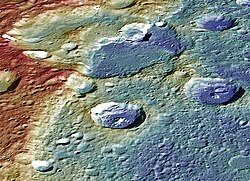
興味深いことに、一部のクレーター付近ではマグマチューブの崩落によると思われる弧状の穴が発見されており、かつての激しい火山活動の痕跡を留めています。
極限の環境:温度と大気
水星には実質的な大気がなく、表面圧力は極めて低いため、太陽からの熱を保持することができません。そのため、太陽に照らされた昼側は灼熱となり、夜側は極寒となるという、太陽系で最も激しい温度差が生じます。
しかし、北極や南極にある深いクレーターの底など、太陽光が永久に届かない「永久影」と呼ばれる領域には、水氷が大量に蓄積していることが判明しました。これは、彗星や小惑星の衝突によってもたらされた水が、極低温の環境で保存されたためと考えられています。
![Composite of the north pole of Mercury, where a large volume of water ice lies in permanently dark craters.[80]](/images/ad/b1/adb15b3c5ba978b51249c1c25b3f01fbcf4ba4bcea30bae4055b95115f348053.jpg)
軌道と自転の不思議
水星の公転周期は約88日で、太陽系で最も速い速度(平均47.36 km/s)で移動しています。特筆すべきは「自転と公転の3:2共鳴」です。水星が太陽を2周する間にちょうど3回自転するため、表面から見た太陽の動きは非常に複雑になります。
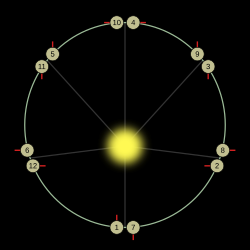
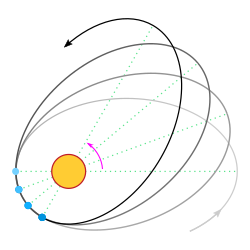
また、水星の軌道は楕円形であり、近日点(太陽に最も近づく点)と遠日点(最も遠ざかる点)の差が大きいため、季節的な温度変化や軌道上の変動(近日点移動)が顕著に現れます。
人類による探査の歴史
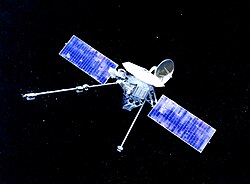
水星への挑戦は、1970年代のマリナー10号から始まりました。この探査機により、初めて水星の表面の一部が撮影され、磁場の存在が確認されました。その後、2004年に打ち上げられたメッセンジャー(MESSENGER)が水星周回軌道に入り、全表面のマッピングと詳細な組成分析を完遂しました。
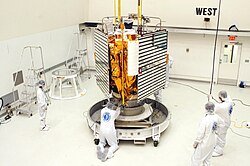
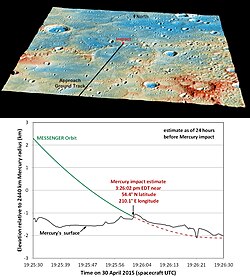
メッセンジャーは2015年、燃料を使い切り、あえて水星表面に衝突してその任務を終えました。現在は、欧州宇宙機関(ESA)と日本宇宙航空研究開発機構(JAXA)による共同プロジェクト「ベピコロンボ」が、さらなる詳細な調査のために水星へと向かっています。
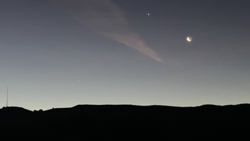
地球からの観測では、金星や月と共に夜空に現れることがあり、時折、太陽面を横切る「太陽面通過」という現象が観察されます。これは火星のキュリオシティなどの探査機からも捉えられています。
![Mercury transiting the Sun as viewed by the Mars rover Curiosity (June 3, 2014).[186]](/images/2c/9e/2c9ea118f6acd87dfdd62376dc8b74188baa6f5641d974be7f501f63a10db2eb.gif)
また、水星の縁(リム)に見えるトルストイ盆地などの巨大構造は、遠方からの観測でもその存在感を示しています。
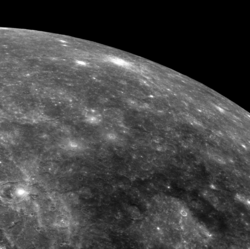
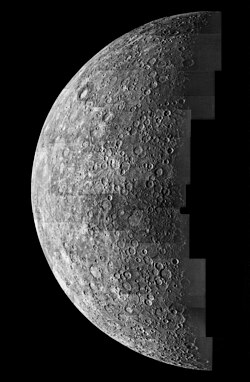
太陽系全体の構造の中で、水星は常に中心に近い位置にあり、他の惑星との距離的関係においても特異な存在です。

水星の基本データまとめ
| 項目 | 数値 / 特徴 |
|---|---|
| 平均半径 | 2,439.7 km (地球の約0.38倍) |
| 平均密度 | 5.427 g/cm³ |
| 表面重力 | 3.7 m/s² (地球の約0.38g) |
| 公転周期 | 約87.97日 |
| 自転周期(恒星日) | 約58.65日 |
| 表面温度範囲 | −173 °C 〜 427 °C |
| 主な大気成分 | 酸素、ナトリウム、マグネシウム(極めて希薄) |
Frequently Asked Questions
水星に空気はありますか?
地球のような厚い大気はありません。代わりに「外圏(エクソスフィア)」と呼ばれる、原子レベルで非常に希薄なガス層が存在しています。主な成分は太陽風によって弾き出された酸素やナトリウムなどです。
なぜ水星には氷があると言われているのですか?
太陽に非常に近いですが、自転軸の傾きが小さいため、北極や南極の深いクレーターの底には太陽光が永久に届かない場所があります。そこは極低温に保たれているため、外部から運ばれた水が氷として安定して存在できると考えられています。
水星の1日はどれくらいですか?
自転周期(恒星日)は約58.6日ですが、公転の影響を受けるため、太陽が昇ってから次に昇るまでの「1日(太陽日)」は約176日もかかります。
水星はなぜ「鉄の惑星」と呼ばれるのですか?
惑星全体の質量に対する核(コア)の割合が非常に大きいためです。地球よりもはるかに高い割合で鉄などの重い金属が含まれており、それが高い平均密度につながっています。
水星に衛星はありますか?
いいえ、水星には天然の衛星(月)は存在しません。太陽の強力な重力の影響を強く受けているため、小さな衛星を保持することが難しい環境にあると考えられています。
References
- The Sun's total angular displacement during its apparent retrograde motion as seen from the surface of Mercury is ~1.23°, while the Sun's angular diameter when the apparent retrograde motion begins and ends is ~1.71°, increasing to ~1.73° at perihelion (midway through the retrograde motion).
- In astronomical literature, the term "closest planets" often means "the two planets that approach each other most closely". In other words, the orbits of the two planets approach each other most closely. However, this does not mean that the two planets are closest over a long period of time. For example, essentially because Mercury is closer to the Sun than Venus, Mercury spends more time in proximity to Earth; it could, therefore, be said that Mercury is the planet that is "closest to Earth when averaged over time". However, it turns out that using this time-average definition of 'closeness', Mercury can be the "closest planet" to all other planets in the solar system.
- Some sources precede the cuneiform transcription with "MUL". "MUL" is a cuneiform sign that was used in the Sumerian language to designate a star or planet, but it is not considered part of the actual name. The "4" is a reference number in the Sumero–Akkadian transliteration system to designate which of several syllables a certain cuneiform sign is most likely designating.
📸 フォトギャラリー