タグ

アストロバイオロジー

14 件の記事
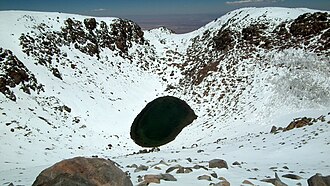
Licancabur Lake in 2012, viewed from the rim

リカンカブール湖火星の環境を再現するアンデス最高峰の火口湖

リカンカブール湖チリ火口湖アンデス山脈
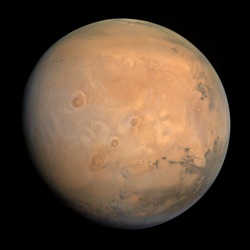
Mars in true color

火星における生命の可能性古代の居住可能性から最新の探査成果まで

火星アストロバイオロジー居住可能性バイオシグネチャー
False positive mechanisms for oxygen on a variety of planet scenarios. The molecules in each large rectangle represent the main contributors to a spectrum of the planet's atmosphere. The molecules circled in yellow represent the molecules that would help confirm a false positive biosignature if they were detected. Furthermore, the molecules crossed out in red would help confirm a false positive biosignature if they were not detected. Cartoon adapted from Victoria Meadows' 2018 oxygen as a biosignature study.[12]

バイオシグネチャー地球外生命の痕跡を特定する科学的指標

バイオシグネチャーアストロバイオロジー地球外生命体バイオマーカー
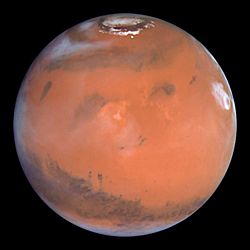
Hubble view of Mars: Gale crater can be seen. Slightly left and south of center, it is a small dark spot with dust trailing southward from it.

マーズ・サイエンス・ラボラトリー(MSL)火星探査車キュリオシティの軌跡

キュリオシティ火星探査車NASAマーズ・サイエンス・ラボラトリー
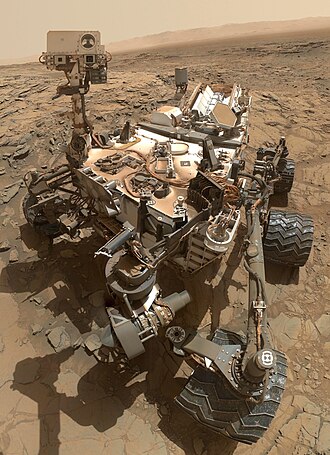
NASA's Curiosity rover, selfie, 2015

火星探査車(マーズ・ローバー)の歴史と進化赤い惑星の謎に迫るロボットたち

火星探査車NASAキュリオシティパーサヴィアランス
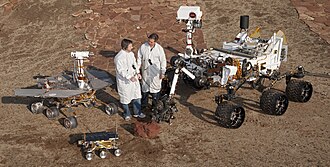
Two Jet Propulsion Laboratory engineers stand with three vehicles, providing a size comparison of three generations of Mars rovers. Front and center left is the flight spare for the first Mars rover, Sojourner, which landed on Mars in 1997 as part of the Mars Pathfinder Project. On the left is a Mars Exploration Rover (MER) test vehicle that is a working sibling to Spirit and Opportunity, which landed on Mars in 2004. On the right is a test rover for the Mars Science Laboratory, which landed as Curiosity on Mars in 2012. Sojourner is 65 cm (26 in) long. The Mars Exploration Rovers (MER) are 1.6 m (5 ft 3 in) long. Curiosity on the right is 3 m (9.8 ft) long.

キュリオシティ火星の生命の痕跡を追うNASAの科学探査車

キュリオシティ火星探査車NASAゲールクレーター
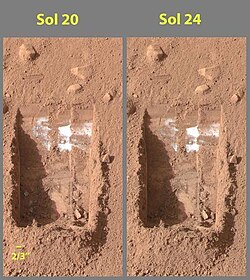
Side-by-side images of a trench dug by Phoenix's robotic arm, showing the sublimation of material – three whitish clumps in the lower left corner of the trench – presumed to be water ice, over the course of four days (Sol 20 to Sol 24).

フェニックス火星着陸機北極圏の氷と生命の痕跡を追った旅

フェニックス火星着陸機NASA水氷
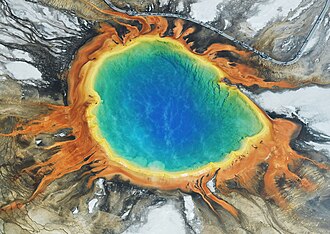
The bright colors of Grand Prismatic Spring in Yellowstone National Park are produced by thermophiles, a type of extremophile.

極限環境微生物(エクストリーモファイル)が明かす生命の限界と可能性

極限環境微生物エクストリーモファイル古細菌アストロバイオロジー
Mars in true color

火星における生命の可能性古代の居住可能性から最新の探査まで

火星アストロバイオロジー居住可能性バイオシグネチャー
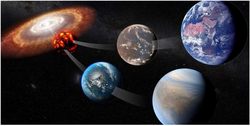
Evolutionary paths of Earth and Venus. Venus has been the prime example for a planet resembling Earth and how such a planet can differ.

地球型惑星(アース・アナログ)の探求第二の地球を求めて

地球型惑星アース・アナログハビタブルゾーン系外惑星
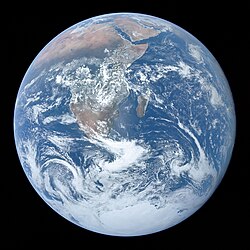
Understanding planetary habitability is partly an extrapolation of the conditions on Earth, as this is the only planet known to support life.

惑星の居住可能性生命を育む宇宙の条件と系外惑星の探究

惑星の居住可能性ハビタブルゾーン系外惑星アストロバイオロジー
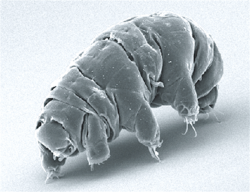
The tardigrade Milnesium tardigradum demonstrated its ability to survive the vacuum and ultraviolet radiation of space in the TARDIS experiment on the 2007 FOTON-M3 mission.

クマムシの宇宙耐性とアストロバイオロジーへの貢献

クマムシ宇宙生物学アストロバイオロジークリプトビオシス