宇宙の広大な空間の中で、地球以外に生命が存在しうる場所はあるのでしょうか。アストロバイオロジー(宇宙生物学)において、ある惑星や衛星が生命を発生させ、維持できる環境を備えているかを評価する指標が惑星の居住可能性(Planetary Habitability)です。私たちは地球という唯一の成功例を基に、宇宙のどこに「第二の地球」が隠れているのかを科学的に分析しています。
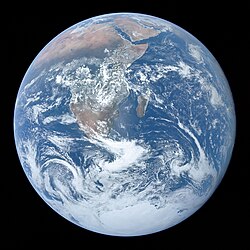
Key Facts
- ハビタブルゾーン:主星からの距離が適切で、惑星表面に液体の水が存在しうる領域。
- 推定数:天の川銀河には、太陽のような星や赤色矮星の周囲に最大400億個の地球サイズ惑星が存在する可能性がある。
- 発見実績:2024年3月時点で、70個の潜在的に居住可能な系外惑星が特定されている。
- 多様な環境:生命は必ずしも地球のような環境を必要とせず、極限環境微生物のような適応力を持つ生物の存在が示唆されている。
生命が誕生するための基礎条件
生命の起源には、化学物質から生命が生まれる「アビオジェネシス(自然発生)」や、天体間で生命が運ばれる「パンスペルミア説」などの仮説があります。居住可能性を判断する上で最も重視されるのは、代謝に不可欠な液体の水の存在です。しかし、必ずしも表面に水がある必要はなく、地下の海洋や特殊な化学環境でも生命は維持され得ます。
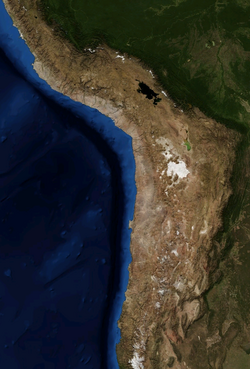
地球上の極限環境(高温、高圧、強酸性など)で生き抜く極限環境微生物(Extremophiles)の研究は、宇宙における生命の生存圏を広げる視点を与えてくれました。例えば、南米のアタカマ砂漠のような不毛の地は、火星の環境に近いアナログ(類似環境)として、生命の限界点を研究する重要なフィールドとなっています。
また、地球のような惑星だけでなく、ガス巨星の衛星(天然衛星)も有力な候補です。内部熱による氷の下の海が存在すれば、太陽から遠く離れていても生命を育む可能性があります。
![The moons of some gas giants could potentially be habitable.[39]](/images/1c/9d/1c9dce1f0b664b0a68c3279c6271d54f0796f0cf80ed7e0f02d417b776fec322.jpg)
主星の特性と居住可能性への影響
惑星が居住可能かどうかは、その中心にある恒星(主星)の種類に大きく依存します。恒星のスペクトル型(温度や光度)によって、ハビタブルゾーンの位置や安定性が変わるためです。
赤色矮星(M型星)の可能性と課題
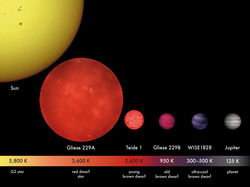
宇宙に最も多く存在する赤色矮星は、注目度の高いホスト星です。例えば、スーパーアース(地球より大きく海王星より小さい岩石惑星)であるGliese 581 cなどは、この種の星のハビタブルゾーンに位置しています。しかし、赤色矮星は光度が低いため、惑星が非常に近い軌道を回る必要があり、その結果として惑星の片面が常に主星に向く潮汐ロックが発生しやすくなります。
太陽型星(G型・K型星)の分布
2020年の研究では、太陽に似た星の約半分が、居住可能な岩石惑星を保持している可能性が示されました。太陽系近傍(約10パーセク以内)だけでも、複数の岩石惑星が存在すると推定されています。
惑星自体の物理的・化学的特性
主星との距離以外にも、惑星自身のスペックが生命維持に直結します。一般的に、居住可能な系外惑星の質量は地球の0.1倍から3.0倍、半径は0.5倍から1.6倍の範囲にあると考えられています。
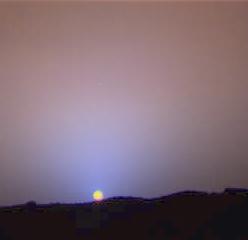
また、大気の組成や地質活動も重要です。火星のように大気が希薄すぎると、十分な保温効果が得られず、地球と同じ距離にいても極端に低温になります。
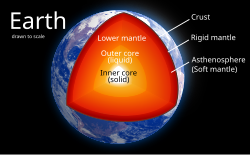
地球の内部構造のような地質学的プロセスは、磁場の形成や物質の循環を促し、生命にとって安定した環境を提供します。
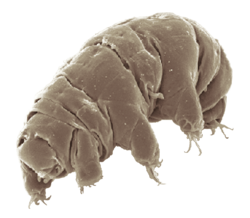
さらに、代謝に必要なエネルギー源(太陽光、地質化学的な酸化還元勾配など)や、水の塩分濃度、pH値といった化学的環境が、どのような形態の生命が生存できるかを決定づけます。地球上のクマムシのように、通常の居住可能圏外でも生存できる特殊な生物も存在しますが、これは極めて稀なケースです。
系外惑星の温度分類
惑星居住可能性研究所(PHL)では、推定表面温度に基づいて系外惑星を以下のように分類しています。
| 分類名 | 温度範囲 | 特徴 |
|---|---|---|
| ハイポサイクロプラネット | -50 °C 未満 | 極めて低温 |
| サイクロプラネット | -50 °C ~ 0 °C | 低温 |
| メゾプラネット | 0 °C ~ 50 °C | 中温(地球に近い) |
| サーモプラネット | 50 °C ~ 100 °C | 高温 |
| ハイパーサーモプラネット | 100 °C 超 | 極めて高温 |
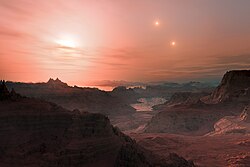
このように分類することで、どの惑星が液体の水を保持し、生命を宿す可能性が高いかを効率的にスクリーニングしています。例えば、三重連星系にあるGJ 667 Ccのような惑星は、複雑な重力環境にありながらも居住可能な候補として注目されています。
Frequently Asked Questions
ハビタブルゾーンにさえあれば、必ず生命が存在しますか?
いいえ。ハビタブルゾーンはあくまで「液体の水が存在しうる距離」を示す指標に過ぎません。実際に生命が存在するには、適切な大気組成、磁場の有無、地質活動、必要な化学元素の存在など、多くの条件が揃う必要があります。
赤色矮星の周りの惑星はなぜ居住しにくいと言われるのですか?
赤色矮星は温度が低いため、惑星が非常に近くを回る必要があります。そのため、潮汐ロックによって昼夜が固定されたり、主星からの強力なフレア(恒星表面の爆発現象)による放射線被害を受けやすかったりすることが懸念されています。
地球以外の惑星で生命が見つかる可能性が最も高いのはどこですか?
太陽系内では、火星の地下や、エウロパ(木星の衛星)、エンケラドゥス(土星の衛星)の内部海が有力視されています。系外惑星では、地球に近い質量と温度を持つ「地球類似惑星」が最大のターゲットです。
「スーパーアース」とはどのような惑星ですか?
地球よりも質量が大きいものの、ガス巨星(木星など)よりは小さい岩石惑星を指します。これらの惑星は強い重力を持つため、厚い大気を保持しやすく、それが居住可能性にどう影響するかが研究されています。
生命の定義が変われば、居住可能性の基準も変わりますか?
はい。現在の基準は「水ベースの炭素生命」を前提としていますが、液体メタンなどの別の溶媒を利用した代替生化学(Alternative Biochemistries)を持つ生命が存在する場合、現在のハビタブルゾーンの定義は全く異なるものになります。
References
- This article is an analysis of planetary habitability from the perspective of contemporary physical science. A historical viewpoint on the possibility of habitable planets can be found at and . For a discussion of the probability of alien life see the and . Habitable planets are also a staple of fiction; see .
- Life appears to on Earth approximately 500 million years after the planet's formation. "A" class stars (which shine for between 600 million and 1.2 billion years) and the very latest of the "B" class stars (which shine 10+ million to 600 million) fall within this window. At least theoretically life could emerge in such systems but it would almost certainly not reach a sophisticated level given these time-frames and the fact that increases in luminosity would occur quite rapidly. Life around "O" class stars is exceptionally unlikely, as they shine for less than ten million years.
- In , and evaluate plausible scenarios in which life might form in the cloud-tops of Jovian planets. Similarly, suggested that the clouds of might host life.
- There is an emerging consensus that single-celled micro-organisms may in fact, be common in the universe, especially since Earth's flourish in environments that were once considered hostile to life. The potential occurrence of complex multi-celled life remains much more controversial. In their work , and argue that microbial life is probably widespread while complex life is very rare and perhaps even unique to Earth. Current knowledge of Earth's history partly buttresses this theory: multi-celled organisms are believed to have emerged at the time of the close to 600 million years ago, but more than 3 billion years after life first appeared. That Earth life remained unicellular for so long underscores that the decisive step toward complex organisms need not necessarily occur.
- There is a "mass gap" in the Solar System between Earth and the two smallest giant planets, and , which are 13 and 17 Earth masses. This is probably just chance, as there is no geophysical barrier to the formation of intermediate bodies (see for instance and ) and we should expect to find planets throughout the galaxy between two and twelve Earth masses. If the star system is otherwise favorable, such planets would be good candidates for life as they would be large enough to remain internally dynamic and to retain an atmosphere for billions of years but not so large as to accrete a gaseous shell which limits the possibility of life formation.
- According to prevailing theory, the formation of the Moon commenced when a Mars-sized body struck the Earth in a glancing collision late in its formation, and the ejected material coalesced and fell into orbit (see ). In Rare Earth Ward and Brownlee emphasize that such impacts ought to be rare, reducing the probability of other Earth-Moon type systems and hence the probability of other habitable planets. Other moon formation processes are possible, however, and the proposition that a planet may be habitable in the absence of a moon has not been disproven.
📸 フォトギャラリー