物質が液体や気体から固体へと相転移し、規則正しい原子配列を持つ結晶へと成長するプロセスは、材料科学における根幹的な現象です。結晶成長とは、原子、イオン、あるいはポリマー鎖が結晶格子と呼ばれる特有の幾何学的配置に組み込まれていく過程を指します。完成した結晶体は、原子が密に充填されており、空間的に固定された位置関係を持つため、非常に高い構造的剛性と変形への耐性を備えているのが特徴です。
このプロセスは、一般的に「核生成」という初期段階を経てから、急速な「成長段階」へと移行します。結晶の成長速度は、核生成よりも大幅に速い傾向にあります。これは、実際の結晶には転位などの欠陥が存在し、それが新たな粒子を取り込む触媒として機能するためです。一方で、不純物の混入は成長を抑制したり、結晶の形状(晶癖)を変化させたりすることがあります。
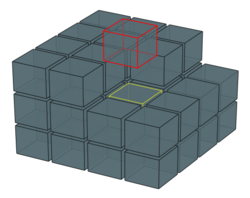
Key Facts
- 核生成の2種類: 外部因子のない「均質核生成」と、異物や容器の壁面を利用する「不均質核生成」がある。
- 成長の加速要因: 結晶内部の欠陥(転位など)が粒子の付着を促進し、成長速度を上げる。
- 駆動エネルギー: 結晶化の主たる原動力は、融点以下に温度が下がる「過冷却」の度合いである。
- 形態の多様性: 成長条件により、樹枝状の「デンドライト」や繊維状の「ウィスカー」など異なる形態が現れる。
- 拡散の影響: 過飽和度が高い場合、粒子の輸送速度が全体の成長速度を決定する「拡散制御」状態となる。
核生成:結晶誕生のプロセス
結晶が成長し始めるには、まず安定した「核」が形成される必要があります。核生成には大きく分けて2つの経路が存在します。
均質核生成と不均質核生成
均質核生成は、周囲に異物が存在しない状態で自発的に起こる現象です。対して不均質核生成は、容器の傷や微小な粒子などの「足場」を利用して起こります。不均質核生成の方が一般的に速く進行するのは、新しい表面をゼロから作る必要がなく、表面エネルギーの障壁を低く抑えられるためです。
例えば、ガラス容器の底にある小さな傷や、意図的に投入した紐や石などが核生成サイトとなります。非常に滑らかな容器を使用すると核が形成されにくく、逆に傷が多い容器では多数の小さな結晶が生成されます。また、あらかじめ作られた小さな結晶である種結晶を導入することで、単一の大きな結晶を効率的に成長させることが可能です。
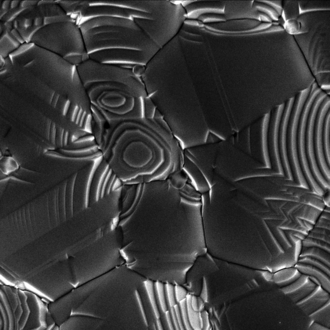
結晶成長の物理的メカニズム
核が形成された後、自由粒子が核に吸着し、構造が外側へと拡大していきます。この成長様式は、界面の性質と駆動力の強さによって異なります。
非一様側方成長と一様法線成長
結晶成長のメカニズムは、主に以下の2つのモデルで説明されます。
- 非一様側方成長: 表面にある「ステップ(段差)」が横方向に移動することで成長する方式です。表面が平衡状態に達しやすいため、ステップが通過するまで表面に変化は起きません。
- 一様法線成長: 表面全体が法線方向(垂直方向)に連続的に前進する方式です。強い熱力学的駆動力が存在する場合に起こります。
どちらのメカニズムが支配的かは、界面が「拡散界面(数層にわたって連続的に変化する)」か「鋭い界面(1層の間で不連続に変化する)」か、また表面張力が方向によって最小値を持つ「特異表面」であるかによって決まります。一般に、駆動力が極めて強い場合や界面が非常に拡散している場合は、一様法線成長が起こりやすくなります。
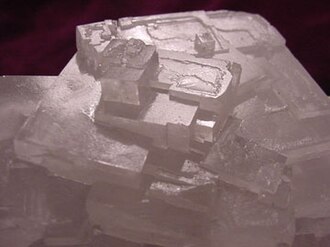
形態形成と特殊な構造
結晶の最終的な形状(形態)は、成長速度の異方性と表面自由エネルギーによって決定されます。J.W.ギブズの研究によれば、結晶は全表面自由エネルギーを最小化する形状へと向かいます。
ウィスカーとデンドライト
特筆すべき形態として、繊維状に伸びるウィスカーがあります。これは圧縮応力や熱応力によって促進され、非常に高い引張強度を持つことが知られています。ウィスカーは基板に対して直角に突き出して成長するのが特徴です。
一方、デンドライト(樹枝状結晶)は、シダの葉のように表面を這う形で枝分かれしながら成長します。これは後述する拡散制御の影響を強く受けた結果です。
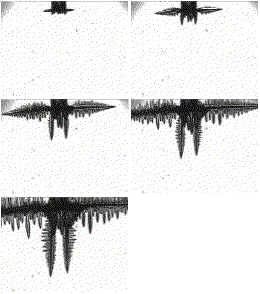
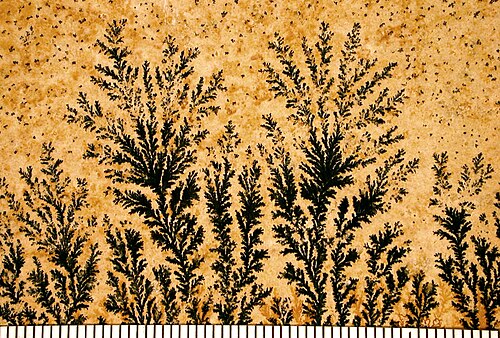
拡散制御による成長速度の決定
過飽和度や過冷却度が非常に高い場合、結晶成長の速度は「粒子がどれだけ速く核まで運ばれるか」という拡散速度によって制限されます。これを拡散制御と呼びます。
球状の核を想定した場合、成長速度(半径 $r$ の時間変化 $\partial r / \partial t$)はフィックの法則を用いて導出されます。粒子のフラックス(単位時間・単位面積あたりの移動量)と濃度勾配の関係から、成長速度は以下の要因に依存することがわかります。
- 原子体積 ($V_{at}$) と拡散係数 ($D$)
- 平衡濃度 ($c_0$) と核表面の濃度 ($c_l$) の差
- 核の半径 ($r$) および拡散層の厚さ ($\delta$)
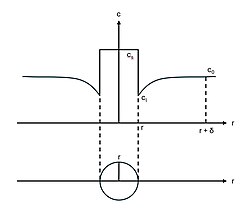
拡散制御下では、角や端の部分で過飽和度が最大となるため、そこから突起が成長しやすくなります。この突起がさらに不安定化して側枝を伸ばすことで、特徴的なデンドライト構造が形成されます。
結晶成長のまとめ
| プロセス/概念 | 主な特徴 | 影響を与える要因 |
|---|---|---|
| 核生成 | 結晶の種ができる初期段階 | 不純物、容器の表面状態、種結晶 |
| 側方成長 | ステップの横移動による成長 | 低い駆動エネルギー、特異表面 |
| 法線成長 | 界面全体の垂直方向への前進 | 高い駆動エネルギー、拡散界面 |
| 拡散制御 | 粒子輸送速度が成長を制限 | 高い過飽和度、濃度勾配 |
| 形態形成 | ウィスカーやデンドライトの形成 | 表面自由エネルギー、機械的応力 |
Frequently Asked Questions
種結晶を使うとどのようなメリットがありますか?
種結晶を導入することで、不均質核生成を意図的に制御でき、核生成にかかる時間を短縮できます。また、投入する種結晶の数を1つに限定すれば、多数の小結晶ではなく、単一の大きな単結晶を成長させることが可能です。
均質核生成と不均質核生成の決定的な違いは何ですか?
最大の違いは「外部の助け(足場)があるか」です。均質核生成は純粋な物質のみで起こりますが、不均質核生成は容器の壁や微粒子などの異物を利用します。後者は表面エネルギーの障壁を下げられるため、より容易に、かつ速く進行します。
デンドライトとウィスカーはどちらも細長いですが、何が違うのですか?
成長方向と形状が異なります。デンドライトは樹枝状に枝分かれしながら表面に沿って広がる傾向がありますが、ウィスカーは繊維状で、基板に対して垂直方向に突き出して成長します。また、ウィスカーは機械的な応力が成長を促進する要因となる点が特徴的です。
「過冷却」が結晶成長にどのように関わっていますか?
過冷却(融点以下に冷却された状態)は、液体から固体へ相転移させるための熱力学的な「駆動力」となります。この過冷却の度合いが大きくなるほど、界面が法線方向に成長しやすくなったり、拡散制御による不安定な成長(デンドライト形成)が起こりやすくなったりします。
なぜ完璧な結晶よりも、欠陥のある結晶の方が速く成長するのですか?
完璧な結晶表面に新しい層を作るには高いエネルギー障壁がありますが、転位などの欠陥がある場合、そこが粒子の付着しやすい「ステップ」として機能します。この欠陥が触媒のような役割を果たすため、粒子が効率的に組み込まれ、成長速度が向上します。
References
- Markov, Ivan (2016). Crystal Growth For Beginners: Fundamentals Of Nucleation, Crystal Growth And Epitaxy (Third ed.). Singapore: World Scientific. :10.1142/10127. .
- Pimpinelli, Alberto; Villain, Jacques (2010). Physics of Crystal Growth. Cambridge: Cambridge University Press. pp. https://www.cambridge.org/bg/academic/subjects/physics/condensed-matter-physics-nanoscience-and-mesoscopic-physics/physics-crystal-growth?format=PB. .
- Frank, F. C. (1949). "The influence of dislocations on crystal growth". Discussions of the Faraday Society. 5: 48. :10.1039/DF9490500048.
- Nguyen, Thai; Khan, Azeem; Bruce, Layla; Forbes, Clarissa; o'Leary, Richard; Price, Chris (2017). "The effect of ultrasound on the crystallisation of paracetamol in the presence of structurally similar impurities". Crystals. 7 (10): 294. :2017Cryst...7..294N. :10.3390/cryst7100294.
- Volmer, M., "Kinetic der Phasenbildung", T. Steinkopf, Dresden (1939)
- Burton, W. K.; Cabrera, N. (1949). "Crystal growth and surface structure. Part I". Discussions of the Faraday Society. 5: 33. :10.1039/DF9490500033.
- Burton, W. K.; Cabrera, N. (1949). "Crystal growth and surface structure. Part II". Discuss. Faraday Soc. 5: 40–48. :10.1039/DF9490500040.
- E.M. Aryslanova, A.V.Alfimov, S.A. Chivilikhin, "Model of porous aluminum oxide growth in the initial stage of anodization", Nanosystems: physics, chemistry, mathematics, October 2013, Volume 4, Issue 5, pp 585
- Burton, W. K.; Cabrera, N.; Frank, F. C. (1951). "The Growth of Crystals and the Equilibrium Structure of their Surfaces". . 243 (866): 299. :1951RSPTA.243..299B. :10.1098/rsta.1951.0006. 119643095.
- Jackson, K.A. (1958) in Growth and Perfection of Crystals, Doremus, R.H., Roberts, B.W. and Turnbull, D. (eds.). Wiley, New York.
📸 フォトギャラリー