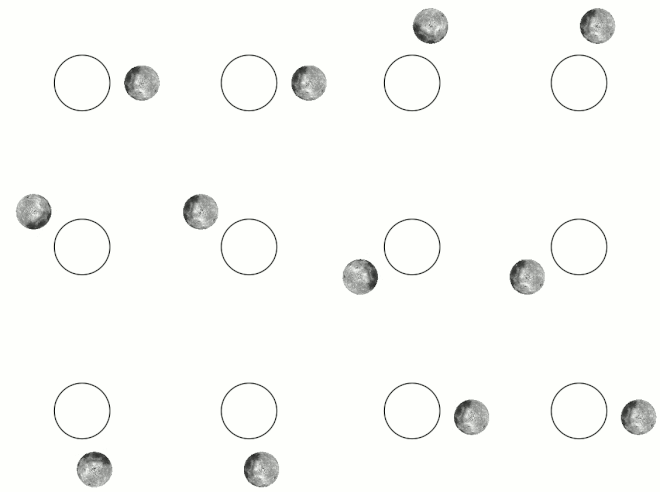
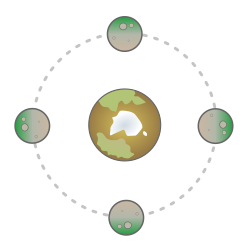
夜空に浮かぶ月を眺めていると、常に同じ面だけが見えていることに気づくはずです。これは偶然ではなく、天文学的に潮汐ロック(Tidal Locking)と呼ばれる現象が起きているためです。この現象は、互いに重力で引き合う2つの天体の間で発生し、最終的に一方または両方の自転速度が公転速度と一致する状態を指します。
一般的に、潮汐ロックが完了した天体は「同期回転」の状態にあり、自転に要する時間と公転に要する時間が等しくなります。これにより、親天体から見て常に同じ面が向き続けることになります。
Key Facts
- 同期回転:自転周期と公転周期が完全に一致し、常に同じ面を向く状態。
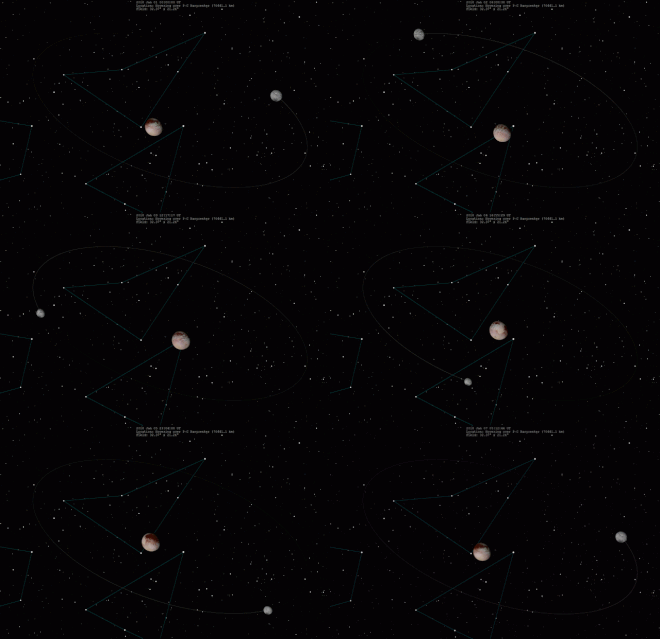
- 相互ロック:質量差が小さく距離が近い場合、両方の天体が互いにロックされる(例:冥王星とカロン)。
- スピン軌道共鳴:完全な1:1の同期ではなく、単純な整数比(例:3:2)で回転が固定される現象。
- 時間的変化:地球の自転も月の影響で徐々に遅くなっており、1世紀あたり約2.3ミリ秒伸びている。
潮汐ロックが発生するメカニズム
この現象は、天体間の重力相互作用によって引き起こされます。天体は完全な球体ではなく、重力によってわずかに引き伸ばされた「潮汐膨らみ」を持ちます。この膨らみが回転方向からずれると、重力によるトルク(回転させる力)が発生し、自転速度を徐々に変化させます。
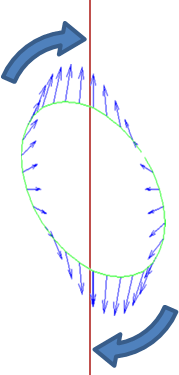
数百万年という膨大な時間をかけてエネルギーが熱として散逸し、自転速度が公転速度と一致したとき、正味の回転変化がなくなる安定した状態に達します。一度この状態になると、外部から大きなエネルギーが加わらない限り、ロック状態は維持されます。
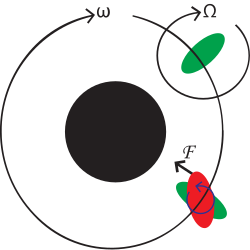
親天体への影響と軌道の変化
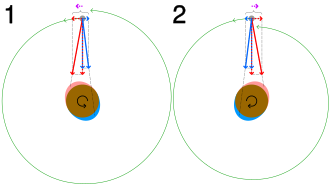
潮汐ロックの影響は、衛星だけでなく親天体(大きな天体)側にも及びます。質量が大きいため変化は緩やかですが、地球の自転も月の重力によって徐々に減速しています。化石記録などの分析から、地球の1日はかつて約6時間だったと考えられており、現在は24時間まで伸びています。
理論上は、十分な時間があれば地球も月にロックされ、1日が現在の約47倍の長さになります。しかし、その前に太陽が赤色巨星となって地球と月を飲み込む可能性が高いため、完全な相互ロックが実現することはないと予想されています。
多様なロック形態と具体例
1:1の同期回転と「見えない面」
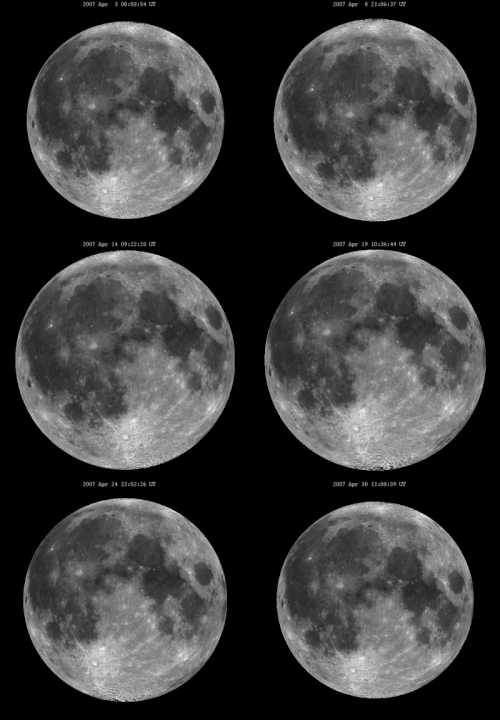
月が代表的な例です。地球からは常に同じ面しか見えないため、1959年にソ連のルナ3号が写真を送信するまで、月の裏側は未知の領域でした。ただし、軌道が完全な円ではないこと(離心率)や自転軸の傾きによる「秤動(ひょうどう)」という現象があるため、実際には表面の約59%を観測することが可能です。
スピン軌道共鳴(非同期ロック)
軌道が楕円形である場合、完全な1:1ではなく、特定の比率で回転が固定される「スピン軌道共鳴」が起こります。水星はその典型で、2回の公転の間に3回の自転を行う「3:2共鳴」の状態にあります。これは形成後1,000万〜2,000万年という比較的早い段階で固定されたと考えられています。
相互潮汐ロック
2つの天体の質量差が小さく、距離が非常に近い場合、双方向でロックがかかります。冥王星とその衛星カロンの関係がこれに当たり、互いに常に同じ面を向け合っています。
潮汐ロック天体のまとめ
| 親天体 | ロック状態の衛星/惑星 | 備考 |
|---|---|---|
| 太陽 | 水星 | 3:2 スピン軌道共鳴 |
| 地球 | 月 | 1:1 同期回転 |
| 木星 | イオ、エウロパ、ガニメデ、カリスト等 | 多くの衛星がロック状態 |
| 冥王星 | カロン | 相互潮汐ロック |
| プロキシマ・ケンタウリ | プロキシマ・ケンタウリb | 同期回転または3:2共鳴の可能性が高い |
| TRAPPIST-1 | 全惑星 | ほぼすべてがロック状態と推測 |
Frequently Asked Questions
なぜ月の裏側は地球から絶対に見えないのですか?
月の自転周期と公転周期が完全に一致しているため、常に同じ面が地球に向いています。ただし、前述の「秤動」により、縁の部分がわずかに見え隠れするため、合計では表面の約6割近くを観測できます。
潮汐ロックされるまでにはどれくらいの時間がかかりますか?
天体の質量、半径、距離、および内部の剛性やエネルギー散逸率(Q値)によって大きく異なります。数百万年から数十億年まで幅がありますが、一般的に親天体に近く、質量が小さい衛星ほど早くロックされます。
水星はなぜ1:1ではなく3:2で回転しているのですか?
水星の軌道は楕円形(離心率が高い)であるため、近日点付近での公転速度が速くなります。このため、完全な同期よりも3:2の比率で回転する方がエネルギー的に安定しやすいためです。
地球が月にロックされるとどうなりますか?
地球の自転速度が極端に遅くなり、1日が現在の約47倍の長さになります。その結果、地球上の特定の地域からしか月が見えなくなり、月が常に空の同じ位置に留まることになります。
References
- "When Will Earth Lock to the Moon?". Universe Today. 2016-04-12. Archived from the original on 2016-09-23. Retrieved 2017-01-02.
- Clouse, Christopher; et al. (May 2022), "Spin-orbit gravitational locking-an effective potential approach", European Journal of Physics, 43 (3): 13, :2203.09297, :2022EJPh...43c5602C, :10.1088/1361-6404/ac5638, 246962304, 035602
- Barnes, Rory, ed. (2010). Formation and Evolution of Exoplanets. John Wiley & Sons. p. 248. . Archived from the original on 2023-08-06. Retrieved 2016-08-16.
- Heller, R.; Leconte, J.; Barnes, R. (April 2011). "Tidal obliquity evolution of potentially habitable planets". Astronomy & Astrophysics. 528: 16. :1101.2156. :2011A&A...528A..27H. :10.1051/0004-6361/201015809. 118784209. A27.
- Mahoney, T. J. (2013). Mercury. Springer Science & Business Media. . Archived from the original on 2023-08-06. Retrieved 2018-04-20.
- Lewis, John (2012). Physics and Chemistry of the Solar System. Academic Press. pp. 242–243. . Archived from the original on 2023-08-06. Retrieved 2018-02-22.
- Watson, C.; et al. (April 2006). "Impact of solid Earth tide models on GPS coordinate and tropospheric time series" (PDF). Geophysical Research Letters. 33 (8): L08306. :2006GeoRL..33.8306W. :10.1029/2005GL025538. :1885/21511. Archived (PDF) from the original on 2021-11-26. Retrieved 2018-05-18.
- de Pater, Imke (2001). Planetary Sciences. Cambridge. p. 34. .
- Ray, R. (15 May 2001). "Ocean Tides and the Earth's Rotation". IERS Special Bureau for Tides. Archived from the original on 18 August 2000. Retrieved 17 March 2010.
- Murray, C. D.; Dermott, Stanley F. (1999). Solar System Dynamics. Cambridge University Press. p. 184. .
📸 フォトギャラリー