宇宙に浮かぶ惑星は、単に回転しながら太陽の周りを回っているわけではありません。多くの惑星は、その回転軸が公転面に対してわずかに、あるいは大きく傾いています。この自転軸の傾き(天文学用語でObliquity、または黄道傾斜角)こそが、地球を含む多くの惑星において、ダイナミックな気候変動や季節の移り変わりを生み出す根本的な要因となっています。
自転軸の傾きとは何か
自転軸の傾きとは、天体が自転する際の回転軸と、その天体が公転する面に対して垂直な線(公転軸)との間に形成される角度のことを指します。言い換えれば、天体の赤道面と公転面がなす角度とも定義できます。もしこの角度が0度であれば、回転軸は公転面に対して完全に垂直となり、季節の変化は起こりません。
惑星の傾きを定義する場合、国際天文学連合(IAU)は2つの基準を用いています。一つは地球の北極方向を基準とする方法で、もう一つは「右手の法則」に基づいた正の極(Positive Pole)を定義する方法です。右手の指を自転方向に巻いたとき、親指が指す方向を正の極とします。この定義を用いると、金星は約177度傾いており、実質的に「逆さま」に回転していることになります。
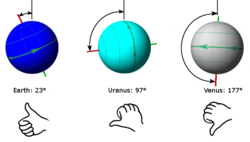
地球の傾きと季節のメカニズム
地球の公転面は「黄道面」と呼ばれ、この面と天の赤道とのなす角が黄道傾斜角(ギリシャ文字の $\epsilon$ で表記)です。現在の地球の傾きは約23.44度です。地球が太陽の周りを一周する間、この自転軸の向きは背景の星々に対してほぼ一定に保たれます。これを軸平行と呼びます。
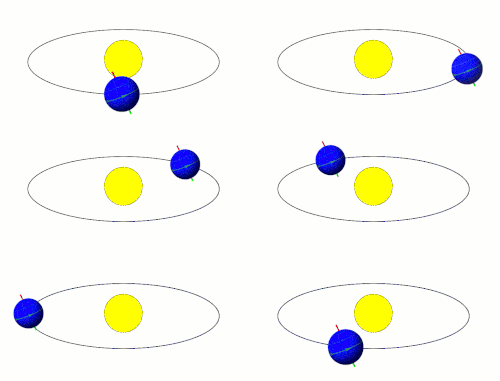
軸が一定方向を向いたまま公転するため、ある時期には北極が太陽方向に向き、半年後には南極が太陽方向に向くことになります。このため、太陽光が降り注ぐ角度と時間が地域によって変動し、私たちが経験する「季節」が生まれます。北半球が夏になるのは、北極側が太陽に向いているときです。
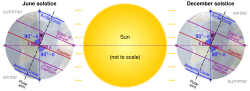
傾きの変動と長期的な気候への影響
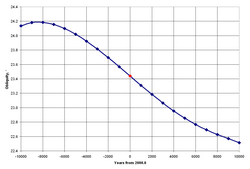
地球の傾きは固定された数値ではなく、長い年月をかけて緩やかに変動しています。短期的には、月や地球の公転に伴うわずかな振動(章動)が発生しますが、長期的には数万年単位のサイクルで変動します。過去500万年間、地球の傾きは約22.1度から24.5度の間で変動しており、その平均周期は約41,040年とされています。
このような傾きの変化は、太陽エネルギーの分布を変えるため、長期的な気候変動(ミランコビッチ・サイクルなど)に深く関わっています。また、月が地球の自転軸を安定させる役割を果たしていることも分かっています。もし月が存在しなければ、地球の傾きは数百万年で90度に達するなど、極めて不安定な状態になっていた可能性があります。
太陽系および系外惑星の多様な傾き
太陽系の惑星は、それぞれ異なる傾きを持っています。水星や金星は太陽の潮汐力によって安定していますが、火星の傾きは数百万年単位で0度から60度まで激しく変動し、カオス的な状態にあると考えられています。一方、天王星は極端に傾いており、ほぼ横倒しの状態で公転しているのが特徴です。
また、太陽系外の惑星(系外惑星)の研究も進んでいます。2024年までにいくつかの惑星で傾きが測定されており、中には天王星のように約90度傾いている「VHS 1256 b」のようなスーパー・ジュピターも発見されています。低質量星のハビタブルゾーンにある惑星では、潮汐力によって傾きが消失しやすく、地球のような季節の変化を持たない可能性が指摘されています。
主要データのまとめ
| 天体名 | 自転軸の傾き (度) | 特徴 |
|---|---|---|
| 水星 | 0.03 | ほぼ垂直で非常に安定 |
| 金星 | 2.64 (または177) | 逆回転に近い状態 |
| 地球 | 23.44 | 明確な四季を形成 |
| 火星 | 25.19 | 長期的に大きく変動 |
| 木星 | 3.13 | 傾きが小さい |
| 土星 | 26.73 | 地球に近い傾き |
| 天王星 | 82.23 (または97) | ほぼ横倒しの回転 |
| 海王星 | 28.32 | 比較的安定した傾き |
Key Facts
- 自転軸の傾きとは、回転軸と公転面垂直線とのなす角のこと。
- 地球の現在の傾きは約23.44度であり、これが四季を生む原因である。
- 軸平行により、公転位置に関わらず自転軸が同じ方向を向くため、季節が変動する。
- 地球の傾きは約41,000年周期で変動し、長期的な気候に影響を与える。
- 月の存在が地球の自転軸を安定させ、極端な変動を防いでいる。
- 天王星のように極端な傾きを持つ惑星や、火星のように変動が激しい惑星が存在する。
Frequently Asked Questions
自転軸の傾きが0度になるとどうなりますか?
自転軸が公転面に対して完全に垂直になるため、太陽光が降り注ぐ角度が一年中変わらなくなります。その結果、地球のような季節の移り変わりは消失します。
なぜ地球の傾きは一定ではないのですか?
他の惑星からの重力的な摂動(影響)を受けるためです。これにより、黄道面自体がわずかに移動し、結果として傾きの数値が長期的に変動します。
金星の傾きが「3度」と「177度」の2通りに表記されるのはなぜですか?
定義が異なるためです。地球の北極方向を基準にすると約3度ですが、自転方向から定義する「右手の法則(正の極)」を用いると、逆さまに回転しているため約177度となります。
月がなかったら地球の気候はどうなっていたでしょうか?
月による安定化作用がなくなるため、自転軸が激しく変動したと考えられます。最悪の場合、軸が90度近くまで傾き、極端に過酷な気候変動が繰り返されていた可能性があります。
系外惑星にも地球のような季節はありますか?
惑星の傾きがあれば季節は生じますが、小さな星の近くにある惑星では潮汐力によって傾きが消し去られる傾向があり、季節を持たないケースが多いと予測されています。
References
- As measured at 16° latitude (the Sun's rotation varies with latitude).
- With respect to the of 1850.
- With respect to the ecliptic; the Moon's orbit is inclined 5.16° to the ecliptic.
- From the origin of the radio emissions; the visible clouds generally rotate at different rate.
- NASA lists the coordinates of Pluto's positive pole; noted values have been reinterpreted to correspond to the north/negative pole.
📸 フォトギャラリー