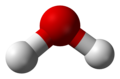
The water molecule has this basic geometric structure
← ホームへ戻る
H2O化学的性質物理的特性水素結合

水(H2O)の科学的特性:分子構造から物理的性質まで

🗓 2026年8月10日

地球上のあらゆる生命に不可欠なは、化学式 H2O で表される単純な組成を持ちながら、極めてユニークな物理的・化学的性質を備えています。単なる液体ではなく、温度や圧力によって固体(氷)や気体(水蒸気)へと姿を変え、それぞれの状態で異なる挙動を示します。

Key Facts

  • 化学組成: 2つの水素原子と1つの酸素原子からなる分子。
  • 特異な密度: 約4°Cで最大密度となり、氷になると密度が低下して水に浮く。
  • 高い溶解力: 極性を持つため「万能溶媒」として多くの物質を溶解させる。
  • 相転移: 0°Cで凝固し、100°C(1気圧下)で沸騰する。
  • 表面張力: 水素結合により強い凝集力を持ち、液面で高い張力を生む。

水の分子構造と化学的基礎

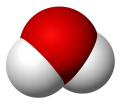
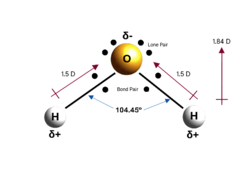
水の分子は、酸素原子を中心に2つの水素原子が折れ線型に結合した構造をしています。この幾何学的な形状により、分子全体として電荷の偏り(ダイポールモーメント)が生じ、電気的な極性を持つことになります。
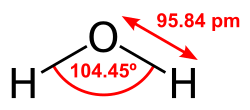
The water molecule has this basic geometric structure

この極性があるため、ある分子の水素側(正電荷)と別の分子の酸素側(負電荷)が引き付け合い、水素結合と呼ばれる強力な分子間相互作用を形成します。これが水の多くの特異な性質の根源となっています。
Ball-and-stick model of a water molecule
Space filling model of a water molecule
Water molecule - structure and dipole moment

化学的な名称としては、IUPACによる推奨名は「Water」ですが、系統名では「Oxidane」と呼ばれます。また、パロディ的な名称として「一酸化二水素(DHMO)」と呼ばれることもあります。

物理的状態と相変化

水は温度と圧力に応じて、液体、固体、気体の3つの相の間を遷移します。特に注目すべきは三重点であり、特定の圧力(611.657 Pa)と温度(0.01 °C)において、これら3つの相が同時に安定して共存します。
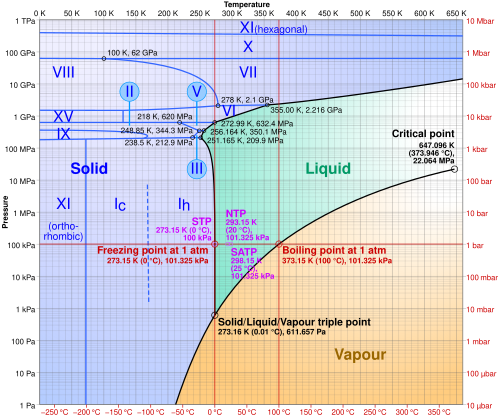
The solid/liquid/vapor triple point of liquid water, ice Ih, and water vapor in the lower left portion of a water phase diagram.

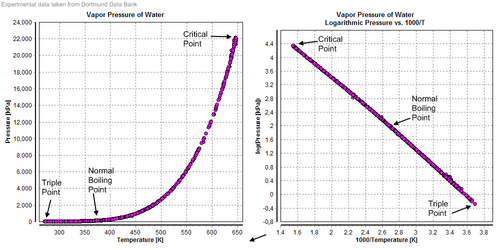
また、水の蒸気圧は温度の上昇とともに増加し、特定の条件下で飽和状態に達します。
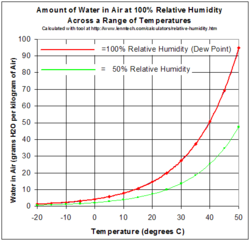
Red line shows saturation
Vapor pressure diagrams of water

熱力学的な観点では、水は高い比熱容量と蒸発熱を持っており、これが地球の気候調節に重要な役割を果たしています。
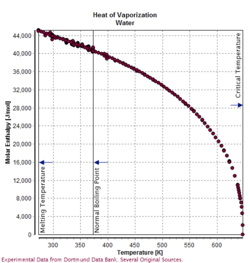
Heat of vaporization of water from melting to critical temperature

密度と温度の特異な関係

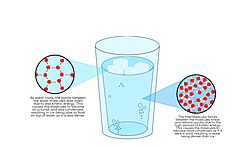
多くの物質は液体から固体になると密度が増しますが、水は例外的に氷になると密度が減少します。これは、凍結時に水素結合によって隙間の多い六方晶系の結晶構造を作るためです。
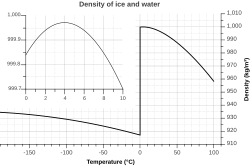
Density of ice and water as a function of temperature
The difference in the molecular structures of water and ice

液体状態では、約3.98°Cで密度が最大になります。この性質により、冬場の湖や池では冷たい水が表面に上がり、底の方には比較的暖かい水が留まるという温度分布が形成され、水生生物の生存を可能にしています。
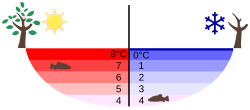
Temperature distribution in a lake in summer and winter
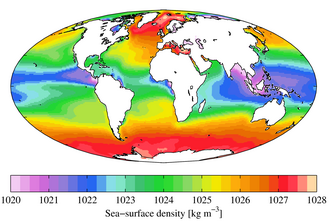
WOA surface density

表面張力と毛細管現象

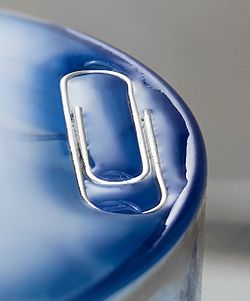
水分子同士が強く引き付け合う「凝集力」と、他の物質の表面に引き付けられる「付着力」により、水は顕著な表面張力を示します。これにより、液面が盛り上がったり、小さな昆虫が水面に浮いたりすることが可能です。
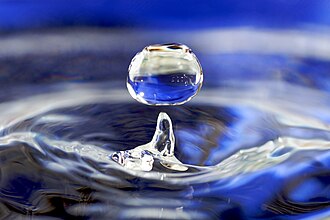
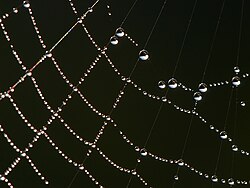
A drop of water falling toward water in a glass
Dew drops adhering to a spider web
This paper clip is under the water level, which has risen gently and smoothly. Surface tension prevents the clip from submerging and the water from overflowing the glass edges.

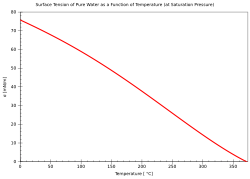
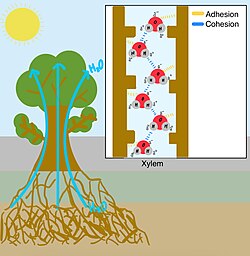
表面張力は温度に依存し、温度が上がると低下する傾向にあります。また、この凝集力と付着力の組み合わせは、植物が根から高い場所まで水を吸い上げる毛細管現象の原動力となっています。
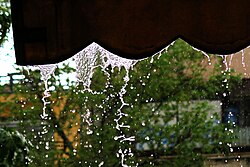
Rain water flux from a canopy. Among the forces that govern drop formation: surface tension, cohesion, van der Waals force, Plateau–Rayleigh instability.
Temperature dependence of the surface tension of pure water
This diagram illustrates capillary action in plants, which allows water to move upward through the xylem from the roots to the leaves. This upward movement is driven by cohesion (hydrogen bonds between the partial positive of one water molecule to the partial negative of another water molecule) and adhesion (attraction between water molecules to other polar molecules). The inset on the top right shows a close-up of these molecular interactions. Blue dashed lines represent hydrogen bonds between water molecules (cohesion), while yellow dashed lines indicate the adhesive forces between water and the xylem wall (adhesion). Together, cohesion and adhesion generate the capillary action and tension required to pull water up through the plant during transpiration.

溶媒としての性質と化学反応

水は極性が高いため、イオン化合物や他の極性分子を容易に溶解させることができます。例えば、石灰分などの溶解物によって、滝の水が鮮やかなターコイズブルーに見えることがあります。
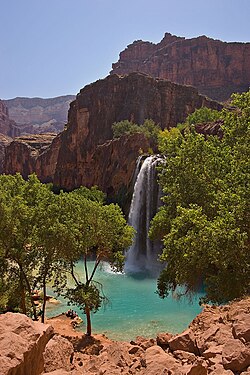
Presence of colloidal calcium carbonate from high concentrations of dissolved lime turns the water of Havasu Falls turquoise.

化学的には、水は自己電離してヒドロニウムイオン(H3O+)と水酸化物イオン(OH−)を生成します。また、反応相手によって酸としても塩基としても機能する両性物質としての性質を持ちます。

さらに、水分子は他の金属錯体などの結晶構造内においても、格子水として重要な役割を果たし、水素結合ネットワークを構築します。
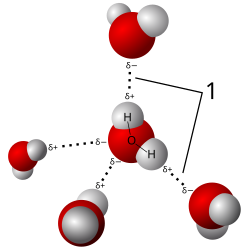
Model of hydrogen bonds (1) between molecules of water
Some hydrogen-bonding contacts in FeSO4.7H2O. This metal aquo complex crystallizes with one molecule of "lattice" water, which interacts with the sulfate and with the [Fe(H2O)6]2+ centers.

水の基本特性まとめ

水の物理化学的データ一覧
項目 数値・特性
化学式 / モル質量 H2O / 18.015 g·mol
融点 / 沸点 0.00 °C / 99.98 °C (1 atm)
最大密度温度 約 3.98 °C
屈折率 (20 °C) 1.3330
pKa / pKb 13.995 / 13.995
危険性 (NFPA 704) 0-0-0 (非引火性)
NFPA 704 four-colored diamond

Frequently Asked Questions

なぜ氷は水に浮くのですか?

水が凍って氷になると、水素結合によって分子が規則正しく並び、液体状態よりも隙間の多い構造になります。その結果、体積が増え密度が低くなるため、液体である水よりも軽くなり、表面に浮くことになります。

「万能溶媒」と呼ばれるのはなぜですか?

水分子が強い極性(電気的な偏り)を持っているため、塩などのイオン性物質や、糖などの極性を持つ分子を効率よく取り囲んで分散させることができるからです。

三重点とは具体的にどのような状態ですか?

非常に限定的な温度(0.01 °C)と圧力(611.657 Pa)において、氷(固体)、水(液体)、水蒸気(気体)の3つの相が互いに平衡状態で同時に存在できる点のことです。

水の表面張力はどのようにして生まれますか?

水分子同士が水素結合によって強く引き付け合うため、液体の内部では全方向から引かれていますが、表面の分子は内側からのみ引かれます。これにより、表面積を最小限にしようとする強い力が働き、膜のような張力が生まれます。

水は酸ですか、それとも塩基ですか?

水は「両性物質」であり、反応する相手によってどちらの性質も示します。例えば、アンモニアと反応する際は水素イオンを供与するため酸として振る舞います。

References

  1. (VSMOW), used for calibration, melts at 273.150089(10) K (0.000089(10) °C, and boils at 373.1339 K (99.9839 °C). Other isotopic compositions melt or boil at slightly different temperatures.
  2. A commonly quoted value of 15.7 used mainly in organic chemistry for the pKa of water is incorrect.
  3. H+
    represents H
    3O+
    (H
    2O)
    n and more complex ions that form.
  4. Negative thermal expansion is also observed in . Also, fairly pure silicon has a negative coefficient of thermal expansion for temperatures between about 18 and 120 .
  5. Other substances that expand on freezing are ( of 1,687 K (1,414 °C; 2,577 °F)), (melting point of 303 K (30 °C; 86 °F), (melting point of 1,211 K (938 °C; 1,720 °F)), and (melting point of 545 K (272 °C; 521 °F))
  6. (1-0.95865/1.00000) × 100% = 4.135%
  7. resulting from the .
  8. The source gives it as 0.0072°C/atm. However the author defines an as 1,000,000 dynes/cm2 (a ). Using the standard definition of atmosphere, 1,013,250 dynes/cm2, it works out to 0.0073°C/atm.
  9. Using the fact that 0.5/0.0073 = 68.5.
  10. Both acid and base names exist for water because it is (able to react both as an acid or an alkali).

📸 フォトギャラリー

The water molecule has this basic geometric structure
Ball-and-stick model of a water molecule
Space filling model of a water molecule
A drop of water falling toward water in a glass
NFPA 704 four-colored diamond
Heat of vaporization of water from melting to critical temperature
Density of ice and water as a function of temperature
The difference in the molecular structures of water and ice
Temperature distribution in a lake in summer and winter
WOA surface density
Red line shows saturation
Vapor pressure diagrams of water
The solid/liquid/vapor triple point of liquid water, ice Ih, and water vapor in the lower left portion of a water phase diagram.
Water molecule - structure and dipole moment
Dew drops adhering to a spider web
Rain water flux from a canopy. Among the forces that govern drop formation: surface tension, cohesion, van der Waals force, Plateau–Rayleigh instability.
This paper clip is under the water level, which has risen gently and smoothly. Surface tension prevents the clip from submerging and the water from overflowing the glass edges.
Temperature dependence of the surface tension of pure water
This diagram illustrates capillary action in plants, which allows water to move upward through the xylem from the roots to the leaves. This upward movement is driven by cohesion (hydrogen bonds between the partial positive of one water molecule to the partial negative of another water molecule) and adhesion (attraction between water molecules to other polar molecules). The inset on the top right shows a close-up of these molecular interactions. Blue dashed lines represent hydrogen bonds between water molecules (cohesion), while yellow dashed lines indicate the adhesive forces between water and the xylem wall (adhesion). Together, cohesion and adhesion generate the capillary action and tension required to pull water up through the plant during transpiration.
Presence of colloidal calcium carbonate from high concentrations of dissolved lime turns the water of Havasu Falls turquoise.
Model of hydrogen bonds (1) between molecules of water
Some hydrogen-bonding contacts in FeSO4.7H2O. This metal aquo complex crystallizes with one molecule of "lattice" water, which interacts with the sulfate and with the [Fe(H2O)6]2+ centers.