かつて月は完全に乾燥した世界であると考えられてきました。しかし、近年の探査技術の向上により、月にはさまざまな形態で水が存在することが明らかになっています。水は将来の月面基地における飲料水やロケット燃料の原料となるため、その分布と性質の解明は人類の宇宙進出において極めて重要な意味を持っています。
Key Facts
- 存在形態: 液体としての水ではなく、氷の粒、鉱物への化学的結合(水和物・水酸化物)、および極めて希薄な大気中の分子として存在。
- 主要な分布域: 両極の「永久影(太陽光が全く当たらない領域)」に水氷が集中している可能性が高い。
- 含有量: レゴリス(月表面の堆積層)中の吸着水は10〜1000ppm程度と推定される。
- 供給源: 彗星や小惑星の衝突による外部からの供給、および太陽風の水素イオンと月面の酸素含有鉱物の反応による現地生成。
月の水がたどった認識の変遷
19世紀、天文学者のヴィルヘルム・ベールとヨハン・ハインリヒ・メードラーは、月面に水や有意な大気は存在しないと結論づけました。その後、アポロ計画で回収された土壌サンプルからも、月は概ね無水状態であると考えられてきました。太陽光にさらされた水蒸気は分解され、水素と酸素が宇宙空間へ逃げてしまうためです。
しかし、20世紀後半から21世紀にかけて、ロボット探査機による観測がこの定説を覆しました。1998年に打ち上げられたルナ・プロスペクターは、中性子分光計を用いて極域のレゴリスに高濃度の水素が存在することを検出し、これが水氷の存在を示唆していると解釈されました。
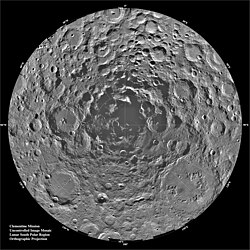
水氷の分布と「コールドトラップ」の仕組み
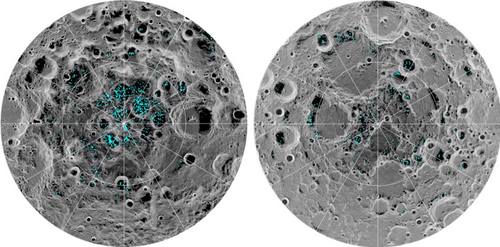
月の北極と南極にある深いクレーターの底は、太陽光が永遠に届かない「永久影」となっており、極低温の状態が維持されています。ここは蒸発した水分子が集積するコールドトラップ(低温の罠)として機能しており、水氷が安定して存在できる唯一の場所と考えられています。
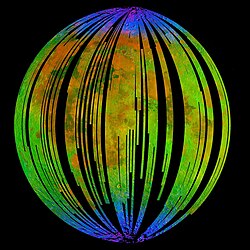
インドの探査機チャンドラヤーン1号に搭載されたMoon Mineralogy Mapper (M3) のデータにより、両極の緯度20度以内で表面に近い水氷の直接的な証拠が得られました。北極では氷がパッチ状に点在し、南極ではより集中して存在している傾向があります。
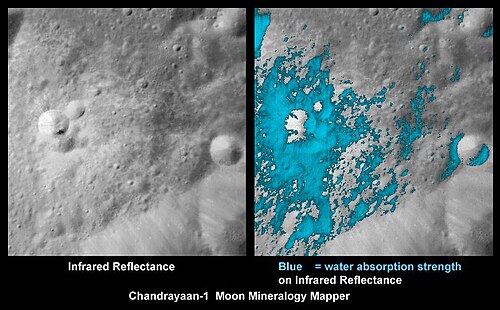
また、M3の観測では、若いクレーターの内部に水が存在する兆候も捉えられています。
化学的結合と多様な水の形態
月面の水は、単なる氷の塊としてだけではなく、より複雑な化学形態で存在しています。多くの水分子(H2O)や水酸基(-OH)は、鉱物の中に水和物や水酸化物として組み込まれています。具体的には、ガラス質やアパタイト、そして地球上の熱水活動付近で見られるノボグラブレノバイト((NH4)MgCl3・6H2O)などの鉱物が確認されています。
また、中国の嫦娥5号が回収したガラスビーズの分析では、内部に水が閉じ込められていることが判明し、新たな保存メカニズムの可能性が示されました。さらに、アポロ17号が回収した火山起源の「オレンジ色のガラス土壌」の中からも、数億年前の噴火時に取り込まれた水が検出されています。
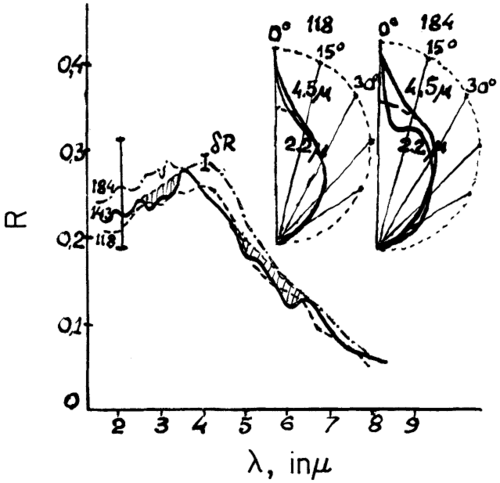
探査ミッションによる直接的な証拠
NASAのLCROSSミッションでは、意図的にクレーターへ衝突体(インパクター)を激突させ、舞い上がった噴煙を分析しました。その結果、レゴリスに混在する純度の高い結晶質水氷と思われる水酸基が検出され、質量比で5.6 ± 2.9%という具体的な濃度が算出されました。
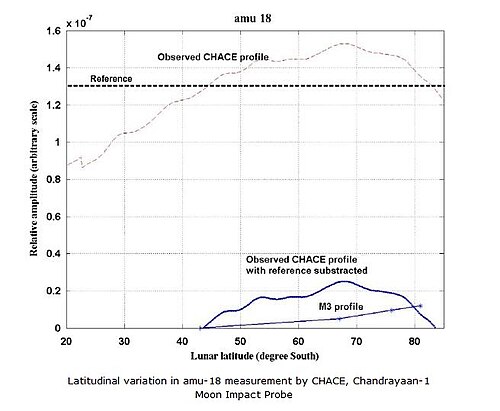
また、LCROSSは水以外にも、一酸化炭素、硫化水素、アンモニア、メタンなどの多様な揮発性物質を検出しており、月の化学組成の複雑さを浮き彫りにしました。
月面水の概要まとめ
| 形態 | 主な分布場所 | 特徴・性質 |
|---|---|---|
| 水氷 (Ice) | 極域の永久影クレーター | レゴリスに混在する小さな塊(10cm未満)として存在 |
| 水和物・水酸化物 | 月面全域(低濃度) | 鉱物(ガラス、アパタイト等)に化学的に結合 |
| 吸着水 | 日照面を含む表面層 | 10〜1000ppmの極低濃度で存在 |
| 水蒸気・分子 | 極めて希薄な大気中 | CHACEなどの分光計により検出 |
Frequently Asked Questions
月には湖や川のような液体としての水はありますか?
いいえ、存在しません。月面は気圧がほぼゼロで温度変化が激しいため、液体としての水はすぐに蒸発するか凍結します。水は氷または鉱物結合という形でのみ存在しています。
月にある水はどこから来たのでしょうか?
主に2つの説があります。一つは、水を含んだ彗星や小惑星が衝突した際にもたらされたという説。もう一つは、太陽風から飛来した水素イオンが月面の酸素を含む鉱物と反応して現地で生成されたという説です。
「永久影」とは具体的にどのような場所ですか?
月の極域にある深いクレーターの底などで、地形的な遮蔽により太陽光が永久に届かない領域のことです。ここは極めて低温に保たれているため、揮発しやすい水分子が氷として蓄積される「コールドトラップ」となります。
月面の水は将来どのように利用されますか?
飲料水としての利用はもちろん、水を電気分解して得られる水素と酸素は、ロケットの推進剤(燃料および酸化剤)として利用できるため、地球からの輸送コストを大幅に削減できる資源として期待されています。
水氷は地表に一面に広がっているのでしょうか?
いいえ。観測データによれば、厚い氷の層が広がっているのではなく、レゴリス(砂のような堆積物)の中に10センチメートル未満の小さな氷の粒が混ざっている状態であると考えられています。
References
- "The Moon". nssdc.gsfc.nasa.gov. Retrieved 2022-07-07.
- Water and Ices on the Moon", science.nasa.gov, fetched 11 June 2024
- "Ice Confirmed at the Moon's Poles". NASA Jet Propulsion Laboratory (JPL). Retrieved 2023-04-13.
- Water on the Moon: Direct evidence from Chandrayaan-1's Moon Impact Probe. Published on 2010/04/07.
- Pinson, Jerald (2020-11-20). "Moon May Hold Billions of Tons of Subterranean Ice at Its Poles". Eos. 101. :10.1029/2020eo151889.
- Akhmanova, M; Dement'ev, B; Markov, M (February 1978). "Water in the regolith of Mare Crisium (Luna-24)?". Geokhimiya (in Russian) (285).
- Akhmanova, M; Dement'ev, B; Markov, M (1978). "Possible Water in Luna 24 Regolith from the Sea of Crises". Geochemistry International. 15 (166).
- Pieters, C. M.; Goswami, J. N.; Clark, R. N.; Annadurai, M.; Boardman, J.; Buratti, B.; Combe, J. -P.; Dyar, M. D.; Green, R.; Head, J. W.; Hibbitts, C.; Hicks, M.; Isaacson, P.; Klima, R.; Kramer, G.; Kumar, S.; Livo, E.; Lundeen, S.; Malaret, E.; McCord, T.; Mustard, J.; Nettles, J.; Petro, N.; Runyon, C.; Staid, M.; Sunshine, J.; Taylor, L. A.; Tompkins, S.; Varanasi, P. (2009). "Character and Spatial Distribution of OH/H2O on the Surface of the Moon Seen by M3 on Chandrayaan-1". Science. 326 (5952): 568–572. :2009Sci...326..568P. :10.1126/science.1178658. 19779151.
- "Is There an Atmosphere on the Moon? | NASA". nasa.gov. 7 June 2013. Retrieved 2015-05-25.
- "NASA - SOFIA discovers water on sunlit surface of the Moon". NASA. 26 October 2020.
📸 フォトギャラリー