私たちの呼吸する空気の約78%を占める窒素は、地球上で最もありふれた純粋元素の一つです。無色・無臭・無味のガスとして存在するこの元素は、一見すると化学的に不活性で地味な存在に思えますが、その実態は極めて強力な結合エネルギーと、多様な酸化状態を持つダイナミックな化学的側面を併せ持っています。
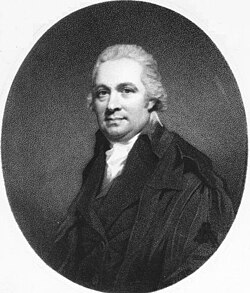
窒素の歴史を紐解くと、1772年にダニエル・ラザフォードによって発見され、後にジャン=アントワーヌ・シャプタルによって命名されました。自然界では主に二原子分子(N2)として存在し、その安定性は現代の産業から宇宙科学まで幅広く応用されています。
Key Facts
- 大気組成: 地球の大気体積の約78.1%を占める主成分である。
- 強力な結合: 窒素分子(N2)は非常に強い三重結合を持ち、常温では極めて安定している。
- 物理的状態: 沸点は−195.795 °Cであり、極低温では液体や固体となる。
- 多様な酸化数: −3から+5まで幅広い酸化状態を取り、多種多様な化合物を形成する。
- 宇宙での存在: 地球だけでなく、冥王星の表面など太陽系外の天体にも固体として存在する。
窒素の原子構造と物理的特性
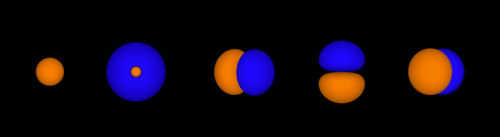
窒素は周期表の第2周期、第15族(窒素族)に属するpブロック元素です。原子番号は7で、電子配置は[He] 2s2 2p3となります。この電子構造により、窒素は他の元素と共有結合を形成しやすく、特に2つの窒素原子が結合したN2分子では、非常に短い結合距離(109.76 pm)と高い解離エネルギー(945.41 kJ/mol)を持つ三重結合を形成します。

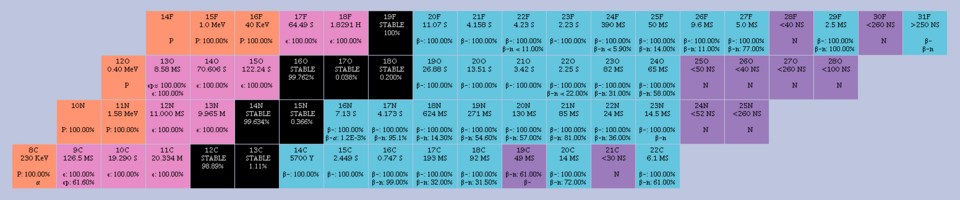
この強固な結合こそが、窒素が常温で反応しにくい理由です。しかし、リチウムなどの特定の金属や遷移金属錯体とは反応することが知られています。また、核種としての特性を見ると、安定同位体として14N(約99.6%)と15N(約0.38%)が存在します。
物理的特性のまとめ
| 特性項目 | 数値 / 内容 |
|---|---|
| 標準原子量 | 14.007 ± 0.001 |
| 融点 | 63.23 K (−209.92 °C) |
| 沸点 | 77.355 K (−195.795 °C) |
| 密度 (STP) | 1.2506 g/L (0 °C, 1013 mbar) |
| 結晶構造 | 六方晶系 (hP4) |
| 磁性 | 反磁性 |
窒素の化学と多様な化合物
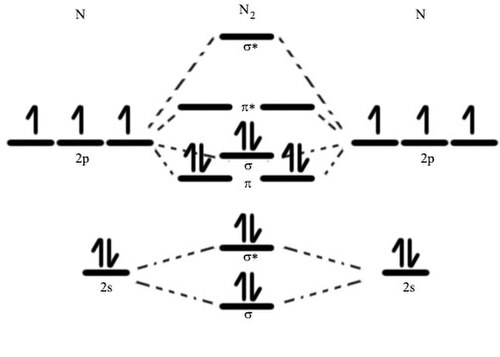
窒素は単体では安定していますが、化合物になるとその表情を大きく変えます。分子軌道論的な視点で見ると、N2分子は5つの結合性軌道と2つの反結合性軌道を持ち、結合次数は3となります。
窒化物と水素化物
窒素が金属と結合して形成されるのが窒化物です。例えば、カルシウムやマグネシウムとの反応でそれぞれ窒化カルシウム(Ca3N2)や窒化マグネシウム(Mg3N2)が生成されます。また、水素との化合物である水素化物の中でも、アンモニア(NH3)のほか、ロケット燃料としても利用されるヒドラジン(N2H4)や、反応性の高いアジ化水素(HN3)などが重要です。
酸化物と酸・塩
窒素は酸素と結合し、一酸化窒素(NO)から五酸化二窒素(N2O5)まで、少なくとも9種類の分子状酸化物を形成します。これらの多くは熱的に不安定であり、分解して元素に戻る性質があります。また、亜硝酸(HNO2)や硝酸(HNO3)といったオキソ酸を形成し、これらは水溶液中で重要な化学反応を担います。
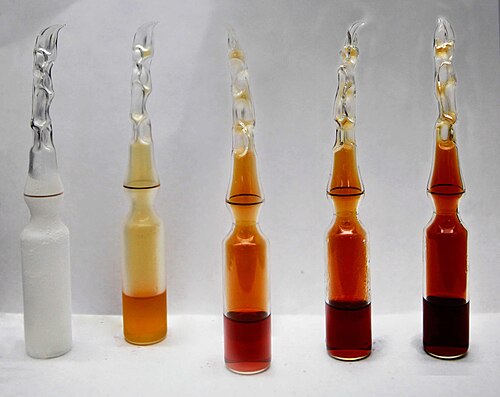
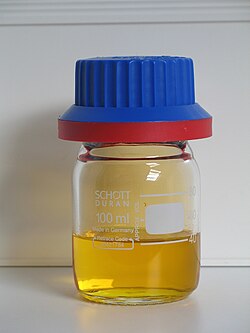
特に硝酸塩は、かつては天然の硝石(硝酸カリウム)やチリ硝石(硝酸ナトリウム)から得られていましたが、現在は工業的なアンモニア合成を通じて大量に生産されています。
特殊な錯体と有機窒素化合物
遷移金属との結合による窒素錯体も研究されており、最初に見つかったのはペンタアミン(ジ窒素)ルテニウム(II)錯体です。また、ボラジン((–BH–NH–)3)のような、ベンゼンに似た構造を持つ化合物も存在します。
![Structure of [Ru(NH3)5(N2)]2+ (pentaamine(dinitrogen)ruthenium(II)), the first dinitrogen complex to be discovered](/images/e4/76/e476da4d2e783679727c9aa577f046bb9ff5d5de98d824c7aca7e17f46b879b0.png)

自然界における存在と応用
地球上では大気に大量に存在しますが、地殻中の含有量は極めて少なく(約19 ppm)、ニオブやガリウムと同程度です。しかし、生物にとって窒素は不可欠な元素であり、土壌や水圏を通じて循環する窒素サイクルを形成しています。
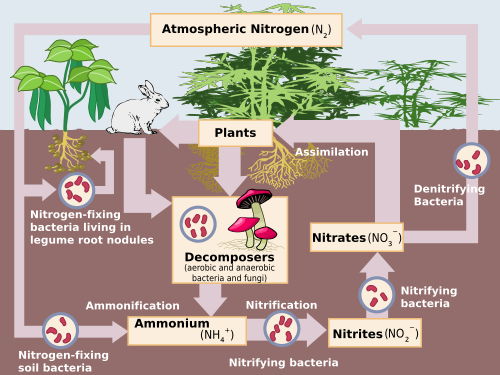
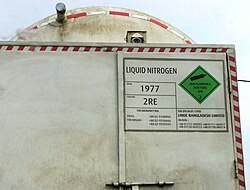
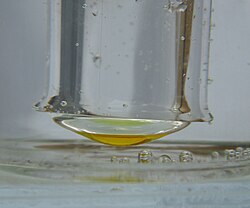
産業面では、極低温の液体窒素が冷凍保存や医療用の凍結療法に利用されています。液体窒素は−196 °Cという極低温を維持できるため、特殊な断熱容器(デュワー瓶)を用いて輸送・保管されます。
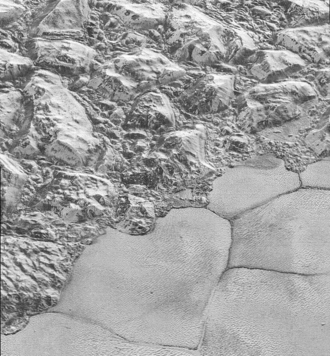
さらに、宇宙空間においても窒素は重要な役割を果たしており、冥王星のスピートニク平原では、水氷の山々の隣に固体窒素が広がっている様子が観測されています。
化学的反応性の指標
窒素含有種の標準還元電位は、pH環境によって大きく変動します。これは、窒素が環境に応じて多様な酸化状態(−3から+5)を使い分ける能力を持っていることを示しています。
![Standard reduction potentials for nitrogen-containing species. Top diagram shows potentials at pH 0; bottom diagram shows potentials at pH 14.[57]](/images/9f/a7/9fa76d39fe01f1a8473c03757c2b77661f118f96a822a5da932d199baaf52026.webp)
Frequently Asked Questions
なぜ窒素ガスは化学的に安定しているのですか?
窒素分子(N2)が2つの原子間で非常に強力な三重結合を形成しているためです。この結合を切断して反応させるには非常に大きなエネルギーが必要であり、そのため常温ではほとんどの物質と反応しません。
液体窒素を扱う際の注意点は何ですか?
極低温であるため、直接触れると深刻な凍傷を引き起こします。また、密閉容器に入れると気化して圧力が急上昇し、容器が破裂する危険があるため、適切な換気と専用の容器(デュワー瓶)の使用が不可欠です。
窒素サイクルとは何ですか?
大気中の窒素が、細菌などの働きによってアンモニアや硝酸塩に変換され、植物に吸収された後、再び大気中に戻る一連の循環プロセスを指します。これにより、生物は利用不可能なN2ガスから必要な窒素成分を取り出すことができます。
窒素の同位体にはどのようなものがありますか?
天然に安定して存在する同位体として、主要な14N(約99.6%)と、少量の15N(約0.38%)があります。これらは化学的性質はほぼ同じですが、質量が異なるため、同位体分析などの研究に利用されます。
References
- "Standard Atomic Weights: Nitrogen". . 2009.
- Prohaska, Thomas; Irrgeher, Johanna; Benefield, Jacqueline; Böhlke, John K.; Chesson, Lesley A.; Coplen, Tyler B.; Ding, Tiping; Dunn, Philip J. H.; Gröning, Manfred; Holden, Norman E.; Meijer, Harro A. J. (2022-05-04). "Standard atomic weights of the elements 2021 (IUPAC Technical Report)". Pure and Applied Chemistry. :10.1515/pac-2019-0603. 1365-3075.
- Lide, David R. (1990–1991). CRC Handbook of Physics and Chemistry (71st ed.). Boca Raton, Ann Arbor, Boston: CRC Press, inc. pp. 4-22 (one page).
- "Gases - Density". The Engineering Toolbox. Retrieved 27 January 2019.
- ; Earnshaw, Alan (1997). Chemistry of the Elements (2nd ed.). Butterworth-Heinemann. p. 28. :10.1016/C2009-0-30414-6. .
- contain a pair of double-bonded nitrogen atoms with oxidation state 0 in the ring. A Synthesis of the parent 1H-tetrazole, CH2N4 (two atoms N(0)) is given in Henry, Ronald A.; Finnegan, William G. (1954). "An Improved Procedure for the Deamination of 5-Aminotetrazole". Journal of the American Chemical Society. 76 (1): 290–291. :1954JAChS..76..290H. :10.1021/ja01630a086. 0002-7863.
- Arblaster, John W. (2018). Selected Values of the Crystallographic Properties of Elements. Materials Park, Ohio: ASM International. .
- Kondev, F. G.; Wang, M.; Huang, W. J.; Naimi, S.; Audi, G. (2021). "The NUBASE2020 evaluation of nuclear properties" (PDF). Chinese Physics C. 45 (3) 030001. :10.1088/1674-1137/abddae.
- Common Bond Energies (D) and Bond Lengths (r) Archived 2010-05-15 at the . wiredchemist.com
- Greenwood and Earnshaw, pp. 406–07
📸 フォトギャラリー