地球の地殻内には、マグマが移動し、蓄積されるための複雑なネットワークが存在します。これを火山・火成岩配管システム(VIPS: Volcanic and Igneous Plumbing Systems)と呼びます。このシステムは、海嶺や沈み込み帯、マントルプルームといったあらゆる活動的なテクトニクス環境に見られ、地殻やマントルで生成されたマグマを地表や浅層へと運ぶ重要な役割を担っています。
マグマの旅は、岩石の一部が溶ける「部分溶融」から始まり、その後、液体成分が固体から分離して抽出され、地殻内の通路を上昇します。最終的に上昇が止まった場所で、その形状や深さに応じた多様な火成岩体が形成されます。
![Schematic sketch of the volcanic and igneous plumbing systems (after Burchardt, 2018).[1][2]](/images/37/c1/37c1d3408ffd921618d6fb8904433b677ffccd676cd5cd27cdf97199aab118bc.png)
Key Facts
- VIPSは、マグマの通路(チャネル)と貯留槽(チャンバー)からなる相互接続ネットワークである。
- マグマの生成は部分溶融によって始まり、温度、圧力、揮発性成分、母岩の組成に左右される。
- 輸送メカニズムには、大量のマグマが塊として上昇するダイアピルと、狭い割れ目を伝わるチャネル状上昇がある。
- 定着したマグマは、その形態により深成岩体(プルトン)、岩床(シル)、ラコリス、ロポリスに分類される。
マグマの生成と抽出プロセス
部分溶融のメカニズム
マグマ生成の第一段階は部分溶融です。大陸地殻では、下部地殻や上部マントルの岩石が溶けてフェルシック(珪長質)マグマが作られます。一方、海洋地殻では、マントル物質が上昇する際に圧力が下がることで融点が低下し、玄武岩質マグマが生成される「減圧溶融」が起こります。
分離と抽出のステップ
生成された溶融体(メルト)が母岩から離れるプロセスを分離(Segregation)と呼びます。これは主に重力による圧密作用で起こり、岩石の粒界にメルトの液滴が集まり、プール状に繋がっていきます。メルトの割合が約7%(第一浸透閾値)に達すると移動が始まり、さらに26%〜30%(第二浸透閾値)に達すると母岩の構造が崩壊し、効率的な抽出(Extraction)が可能になります。
![Microscopic view of melt segregation and extraction.[6][7][8] When the source rock experiences compaction, minerals start to melt at grain boundaries. Melt droplets then build up and connect into melt pools until they are being extracted.](/images/59/2d/592d7f9b6a378dfe17de292bf30570ad1c9b309dd7eed51d50f5371d39213609.png)
抽出の速度や形態は、チャネルネットワークの接続性に依存します。ネットワークが高度に発達していればパルス状に急速に抽出され、定常的に発達していれば連続的に排出されます。この抽出効率が、後の岩脈や深成岩体の規模を決定づけます。
マグマの上昇と輸送メカニズム
マグマを上昇させる主動力は浮力です。輸送方法は大きく分けて、塊状に上昇する方式と、狭い通路を伝う方式の2種類があります。
ダイアピルによる輸送
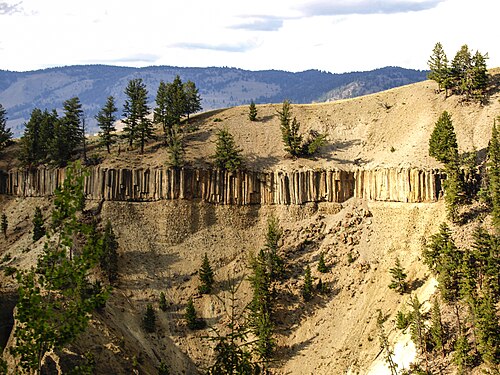
ダイアピルとは、周囲の岩石よりも密度が低く、粘性が低い高温のマグマ塊が、ドーム状に上昇する現象です。特に下部から中部地殻での主要な輸送手段であり、フェルシック・マフィック両方のマグマで見られます。最近の研究では、ダイアピルの頂部に岩脈のような領域が形成されることで屋根の岩石が軟化し、上昇が促進される「岩脈-ダイアピルハイブリッドモデル」が提唱されています。
チャネル状の上昇(岩脈と延性破砕)
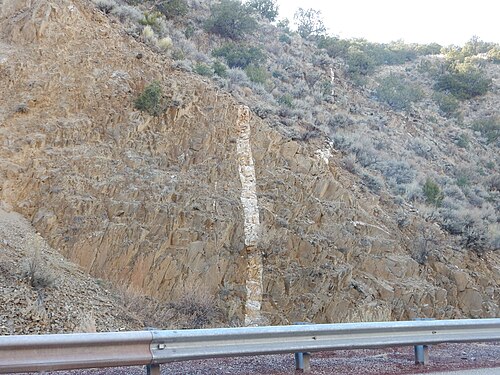
一方、岩脈(ダイク)は、地層を横切る垂直または亜垂直な割れ目にマグマが充填された構造です。岩脈は表面積が大きいため、ダイアピルよりも高速にマグマを輸送できますが、同時に冷却による結晶化も起こりやすく、多くは地中で凝固して停止します。
![End members of magma segregation, ascent, and displacement: Diapirism and Channeled ascent (after Cruden, 2018).[4] Diapirs transport melt in a large batch of magma and emplace as plutons. Transport channels transports melt in a fracture network and emplace as dykes and sills.[4]](/images/6f/f9/6ff97bfe872f1b79493ec13536e8dcbf0051f51e7bf69d198355ae0e134af7a5.png)
また、より深い地殻では、岩石が塑性変形する「クリープ」によって微小な空隙が繋がる延性破砕が起こり、これがマグマの通路となります。さらに、断層や剪断帯などの弱線も、マグマが上昇するための効率的な経路として利用されます。
マグマの定着と形成される構造
マグマの上昇が停止し、冷却・凝固することでマグマ貯留槽が形成されます。定着する深さと形状によって、以下のように分類されます。
中・下部地殻:深成岩体(プルトン)
深成岩体(プルトン)は、厚みが大きく、主に水平方向に拡大した岩体です。周囲の岩石が延性的な環境では側方および垂直方向に押し広げられますが、脆性的な環境では垂直方向への変位が主となります。底面の形状により、不規則な「楔形(ウェッジ状)」と、底面と上面がほぼ平行な「板状(タブレット状)」に分けられます。
![Shape of different magma emplacement structures: (a)sill, (b) pluton, (c) laccolith and (d) lopolith.[4] Sills are tabular sheet intrusions. Plutons are large, thick tabular bodies. Laccoliths are dome-shaped structures with elevate roofs and flat floors. Lopoliths are lenticular structures with flat roofs and depressed floors.[4]](/images/b2/ef/b2efac24627d9012a05eff61aa3c6a0a0a1c6f68f62a53c925661320564e51a5.png)
![Classification of plutons depending on the geometry of pluton floor. Wedge-shaped plutons are circular to elliptical in shape, whereas tablet-shaped plutons are in disc-shape.[22]](/images/fb/10/fb108329c0abea886a0b97ed9bca3c5302f2127cc198089b47b3b65822c0ec9d.png)
中・上部地殻:岩床、ラコリス、ロポリス
地表から3km以内の浅層では、層状の構造が発達します。
- 岩床(シル): 地層にほぼ平行に貫入する板状の構造です。層に沿った「整合的」なものから、層を突き抜ける「不整合的」なものまで多様な形態があります。
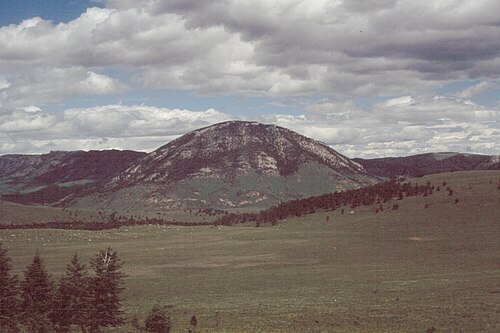
- ラコリス: 岩床が積み重なり、上部の地層を押し上げてドーム状に盛り上がった構造です。初期は岩床として広がりますが、十分なマグマ圧が高まると垂直方向に膨張します。
- ロポリス: 底面が下に凸(皿状)に沈み込んだレンズ状の貫入岩体です。底面の傾斜による「カンチレバーモデル」や、中央ブロックの沈下による「ピストンモデル」という形成説があります。
![Different geometry of sills (After Galland et al., 2018).[25][27][26] They can be concordant (parallel to layers), discordant (cutting across layers), or a mix of two.](/images/1a/5b/1a5ba1ab3ba3ace9eec202d48ddb753f1cf02228b5f9edbf05ef574f1a5e0235.png)
![Formation of a laccolith (After Morgan, 2018).[28] The joints in the country rock allow sills to intrude, stack on top of each other, and eventually lead to vertical inflation and roof lifting, forming laccoliths.[28]](/images/78/9c/789c0ad0ad490049ce77467686017ba4a9573046fa49e4a787b96596724d5b9c.png)
![Two models of lopolith formation: the cantilevel model and the pistol model (After Cruden & Weinberg, 2018).[4] In the Cantilever model, lopoliths form by tilting of the floor. In the Pistol model, lopoliths form.by vertical subsidence of the floor.[4]](/images/ef/9e/ef9e38fe697e1b7568e561e6efd1906bf5c87e5f60f9fc4518a3abbab12402a7.png)
マグマ定着構造のまとめ
| 構造名称 | 主な形状 | 定着深さ・特徴 | 地層との関係 |
|---|---|---|---|
| 深成岩体(プルトン) | 厚い板状・不規則 | 中〜下部地殻 / 大規模な岩体 | 不整合的 |
| 岩床(シル) | 薄い板状 | 上部地殻(3km以内) / 水平方向に伸展 | 主に整合的 |
| ラコリス | ドーム状(上凸) | 上部地殻 / 屋根を持ち上げる膨張 | 底面は整合的 |
| ロポリス | 皿状(下凸) | 底面の沈下を伴うレンズ状 | 整合的 |
Frequently Asked Questions
部分溶融とは具体的にどのような現象ですか?
岩石全体が一度に溶けるのではなく、温度や圧力の条件によって、融点の低い特定の鉱物から順番に溶け出す現象です。これにより、元の岩石とは異なる化学組成を持つマグマが生成されます。
岩脈(ダイク)と岩床(シル)の違いは何ですか?
最大の違いは地層に対する方向です。岩脈は地層を切り裂くように垂直または斜めに貫入しますが、岩床は地層に沿って水平方向に貫入します。
ダイアピルはどのようにして上昇するのですか?
周囲の冷たい岩石よりも温度が高く密度が低いため、浮力によってゆっくりと上昇します。粘性が低いほど、球状の塊として効率的に上昇しやすくなります。
ラコリスが形成される条件は?
まず岩床として水平に広がった後、マグマの供給が続き、その圧力が上載荷重(上の岩石の重さ)を上回ったときに、垂直方向への膨張(インフレーション)が起こることで形成されます。
ロポリスの底面が凹むのはなぜですか?
底面の岩石が傾斜して沈み込む(カンチレバーモデル)か、あるいは中央の岩盤ブロックが重みや構造的な要因で垂直に沈下する(ピストンモデル)ためと考えられています。
References
- Burchardt, S. (2018-01-01). "Introduction to Volcanic and Igneous Plumbing Systems—Developing a Discipline and Common Concepts". In Burchardt, S. (ed.). Volcanic and Igneous Plumbing Systems: Understanding Magma Transport, Storage, and Evolution in the Earth's Crust. Elsevier. pp. 1–12. :10.1016/b978-0-12-809749-6.00001-7. .
- Burchardt, S. (2009). Mechanisms of magma emplacement in the upper crust (). . 553444973.
- Mathieu, L.; van Wyk de Vries, B.; Holohan, Eoghan P.; Troll, Valentin R. (2008-07-15). "Dykes, cups, saucers and sills: Analogue experiments on magma intrusion into brittle rocks". Earth and Planetary Science Letters. 271 (1): 1–13. :2008E&PSL.271....1M. :10.1016/j.epsl.2008.02.020. 0012-821X.
- Cruden, A. R.; Weinberg, R. F. (2018-01-01). "Mechanisms of Magma Transport and Storage in the Lower and Middle Crust—Magma Segregation, Ascent and Emplacement". In Burchardt, S. (ed.). Volcanic and Igneous Plumbing Systems: Understanding Magma Transport, Storage, and Evolution in the Earth's Crust. Elsevier. pp. 13–53 [15–16]. :10.1016/B978-0-12-809749-6.00002-9. .
- Whitehead, J. A.; Luther, D. S. (1975). "Dynamics of laboratory diapir and plume models". Journal of Geophysical Research. 80 (5): 705–717. :1975JGR....80..705W. :10.1029/JB080i005p00705. 2156-2202.
- McKenzie, D. (1984-08-01). "The Generation and Compaction of Partially Molten Rock". Journal of Petrology. 25 (3): 713–765. :10.1093/petrology/25.3.713. 0022-3530.
- Brown, M.; Korhonen, F. J.; Siddoway, C. S. (2011). "Organizing Melt Flow through the Crust". Elements. 7 (4): 261–266. :2011Eleme...7..261B. :10.2113/gselements.7.4.261.
- Rosenberg, C. L.; Handy, M. R. (2005). "Experimental deformation of partially melted granite revisited: implications for the continental crust". Journal of Metamorphic Geology. 23 (1): 19–28. :2005JMetG..23...19R. :10.1111/j.1525-1314.2005.00555.x. 55243642.
- Vanderhaeghe, O. (2001-04-01). "Melt segragation [sic], pervasive melt migration and magma mobility in the continental crust: the structural record from pores to orogens". Physics and Chemistry of the Earth, Part A: Solid Earth and Geodesy. 26 (4): 213–223. :2001PCEA...26..213V. :10.1016/S1464-1895(01)00048-5. 1464-1895.
- Bons, P. D.; van Milligen, B. P. (2001-10-01). "New experiment to model self-organized critical transport and accumulation of melt and hydrocarbons from their source rocks". Geology. 29 (10): 919–922. :2001Geo....29..919B. :10.1130/0091-7613(2001)029<0919:NETMSO>2.0.CO;2. 0091-7613.
📸 フォトギャラリー