私たちは日常生活の中で、ドアを開けたり、レンチでネジを締めたりする際に、無意識に「回転させる力」を利用しています。物理学において、この物体を回転させる能力のことをトルク(Torque)と呼びます。ラテン語で「ねじる」ことを意味する言葉に由来し、機械工学の分野では「力のモーメント」とも称されます。
トルクは単なる「力」ではなく、力がどこに、どのような方向で加えられたかによって決まるベクトル量です。本記事では、トルクの定義からエネルギーとの関係、そして実社会での応用までを詳しく解説します。
Key Facts
- 定義: 物体を回転軸の周りに回転させようとする力の大きさ。
- 基本単位: SI単位系ではニュートンメートル(N⋅m)で表記される。
- 決定要因: 加える力の大きさと、回転軸から力のかかる点までの距離(モーメントアーム)によって決まる。
- 物理的役割: 角運動量の時間的な変化率を決定し、回転加速を引き起こす。
- 仕事との関係: トルクに回転角を乗じることで、回転運動による仕事量(エネルギー)が算出される。
トルクの定義と計算メカニズム
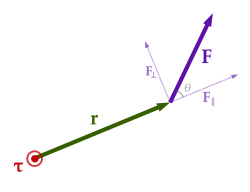
トルクは、回転軸から力が発生している点までの距離(位置ベクトル)と、加えられた力の外積として定義されます。数学的には $\tau = r \times F$ と表され、その大きさは回転軸に対して垂直に作用する力の成分によってのみ決定されます。
具体的にトルクを最大化するには、回転軸から遠い位置で、かつ軸に対して垂直に力を加えることが重要です。例えば、長いレンチを使用すると、少ない力で大きなトルクを得られるのは、回転軸からの距離(モーメントアーム)が長くなるためです。
モーメントアームによる簡略化
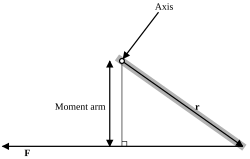
物理学以外の分野では、トルクを「モーメントアーム × 力」というシンプルな積で定義することが一般的です。例えば、長さ0.5mのレンチの端に10Nの力を垂直に加えた場合、トルクは $0.5\text{m} \times 10\text{N} = 5\text{N\cdot m}$ となります。
角運動量およびエネルギーとの相関
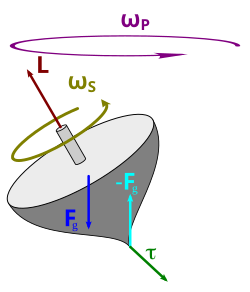
直線運動における「力」が線形運動量($p$)を変化させるように、回転運動における「トルク」は角運動量($L$)を変化させます。正味のトルクが物体に作用すると、その物体の角運動量は時間とともに変化し、回転速度が加速または減速します。
また、トルクはエネルギーの概念とも密接に結びついています。物体をある角度まで回転させるために必要な仕事($W$)は、トルクを回転角で積分することで求められます。さらに、回転速度(角速度 $\omega$)とトルクの積は、そのシステムが単位時間あたりに生み出す仕事率(パワー)に相当します。
静的平衡と力のバランス
物体が完全に静止した状態(静的平衡)にあるためには、単に全ての力の合計がゼロであるだけでは不十分です。同時に、任意の点におけるトルクの総和もゼロである必要があります。2次元的な系においては、「水平方向の力の和=0」「垂直方向の力の和=0」「トルクの総和=0」という3つの条件を満たすことで、物体は安定して静止します。
産業・機械への応用:エンジン出力とトルク
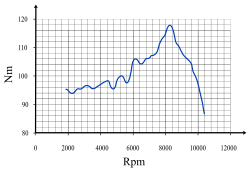
自動車のエンジンなどの仕様書に記載されるトルクは、エンジンの性能を示す重要な指標です。エンジンの出力(パワー)は、「トルク × 回転速度」で計算されます。内燃機関の場合、効率的にトルクを発生させられる回転数範囲(トルクバンド)が存在し、これをグラフ化したものが「トルクカーブ」です。
電気モーターや蒸気機関は、回転数がゼロに近い状態でも最大に近いトルクを発生させることができる特性を持っており、そのためクラッチなしで重量物を始動させることが可能です。
トルクの物理的特性まとめ
| 項目 | SI単位 | 物理的意味 | 関係式(簡略) |
|---|---|---|---|
| トルク ($\tau$) | N⋅m | 回転させる能力 | $\tau = r \times F$ |
| 角運動量 ($L$) | kg⋅m²/s | 回転の勢い | $\tau = dL/dt$ |
| 仕事率 ($P$) | W (ワット) | 単位時間あたりのエネルギー | $P = \tau \cdot \omega$ |
| 仕事 ($W$) | J (ジュール) | 回転によるエネルギー消費 | $W = \int \tau d\theta$ |
Frequently Asked Questions
トルクとエネルギー(ジュール)は単位が同じですが、なぜ区別されるのですか?
どちらも $\text{N\cdot m}$ という単位を持ちますが、物理的な意味が異なります。ジュールは「力 × 移動距離」というエネルギーの量を示すのに対し、トルクは「回転させる能力」というベクトル量を示すため、混乱を避けるためにトルクの表記にジュール(J)は使用しません。
モーメントアームを長くすると、なぜ少ない力で回せるのですか?
トルクの大きさは「距離 × 力」で決まるため、距離(モーメントアーム)を2倍にすれば、同じトルクを得るために必要な力は半分で済むからです。これがテコの原理の基本です。
エンジンの「最大トルク」とは何を意味していますか?
エンジンがクランクシャフトを通じて出力できる最大の回転力のことです。最大トルクが高いほど、加速力や重量物を牽引する力が強くなります。
トルクがゼロになれば、物体は必ず停止しますか?
いいえ。トルクがゼロであることは「角運動量が変化しない」ことを意味します。すでに回転している物体にトルクが作用しなくなっても、摩擦などの抵抗がなければ、物体は慣性によって回転し続けます。
References
- Serway, R. A. and Jewett, J. W. Jr. (2003). Physics for Scientists and Engineers. 6th ed. Brooks Cole. .
- Physics for Engineering by Hendricks, Subramony, and Van Blerk, Chinappi page 148, Web link Archived 2017-07-11 at the
- Thomson, James; Larmor, Joseph (1912). Collected Papers in Physics and Engineering. University Press. p. civ.
- Thompson, Silvanus Phillips (1893). Dynamo-electric machinery: A Manual For Students Of Electrotechnics (4th ed.). New York, Harvard publishing co. p. 108.
- "torque". Oxford English Dictionary. 1933.
- Kane, T.R. Kane and D.A. Levinson (1985). Dynamics, Theory and Applications pp. 90–99: Free download Archived 2015-06-19 at the .
- (1811). Traité de mécanique, tome premier. p. 67.
- "Right Hand Rule for Torque". Archived from the original on 2007-08-19. Retrieved 2007-09-08.
- Halliday, David; Resnick, Robert (1970). Fundamentals of Physics. John Wiley & Sons. pp. 184–85.
- Knight, Randall; Jones, Brian; Field, Stuart (2016). College Physics: A Strategic Approach (3rd technology update ed.). Boston: Pearson. p. 199. . 922464227.
📸 フォトギャラリー