Slightly grainy black and white portrait of a stiff fourteen-year-old Edison in winter garb. A poorly patched area on the right shoulder leaks stuffing. He has a thick scarf and hat with his hands in his lap and right knee crossed over the left.
← ホームへ戻る

トーマス・エジソン世界を変えた発明王の軌跡と革新

🗓 2026年8月15日

現代社会の基盤となる電気文明の礎を築いた人物、トーマス・エジソン。彼は単なる発明家にとどまらず、研究開発を組織的に行う「研究所」という概念を確立し、ビジネスへと昇華させた稀代の実業家でもありました。独学で知識を身につけ、数多くの特許を取得した彼の人生は、飽くなき好奇心と執念に満ちた挑戦の連続でした。

若き日のエジソンは、電信技術への関心からそのキャリアをスタートさせました。1861年頃の彼の姿からは、後の偉大な業績を予感させる知的な眼差しが見て取れます。
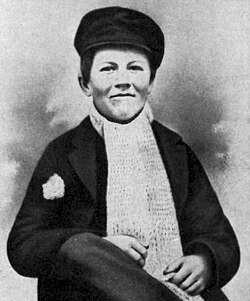
Slightly grainy black and white portrait of a stiff fourteen-year-old Edison in winter garb. A poorly patched area on the right shoulder leaks stuffing. He has a thick scarf and hat with his hands in his lap and right knee crossed over the left.

彼の最初期の成功の一つに、電気式投票記録機の開発があります。これは彼が取得した最初の特許の一つであり、効率的なシステム構築への関心が早くから現れていました。
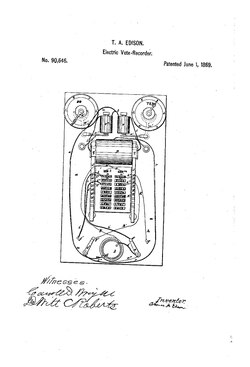
A diagram for the vote recorder signed by Edison with the patent number displayed.

Key Facts

  • 主要発明: 白熱電球、蓄音機、キネトスコープ(初期の映画装置)、電気配電システムなど。
  • 研究拠点: ニュージャージー州メンロパークに世界初の組織的な研究開発施設を設立。
  • ビジネス展開: ゼネラル・エレクトリック(GE)の前身となる企業の設立に関与。
  • 教育背景: 正式な学校教育はほとんど受けず、独学と実務経験で知識を習得。
  • 多才な研究: 電気だけでなく、セメント、ゴム、蓄電池など幅広い分野に挑戦。

技術革新の原点とメンロパークの時代

エジソンは、個人のひらめきに頼るのではなく、チームで試行錯誤を繰り返す近代的な研究スタイルを導入しました。ニュージャージー州のメンロパークに設立された研究所は、その象徴的な場所です。ここでは多くのエンジニアが集まり、効率的な開発体制が構築されていました。

1873年頃のニューアーク工場での様子を捉えた写真では、多忙を極めるエジソンが4階の窓から顔を覗かせており、彼の仕事に対する没頭ぶりが伺えます。
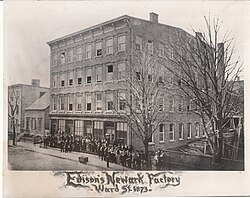
Group photo taken as a postcard of the employees in front of the factory at Edison's Newark Factory on Ward St in 1873. The trees are bare and the surrounding buildings are much smaller. Edison is visible peeking out of the fourth floor window. He wrote that he was too busy working to come downstairs.

通信技術の向上と蓄音機の誕生

電話機の性能を向上させるため、エジソンはカーボンマイクロホン(炭素粒子を用いて音声を電気信号に変換する装置)を開発しました。これにより、音声の伝達効率が劇的に改善されました。
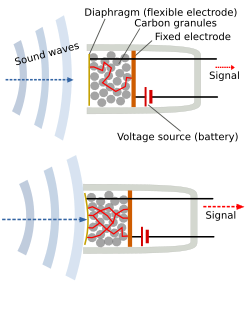
Diagram of a carbon microphone.

さらに、音声を記録し再生するという人類初の快挙を成し遂げたのが「蓄音機(フォノグラフ)」です。1878年、ワシントンD.C.のスタジオで披露された第2モデルは、世界に大きな衝撃を与えました。
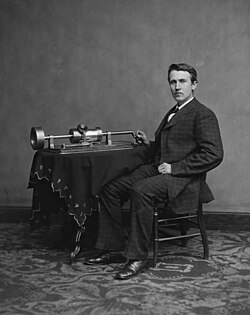
Edison as a young man, sharply dressed, seated over decorative carpet and facing slightly towards the right with his face towards the camera. His right hand positioned to start turning his phonograph.

後のグラフフォンなどの改良モデルでは、録音用のシリンダーと針が用いられ、音声記録の精度が向上していきました。
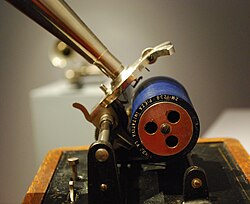
The blue cylinder appears in macro about the size of a toilet paper roll. The much larger handle has a minuscule needle poised above the cylinder.

光の革命:白熱電球と電力インフラ

エジソンの名声を決定づけたのが、実用的な白熱電球の開発です。1879年12月、メンロパークでの公開デモンストレーションに成功したモデルは、夜の生活を根本から変えることになります。
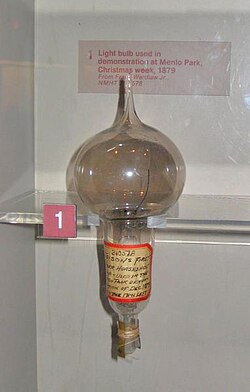
The inside of a museum exhibit shows a heavily used light-bulb with smoky glass. There is a handwritten inscription on a label wrapped around the stem of the bulb.

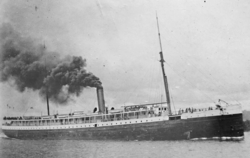
1880年1月27日に発行された特許第223,898号は、この電球の権利を確定させました。この技術はすぐに商業利用され、1880年には蒸気船「コロンビア号」に導入されるなど、実用化が加速しました。
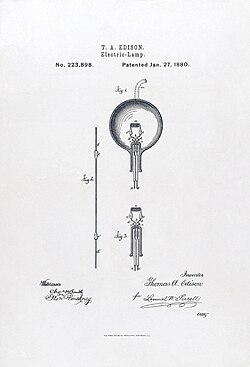
A diagram of a light bulb with Edison's name written above it the patent number and date are labeled.
A grainy black and white photo of a steamship on the water. The bow faces to right and the ship occupies the whole frame. Several groups of people are visible fore and aft, on the first and second deck. The ship has two masts and a smokestack which is bellowing.

電球だけでは意味がなく、それを灯すための電力供給網が必要です。エジソンはマンハッタンに「エジソン・マシンワークス」を設立し、発電機などの重機を製造しました。ここには後に名高いニコラ・テスラなどの若きエンジニアも在籍していました。
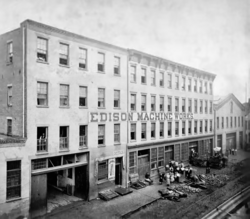
A perspective shot in black and white of a building with the Edison Machine Works name painted in the center. Several windows are missing. An old fashioned garage appears on the closest section on the left. A group of people stands in front of the single room central office with a pile of construction material.

電灯の普及は、1897年のテネシー万博に見られるような豪華なイルミネーションへと発展し、都市の景観を劇的に変貌させました。
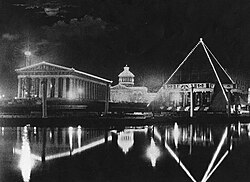
Greek architecture pictured at night in black in white. The foreground is occupied by a small body of water and the building in the middle and background have their perimeter outlined with string lights.

さらなる挑戦と多様な研究分野

1889年頃のエジソンは、すでに世界的な名声を得ていましたが、彼の探究心は止まりませんでした。
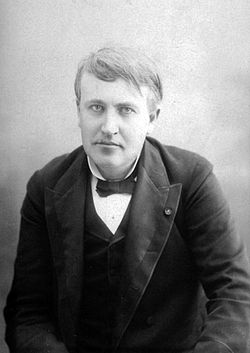
Edison at 42 in a highly focused portrait peers into the camera. This bored looking man with neat hair is finely dressed with a bow tie, stiff collar, and layered lapels.

ニュージャージー州オグデンズバーグなどの施設を拠点に、彼は電力供給の効率化だけでなく、鉱業やセメント製造といった産業分野にも進出しました。
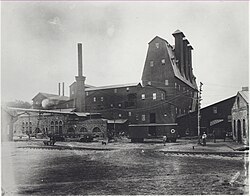
An Edison plant in Ogdensburg, New Jersey, c. 1895

また、建築分野への関心からコンクリート住宅のモデルを考案するなど、生活様式の改善にも意欲的に取り組みました。
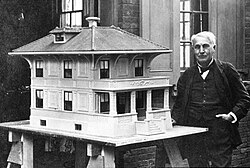
Edison with a model of a concrete house

研究の過程では困難もありました。1914年の火災は彼の施設に大きな打撃を与えましたが、それでも彼は立ち上がり、ニッケル鉄蓄電池などの開発を続けました。
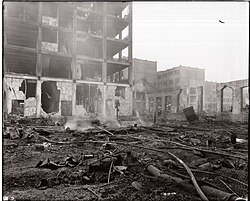
Aftermath of the 1914 fire
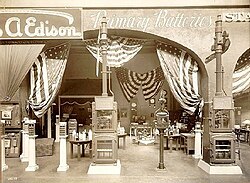
An exhibit in greyscale displays many objects on pylons. The background is draped in stars and stripes.

映像時代の幕開け:キネトスコープ

エジソンは「動く写真」への挑戦も行い、覗き窓から映像を鑑賞するキネトスコープを開発しました。これが後の映画産業の先駆けとなりました。
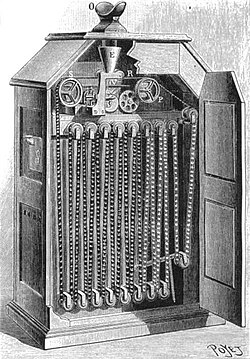
Interior view of Kinetoscope with peephole viewer at top of cabinet

晩年と人間としてのエジソン

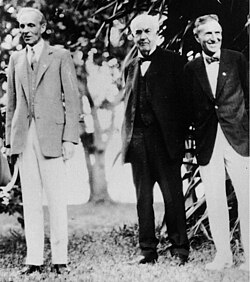
晩年のエジソンは、親友であるヘンリー・フォードやハービー・ファイアストーンと共に時間を過ごし、ゴム植物の研究など、自然科学への関心を深めました。
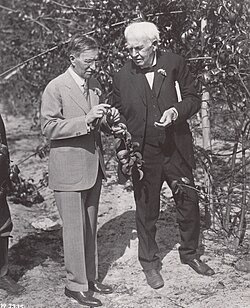
Edison and Harvey S. Firestone examining a rubber plant on Edison's 81st birthday
Black and white photo taken in bright light shows three men in suits standing in a grassy field surrounded by a few large trees. Edison appears more elderly.

1931年に亡くなるまで、彼は絶えず思考し続けました。彼の最期の呼吸を保存した展示物は、今も彼の生命力と科学への情熱を物語っています。
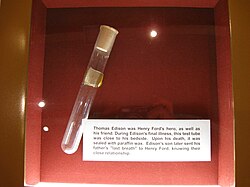
A glass vial in a museum display case

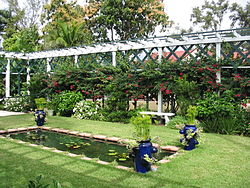
私生活では、最初の妻メアリーを亡くした後、ミーナ・ミラーと再婚しました。ミーナが手がけた「ムーンライト・ガーデン」は、今もその美しさを伝えています。
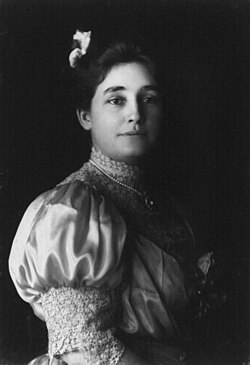
Mina at 41, appears youthful in staged lighting that presents her as elegantly dressed.
A sunny garden presents a rectangular pond as the centerpiece. Its corners highlighted by a set of blue urns. Well trimmed grass surrounds the pond.

エジソンは自然を崇拝の対象ではなく、冷徹で無関心な力として捉えていました。自分自身を「個体ではなく細胞の集合体」と表現した彼の哲学は、極めて合理的かつ科学的な視点に基づいたものでした。
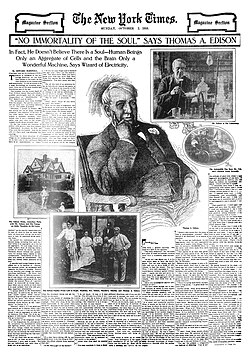
Front page of a New York Times publication in which several sketches and photos of Edison are presented surrounded by text columns.

彼の功績を称え、電球発明から125周年にあたり、2004年には記念のシルバーダラーが発行されました。
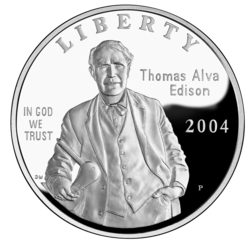
Digital rendering of the Edison silver dollar. The bust of Edison in his characteristic suit is central with the middle aged man facing forward.

エジソンの主要業績まとめ

トーマス・エジソンの主な発明と貢献
分野 主な発明・成果 社会的影響
通信 カーボンマイクロホン、電信機改良 電話の音質向上と通信効率の改善
音響 蓄音機(フォノグラフ) 音声の記録と再生を可能にした
照明・電力 実用的な白熱電球、電力配電網 夜間の活動を可能にし、都市の電化を推進
映像 キネトスコープ、映画カメラ 映画産業の基礎を築いた
エネルギー ニッケル鉄蓄電池 効率的なエネルギー貯蔵手段を提供

Frequently Asked Questions

エジソンは白熱電球をゼロから発明したのですか?

いいえ。電球の概念自体は以前からありましたが、エジソンは長い試行錯誤の末に、長時間点灯可能な実用的なフィラメントを発見し、商業的に成功させるためのシステム(配電網など)を構築した点に最大の功績があります。

メンロパーク研究所にはどのような意味がありましたか?

それまでの発明は個人のひらめきによるものが多かったのですが、エジソンは専門のスタッフを集め、組織的に研究開発を行う体制を整えました。これが現代の企業におけるR&D(研究開発)部門のモデルとなりました。

ニコラ・テスラとの関係はどうだったのでしょうか?

テスラはかつてエジソンの会社で働いていましたが、電流方式(直流 vs 交流)を巡る見解の相違などから対立し、激しい競争(電流戦争)を繰り広げたことで知られています。

エジソンは学校で勉強したのですか?

ほとんどの時間を独学で過ごしました。一部、クーパーユニオンで講義を受けたことはありますが、基本的には本を読み、実際に手を動かして実験することで知識を習得した自学自習の達人でした。

エジソンの発明の中で、現代に最も影響を与えているものは何ですか?

白熱電球と電力配電システムです。これにより、世界中で電気が利用可能となり、産業構造や人々のライフスタイルが根本から変わりました。また、蓄音機やキネトスコープは、現代の音楽・映画産業の原点となっています。

References

  1. His friends knew him by the name "Al".
  2. Edison later listened to a music player or piano by clamping his teeth into the wood to absorb the sound waves into his skull.
  3. At age 15 he saved a child from being struck by a runaway train. The child's father, a telegraph operator, refined Edison's skills in telegraphy.
  4. Such as .
  5. In addition to the United States patents, 1,239 foreign patents are registered with Edison's name.[38]
  6. He expanded his public involvement by funding the creation of , which published its first volume in 1880. Edison kept his publishing role anonymous, and the journal began as a mouthpiece for pro-Edison articles. He gave up the journal in 1883 due to its lack of profit. It was subsequently led by .
  7. Edison used the term "Westinghoused" to refer to death by high-voltage alternating current.
  8. From 1890 to 1913 Edison and Dickson did not maintain consistent terminology to refer to the motion picture and sound technology they developed.
  9. Marion and Thomas Jr. were nicknamed Dot and Dash respectively.
  10. Edison declined because he believed he did not do more for the navy than persons in similar roles.

📸 フォトギャラリー

Slightly grainy black and white portrait of a stiff fourteen-year-old Edison in winter garb. A poorly patched area on the right shoulder leaks stuffing. He has a thick scarf and hat with his hands in his lap and right knee crossed over the left.
A diagram for the vote recorder signed by Edison with the patent number displayed.
Group photo taken as a postcard of the employees in front of the factory at Edison's Newark Factory on Ward St in 1873. The trees are bare and the surrounding buildings are much smaller. Edison is visible peeking out of the fourth floor window. He wrote that he was too busy working to come downstairs.
Diagram of a carbon microphone.
Edison as a young man, sharply dressed, seated over decorative carpet and facing slightly towards the right with his face towards the camera. His right hand positioned to start turning his phonograph.
The blue cylinder appears in macro about the size of a toilet paper roll. The much larger handle has a minuscule needle poised above the cylinder.
The inside of a museum exhibit shows a heavily used light-bulb with smoky glass. There is a handwritten inscription on a label wrapped around the stem of the bulb.
A diagram of a light bulb with Edison's name written above it the patent number and date are labeled.
A grainy black and white photo of a steamship on the water. The bow faces to right and the ship occupies the whole frame. Several groups of people are visible fore and aft, on the first and second deck. The ship has two masts and a smokestack which is bellowing.
A perspective shot in black and white of a building with the Edison Machine Works name painted in the center. Several windows are missing. An old fashioned garage appears on the closest section on the left. A group of people stands in front of the single room central office with a pile of construction material.
Greek architecture pictured at night in black in white. The foreground is occupied by a small body of water and the building in the middle and background have their perimeter outlined with string lights.
Edison at 42 in a highly focused portrait peers into the camera. This bored looking man with neat hair is finely dressed with a bow tie, stiff collar, and layered lapels.
An Edison plant in Ogdensburg, New Jersey, c. 1895
Edison with a model of a concrete house
Aftermath of the 1914 fire
An exhibit in greyscale displays many objects on pylons. The background is draped in stars and stripes.
Interior view of Kinetoscope with peephole viewer at top of cabinet
Edison and Harvey S. Firestone examining a rubber plant on Edison's 81st birthday
Black and white photo taken in bright light shows three men in suits standing in a grassy field surrounded by a few large trees. Edison appears more elderly.
A glass vial in a museum display case
Mina at 41, appears youthful in staged lighting that presents her as elegantly dressed.
A sunny garden presents a rectangular pond as the centerpiece. Its corners highlighted by a set of blue urns. Well trimmed grass surrounds the pond.
Front page of a New York Times publication in which several sketches and photos of Edison are presented surrounded by text columns.
Digital rendering of the Edison silver dollar. The bust of Edison in his characteristic suit is central with the middle aged man facing forward.