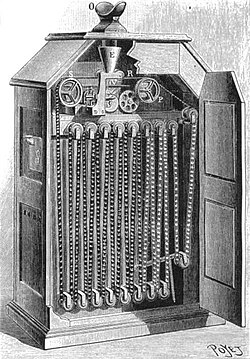
現代の映画館のような大スクリーンでの鑑賞とは異なり、初期の映像体験は「一人で覗き込む」という極めて個人的なものでした。その中心にあったのが、トーマス・エジソンと彼の助手ウィリアム・K・L・ディクソンによって開発されたキネトスコープです。これは、静止画の連続を高速で回転させ、光を当てることで動いているように見せる、ビデオ時代の先駆けとなる画期的な装置でした。
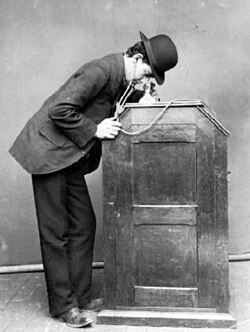
キネトスコープは厳密にはプロジェクター(投影機)ではなく、キャビネット上部の覗き窓から一人ずつ映像を鑑賞する形式を採用していました。この仕組みは、後の映画撮影の世界標準となる穿孔(穴あき)フィルムの利用という基本概念を確立させました。
Key Facts
- 開発者:トーマス・エジソンが構想し、ウィリアム・K・L・ディクソンらが実用化。
- 仕組み:穿孔フィルムを光源の前で高速シャッターと共に走らせ、視覚的な錯覚で動きを再現。
- 撮影機:専用のカメラ「キネトグラフ」を用いて映像を記録。
- 標準化:後に世界標準となる35mmフィルム形式の基礎を築いた。
- 進化:音声付きの「キネトフォン」や、後の投影式「プロジェクティング・キネトスコープ」へ発展。
映像制作の舞台裏:キネトグラフとブラック・マリア
キネトスコープで上映するための映像を撮影するために開発されたのが、キネトグラフというカメラです。この装置は、フィルムを断続的に動かす(ストップ&ゴー)という革新的な機構を備えていましたが、非常に巨大で移動には不向きな設計でした。
![Charles Kayser of the Edison lab seated behind the Kinetograph.[17] Portability was not among the camera's virtues.](/images/36/0e/360e319e8eeb8803a163a04b874c8306c96d0275069756fd441382726fb1d84b.jpg)
この巨大なカメラを運用し、十分な光量を確保するために建設されたのが、世界初の映画スタジオとも言える「ブラック・マリア」です。1892年末に建設されたこのスタジオは、太陽光を最大限に取り入れるため、屋根が開閉し、建物全体がレール上で回転する特殊な構造を持っていました。
![Construction of the imposing Black Maria began in December 1892. To take full advantage of sunlight, the tar paper–lined studio was equipped with a hinged, flip-up roof and the entire structure could rotate on a track. "It obeys no architectural rules," declared Dickson, who found it "productive of the happiest effects in the films."[39]](/images/2a/d0/2ad0d0f01d3bdfc504f92ffb943ca2e8e49b15867126c100c55634553fd61eb5.jpg)
ここで撮影された初期のテスト映像には、猿が登場する作品などがあり、映像表現の基礎が模索されていました。また、1894年から95年にかけて撮影された「バタフライ・ダンス」などの作品では、後の映画業界の標準となる幅1 3/8インチ(約35mm)のフィルムが使用されていました。
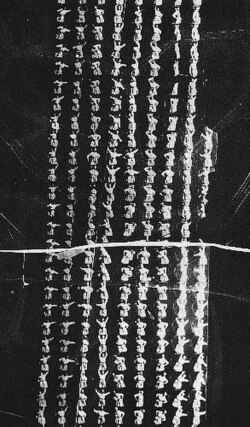
![1 3/8–inch (35 mm) filmstrip of the Edison production Butterfly Dance (c. 1894–95), featuring Annabelle Whitford Moore, in the format that would become standard for motion picture photography around the world.[23]](/images/98/a9/98a9a3fb0880865fc137a3a9314960c314e0f7049e3b363ef81e1b80f1e8a84b.jpg)
商業展開と「キネトスコープ・パーラー」の流行
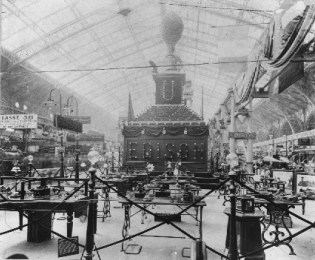
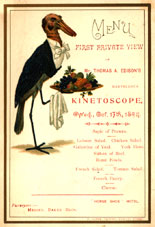
1891年に限定的なデモンストレーションが行われた後、1893年にはブルックリンで一般公開され、1894年4月にはニューヨークで10本の短編映画を揃えた初の商業展示が始まりました。その後、エジソンは世界万博などの大規模な展示会でもその技術を披露しました。
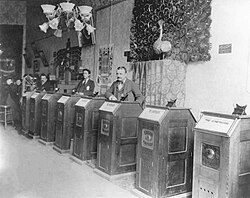
この成功を受けて、多くのキネトスコープを並べた「キネトスコープ・パーラー(鑑賞所)」が各地にオープンしました。人々はコインを払い、一人ずつ順番に覗き窓から短い映像を楽しむという、新しい娯楽文化が定着したのです。このビジネスモデルはサンフランシスコやロンドンなど、世界的な広がりを見せました。
音との融合:キネトフォンの登場
エジソンは映像だけでなく、自身のもう一つの偉大な発明である蓄音機との統合を試みました。こうして誕生したのが、1895年に発売されたキネトフォン(またはフォノキネトスコープ)です。
これはキネトスコープのキャビネットに円筒形蓄音機を組み込んだもので、鑑賞者はイヤホンを通じて映像に合わせた音声を聞くことができました。1893年のシカゴ万博でも、映像と音声を同時に記録する可能性が示唆されており、音付き映画という概念の先駆けとなりました。
投影方式への移行と家庭用モデル
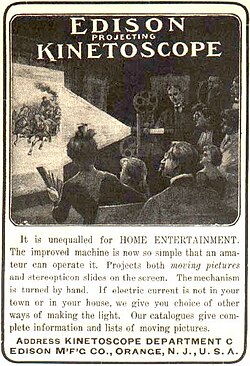
当初、エジソンは不特定多数が同時に見る「投影方式」の映画には商業的な価値がないと考えていましたが、時代の流れは投影式へと傾きました。結果として、一人ずつ見るキネトスコープのモデルは、スクリーンに映し出す方式に取って代わられることになります。
その後、エジソン社は「プロジェクティング・キネトスコープ」という名称で投影機を販売し、1900年代初頭には家庭向けに35mmフィルムを使用できる劇場仕様の投影機も展開しました。これにより、映画は個人の覗き窓から、家族や大衆で共有する体験へと進化しました。
キネトスコープの概要まとめ
| 項目 | 詳細 | 役割・特徴 |
|---|---|---|
| キネトスコープ | 覗き窓式鑑賞装置 | 一人ずつ映像を鑑賞する初期の展示デバイス |
| キネトグラフ | 映画撮影カメラ | 断続的なフィルム送りによる映像記録 |
| キネトフォン | 音声付き鑑賞装置 | キネトスコープと円筒蓄音機の統合 |
| ブラック・マリア | 撮影スタジオ | 回転式構造と開閉屋根を持つ日光利用スタジオ |
| フィルム規格 | 35mm(1 3/8インチ) | 後の世界標準となるフィルム幅を確立 |
Frequently Asked Questions
キネトスコープは映画プロジェクターだったのですか?
いいえ、キネトスコープはプロジェクターではなく、キャビネットの上にある覗き窓から一人で映像を見る「覗き窓式」の装置でした。スクリーンに映像を投影する方式は、その後の発展段階で導入されました。
誰がこの装置を開発したのですか?
構想はトーマス・エジソンによるものでしたが、実際の開発の多くは彼の従業員であったウィリアム・K・L・ディクソンとそのチームが担いました。
キネトスコープで使われていたフィルムの特徴は?
穿孔(穴)が開いたフィルムを使用し、これを高速シャッターと共に光源の前で走らせることで動きを再現していました。この35mmという幅は、後の映画業界の標準規格となりました。
音付きの映像は可能だったのでしょうか?
はい。エジソンはキネトスコープに円筒蓄音機を組み合わせた「キネトフォン」を開発し、イヤホンを通じて映像と音声を同時に楽しむ仕組みを実現していました。
ブラック・マリアとは何ですか?
キネトグラフで映像を撮影するために建設された世界初の映画スタジオです。太陽光を効率よく取り入れるため、屋根が開閉し、建物全体が回転する仕組みを持っていました。
References
- Hendricks (1961), pp. 4, 10–12; Musser (1994), pp. 49–53, 62. Robinson (1997) states that "Edison and Dickson were almost certainly in the audience" on February 25 (p. 23); Rossell (2022) is even more definitive: "Thomas Edison attended the Saturday evening lecture with his wife Minna" (p. 26). Neither adduces any evidence for such assertions (and Edison's wife was named Mina).
- Quoted in Robinson (1997), p. 23. The caveat was written on October 8 and filed on October 17. Hendricks (1961), pp. 14–16.
- Musser (2004), p. 63.
- "Origins of Motion Pictures: The Kinetoscope". Inventing Entertainment: The Early Motion Pictures and Sound Recordings of the Edison Companies. Library of Congress. Retrieved November 24, 2022.
- Braun (1992), pp. 188, 404 n. 44.
- Rossell (1998), pp. 63–64; Braun (1992), pp. 189, 404 n. 47. Robinson (1997) says the lab ordered the Carbutt sheets on June 25, 1889, and that they were "marketed in 20" x 50"" size. (p. 27). Spehr (2000) says (a) the lab received them on that date, (b) they were "11 by 14" inches in size (a figure with which Braun, op. cit., agrees), (c) sheets from another supplier, Allen & Rowell, arrived on the same date, and (d) sheets from yet another source had been received in May. It was Carbutt's sheets, according to Spehr's report of Dickson's recollections, that were used in the cylinder experiments (p. 23 n. 22).
- Spehr (2008), pp. 140, 149–51, 166, 210; Hendricks (1961), pp. 44–47. There is also a question about which Edison employee appears in the film. If the earlier date is correct, it is likely Fred Ott; if the latter, G. Sacco Albanese.
- Dickson (1907), part 2.
- Robinson (1997) gives August 2 (p. 27). Hendricks (1961) gives August 3 (p. 48).
- Baldwin (2001), pp. 208–9. Baldwin describes the meeting as taking place in mid-September (p. 209); Burns (1998) says it was August (p. 73). See also Braun (1992), p. 189.
📸 フォトギャラリー