私たちが暮らす太陽系は、約46億年前という遥か昔に、宇宙に漂う巨大な分子雲の一部が自らの重力で崩壊したことから始まりました。この劇的なプロセスを経て、中心に太陽が誕生し、その周囲に惑星や衛星、小惑星といった多様な天体が配置される現在の構造が形作られました。
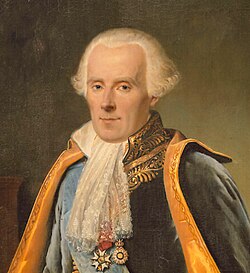
この形成プロセスを説明する主要な理論が星雲説(Nebular Hypothesis)です。18世紀にエマニュエル・スウェーデンボリ、イマヌエル・カント、そしてピエール=シモン・ラプラスらによって提唱されたこのモデルは、天文学のみならず化学、地質学、物理学などの多角的な視点から洗練されてきました。特に1950年代の宇宙時代の到来や、1990年代以降の系外惑星の発見は、この理論をさらに精緻なものへと進化させています。
Key Facts
- 誕生の起源:約46億年前、巨大分子雲の重力崩壊によって形成。
- 構造の形成:中心に太陽が位置し、周囲の原始惑星系円盤(ガスと塵の円盤)から惑星や衛星が誕生。
- ダイナミックな変化:惑星の移動や巨大衝突が、現在の太陽系の配置に大きな影響を与えた。
- 未来の運命:太陽は最終的に赤色巨星となり、その後は白色矮星へと変化する。
太陽系の形成プロセス
原始星雲から円盤へ
太陽系の始まりは、ガスと塵が密集した分子雲の崩壊でした。物質の大部分は中心に集まって太陽となりましたが、残りの物質は回転しながら平坦な円盤状に広がりました。これが原始惑星系円盤であり、ここからあらゆる天体が成長していきました。
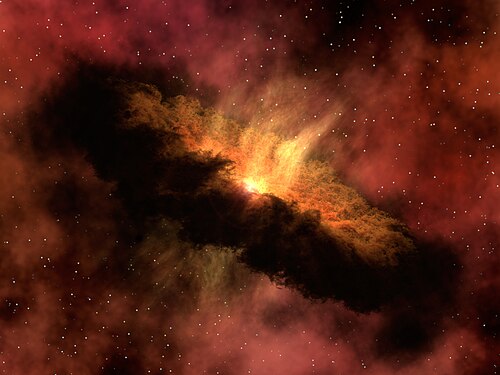
現在の宇宙でも、オリオン大星雲のような星形成領域では、かつての太陽系に似た原始惑星系円盤が数多く観測されており、私たちの故郷がどのような環境で生まれたかを推測する重要な手がかりとなっています。
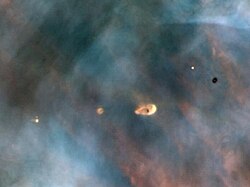
惑星の誕生と成長
円盤内の塵が衝突・合体を繰り返すことで、次第に大きな塊へと成長しました。これが太陽を取り囲む初期の惑星系となります。
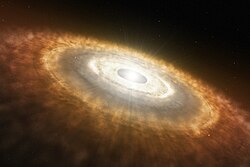
地球のような岩石惑星(地球型惑星)が内側に、木星や土星のような巨大ガス惑星が外側に配置されました。また、海王星より外側では、惑星サイズに達しなかった数千もの太陽系外縁天体(Trans-Neptunian Objects)が形成されました。これらの天体は、主要な惑星とは異なり、傾いた楕円軌道を描いて移動しているのが特徴です。
進化し続ける太陽系
惑星の移動と軌道の変動
太陽系の構造は、誕生直後から固定されていたわけではありません。惑星同士の重力相互作用により、惑星が元の位置から移動する「惑星移動」が起こったと考えられています。例えば、木星や土星の軌道変化が、外惑星の配置やカイパーベルトの天体の散乱に影響を与えたというシミュレーション結果があります。
![Simulation showing outer planets and Kuiper belt:[2] a) Before Jupiter/Saturn 2:1 resonance b) Scattering of Kuiper belt objects into the Solar System after the orbital shift of Neptune c) After ejection of Kuiper belt bodies by Jupiter Orbit of Jupiter Orbit of Saturn Orbit of Uranus Orbit of Neptune](/images/00/4a/004a97db5cefdeac67f13c6322beedb28ab94a0d345364d8359a7d6672dbebd9.png)
衛星の多様な成り立ち
惑星の周りを回る衛星の形成ルートは一つではありません。巨大惑星の周囲にあったガス円盤から同時に形成されたものもあれば、独立して存在していた天体が惑星の重力に捕らえられたものもあります。また、地球の月のように、巨大な天体同士の衝突によって飛び散った破片から形成されたケースも有力視されています。
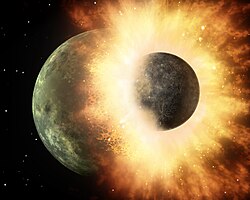
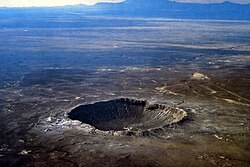
こうした衝突現象は太陽系初期に集中していましたが、現在でも続いています。アリゾナ州のメテオ Craterのような巨大な衝突跡は、物質の集積と衝突というプロセスが今なお進行している証拠です。
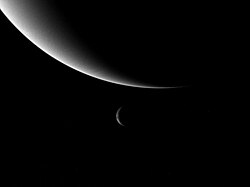
また、海王星の衛星トリトンのように、将来的にロシュ限界(天体が潮汐力で破壊される距離)まで接近し、分解されて新たな環を形成する可能性を持つ天体も存在します。
太陽系の未来と終焉
太陽系は今後も安定した状態を保ちますが、太陽が中心核の水素を使い果たし、ヘリウムへの核融合が進むと、その姿は劇的に変化します。太陽は赤色巨星へと進化し、その巨大なサイズで水星や金星、そしておそらく地球までも飲み込むと予想されています。
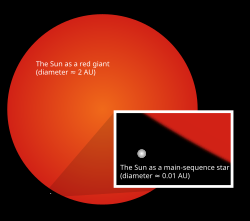
その後、太陽は外層を放出して惑星状星雲となり、中心には小さく高密度な白色矮星だけが残ります。木星や土星などの外惑星は生き残る可能性がありますが、それらは冷え切った太陽の残骸の周りを回り続けることになります。このような状況は、すでに観測されている白色矮星の周囲を回る系外惑星の事例からも推測可能です。
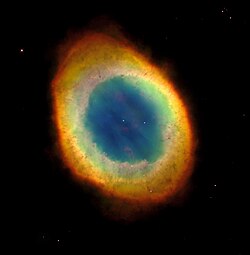
私たちの太陽系は、天の川銀河という広大なスケールの中のほんの一点に位置しており、銀河全体のダイナミクスの中での長い旅を続けています。
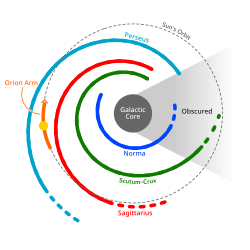
現在の太陽、惑星、そしてその先の天体までを含むこの壮大なシステムは、誕生から消滅まで、数十億年という時間軸で絶えず変化し続けています。

太陽系進化のタイムライン
| フェーズ | 発生時期(形成後) | 主な出来事 |
|---|---|---|
| 前太陽系期 | 形成の数千万年前 | 巨大分子雲の重力崩壊 |
| 誕生期 | 0 〜 1億年 | 太陽の形成、原始惑星系円盤の誕生、惑星の核形成 |
| 主系列星期 | 1億年 〜 約100億年 | 安定した太陽の燃焼、地球での生命進化(現在はこの期間) |
| ポスト主系列期 | 約100億年 〜 125億年 | 赤色巨星への進化、内惑星の消失 |
| 太陽の残骸期 | 約125億年以降 | 白色矮星への移行、外惑星の生存 |
Frequently Asked Questions
太陽系はどうやってできたのですか?
約46億年前、巨大な分子雲が重力で崩壊し、中心に太陽が、その周囲に回転するガスと塵の円盤(原始惑星系円盤)ができました。この円盤の中で物質が衝突・合体することで、惑星や衛星が形成されました。
惑星の場所は最初から決まっていたのでしょうか?
いいえ。惑星移動と呼ばれる現象により、重力相互作用を通じて惑星の軌道が変化したと考えられています。これにより、現在の太陽系の構造や、外縁天体の分布が決定づけられました。
月はどのようにして誕生したと考えられていますか?
最も有力な説は、地球の形成末期に巨大な天体が地球に衝突し、その際に放出された破片が地球の周りに集まって月になったという「巨大衝突説」です。
太陽の寿命が尽きるとどうなりますか?
太陽は水素を使い果たすと膨張して赤色巨星となり、内側の惑星を飲み込みます。その後、外層を放出して惑星状星雲となり、最終的には小さく高密度な白色矮星となって静かに冷えていきます。
太陽系外縁天体とは何ですか?
海王星よりも遠い軌道を回る、惑星よりも小さな天体の総称です。カイパーベルトなどに分布しており、多くは惑星の公転面に対して傾いた楕円軌道を持っています。
References
- An astronomical unit, or AU, is the average distance between the Earth and the Sun, or about 150 million kilometres. It is the standard unit of measurement for interplanetary distances.
- The combined mass of Jupiter, Saturn, Uranus and Neptune is 445.6 Earth masses. The mass of remaining material is ~5.26 Earth masses or 1.1% (see and )
- The reason that Saturn, Uranus and Neptune all moved outward whereas Jupiter moved inward is that Jupiter is massive enough to eject planetesimals from the Solar System, while the other three outer planets are not. To eject an object from the Solar System, Jupiter transfers energy to it, and so loses some of its own orbital energy and moves inwards. When Neptune, Uranus and Saturn perturb planetesimals outwards, those planetesimals end up in highly eccentric but still bound orbits, and so can return to the perturbing planet and possibly return its lost energy. On the other hand, when Neptune, Uranus and Saturn perturb objects inwards, those planets gain energy by doing so and therefore move outwards. More importantly, an object being perturbed inwards stands a greater chance of encountering Jupiter and being from the Solar System, in which case the energy gains of Neptune, Uranus and Saturn obtained from their inwards deflections of the ejected object become permanent.
- In all of these cases of transfer of angular momentum and energy, the angular momentum of the two-body system is conserved. In contrast, the summed energy of the moon's revolution plus the primary's rotation is not conserved but decreases over time due to dissipation via frictional heat generated by the movement of the tidal bulge through the body of the primary. If the primary were a frictionless ideal fluid, the tidal bulge would be centered under the satellite, and no transfer would occur. It is the loss of dynamical energy through friction that makes the transfer of angular momentum possible.
📸 フォトギャラリー