空から太陽が消え、昼間なのに夜のような暗闇に包まれる。日食は、地球、月、太陽が一直線に並ぶことで起こる、宇宙のダイナミックな幾何学が生み出す現象です。単なる視覚的な驚きだけでなく、日食は古来より天文学の発展に寄与し、現代でもアインシュタインの相対性理論を証明するなど、科学的に極めて重要な役割を果たしてきました。
日食が発生するためには、月が新月の位相にあり、かつ月の公転面が地球の公転面と交差する点(昇交点または降交点)付近に位置する必要があります。月の軌道は約5度傾いているため、毎月の新月で日食が起こるわけではなく、約6ヶ月ごとの「食の季節」にのみ発生します。
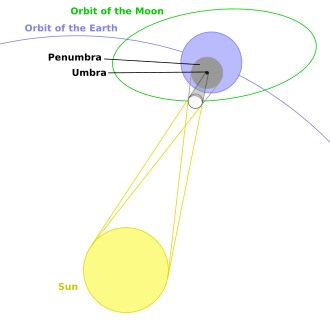
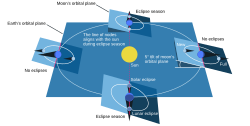
Key Facts
- 日食の基本: 月が太陽の前を横切り、地球に届く太陽光を遮ることで発生します。
- 3つの主要タイプ: 太陽が完全に隠れる「皆既日食」、リング状に残る「金環日食」、一部が欠ける「部分日食」があります。
- 視直径の影響: 月と太陽の地球からの距離によって、見かけの大きさが変わり、日食の種類が決定します。
- 観測の重要性: 皆既日食の最中のみ、通常は見えない太陽の外層大気である「コロナ」を直接観測できます。
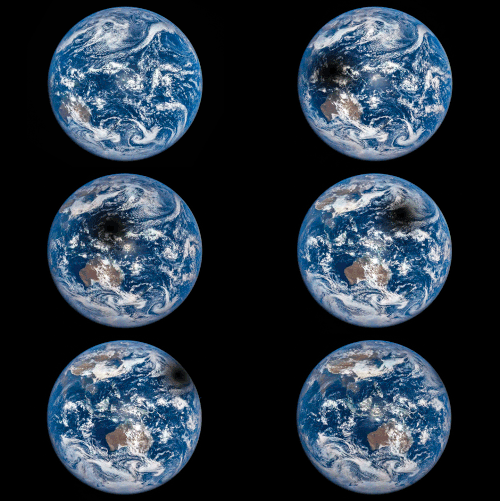
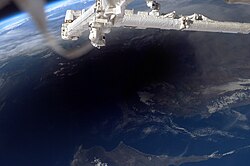
- 宇宙からの視点: 国際宇宙ステーション(ISS)などの人工衛星からは、天候に左右されず、月の影が地球上を移動する様子を観察できます。
日食の種類と発生条件
日食の形態は、地球から見た太陽と月の「見かけの大きさ(視直径)」のバランスによって決まります。月は楕円軌道を描いているため、地球に最も近い地点(近地点)では大きく見え、最も遠い地点(遠地点)では小さく見えます。
皆既日食(Total Solar Eclipse)
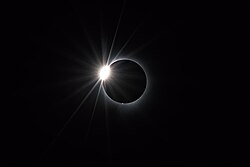
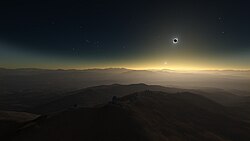
月が太陽の円盤を完全に覆い隠す現象です。このとき、太陽の縁から赤いプロミネンス(紅炎)や、白く輝くコロナ、そして放射状に広がるコロナストリーマーが姿を現します。
金環日食(Annular Solar Eclipse)
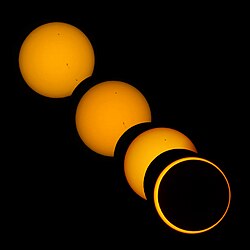
月が遠地点付近にあり、見かけの大きさが太陽よりも小さいために、太陽の縁がリング状に残る現象です。「火の輪」のような幻想的な光景となります。
部分日食(Partial Solar Eclipse)
太陽、月、地球が完全な一直線にならず、太陽の円盤の一部だけが月に隠される状態です。皆既日食や金環日食の周囲の地域でも、部分日食として観測されます。
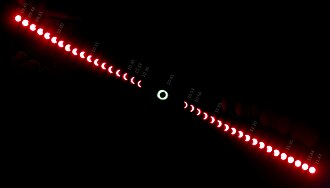
その他の特殊な日食
ハイブリッド日食は、観測地点によって皆既日食に見えたり金環日食に見えたりする稀な現象です。また、中心的な影が地球を通過するものを中心日食と呼びます。
天文学的視点から見る日食の幾何学
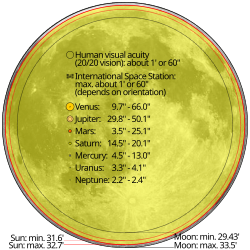
日食の発生を左右するのは、天体の距離と角度です。以下の表に、太陽と月の物理的な特性と見かけのサイズをまとめました。
| 天体 | 状態/位置 | 距離 | 視直径(見かけの大きさ) |
|---|---|---|---|
| 月 | 近地点(最短) | 363,104 km | 33' 30" (0.5583°) |
| 遠地点(最遠) | 405,696 km | 29' 26" (0.4905°) | |
| 太陽 | 近日点(最短) | 147,098,070 km | 32' 42" (0.5450°) |
| 遠日点(最遠) | 152,097,700 km | 31' 36" (0.5267°) |
この数値からわかる通り、月が近地点にあり太陽が遠日点にあるとき、月は太陽を完全に覆うことができ、皆既日食が起こります。逆に月が遠地点にあるときは、太陽を覆いきれず金環日食となります。
歴史的意義と科学的発見
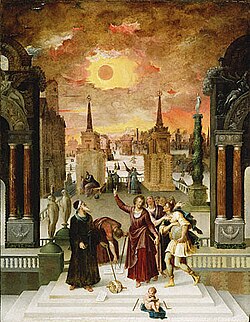
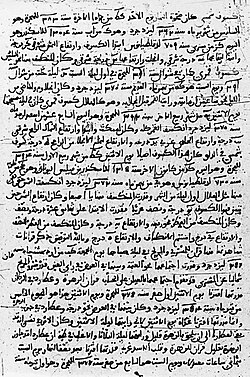
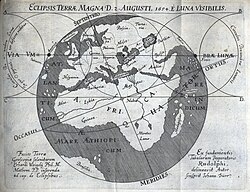
日食は単なる自然現象ではなく、人類の科学的知見を広げる機会となってきました。古代エジプトや中世の記録(イブン・ユヌスによる記録など)から、日食の予測精度は向上し、17世紀にはエルハルト・ヴァイゲルらが月の影の経路を予測しました。
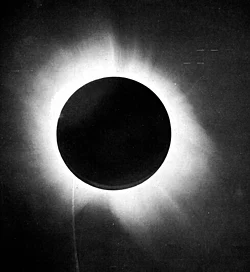
特に有名なのは1919年の日食観測です。アーサー・エディントンは、太陽の近くを通る星の光が太陽の重力によって曲がることを撮影し、アインシュタインの一般相対性理論を実証しました。
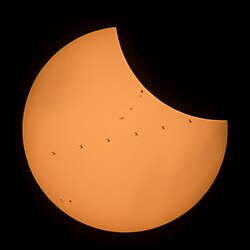
現代では、ISSなどの宇宙機から日食を観測することで、大気の影響を受けない純粋なデータを収集しています。また、2017年の日食中にはISSが太陽を横切るトランジット現象も記録されました。
日食の観測と未来の予測
日食を安全に楽しむためには、専用のフィルター付きサングラスなどの保護具が不可欠です。特に部分日食や金環日食の際は、直接太陽を見ることは非常に危険です。一方で、皆既日食の「完全な遮蔽」の間だけは肉眼での観測が可能になります。
日食の経路は非常に限定的であり、特定の地点で皆既日食が見られるのは数百年に一度ということもあります。そのため、世界中の愛好家が最適な観測地を求めて旅をする「エクリプス・チェイシング(日食追跡)」という文化が生まれています。
![Total solar eclipse paths: 1001–2000, showing that total solar eclipses occur almost everywhere on Earth. This image was merged from 50 separate images from NASA.[36]](/images/eb/d6/ebd68d380d12ef32a60d5c0440233b1a0dc05df2803e57c19a2049c85e08dc28.gif)

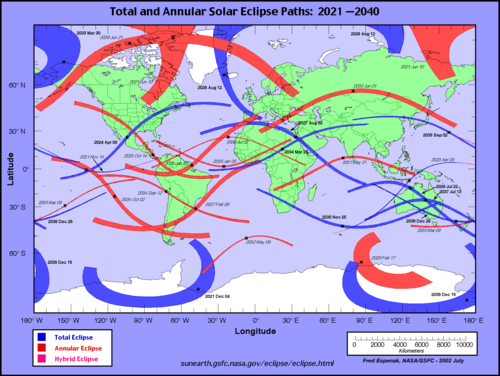
今後の予測では、2026年から2029年にかけても複数の皆既日食や金環日食が予定されており、天文学的な関心を集め続けています。
Frequently Asked Questions
なぜ毎月の新月に日食が起きないのですか?
月の公転面が地球の公転面に対して約5度傾いているためです。月が太陽の真正面に位置するためには、月がこの傾きを越えて公転面が交差する点(ノード)に同時に位置する必要があります。
皆既日食と金環日食の違いは何ですか?
地球から見た月の見かけの大きさの違いです。月が太陽より大きく見えれば完全に覆い隠す「皆既日食」になり、月が太陽より小さく見えれば縁が残る「金環日食」になります。
日食を肉眼で見るのは危険ですか?
はい、非常に危険です。皆既日食の完全な遮蔽時間以外は、強い太陽光が網膜を傷つけるため、必ず認定された日食グラスやフィルターを使用してください。
日食はどのくらいの頻度で起こりますか?
部分日食を含む日食は年に数回発生しますが、特定の地点で皆既日食が見られる機会は非常に稀です。地球全体で見れば、皆既日食は数年ごとにどこかで発生しています。
コロナとは何ですか?
太陽の最外層にある非常に高温のガス層のことです。通常は太陽本体の強烈な光に隠れて見えませんが、皆既日食によって太陽の円盤が完全に隠されたときだけ、白い光の輪として観測できます。
References
- "What is an eclipse?". European Space Agency. Archived from the original on 2018-08-04. Retrieved 2018-08-04.
- Littmann, Mark; Espenak, Fred; Willcox, Ken (2008). Totality: Eclipses of the Sun. Oxford University Press. pp. 18–19. .
- Five solar eclipses occurred in 1935. (September 6, 2009). "Five Millennium Catalog of Solar Eclipses". NASA Eclipse Web Site. , Project and Website Manager. Archived from the original on April 29, 2010. Retrieved January 26, 2010.
- Koukkos, Christina (May 14, 2009). "Eclipse Chasing, in Pursuit of Total Awe". The New York Times. Archived from the original on June 26, 2018. Retrieved January 15, 2012.
- Pasachoff, Jay M. (July 10, 2010). "Why I Never Miss a Solar Eclipse". The New York Times. Archived from the original on June 26, 2018. Retrieved January 15, 2012.
- Mobberley, pp. 30–38
- Harrington, pp. 4–5
- Hipschman, Ron. "Why Eclipses Happen". Exploratorium. Archived from the original on December 27, 2015. Retrieved January 14, 2012.
- Brewer, Bryan (January 14, 1998). "What Causes an Eclipse?". Earth View. Retrieved January 14, 2012.
{{}}: CS1 maint: deprecated archival service () - NASA – Eclipse 99 – Frequently Asked Questions Archived 2010-05-27 at the – There is a mistake in the How long will we continue to be able to see total eclipses of the Sun? answer, "...the Sun's angular diameter varies from 32.7 minutes of arc when the Earth is at its farthest point in its orbit (aphelion), and 31.6 arc minutes when it is at its closest (perihelion)." It should appear smaller when farther, so the values should be swapped.
📸 フォトギャラリー