地球の誕生から生命の進化、そして古代文明の足跡まで、私たちはどのようにして数百万年、あるいは数十億年前という膨大な時間を計測しているのでしょうか。その鍵となるのが放射性年代測定です。この技術は、岩石や有機物に含まれる微量の放射性同位体が、一定の速度で別の元素へと変化する性質を利用して、物質が形成された「絶対的な時間」を導き出します。
1900年代初頭にアーネスト・ラザフォードやベルトラム・ボルトウッドによって開拓されたこの手法は、現在では地質学や考古学、天文学において不可欠なツールとなっています。地層の重なりに基づく相対的な年代決定と組み合わせることで、精緻な地質年代尺度を構築することが可能になりました。
Key Facts
- 原理:親核種が一定の速度で娘核種へと崩壊する比率を測定して年代を算出する。
- 適用範囲:数十年から数十億年まで、使用する同位体によって測定可能な時間軸が異なる。
- 主要手法:炭素14法(有機物)、ウラン・鉛法(古い岩石)、カリウム・アルゴン法など。
- 精度向上:現代では質量分析計の導入により、ナノグラム単位の極微量サンプルでも測定が可能。
- 重要性:地球の年齢特定や化石の年代決定、隕石の起源解明に寄与している。
放射性崩壊の基礎理論
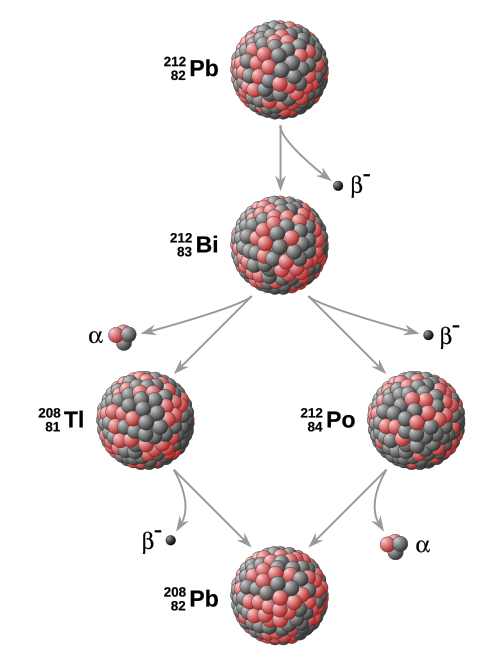
放射性年代測定の根幹にあるのは、不安定な原子核(親核種)が放射線を放出して別の安定した原子核(娘核種)へと変化する「放射性崩壊」という現象です。この崩壊速度は外部環境に左右されず、常に一定の割合で進行します。
例えば、ある物質が形成された瞬間に親核種だけが含まれていたと仮定すると、時間の経過とともに親核種は減少し、比例して娘核種が増加します。この比率を計算することで、形成から現在までどれだけの時間が経過したかを割り出すことができます。
測定の精度と信頼性を左右する要因
正確な年代を導き出すには、「システムが閉じていたこと」が絶対条件となります。つまり、物質の形成後に親核種や娘核種が外部に漏れ出したり、逆に外部から混入したりしていないことが前提です。汚染や変質がある場合、算出される年代に誤差が生じます。
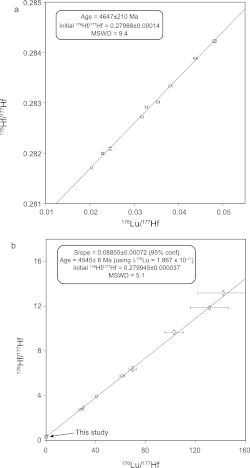
この問題を解決するため、複数のサンプルを測定したり、異なる鉱物を同時に分析して「等時線(アイソクロン)」を導き出したりする手法が取られます。また、異なる同位体を用いた複数の測定法で結果を照合し、整合性を確認することで信頼性を高めています。
現代の測定技術と分析手法
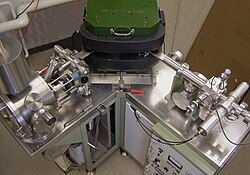
かつての測定法に比べ、現代の分析技術は飛躍的に進化しました。特に1950年代から導入された質量分析計は、サンプルの原子をイオン化し、磁場を用いて質量ごとに分離することで、極めて高い精度で同位体比を測定することを可能にしました。
代表的な年代測定法とその特徴
測定対象となる物質や、知りたい時間軸に応じて最適な手法が使い分けられます。
- ウラン・鉛法:ウラン235とウラン238という2つの「時計」を同時に利用できるため、非常に信頼性が高く、数十億年前の古い岩石の測定に適しています。鉛の損失があっても、コンコルディア図を用いることで正確な年代を特定できます。
- カリウム・アルゴン法:カリウム40の崩壊を利用し、雲母や角閃石などの鉱物を含む古い岩石の測定に用いられます。
- ルビジウム・ストロンチウム法:半減期が非常に長く、火成岩や変成岩、さらには月面のサンプル分析に活用されています。
- ウラン・トリウム法:半減期が比較的短いため、より最近の地質学的イベントの特定に適しています。
![A concordia diagram as used in uranium–lead dating, with data from the Pfunze Belt, Zimbabwe.[21] All the samples show loss of lead isotopes, but the intercept of the errorchron (straight line through the sample points) and the concordia (curve) shows the correct age of the rock.[22]](/images/95/23/952335d28a1d9dd6616d412e0a4f704004c966f785c6fb1370270aaea92f05bf.png)
炭素14法(放射性炭素年代測定)
考古学で最も有名なのが炭素14法です。宇宙線によって大気中で絶えず生成される炭素14は、光合成や食物連鎖を通じて生物に取り込まれます。生物が死ぬと新しい炭素の摂取が止まり、体内の炭素14が一定の速度で減少していきます。
この手法は半減期が約5,730年と短いため、数万年前までの有機物(骨や木片など)の測定に最適です。ただし、火山活動による二酸化炭素の放出や、近代の工業化、核実験などの影響で大気中の炭素比率が変動するため、補正が必要です。
![Ale's Stones at Kåseberga, around ten kilometres south east of Ystad, Sweden were dated back to approximately 1,400 years ago using the carbon-14 method on organic material found at the site.[30]](/images/90/2f/902fb2fc7301e0fd61558b2dc9857b292d9c8ede5362f24b96ddb4069c0bf43c.jpg)
その他の特殊な手法
岩石の熱履歴を調べる「フィッショントラック法」や、海水中の塩素36を利用した地下水の年代測定など、目的に応じた多様なアプローチが存在します。
太陽系初期の解明と短寿命核種
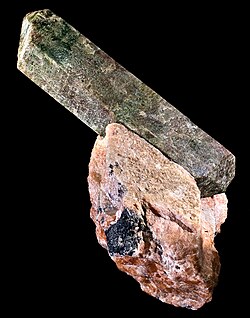
地球だけでなく、隕石などの太陽系初期物質の分析には、マンガン-クロム(Mn-Cr)のような短寿命の核種が利用されます。これらは半減期が非常に短いため、太陽系形成直後の数百万年という極めて短い時間スケールの出来事を解明するのに役立ちます。これにより、地球の原始的な組成がいつ決定したのかという謎に迫ることができます。
年代測定法のまとめ
| 測定手法 | 親核種 $\rightarrow$ 娘核種 | 主な対象物 | 適応時間軸 |
|---|---|---|---|
| 炭素14法 | $^{14} ext{C} \rightarrow ^{14} ext{N}$ | 有機物(骨、木材) | ~約6万年前 |
| ウラン・鉛法 | $^{238} ext{U}/^{235} ext{U} \rightarrow ^{206} ext{Pb}/^{207} ext{Pb}$ | ジルコンなどの鉱物 | 数百万年~数十億年前 |
| カリウム・アルゴン法 | $^{40} ext{K} \rightarrow ^{40} ext{Ar}$ | 雲母、角閃石 | 数万年~数十億年前 |
| ルビジウム・ストロンチウム法 | $^{87} ext{Rb} \rightarrow ^{87} ext{Sr}$ | 火成岩、変成岩 | 数千万年~数十億年前 |
| マンガン-クロム法 | $^{53} ext{Mn} \rightarrow ^{53} ext{Cr}$ | 隕石、初期地球物質 | 太陽系形成初期(数百万年) |
Frequently Asked Questions
放射性年代測定で「絶対年代」とは何を意味しますか?
地層の上下関係から判断する「相対年代(どちらが古いか)」とは異なり、数値として「〇〇万年前」と具体的に特定できる年代のことを指します。
炭素14法で測定できる限界はありますか?
はい。炭素14の半減期が短いため、約6万年(58,000〜62,000年)を過ぎると、サンプルに残っている放射性炭素が少なすぎて正確な測定ができなくなります。
なぜ複数の測定法を組み合わせて使う必要があるのですか?
サンプルが途中で加熱されたり、化学的に変質して同位体が漏れ出したりすることがあるためです。異なる手法で同じ結果が得られれば、その年代の信頼性が極めて高いと判断できます。
質量分析計を使うと何が良いのでしょうか?
非常に微量なサンプルからでも、親核種と娘核種の比率を極めて精密に測定できるため、分析精度が飛躍的に向上し、貴重な隕石や小さな鉱物結晶の分析が可能になります。
工業化や核実験は年代測定に影響しますか?
特に炭素14法に影響します。化石燃料の燃焼による二酸化炭素の増加や、大気圏での核実験による炭素14の増加は、大気中の同位体比を変化させるため、適切な補正が必要です。
References
- , , 5th ed. (the "Gold Book") (2025). Online version: (2006–) "radioactive dating". :10.1351/goldbook.R05082
- (1906). Radioactive Transformations. London: Archibald Constable and Co. Ltd. p. 186.
- Boltwood, Bertram (1907). "The Ultimate Disintegration Products of the Radio-active Elements. Part II. The disintegration products of uranium". American Journal of Science. 4. 23 (134): 77–88. :1907AmJS...23...78B. :10.2475/ajs.s4-23.134.78. 131688682.
- McRae, A. 1998. Radiometric Dating and the Geological Time Scale: Circular Reasoning or Reliable Tools? Radiometric Dating and the Geological Time Scale,
- "Spontaneous fission". Australian Radiation Protection and Nuclear Safety Agency. Retrieved 29 January 2025.
- Bernard-Griffiths, J.; Groan, G. (1989). "The samarium–neodymium method". In Roth, Etienne; Poty, Bernard (eds.). Nuclear Methods of Dating. Springer Netherlands. pp. 53–72. .
- Pommé, S.; Stroh, H.; Altzitzoglou, T.; Paepen, J.; Van Ammel, R.; Kossert, K.; Nähle, O.; Keightley, J. D.; Ferreira, K. M.; Verheyen, L.; Bruggeman, M. (1 April 2018). "Is decay constant?". Applied Radiation and Isotopes. ICRM 2017 Proceedings of the 21st International Conference on Radionuclide Metrology and its Applications. 134: 6–12. :2018AppRI.134....6P. :10.1016/j.apradiso.2017.09.002. 28947247.
- Emery, G T (1972). "Perturbation of Nuclear Decay Rates". . 22 (1): 165–202. :1972ARNPS..22..165E. :10.1146/annurev.ns.22.120172.001121.
- Shlyakhter, A. I. (1976). "Direct test of the constancy of fundamental nuclear constants". Nature. 264 (5584): 340. :1976Natur.264..340S. :10.1038/264340a0. 4252035.
- Johnson, B. (1993). How to Change Nuclear Decay Rates Usenet Physics FAQ
📸 フォトギャラリー