太陽系の最果てに位置する冥王星は、かつては第9惑星として親しまれていましたが、現在は「準惑星」という独自のカテゴリーに分類されています。1930年の発見以来、私たちの想像力をかき立ててきたこの天体は、2015年の探査機ニューホライズンズによる接近まで、その詳細な姿は謎に包まれていました。氷の地表、薄い大気、そして複数の衛星を持つ冥王星は、太陽系外縁部のダイナミズムを象徴する存在です。

Key Facts
- 分類: 準惑星(エッジワース・カイパーベルト天体の一種)
- 発見: 1930年2月18日、クライド・トンボーによって発見
- サイズ: 平均半径は約1,188kmで、地球の約0.18倍
- 公転周期: 太陽を一周するのに約248年を要する
- 主要衛星: カロンを含む5つの衛星を保有
- 表面: 窒素、メタン、一酸化炭素などの氷で構成されている
冥王星の軌道と太陽系における位置
冥王星の公転軌道は、他の主要惑星とは大きく異なります。軌道面が黄道面(地球の公転面)に対して約17.16度傾いており、さらに強い楕円形を描いているため、太陽との距離が大きく変動します。これにより、時期によっては海王星よりも太陽に近い位置にまで入り込むことがあります。
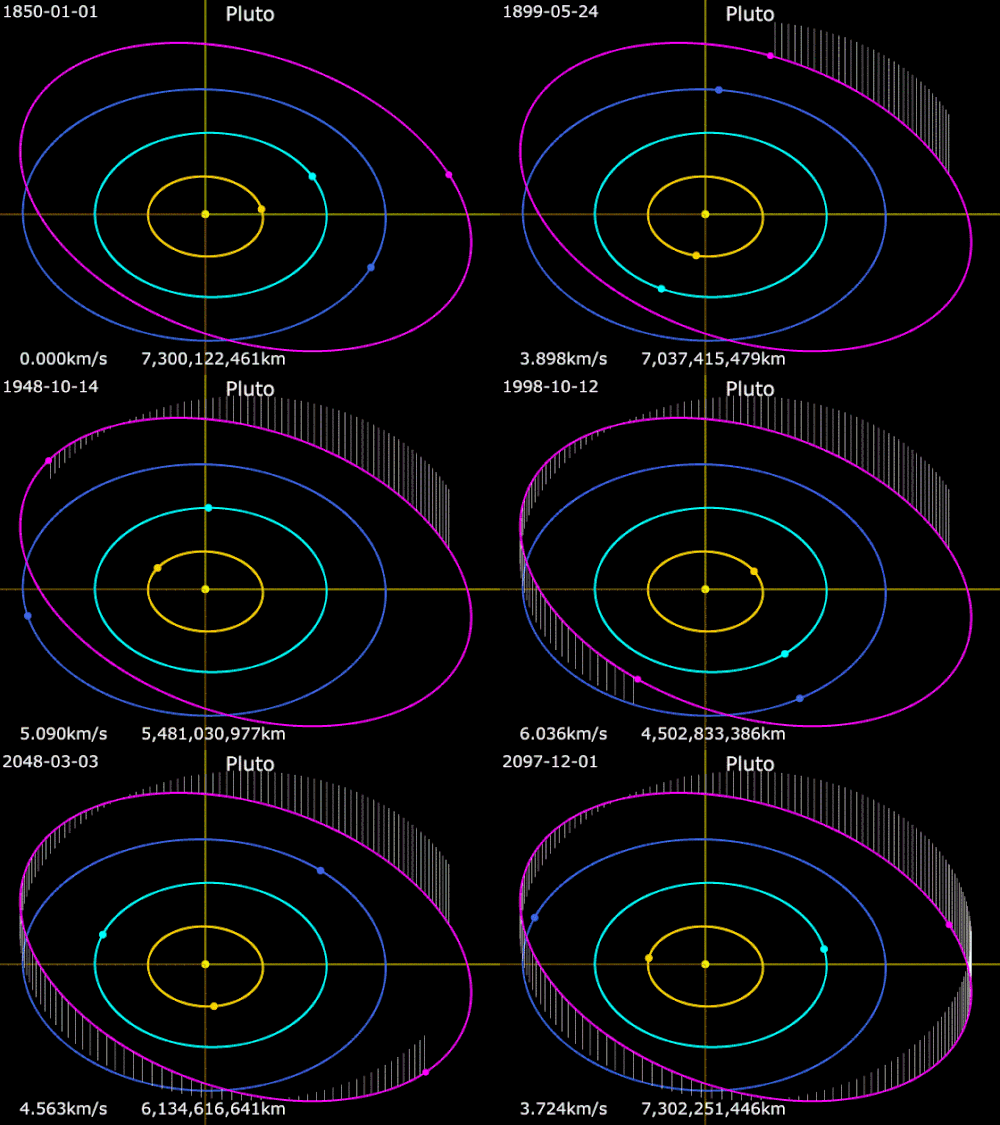
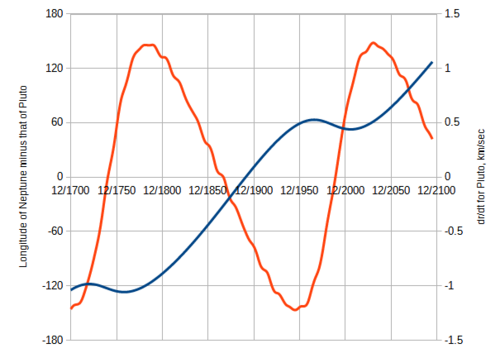
この特異な軌道は、海王星との重力的な相互作用(共鳴)によって安定しており、衝突を避けながら太陽系外縁部を周回しています。このような特性から、冥王星は「プルチノ」と呼ばれる天体グループの代表格とされています。
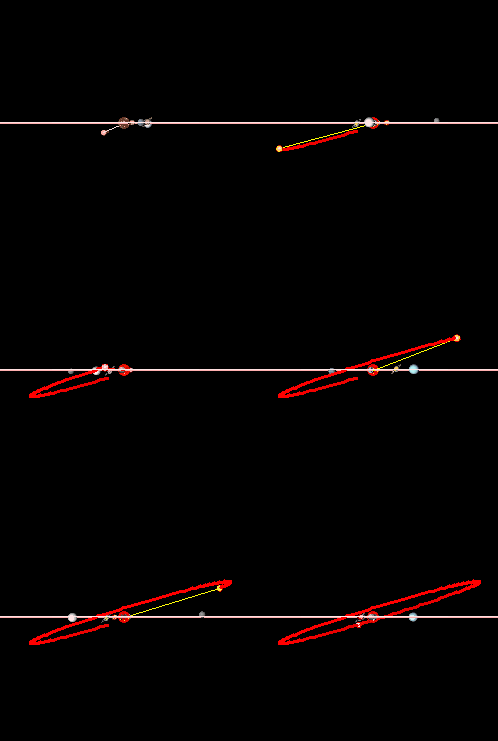
太陽との距離は、最も近い近日点では約29.7AU(1AU=地球と太陽の平均距離)、最も遠い遠日点では約49.3AUにまで達します。この距離の変化が、表面の物質の昇華や大気の密度に影響を与えています。
物理的特性と内部構造
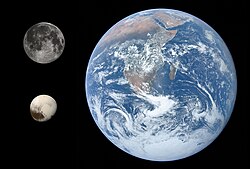
冥王星の大きさは月よりも小さく、地球と比較すると極めて小規模です。しかし、その密度(約1.85g/cm³)から、岩石の核と氷の層からなる複雑な内部構造を持っていると考えられています。
最新のモデルでは、中心にケイ酸塩の核があり、その周囲を液体の水の海(内部海)が取り囲み、さらに外側を水氷の地殻が覆っているという説が有力視されています。このような構造は、冥王星が単なる「凍った岩石」ではなく、地質学的に活動的な天体である可能性を示唆しています。
![A model of the internal structure of Pluto.[129]Water ice crustLiquid water oceanSilicate core](/images/d8/a6/d8a6e73fcce1957a6a9f47789abc1bf98b72a841bfbf321e4d3dfdf1aa2c350e.jpg)
ダイナミックな地表と大気
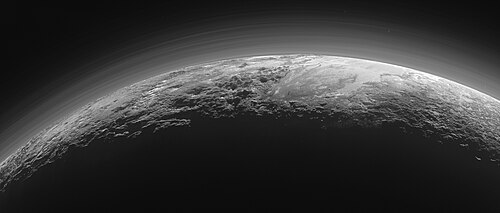
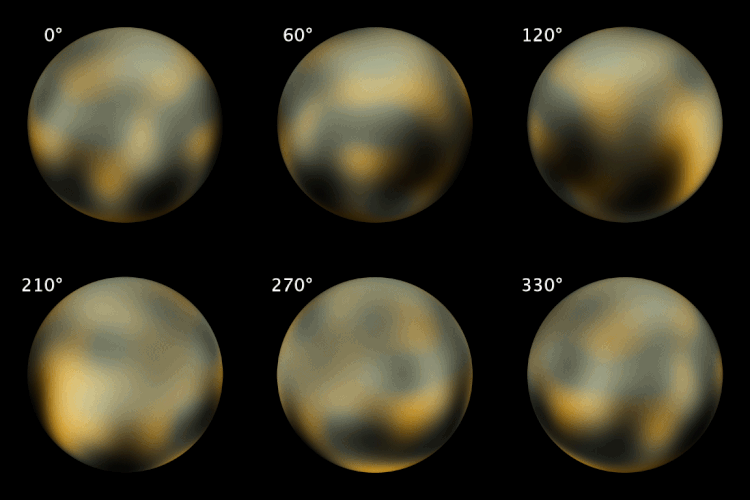
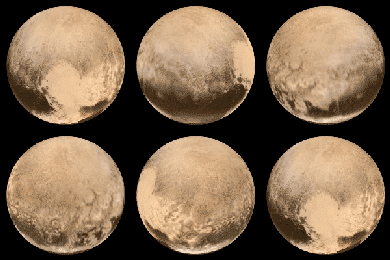
ニューホライズンズが捉えた冥王星の表面は、驚くほど多様な地形に満ちていました。特に「スプートニク平原」と呼ばれる心臓形の領域では、窒素氷が対流によって絶えず入れ替わっており、地質学的に非常に若い表面であることが分かっています。

また、水氷でできた巨大な山脈や、青い霞(ヘイズ)をまとった薄い大気も確認されました。大気の主成分は窒素であり、メタンや一酸化炭素も含まれています。この大気は、冥王星が太陽から遠ざかるにつれて凝結し、表面に降り積もるというサイクルを繰り返しています。
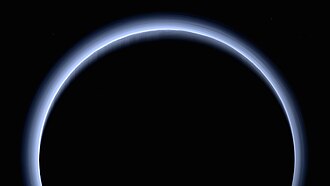
地表には氷の平原と険しい山々が共存しており、太陽系外縁部においても複雑な地質プロセスが進行していることが明らかになりました。
衛星系とカロンとの関係
冥王星には5つの衛星が存在しますが、なかでも最大であるカロンは特筆すべき存在です。カロンは冥王星に対して非常に大きく、両者は共通の重心の周りを回転しています。このため、実質的に「二重惑星」のような関係にあると言えます。
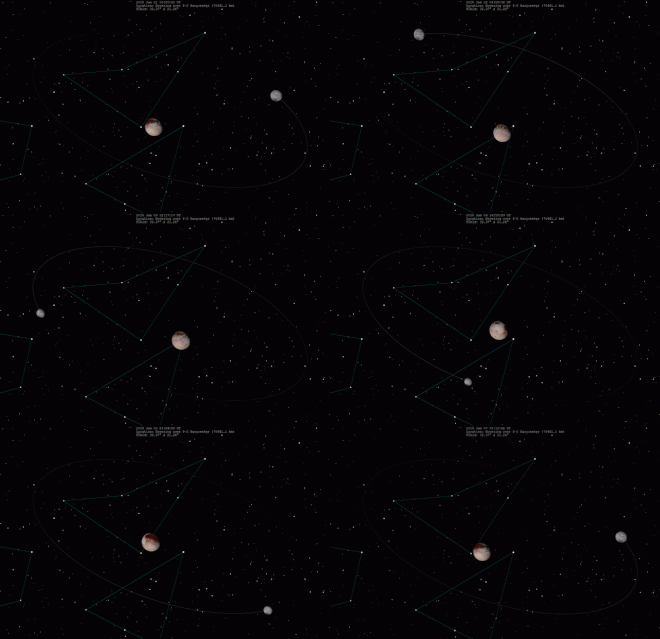
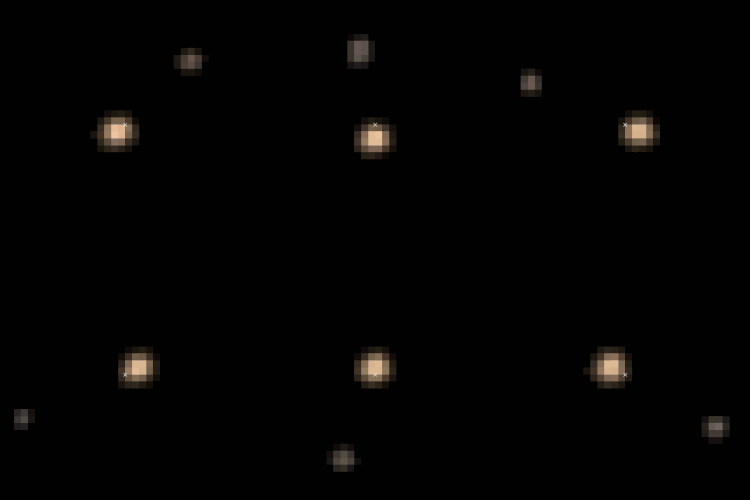
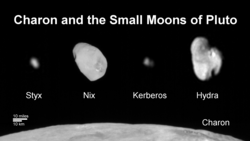
また、冥王星とカロンは互いに「潮汐ロック」されており、常に同じ面を向け合っています。その他の小型衛星(ニクス、ヒドラ、ケルベロス、スティクス)は、より外側の軌道を不規則に周回しています。
カイパーベルトという故郷
冥王星は、海王星の軌道よりも外側に広がる氷天体の集まり「エッジワース・カイパーベルト」に属しています。ここは太陽系形成時の残骸が保存されている場所であり、冥王星のような天体を研究することは、太陽系誕生の謎を解き明かす鍵となります。
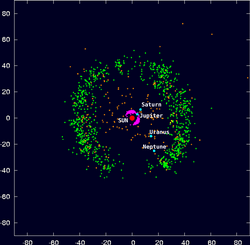
冥王星以外にも、エリスやハウメア、マケマケといった準惑星候補が存在し、これらはすべて太陽系の外縁部で独自の進化を遂げてきました。
冥王星の基本データまとめ
| 項目 | 数値・詳細 |
|---|---|
| 平均半径 | 1,188.3 ± 0.8 km |
| 質量 | 1.3025 × 10²² kg (地球の約0.2%) |
| 平均密度 | 1.853 g/cm³ |
| 公転周期 | 247.94 年 |
| 自転周期 | 約6.387 日 |
| 表面温度 | 約 33K 〜 55K (-240℃ 〜 -218℃) |
| 大気組成 | 窒素 (N₂), メタン (CH₄), 一酸化炭素 (CO) |
Frequently Asked Questions
なぜ冥王星は惑星から外れたのですか?
国際天文学連合(IAU)が2006年に定めた惑星の定義において、「その軌道周辺から他の天体を排除していること」という条件を満たさなかったためです。冥王星はカイパーベルトの多くの天体と共に存在しており、この条件に合致しなかったため「準惑星」に再分類されました。
冥王星の表面にある「心臓形」の正体は何ですか?
「トムボー領域」と呼ばれるこの場所は、主に窒素氷で構成された平原です。内部からの熱による対流が起きており、氷が絶えず更新されているため、クレーターが少なく滑らかな表面になっています。
冥王星に海があるというのは本当ですか?
確定的な証拠は見つかっていませんが、地表の地形や密度計算から、氷の地殻の下に液体の水による「内部海」が存在している可能性が高いと考えられています。これはアンモニアなどの不凍液が混ざっていることで維持されていると推測されています。
カロンと冥王星はどのような関係ですか?
カロンは冥王星の衛星ですが、サイズが非常に大きいため、両者は共通の重心を中心に回転しています。また、互いに潮汐ロックされており、常に同じ面を向け合って向き合っているという特殊な関係にあります。
冥王星の大気は常に存在しているのでしょうか?
冥王星の大気は、太陽との距離に応じて密度が変化します。太陽から遠ざかると大気の多くが凍結して表面に降り積もり、近づくと再び昇華して大気が形成されるというサイクルを繰り返していると考えられています。
References
- The mean elements here are from the Theory of the Outer Planets (TOP2013) solution by the Institut de mécanique céleste et de calcul des éphémérides (IMCCE). They refer to the standard equinox J2000, the barycenter of the Solar System, and the epoch J2000.
- Surface area derived from the radius r: .
- Volume v derived from the radius r: .
- Surface gravity derived from the mass M, the G and the radius r: .
- Escape velocity derived from the mass M, the G and the radius r: .
- Based on geometry of minimum and maximum distance from Earth and Pluto radius in the factsheet
- A French astronomer had suggested the name Pluto for Planet X in 1919, but there is no indication that the Lowell staff knew of this.
- For example, ⟨♇⟩ (in : U+2647 ♇ PLUTO) occurs in a table of the planets identified by their symbols in a 2004 article written before the 2006 IAU definition, but not in a graph of planets, dwarf planets and moons from 2016, where only the eight IAU planets are identified by their symbols. (Planetary symbols in general are uncommon in astronomy, and are discouraged by the IAU.)
- The bident symbol (U+2BD3 ⯓ PLUTO FORM TWO) has seen some astronomical use as well since the IAU decision on dwarf planets, for example in a public-education poster on dwarf planets published by the NASA/JPL Dawn mission in 2015, in which each of the five dwarf planets announced by the IAU receives a symbol. There are in addition several other symbols for Pluto found in astrological sources, including three accepted by Unicode: , U+2BD4 ⯔ PLUTO FORM THREE, used principally in southern Europe; /, U+2BD6 ⯖ PLUTO FORM FIVE (found in various orientations, showing Pluto's orbit cutting across that of Neptune), used principally in northern Europe; and , U+2BD5 ⯕ PLUTO FORM FOUR, used in .
- The equivalence is less close in languages whose differs widely from , such as Buluuto and Tłóotoo.
 .
. .
. .
. .
.📸 フォトギャラリー