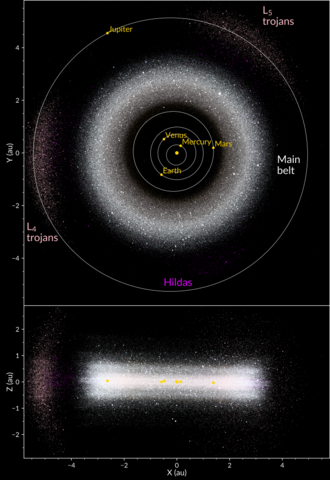
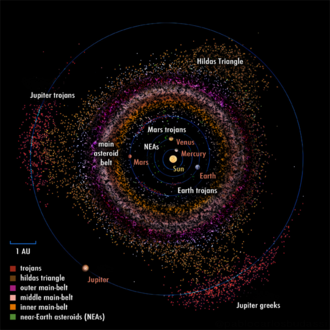
太陽系の内側に位置する小惑星帯(メインベルト)は、火星と木星の公転軌道に挟まれたドーナツ状の領域です。ここには、惑星よりもはるかに小さく、不規則な形状をした無数の岩石天体、いわゆる小惑星や準惑星が漂っています。映画などのイメージとは異なり、実際には天体同士の距離が平均して約100万キロメートルも離れているため、非常にまばらな空間となっています。
この領域は太陽系で最も内側にある円盤状の構造であり、その総質量は月の約3%に過ぎません。しかし、その大部分は少数の巨大な天体に集中しており、特に上位4つの天体だけで全体の約60%の質量を占めています。

Key Facts
- 位置: 火星と木星の間の軌道領域に分布。
- 主要天体: 準惑星ケレス、ベスタ、パラス、ヒギエアの4つが質量の過半数を占める。
- 密度: 天体間の距離が非常に広く、探査機が衝突せずに通過できるほど希薄。
- 組成: 主に炭素質(C型)、珪酸塩(S型)、金属質(X型)の3グループに分類される。
- 境界: 木星の重力による「軌道共鳴」が分布の境界線に影響を与えている。
小惑星帯を構成する天体とその特徴
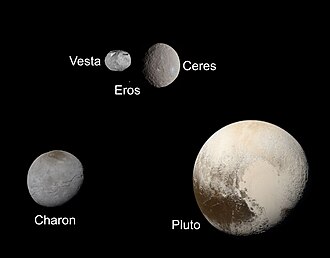
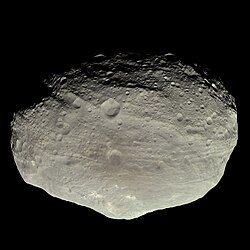
小惑星帯の中で際立って大きいのが、直径約950kmを持つケレスです。ケレスはその大きさと形状から、唯一の準惑星として分類されています。一方で、ベスタ、パラス、ヒギエアといった次点の大天体であっても、平均直径は600kmを下回ります。それ以外の天体は、数メートル程度の極小な岩石まで多岐にわたります。
![Size distribution of asteroids in the main belt[62]](/images/92/94/9294f175c1fd5c8b2eebe515088bf23c5ac45e26c4a2983830ad6c70c8c56452.webp)
これらの天体は、その光学的特性(スペクトル)に基づいて主に3つのカテゴリーに分けられます。有機物や炭素を多く含む「C型」、岩石成分である珪酸塩が主体の「S型」、そして金属成分が豊富な「X型」です。これらの組成分布は、太陽からの距離に応じて変化していることが分かっています。
![Distribution of asteroid spectral types by distance from the Sun[72]](/images/76/0b/760bf433c589e1c21b17dc26b35ddad511fc90c20d902204efeb9ea1482f64f0.webp)
天体の衝突と「ファミリー」の形成
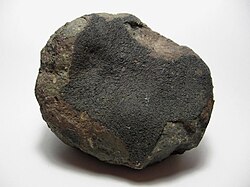
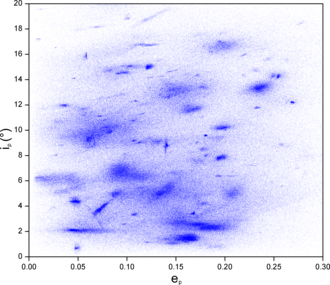
空間は希薄ですが、稀に大規模な衝突が発生します。これにより一つの大きな天体が砕け散り、似たような軌道特性と組成を持つ天体の集団、すなわち「小惑星ファミリー」が形成されます。こうした衝突の破片の一部は地球に到達し、隕石として回収されます。
ダイナミクスと軌道のメカニズム
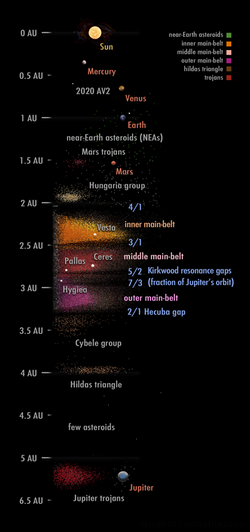
小惑星帯の構造を決定づけている最大の要因は、巨大惑星である木星の重力です。特に、木星の公転周期と整数比になる「軌道共鳴」が起きる場所では、天体が不安定な軌道に追い出されます。例えば、2.06天文単位(AU)付近にある4:1の共鳴帯は内側の境界線となっており、ここにある天体は木星の摂動によって弾き飛ばされます。
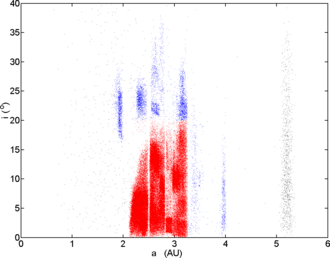
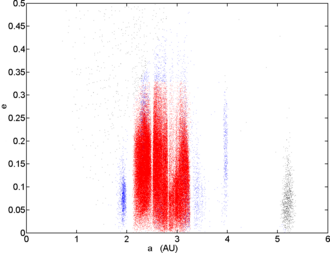
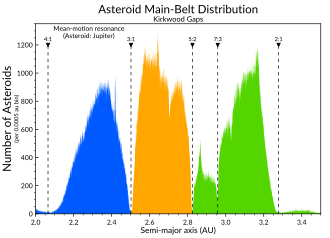
このような重力の影響で、小惑星の分布に空白地帯が生じます。これはカークウッドの間隙と呼ばれ、太陽系における重力の相互作用を視覚的に示す重要な指標となっています。一方で、木星の3:2共鳴軌道にある「ヒルダ群」のように、特定の条件下で安定して存在できるグループも存在します。
周辺領域の天体群
メインベルトの外縁には、3.3〜3.5 AUに位置するシベレ群や、3.5〜4.2 AUに分布するヒルダ群があります。さらに外側の木星軌道上には、木星のトロヤ群と呼ばれる天体群が存在し、その数は1km以上のサイズにおいてメインベルトの小惑星に匹敵します。
![Hubble views the multi-tailed cometary asteroid P/2013 P5.[82]](/images/b9/10/b910d8fe680d8104dbb86f65081cd36960d01e1b00353b7b8cebbdef2e4c7d1a.jpg)
観測の歴史と探査の歩み
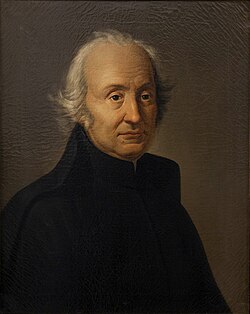
16世紀末、ヨハネス・ケプラーは惑星軌道の比率から、火星と木星の間に未知の惑星が存在することを予見していました。その後、1801年にジュゼッペ・ピアッツィによってケレスが発見され、この領域の存在が証明されました。当初は惑星と考えられていたケレスですが、後に小惑星、そして現在は準惑星へと再定義されています。
![In 1596, Johannes Kepler's sense of proportion for the planetary orbits led him to believe that an undiscovered planet lay between the orbits of Mars and Jupiter.[13]](/images/00/91/009140aefd982c498496dc9b360a75c9621ac8d7e3eb2e2ed29f1d5ca3fc6988.jpg)
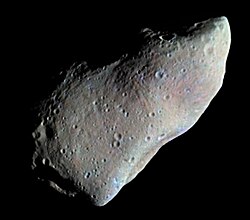
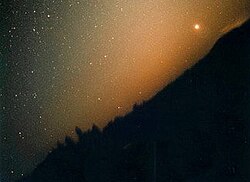
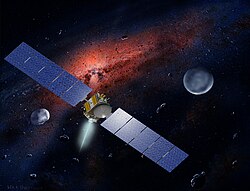
現代では、多くの無人探査機がこの領域を調査しています。1991年にガリレオ探査機が初めて小惑星ガスプラの近接撮影に成功して以来、ドーン(Dawn)などのミッションによってベスタやケレスの詳細な地質調査が行われました。また、小惑星同士の衝突で発生した塵は、太陽光を反射して「黄道光」の一部を形成しています。
小惑星帯の主要天体まとめ
| 天体名 | 推定質量比 (%) | 分類・特徴 |
|---|---|---|
| ケレス (Ceres) | 39.2% | 準惑星 / 最大の天体 |
| ベスタ (Vesta) | 10.8% | 主要小惑星 / 岩石質 |
| パラス (Pallas) | 8.52% | 主要小惑星 |
| ヒギエア (Hygiea) | 3.63% | 主要小惑星 |
| その他(多数) | 37.85% | 数メートル〜数百キロの小天体群 |
Frequently Asked Questions
小惑星帯の中は、映画のように岩が密集して危険な場所ですか?
いいえ、実際には非常にまばらです。天体間の平均距離は約100万キロメートルもあり、無人探査機が衝突を心配することなく通過できるほど空間的な余裕があります。
なぜここには惑星が形成されなかったのでしょうか?
木星の強力な重力が影響しています。木星による重力摂動(軌道の乱れ)が激しいため、物質が集まって一つの大きな惑星に成長する前に、軌道が不安定になり弾き飛ばされてしまったと考えられています。
「準惑星」と「小惑星」の違いは何ですか?
主にサイズと形状に基づいています。準惑星(ケレスなど)は、十分な質量を持って自らの重力でほぼ球形になることができる天体です。一方、小惑星はその質量が不十分で、不規則な形状をしています。
小惑星帯にある天体の温度はどのくらいですか?
太陽からの距離によって異なります。塵の粒子の場合、2.2 AU付近で約200K(−73℃)、3.2 AU付近で約165K(−108℃)と非常に低温です。ただし、自転によって太陽に照らされる面とそうでない面で温度差が生じます。
小惑星帯から地球にやってくるものはありますか?
はい。小惑星同士の衝突などで破片が飛び散り、それが地球の重力に捉えられると「隕石」として落下します。また、一部の天体は軌道を変えて地球近傍天体(NEO)となることがあります。
References
- Williams, Matt (August 23, 2015). "What is the Asteroid Belt?". Universe Today. Retrieved January 30, 2016.
- (2018). "Masses of the Main asteroid Belt and the Kuiper Belt from the Motions of Planets and Spacecraft". Solar System Research. 44 (8–9): 554–566. :1811.05191. :2018AstL...44..554P. :10.1134/S1063773718090050. 119404378.
- ; ; Vasilyev, M. V.; Yagudina, E. I. (July 2002). "Hidden Mass in the asteroid Belt". Icarus. 158 (1): 98–105. :2002Icar..158...98K. :10.1006/icar.2002.6837.
- (2005). "High-Precision Ephemerides of Planets—EPM and Determination of Some Astronomical Constants" (PDF). Solar System Research. 39 (3): 176–186. :2005SoSyR..39..176P. :10.1007/s11208-005-0033-2. 120467483. Archived from the original (PDF) on July 3, 2014.
- For recent estimates of the masses of Ceres, Vesta, Pallas and Hygiea, see the references in the infoboxes of their respective articles.
- Yeomans, Donald K. (July 13, 2006). "JPL Small-Body Database Browser". NASA JPL. Archived from the original on September 29, 2010. Retrieved September 27, 2010.
- "Smallest known asteroid characterized using Earth-based telescopes". University of Arizona. November 30, 2016. Retrieved May 3, 2024.
- Koberlein, Brian (March 12, 2014). "Why the asteroid Belt Doesn't Threaten Spacecraft". Universe Today. Retrieved January 30, 2016.
- "How Did The asteroid Belt Form? Was There A Planet There?". CosmosUp. January 17, 2016. Archived from the original on December 6, 2018. Retrieved January 30, 2016.
- Redd, Nola Taylor (June 11, 2012). "Asteroid Belt: Facts & Information". Space.com. Retrieved January 30, 2016.
📸 フォトギャラリー