日常会話では「速度」と「速さ」を同じ意味で使うことが多いですが、物理学の世界ではこれらは明確に区別される異なる概念です。例えば、サーキットを走るレーシングカーが一定のスピードでカーブを曲がっているとき、その「速さ」は変わっていなくても、進行方向が変わるため「速度」は変化していることになります。
速度は、古典力学の基礎となるキネマティクス(運動学)において、物体がどの方向にどれだけの速さで移動しているかを示す極めて重要な指標です。
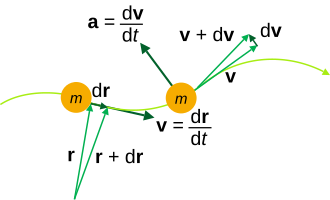
Key Facts
- 速度(Velocity)は、大きさと方向の両方を持つ「ベクトル量」である。
- 速さ(Speed)は、速度の絶対値であり、方向を持たない「スカラー量」である。
- SI単位系における速度の標準単位は m/s(メートル毎秒) である。
- 速度の変化(速さの変化、または方向の変化)が生じている状態を加速度と呼ぶ。
速度と速さの決定的な違い
物理学において、速度は単なる数値ではなく、方向を含むベクトルとして定義されます。例えば、「秒速5メートル」という情報は単なる速さ(スカラー)ですが、「東向きに秒速5メートル」と指定することで初めて速度(ベクトル)となります。
このため、「一定の速度で移動する」とは、速さが変わらず、かつ直線的に(方向を変えずに)進むことを意味します。円運動のように、速さが一定であっても常に方向が変わる運動は、物理学的には「速度が変化している」ため、加速度が発生しているとみなされます。
速度の算出方法:平均速度と瞬時速度
平均速度
ある一定の時間範囲における物体の位置の変化を、その経過時間で割ったものを平均速度と呼びます。これは、変位(位置の変化量)を時間で除した値であり、数式では $\bar{v} = \Delta s / \Delta t$ と表されます。
瞬時速度
ある特定の瞬間における速度を瞬時速度と呼びます。これは、時間間隔を限りなくゼロに近づけたときの平均速度の極限値であり、数学的には位置関数を時間で微分することで得られます。
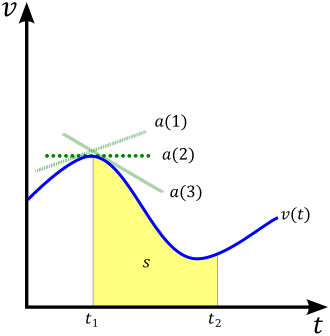
速度と時間のグラフ(v-tグラフ)において、曲線の下側の面積は物体の変位(移動距離と方向)を表します。また、このグラフの接線の傾きは、その瞬間における加速度を示しています。
速度に関連する物理量と応用
運動量と運動エネルギー
速度は他の多くの物理量の基礎となります。物体の質量 $m$ と速度 $v$ の積は運動量($p = mv$)となり、速度の2乗に比例する $\frac{1}{2}mv^2$ は運動エネルギーとなります。運動エネルギーは方向を持たないスカラー量です。
流体抵抗(ドラッグ)
空気や水などの流体中を移動する物体には、速度の2乗に比例して増大する抵抗力(抗力)が作用します。これは流体の密度、物体の断面積、および形状係数(抗力係数)によって決定されます。
脱出速度
天体の重力を振り切り、無限遠まで到達するために必要な最小の速さを脱出速度と呼びます。地球の場合、表面からの脱出速度は約11,200 m/sです。これは方向に関わらず必要な「速さ」であるため、厳密には脱出速さと呼ぶのが適切です。
相対速度と座標系
物理現象を解析する際、どの視点(座標系)から見るかは非常に重要です。2つの物体 A と B があるとき、B から見た A の速度を相対速度と呼び、それぞれの速度ベクトルの差として計算されます。
例えば、直線道路を走る車を歩行者が眺めている場合、速度は「観測者に向かってくる成分(径方向速度)」と「観測者の横を通り過ぎる成分(接線方向速度)」に分解して考えることができます。前者はドップラー効果として観測され、後者は物体の位置が視覚的に変化することとして認識されます。

速度のまとめ
| 項目 | 速さ (Speed) | 速度 (Velocity) |
|---|---|---|
| 物理的性質 | スカラー量(大きさのみ) | ベクトル量(大きさと方向) |
| 定義 | 単位時間あたりの移動距離 | 単位時間あたりの変位 |
| SI単位 | m/s | m/s(+方向の指定) |
| 変化の定義 | 数値の変化のみ | 数値または方向のいずれかの変化 |
Frequently Asked Questions
速さが一定なのに速度が変わることはありますか?
はい、あります。速度は方向を含むため、速さが一定であっても移動方向が変われば(例えば円を描いて走るなど)、速度は変化していることになります。
平均速度と平均速さの違いは何ですか?
平均速さは「全走行距離 ÷ 時間」で計算されますが、平均速度は「最終的な位置のズレ(変位) ÷ 時間」で計算されます。そのため、元の位置に戻ってきた場合、平均速さは正の値になりますが、平均速度はゼロになります。
速度を微分すると何になりますか?
速度を時間で微分すると、速度の時間的変化率である「加速度」になります。
相対速度は常に一定ですか?
いいえ。観測者または対象物のいずれか、あるいは両方の速度が変化すれば、相対速度も変化します。また、特殊相対性理論の領域(光速に近い速度)では、単純な加減算ではなく異なる計算式が適用されます。
References
- "The Feynman Lectures on Physics Vol. I Ch. 8: Motion". www.feynmanlectures.caltech.edu. Retrieved 2024-01-05.
- David Halliday; Robert Resnick; Jearl Walker (2021). Fundamentals of Physics, Extended (12th ed.). John Wiley & Sons. p. 71. . Extract of page 71
- Richard P. Olenick; Tom M. Apostol; David L. Goodstein (2008). The Mechanical Universe: Introduction to Mechanics and Heat (illustrated, reprinted ed.). Cambridge University Press. p. 84. . Extract of page 84
- Michael J. Cardamone (2007). Fundamental Concepts of Physics. Universal-Publishers. p. 5. . Extract of page 5
- Jerry D. Wilson; Anthony J. Buffa; Bo Lou (2022). College Physics Essentials, Eighth Edition (Two-Volume Set) (illustrated ed.). CRC Press. p. 40. . Extract of page 40
- David Halliday; Robert Resnick; Jearl Walker (2021). Fundamentals of Physics, Extended (12th ed.). John Wiley & Sons. p. 70. . Extract of page 70
- Adrian Banner (2007). The Calculus Lifesaver: All the Tools You Need to Excel at Calculus (illustrated ed.). Princeton University Press. p. 350. . Extract of page 350
- Giri & Bannerjee (2002). Statistical Tools and Technique. Academic Publishers. p. 4. . Extract of page 4
- Bekir Karaoglu (2020). Classical Physics: A Two-Semester Coursebook. Springer Nature. p. 41. . Extract of page 41
- David Halliday; Robert Resnick; Jearl Walker (2010). Fundamentals of Physics, Chapters 33-37. John Wiley & Sons. p. 1080. . Extract of page 1080
📸 フォトギャラリー