物理学、化学、そして生物学において、相転移(相変化)とは、ある物質が一つの状態から別の状態へと移行する物理的なプロセスを指します。一般的に、私たちが日常的に目にする「固体」「液体」「気体」、そして特殊な条件下で現れる「プラズマ」といった物質の状態間の変化がこれに当たります。同じ「相」にあるシステムは均一な物理的特性を持っていますが、温度や圧力などの外部条件が変化することで、その特性が劇的に、時には不連続に変化します。
例えば、液体が沸点に達して気体へと変わる際、体積が急激に増大します。このように、転移が起こる特定の外部条件を「相転移点」と呼び、物質の性質を決定づける重要な指標となります。
Key Facts
- 相転移の定義: 温度や圧力の変化により、物質の物理的状態(相)が切り替わる現象。
- 基本的な状態変化: 融解、凝固、蒸発、凝縮、昇華、凝華などが含まれる。
- 多様な転移形態: 単なる状態変化だけでなく、結晶構造の変化(構造相転移)や磁性の変化(磁性相転移)も存在する。
- 広範な適用範囲: 物理学のみならず、生物の細胞膜の機能維持や、社会システムの動態分析にも応用される概念である。
物質の状態と転移のパターン
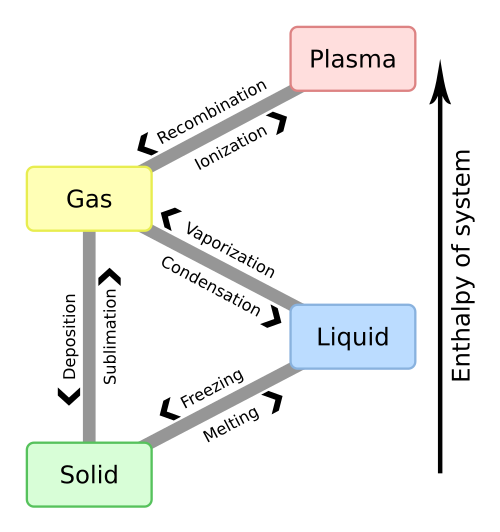
物質の状態変化は、どの状態からどの状態へ移行するかによって名称が異なります。最も基本的なのは、熱エネルギーの増減に伴う固体・液体・気体の相互変換です。
| 元の状態 \ 移行先 | 固体 | 液体 | 気体 | プラズマ |
|---|---|---|---|---|
| 固体 | - | 融解 | 昇華 | - |
| 液体 | 凝固 | - | 蒸発(気化) | - |
| 気体 | 凝華 | 凝縮 | - | 電離(イオン化) |
| プラズマ | - | - | 再結合 | - |
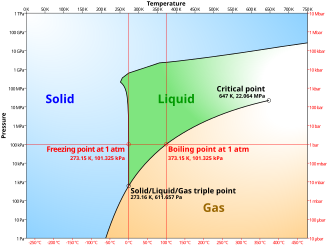
これらの関係を視覚化したものが「相図」です。相図を用いることで、特定の温度と圧力において、どの状態が最も安定して存在できるかを判断できます。
高度な相転移:構造・磁性・混合物
相転移は、単なる「氷が水になる」といった現象に留まりません。物質内部の原子配列や電子の状態が変わることで起こる転移も重要です。
構造相転移とアロトロピー
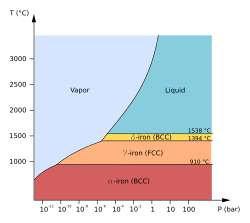
同じ元素であっても、結晶構造が異なる複数の形態(同素体)を持つことがあります。例えば鉄は、温度によってフェライト(α鉄)やオーステナイト(γ鉄)といった異なる結晶構造の間で相転移を起こします。
磁性相転移
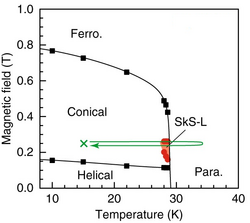
物質の磁気的な構造が変化することも相転移の一種です。例えば、ある温度を境に強磁性から常磁性へ、あるいは反強磁性へと変化する場合があり、これは電子のスピン状態の再編によるものです。
混合物とバイナリ相図
二種類以上の物質が混ざり合った系では、成分比率と温度によって安定な化合物が変化します。チタンとニッケルの合金のように、混合比率によって異なる相が現れる様子はバイナリ相図で記述されます。
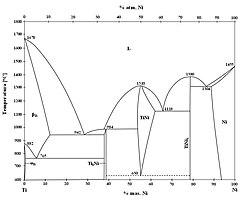
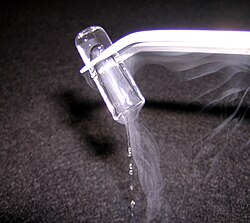
また、固体から液体への転移と同時に、周囲の蒸気が液体に戻る凝縮が同時に観察されるような複雑な現象も存在します。
科学的分類と解析手法
相転移は、その物理的性質に基づいて分類されます。かつてはエレンフェスト分類が用いられていましたが、現在はより柔軟な現代的分類法に取って代わられています。特に、比熱が対数的に発散するような挙動(イジングモデルなどで見られる現象)は、従来の単純な不連続性の枠組みでは説明できず、理論の発展を促しました。
これらの現象を解析するために、以下のような高度な実験手法が用いられます。
- X線回折・中性子回折: 結晶構造の変化を直接観測する。
- SQUID(超伝導量子干渉計): 極めて微小な磁性転移を測定する。
- 熱重量分析(TG): 温度変化に伴う質量の変化を追跡する。
- ラマン分光法: 分子の振動状態から相の変化を検知する。
生物学および社会システムへの応用
相転移の概念は、物理学の枠を超えて生命科学や社会科学にも浸透しています。
生物膜における相転移
細胞膜などの生物学的膜では、「ゲル相」から「液晶相」への転移が重要な役割を果たしています。ゲル相では流動性が低いため膜タンパク質の動きが制限されますが、液晶相では流動性が高まり、生理機能が正常に働きます。例えば、植物の葉緑体膜はリノレン酸を多く含むことで、低温下でも流動性を維持し、光合成を可能にしています。
タンパク質の構造とフラクタル
タンパク質の球状構造は、水との相互作用によって形成されます。親水性と疎水性のバランスにより、タンパク質は「二次相転移」の臨界点付近で機能していることが、表面積に見られるフラクタル構造の研究から示唆されています。
社会システムにおける相転移
社会的な動態を力学系として捉えた場合、非暴力的な対立状態から武装紛争状態への移行を、潜在的な相から顕在的な相への「相転移」としてモデル化する仮説が提唱されています。
Frequently Asked Questions
相転移とは具体的に何を指しますか?
物質が温度や圧力などの外部条件の変化によって、固体から液体へ、あるいは液体から気体へといったように、物理的な状態(相)を切り替えるプロセスのことです。これには状態変化だけでなく、磁性の変化や結晶構造の変化も含まれます。
「臨界点」とはどのような状態ですか?
相転移において、二つの相(例えば液体と気体)の区別がなくなる境界点のことです。この点付近では、物質の物理的特性が非常に敏感に変化する「臨界現象」が観察されます。
生物の体の中で相転移は起きていますか?
はい。特に細胞膜において、脂質の配列が変化するゲル相から液晶相への転移が起きており、これが膜タンパク質の活性や細胞の機能維持に不可欠な役割を果たしています。
一次相転移と二次相転移の違いは何ですか?
一次相転移は、融解や蒸発のように潜熱を伴い、体積などが不連続に変化する転移です。一方、二次相転移は潜熱を伴わず、秩序パラメータが連続的に変化する転移を指します。
相図を見ることで何が分かりますか?
特定の温度と圧力の組み合わせにおいて、その物質が固体、液体、気体のどの状態で最も安定して存在できるかが分かります。また、三つの相が同時に共存する「三重点」などの特殊な点も特定できます。
References
- Liu, Yun; Her, Jae-Hyuk; Dailly, Anne; Ramirez-Cuesta, Anibal J.; Neumann, Dan A.; Brown, Craig M. (2008). "Reversible structural transition in MIL-53 with large temperature hysteresis". Journal of the American Chemical Society. 130 (35): 11813–11818. :2008JAChS.13011813L. :10.1021/ja803669w. 18693731.
- Stracke, K; Evans, JD (2025). "Investigating the Temperature-Induced Expansion of MIL-53 under Different Gas Environments Using Molecular Simulations". The Journal of Physical Chemistry C. 129 (6): 3226–3233. :10.1021/acs.jpcc.4c10584 (inactive 6 September 2025).
{{}}: CS1 maint: DOI inactive as of September 2025 () - Askeland, Donald R.; Haddleton, Frank; Green, Phil; Robertson, Howard (1996). The Science and Engineering of Materials. Chapman & Hall. p. 286. .
- Rybin, M.V.; et al. (2015). "Phase diagram for the transition from photonic crystals to dielectric metamaterials". Nature Communications. 6 10102. :1507.08901. :2015NatCo...610102R. :10.1038/ncomms10102. 4686770. 26626302.
- Eds. Zhou, W., and Fan. S., Semiconductors and Semimetals. Vol 100. Photonic Crystal Metasurface Optoelectronics Archived 25 March 2023 at the , Elsevier, 2019
- (2004). "Fundamentals of Stable Isotope Geochemistry". USGS. Archived from the original on 16 October 2000. Retrieved 10 April 2014.
- Jaeger, Gregg (1 May 1998). "The Ehrenfest Classification of Phase Transitions: Introduction and Evolution". Archive for History of Exact Sciences. 53 (1): 51–81. :10.1007/s004070050021. 1432-0657. 121525126.
- Blundell, Stephen J. & Blundell, Katherine M. (2008). Concepts in Thermal Physics. Oxford, England: Oxford University Press. .
{{}}: CS1 maint: multiple names: authors list ()[] - An example of a continuous transition occurs at the .[]
- Trizac, Emmanuel. "Thermal and Statistical Physics: Lecture Notes" (PDF). Cavendish Laboratory, University of Cambridge. Retrieved 7 July 2026.
📸 フォトギャラリー