Schematic representation of a metamorphic reaction. Abbreviations of minerals: act = actinolite; chl = chlorite; ep = epidote; gt = garnet; hbl = hornblende; plag = plagioclase. Two minerals represented in the figure do not participate in the reaction, they can be quartz and K-feldspar. This reaction takes place in nature when a mafic rock goes from amphibolite facies to greenschist facies.
← ホームへ戻る
変成作用原岩変成相広域変成作用接触変成作用

変成作用のメカニズムと岩石の分類:地球内部で起こる物質の変容

🗓 2026年8月10日

地球の地殻深部では、既存の岩石が激しい熱や圧力にさらされ、全く異なる性質を持つ岩石へと生まれ変わる現象が起きています。これを変成作用と呼びます。このプロセスでは、岩石が完全に溶けてマグマになるのではなく、大部分が固体のまま、化学組成や組織が変化します。地表付近で起こる風化や続成作用とは異なり、通常は150°C以上の高温環境下で進行するのが特徴です。

Key Facts

  • 変成作用の定義: 原岩(プロトリス)が高温・高圧条件下で物理的・化学的に変化し、新しい鉱物組成や組織を持つ岩石になること。
  • 温度条件: 一般的に100〜200°Cから始まり、岩石が溶け始める温度(ソリダス)までで進行する。
  • 主要な要因: 温度、圧力、および化学的に活性な流体の存在が変成の程度を決定する。
  • 不可逆的な変化: 温度と圧力の上昇に伴う「前進変成作用」により、その環境で最も安定な鉱物へと再構成される。

変成作用を駆動する物理・化学的プロセス

岩石が溶けずに変容できるのは、熱によって原子間の結合が切れ、原子が移動して新しい結合を形成できるためです。この際、鉱物粒子間の間隙水が原子交換の媒介となり、効率的な変化を促します。

再結晶と相転移

既存の鉱物が同じ化学組成を保ったまま、結晶構造だけを変えることを相転移と呼びます。例えば、アルミノケイ酸塩鉱物である藍晶石、紅柱石、珪線石はすべて同じ化学式(Al2SiO5)を持ちますが、温度と圧力の条件によってどの形態で安定するかが決まります。
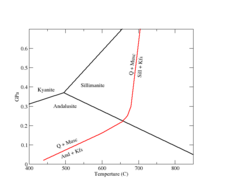
Petrogenetic grid showing aluminium silicate-muscovite-quartz-K feldspar phase boundaries

新結晶作用(ネオクリスタリゼーション)

異なる鉱物同士が化学反応を起こし、全く新しい鉱物を生成することを新結晶作用といいます。これには、水分子を放出する脱水反応や、二酸化炭素を放出する脱炭酸反応などが含まれます。これらの反応によって生成される鉱物の組み合わせ(鉱物組合せ)を分析することで、その岩石が過去にどのような温度・圧力環境にあったかを推定できます。
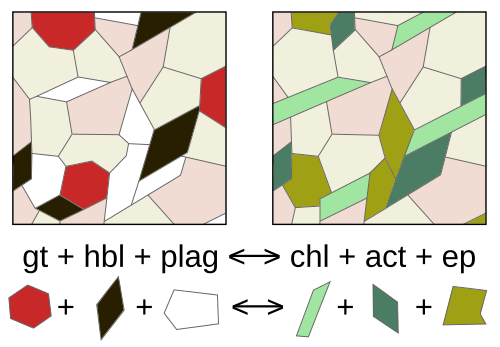
Schematic representation of a metamorphic reaction. Abbreviations of minerals: act = actinolite; chl = chlorite; ep = epidote; gt = garnet; hbl = hornblende; plag = plagioclase. Two minerals represented in the figure do not participate in the reaction, they can be quartz and K-feldspar. This reaction takes place in nature when a mafic rock goes from amphibolite facies to greenschist facies.

塑性変形と機械的変化

強い圧力を受けた岩石は、結晶が回転したり破砕されたりするだけでなく、高温下では飴のようにゆっくりと変形する塑性変形を起こします。これにより、鉱物が一定方向に並ぶ「葉理」などの特有の組織が形成されます。
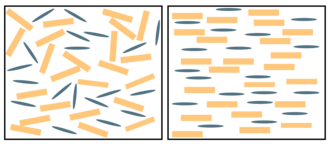
(Left) Randomly-orientated grains in a rock before metamorphism. (Right) Grains align orthogonal to the applied stress if a rock is subjected to stress during metamorphism

変成作用の種類と発生環境

変成作用は、その原因となる温度と圧力のバランスによっていくつかのタイプに分類されます。

広域変成作用とダイナモサーマル変成作用

プレートの衝突などの大規模な地殻変動に伴い、広範囲にわたって起こるのが広域変成作用です。スコットランドの高地で研究された「バロビアン変成帯」のように、温度上昇に伴って現れる指標鉱物が明確な帯状に分布することがあります。
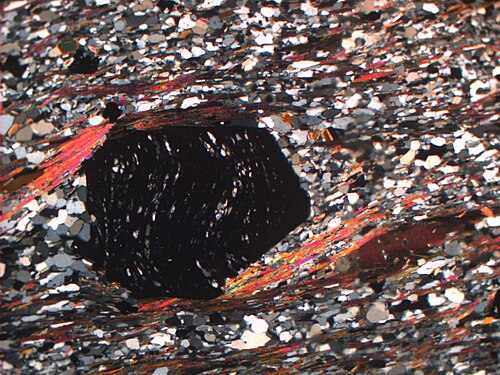
A cross-polarized thin section image of a garnet-mica-schist from Salangen Municipality, Norway showing the strong strain fabric of schists. The black crystal is garnet, the pink-orange-yellow colored strands are muscovite mica, and the brown crystals are biotite mica. The grey and white crystals are quartz and (limited) feldspar.

接触変成作用

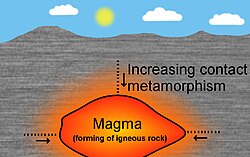
高温のマグマが周囲の岩石に貫入した際、その熱によって周囲の岩石が変成することを接触変成作用と呼びます。マグマの周囲に形成される変成帯を「変成オーレオール」と呼び、マグマに近いほど高温の変成相(例:珪線石ホルンフェルス)が現れます。
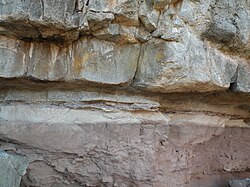
A metamorphic aureole in the Henry Mountains, Utah. The greyish rock on top is the igneous intrusion, consisting of porphyritic granodiorite from the Henry Mountains laccolith, and the pinkish rock on the bottom is the sedimentary country rock, a siltstone. In between, the metamorphosed siltstone is visible as both the dark layer (~5 cm thick) and the pale layer below it.

その他の特殊な変成作用

  • 埋没変成作用: 岩石が地中深くへ埋没し、徐々に温度と圧力が高まることで進行します。
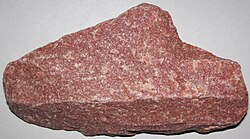
    Sioux Quartzite, a product of burial metamorphism
  • 衝撃変成作用: 隕石の衝突などによる超高圧・短時間の加熱で起こり、コエサイトなどの特殊な鉱物が生成されます。
  • 動的変成作用: 断層帯などの高歪み領域で起こります。浅部では岩石が砕けるカタクレーシスが支配的ですが、深部(約5km以深)ではマイロナイトと呼ばれる微粒で強い葉理を持つ岩石が形成されます。
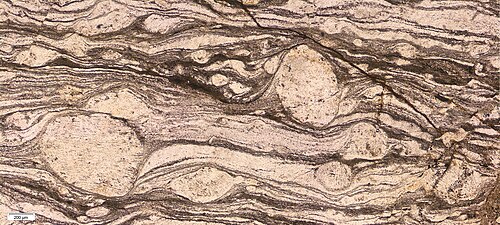
    A mylonite (through a petrographic microscope)
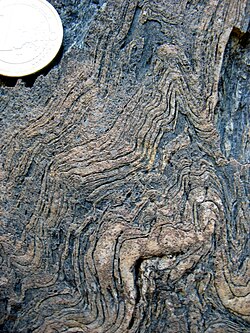
A metamorphic rock, deformed during the Variscan orogeny, at Vall de Cardós, Lérida, Spain

変成岩の分類とグレードの判定

変成岩は、元の岩石(原岩)が特定できる場合は「メタ+原岩名」(例:玄武岩由来のメタバサルト)と呼びますが、不明な場合は鉱物組成や組織で分類します。

変成度(グレード)と変成相

変成の強さは「グレード」として表現されます。泥質岩の場合、低グレードの粘板岩(スレート)から、千枚岩、結晶片岩、そして高グレードの片麻岩やミグマタイトへと変化します。
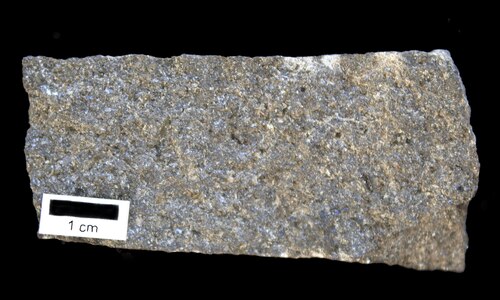
Basalt hand sample showing fine texture
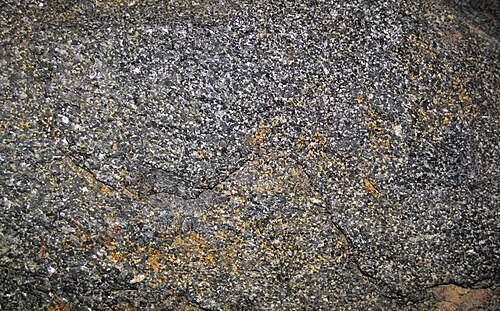
Amphibolite formed by metamorphism of basalt showing coarse texture

より厳密な分類として、特定の温度・圧力条件下で平衡状態にある鉱物組合せに基づいた変成相という概念が用いられます。これはフィンランドの地質学者ペッティ・エスコラによって提唱されました。
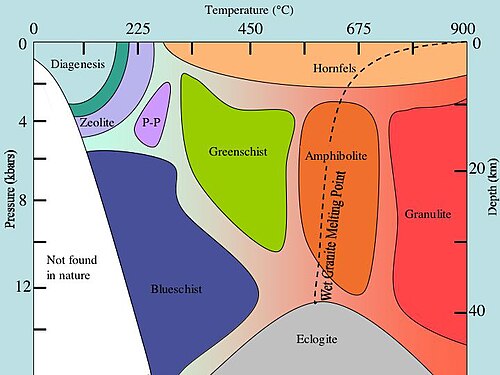
Temperatures and pressures of metamorphic facies
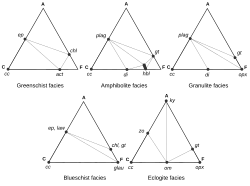
ACF compatibility diagrams (aluminium-calcium-iron) showing phase equilibria in metamorphic mafic rocks at different P-T circumstances (metamorphic facies). Dots represent mineral phases, thin grey lines are equilibria between two phases. Mineral abbreviations: act = actinolite; cc = calcite; chl = chlorite; di = diopside; ep = epidote; glau = glaucophane; gt = garnet; hbl = hornblende; ky = kyanite; law = lawsonite; plag = plagioclase; om = omphacite; opx = orthopyroxene; zo = zoisite

変成相のまとめ

主要な変成相と環境条件
変成相 温度条件 圧力条件 特徴
ゼオライト相 極めて低いグレードの変成
緑色片岩相 緑色鉱物が特徴的な中程度の変成
角閃岩相 中〜高 広域変成作用で一般的
青色片岩相 低〜中 沈み込み帯などの高圧環境
エクロジャイト相 中〜高 極高 超高圧条件下での変成
ホルンフェルス相 中〜高 接触変成作用に特有
ภาพประกอบบทความ

Frequently Asked Questions

変成作用と火成作用の違いは何ですか?

最大の違いは「融解」の有無です。火成作用は岩石が完全に溶けてマグマになり、それが冷えて固まるプロセスですが、変成作用は岩石が固体のまま(あるいはごく一部だけ溶けた状態で)化学的・物理的に変化するプロセスを指します。

「原岩」とは具体的にどのようなものを指しますか?

変成作用を受ける前の元の岩石のことです。堆積岩(泥岩や石灰岩など)や火成岩(玄武岩や花崗岩など)、あるいは既に変成した岩石がさらに変成する場合もあり、あらゆる種類の岩石が原岩となり得ます。

前進変成作用と後退変成作用とは何が違うのでしょうか?

前進変成作用は、温度と圧力が増加する過程で起こる変化であり、通常は脱水反応を伴います。一方、後退変成作用は温度や圧力が低下する過程で起こりますが、多くの変成岩は地表に上昇しても元の状態に戻らず、最大温度・圧力時の特徴を保持しています。

マイロナイトはどのようにして形成されますか?

断層帯などの非常に強い歪みが加わる場所で、温度が300°Cを超える環境下において、岩石が塑性変形を起こすことで形成されます。強い葉理を持ち、周囲の岩石よりも粒径が細くなるのが特徴です。

References

  1. , p. 177.
  2. , p. 1.
  3. , pp. 1–5.
  4. , p. 5.
  5. , pp. 29–30.
  6. , pp. 149, 420–425.
  7. , p. 4.
  8. .
  9. .
  10. , p. 252.

📸 フォトギャラリー

Schematic representation of a metamorphic reaction. Abbreviations of minerals: act = actinolite; chl = chlorite; ep = epidote; gt = garnet; hbl = hornblende; plag = plagioclase. Two minerals represented in the figure do not participate in the reaction, they can be quartz and K-feldspar. This reaction takes place in nature when a mafic rock goes from amphibolite facies to greenschist facies.
A cross-polarized thin section image of a garnet-mica-schist from Salangen Municipality, Norway showing the strong strain fabric of schists. The black crystal is garnet, the pink-orange-yellow colored strands are muscovite mica, and the brown crystals are biotite mica. The grey and white crystals are quartz and (limited) feldspar.
(Left) Randomly-orientated grains in a rock before metamorphism. (Right) Grains align orthogonal to the applied stress if a rock is subjected to stress during metamorphism
Basalt hand sample showing fine texture
Amphibolite formed by metamorphism of basalt showing coarse texture
A mylonite (through a petrographic microscope)
A metamorphic rock, deformed during the Variscan orogeny, at Vall de Cardós, Lérida, Spain
Sioux Quartzite, a product of burial metamorphism
A metamorphic aureole in the Henry Mountains, Utah. The greyish rock on top is the igneous intrusion, consisting of porphyritic granodiorite from the Henry Mountains laccolith, and the pinkish rock on the bottom is the sedimentary country rock, a siltstone. In between, the metamorphosed siltstone is visible as both the dark layer (~5 cm thick) and the pale layer below it.
ภาพประกอบบทความ
Temperatures and pressures of metamorphic facies
Petrogenetic grid showing aluminium silicate-muscovite-quartz-K feldspar phase boundaries
ACF compatibility diagrams (aluminium-calcium-iron) showing phase equilibria in metamorphic mafic rocks at different P-T circumstances (metamorphic facies). Dots represent mineral phases, thin grey lines are equilibria between two phases. Mineral abbreviations: act = actinolite; cc = calcite; chl = chlorite; di = diopside; ep = epidote; glau = glaucophane; gt = garnet; hbl = hornblende; ky = kyanite; law = lawsonite; plag = plagioclase; om = omphacite; opx = orthopyroxene; zo = zoisite