虹色に輝く幻想的な外観で人々を魅了し続けるオパール。この宝石は、一般的な結晶を持つ鉱物とは異なり、水を含んだ非晶質のシリカ(二酸化ケイ素)で構成されています。化学式は SiO2 · n H2O と表され、重量の3%から21%(通常は6%〜10%)が水分であるため、厳密には鉱物ではなく「鉱物様物質(ミネラロイド)」に分類されます。
オパールは比較的低温の環境で形成され、砂岩や玄武岩、ライモナイトなどの岩石の裂け目に見られます。その多様な色彩と独特の物理的特性は、地球上のさまざまな地質学的プロセスを経て生み出されました。
Key Facts
- 分類: 非晶質の水和シリカ(鉱物様物質)
- 硬度: モース硬度 5.5〜6
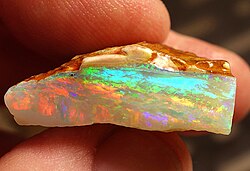
- 最大の特徴: 内部で色が変化して見える「遊色効果」
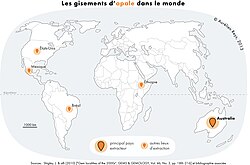
- 主要産地: オーストラリア、エチオピア、メキシコ、アメリカ(ネバダ州)など
- 物理的性質: 加熱すると色が暗くなる特性がある
虹色の正体:貴オパールの微細構造
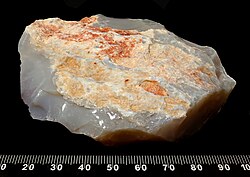
オパールには、鮮やかな色彩が変化して見える「貴オパール」と、そのような効果を持たない「コモンオパール」が存在します。貴オパールの美しさの秘密は、目に見えないほど微小なシリカ球体の配列にあります。
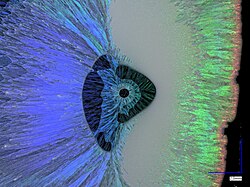
顕微鏡レベルで見ると、直径150〜300ナノメートルの小さな球体が、六方晶または立方晶の密充填構造で規則正しく並んでいます。光がこの構造を通過する際、球体間の間隔が可視光の波長の約半分である場合に回折と干渉が起こり、特定の波長の光が強調されます。これが、見る角度によって色が変わる「遊色効果」の正体であり、ブラッグの回折法則によって説明されます。
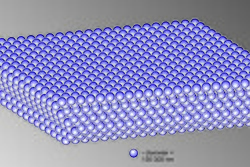
この球体のサイズや配列の規則性が高いほど、宝石としての価値が高まります。一方で、構造が不規則なものはコモンオパールとなり、遊色効果は現れません。
世界各地の主要産地と特徴
オパールの産地は世界中に点在していますが、特に有名な地域にはそれぞれ異なる特性があります。
オーストラリア
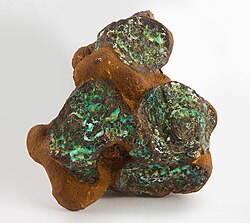
世界最大の供給量を誇るのがオーストラリアです。特に南オーストラリア州のクーバーペディは世界的に有名で、1956年には世界最大かつ最高価値の宝石オパールの一つである「オリンピック・オーストラリス(17,000カラット)」が発見されました。
![Polished opal from Yowah (Yowah Nut[23]), Queensland](/images/fe/76/fe764a57bb401be7ea28d1047d4715658593763fd7de262c2259f67fca4b4eaa.jpg)
エチオピア
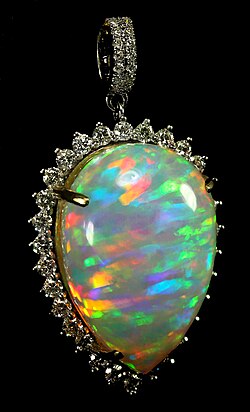
1994年に宝石級のオパールが報告されて以来、急速に注目を集めた産地です。初期に発見されたシェワ州のものは暗褐色で割れやすかったものの、後にウォロ州(ウェロ・オパールとして知られる)で発見されたものは、明るい地色に鮮やかな遊色を持つため、市場で高く評価されています。
アメリカ合衆国(ネバダ州)
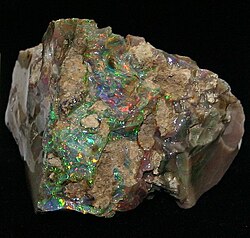
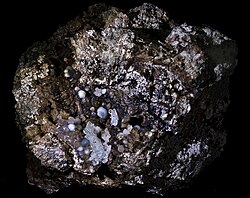
ネバダ州のヴァージンバレーでは、ブラック、クリスタル、ホワイト、レモンなど多彩なオパールが産出されます。特にブラック・ファイア・オパールは州の公式宝石に指定されています。ここでは、太古の木や骨がオパールに置き換わった「化石オパール」も多く見つかっており、白亜紀の魚やヘビの頭骨などが発見されています。

メキシコ
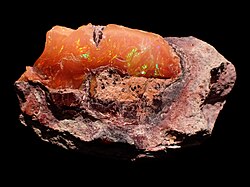
メキシコでは、特にケレタロ州やハリスコ州で産出されます。オレンジから赤色の地色を持つ「ファイア・オパール」が有名で、その中に緑や黄色の遊色が現れる希少な個体も存在します。
多様なバリエーションと特殊な形態
天然のオパール以外にも、地質学的な特異点や人工的な手法によるものが存在します。
- ウッドオパール: 植物の化石がシリカに置き換わったもの。
- 人工オパール: ポリスチレン球体などのコロイドを用いて、天然の構造を模倣して作られたもの。
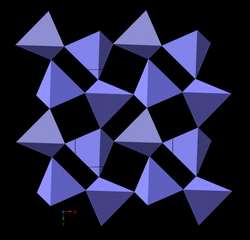
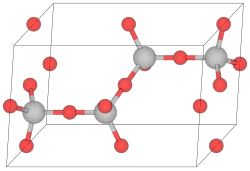
- 結晶質オパール: 完全に非晶質ではなく、クリストバライトなどの結晶構造に近い性質を持つもの。
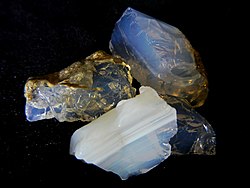
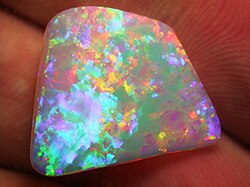
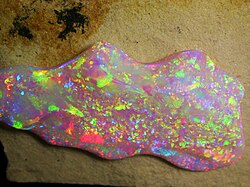
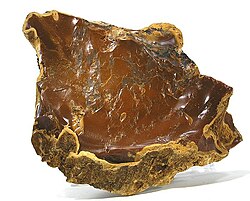
オパールの物理的特性まとめ
オパールの鑑定や取り扱いに役立つ主要な物理的データは以下の通りです。
| 特性項目 | 詳細データ |
|---|---|
| 化学組成 | 水和シリカ (SiO2 · n H2 O) |
| モース硬度 | 5.5 〜 6 |
| 比重 | 2.15 (+0.08 / −0.90) |
| 屈折率 | 通常 1.42 〜 1.43 (メキシコ産は1.37まで低下する場合あり) |
| 光沢 | 亜ガラス光沢 〜 樹脂光沢 |
| 劈開 | なし(断口は貝殻状から不規則) |
歴史と迷信:幸運と不運の象徴
オパールに対する人々の認識は、時代によって劇的に変化してきました。中世ヨーロッパでは、あらゆる宝石の色を併せ持つことから「すべての宝石の美徳を備えた幸運の石」と信じられていました。また、透明になれる力を与えるとして、泥棒たちの守護石とされていたという逸話もあります。
しかし、1829年にサー・ウォルター・スコットの小説『ガイエルシュタインのアン』が発表されると状況が一変します。作中でオパールのタリスマンが不吉な象徴として描かれたため、現実の世界でも「不吉な石」という迷信が広まり、ヨーロッパでの販売量は一時的に激減しました。しかし、現代ではその唯一無二の美しさが再び高く評価されています。
Frequently Asked Questions
オパールが「鉱物」ではなく「鉱物様物質」とされるのはなぜですか?
一般的な鉱物は原子が規則正しく並んだ「結晶構造」を持っていますが、オパールは原子配列が不規則な「非晶質(アモルファス)」であるため、鉱物の定義から外れ、鉱物様物質(ミネラロイド)に分類されます。
遊色効果はどのようにして生まれるのですか?
内部にある微小なシリカ球体が規則正しく並んでいるため、光が通過する際に回折と干渉が起こります。この現象により、特定の色の光だけが強調されて目に届くため、虹色に輝いて見えます。
オパールの取り扱いで注意すべき点はありますか?
オパールは水分を含んでいるため、極端な乾燥や加熱によって水分が失われると、ひび割れ(クラック)が生じたり、色が暗くなったりすることがあります。適切な湿度管理が重要です。
世界で最も価値があるオパールはどこで発見されましたか?
南オーストラリア州のクーバーペディにある「エイトマイル」鉱山で発見された「オリンピック・オーストラリス」が、世界最大かつ最も価値のある宝石オパールの一つとして知られています。
化石オパールとは何ですか?
太古の生物の骨や植物の組織が、長い年月をかけてシリカに置き換わり、オパール化したものです。ネバダ州のヴァージンバレーなどで、恐竜や魚の化石がオパール化した状態で発見されています。
References
- Warr, L.N. (2021). "IMA–CNMNC approved mineral symbols". Mineralogical Magazine. 85 (3): 291–320. :2021MinM...85..291W. :10.1180/mgm.2021.43. 235729616.
- , GIA Gem Reference Guide 1995,
- "Opal". Webmineral. Archived from the original on 18 October 2011. Retrieved 8 October 2011.
- "Opal". Mindat.org. Archived from the original on 6 October 2011. Retrieved 8 October 2011.
- (1997). The World of Opals. John Wiley and Sons. pp. 56–57. . Archived from the original on 26 April 2016.
- "Opal Description". Gemological Institute of America. Archived from the original on 23 November 2017. Retrieved 4 June 2018.
- "Glossary: Play of Color". Mindat. Archived from the original on 10 January 2019. Retrieved 4 June 2018.
- Sanders, J. V. (1964). "Colour of precious opal". . 204 (496): 1151–1153. :1964Natur.204.1151S. :10.1038/2041151a0. 4169953.
- Sanders, J. V. (1968). "Diffraction of light by opals". Acta Crystallographica A. 24 (4): 427–434. :1968AcCrA..24..427S. :10.1107/S0567739468000860.
- Klein, Cornelis; Hurlbut, Cornelius S. (1985). Manual of Mineralogy (20th ed.). Wiley. .
📸 フォトギャラリー