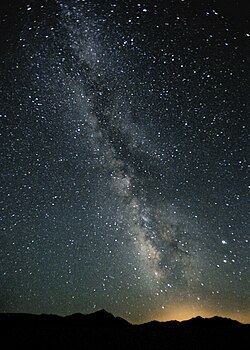
夜空に白く帯状に広がる「天の川」。私たちはこの壮大な光の川の内部に住んでおり、天文学的な視点で見れば、それは天の川銀河(Milky Way Galaxy)という巨大な恒星の集団の一部に過ぎません。この銀河は、数千億もの星々が複雑に絡み合い、回転しながら宇宙を旅しています。
かつては太陽系が銀河の中心に近いと考えられていた時代もありましたが、観測技術の向上により、私たちは自分たちが銀河の端に近い位置にいることを知りました。現代の天文学は、赤外線やX線、そして精密な星のカタログを用いて、この巨大な構造の正体を明らかにしようとしています。
Key Facts
- 銀河の形態: 中心に棒状構造を持つ棒渦巻銀河(Sb, Sbc, SB(rs)bc)に分類される。
- 推定規模: 直径は約87,400光年(±3,600光年)に及び、1,000億から4,000億個の恒星が存在する。
- 太陽の位置: 銀河中心から約26,000光年離れた「オリオン・キグナス腕」という小さな腕に位置している。
- 質量と正体: 太陽質量の約1.15兆倍という膨大な質量を持ち、その多くは正体不明のダークマター(暗黒物質)で構成されている。
- 回転周期: 太陽系が銀河中心を一周するのにかかる時間は約2億1,200万年である。
天の川銀河の物理的構造
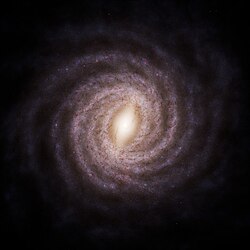
天の川銀河は、平らな円盤状の構造をしており、その中心には星が密集した「バルジ」と呼ばれる膨らみがあります。この円盤部分には、ガスと塵が濃い領域が渦巻状に広がっており、ここで新しい星が次々と誕生しています。
銀河の腕と太陽系の居場所
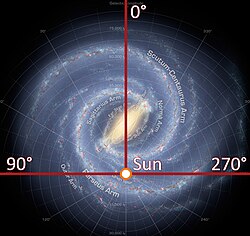
銀河の円盤にはいくつかの主要な「腕」が存在します。例えば、ノルマ腕やペルセウス腕などが挙げられます。私たちの太陽系は、これらの主要な腕の間にある「オリオン・キグナス腕」という比較的小さな構造の中に位置しています。
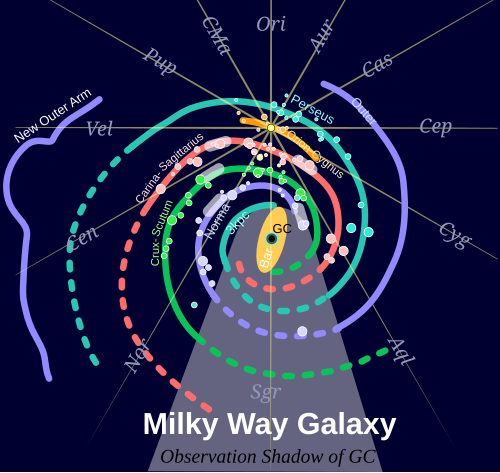
銀河の座標系では、中心方向を基準に4つの象限に分けて分析されます。太陽から見た銀河の広がりは、銀河経度を用いて定義されており、これにより星々の分布を正確にマッピングすることが可能です。
中心部のダイナミクス
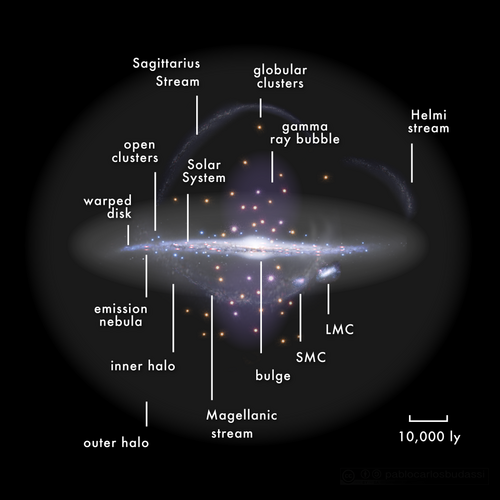
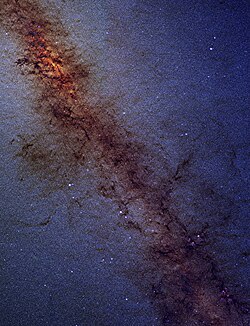
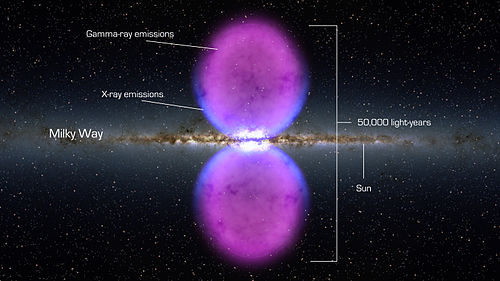
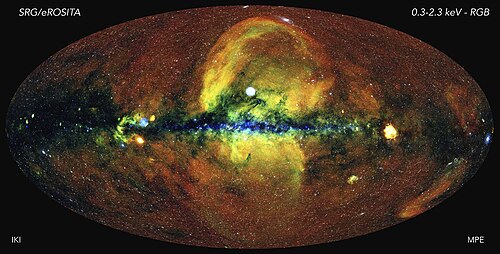
銀河の心臓部である銀河中心には、超大質量ブラックホール(Sagittarius A*)が存在し、その周囲を猛烈な速度で星々が公転しています。また、中心部からは巨大なX線およびガンマ線のバブルが上下に噴出していることが分かっており、銀河の激しい活動の歴史を物語っています。
観測の歴史と現代の解析
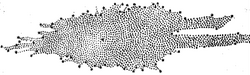
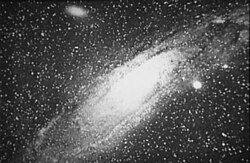
18世紀のウィリアム・ハーシェルによる星の数え上げから始まった銀河の形状推定は、当初は太陽系を中心とした単純なモデルでした。しかし、20世紀に入り、アンドロメダなどの外部銀河が発見されたことで、私たちの銀河も数ある銀河の一つであることが判明しました。
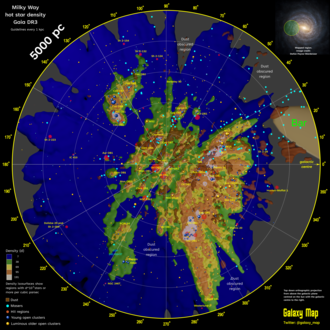
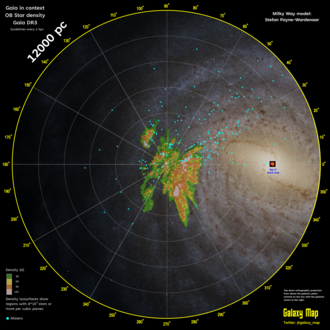
近年では、欧州宇宙機関(ESA)のガイア(Gaia)衛星による精密な観測データが革命をもたらしました。数十億個の星の正確な位置と速度を測定することで、銀河の密度分布や、過去に他の小銀河を吸収した痕跡までが明らかになりつつあります。
質量と回転の謎:ダークマターの存在
天の川銀河の回転速度を測定すると、不思議な現象が見つかります。通常、中心から離れるほど回転速度は落ちるはずですが、実際には外縁部でも速度が維持されています。これは、目に見える星やガスの質量だけでは説明できず、目に見えないダークマターが銀河全体を包み込み、強力な重力で星々を繋ぎ止めていることを示唆しています。
![Galaxy rotation curve for the Milky Way. The vertical axis is the rotation speed about the galactic center. The horizontal axis is the distance from the galactic center. The Sun is marked in yellow. Data points mark the observed rotation speed curve. The predicted curve based on the stellar mass and gas of the Milky Way is in black. The difference is due to dark matter or possibly a modification of gravity like MOND. The data shown can be found here.[147][148][149][150][151][152][153][154][155][156]](/images/43/c9/43c9c171d6ca07a7dbef0fe343cdfcb27418d3e8472a3bb9f33446848ceeda8f.webp)
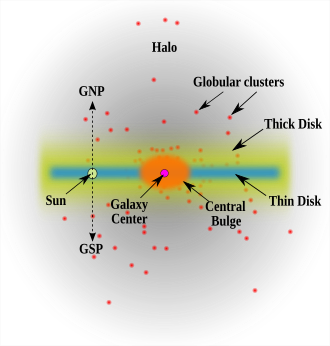
銀河の断面を見ると、薄い円盤(シンディスク)と、それを包む厚い円盤(シックディスク)、そしてさらに外側を球状に囲む「ハロー」という構造があることが分かります。このハロー領域には、非常に古い星や球状星団が点在しています。
宇宙における天の川銀河の立ち位置
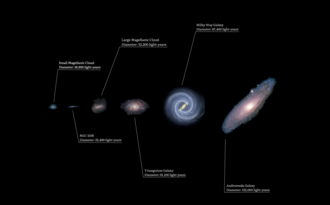
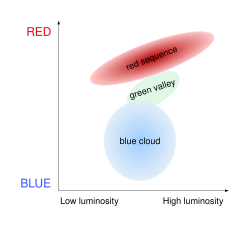
天の川銀河は「局所群」と呼ばれる近隣の銀河集団の中で最大級の存在です。アンドロメダ銀河などと共に、互いの重力で引き合いながら宇宙を漂っています。また、銀河の進化段階で見ると、活発に星を作る「青い雲」のような若い銀河から、星形成が止まった「赤い配列」の古い銀河への移行期である「グリーンバレー」に位置していると考えられています。
100億年前の天の川銀河は、現在とは全く異なる夜空を見せていたはずです。銀河は長い時間をかけて、周囲の小さな銀河を飲み込みながら成長し、現在の姿へと進化してきました。
![Comparison of the night sky with the night sky of a hypothetical planet within the Milky Way 10 billion years ago, at an age of about 3.6 billion years and 5 billion years before the Sun formed[274]](/images/17/5f/175ffd80f3240a8689213cbd5077d5e9a7ad81a02656cb6c4ee991d17049d185.jpg)

天の川銀河の基本データまとめ
| 項目 | 詳細データ |
|---|---|
| 銀河の型 | 棒渦巻銀河 (Sb / Sbc / SB(rs)bc) |
| 直径 | 約 87,400 ± 3,600 光年 |
| 恒星数 | 1,000億 〜 4,000億個 |
| 総質量 | 太陽質量の約 1.15兆倍 |
| 太陽の公転周期 | 約 2億1,200万年 |
| 中心までの距離 | 約 25,881 〜 26,996 光年 |
Frequently Asked Questions
天の川を肉眼で見るための最適な条件は何ですか?
光害の少ない暗い場所(ボートルスケール4以下)で、新月の前後5日間の月明かりがない夜に観測するのが最適です。また、北米などの北半球では5月から8月にかけてが最も見やすい季節とされています。暗闇に目を慣らすために30分ほど時間をかけることが推奨されます。
ダークマターが銀河にどのような影響を与えていますか?
ダークマターは目に見えませんが、強力な重力を提供しています。これにより、銀河の外縁部にある星々が、計算上の予想よりも速い速度で回転していても、銀河の外へ飛び出さずに留まることができています。
太陽系は銀河のどこに位置していますか?
太陽系は銀河の中心ではなく、中心から約26,000光年離れた円盤部分に位置しています。「オリオン・キグナス腕」という比較的小さな腕の中にあり、銀河全体から見ればかなり端の方に位置しています。
天の川銀河の形はどのようにして分かったのですか?
私たちは銀河の内部にいるため、外側から直接見ることはできません。しかし、星の数や分布の測定、ガス雲の速度解析、そしてガイア衛星のような精密な星のカタログを作成し、それらを数学的にモデル化することで、渦巻状の構造であることが導き出されました。
銀河中心には何があるのですか?
銀河の中心には、非常に高密度に星が集まったバルジがあり、その最深部には「Sagittarius A*」と呼ばれる超大質量ブラックホールが存在しています。また、中心部からは巨大なX線・ガンマ線バブルが放出されていることも観測されています。
References
- The distance towards its ().
- This is the diameter measured using the D25 standard. It has been recently suggested that there is a presence of disk stars beyond this diameter, although it is not clear how much of this influences the surface brightness profile.
- Some authors use the term Milky Way to refer exclusively to the band of light that the galaxy forms in the night sky, while the galaxy receives the full name Milky Way Galaxy. See for example Laustsen et al., Pasachoff, Jones, van der Kruit, and Hodge et al.
- See also .
- The bright center of the galaxy is located in the constellation . From Sagittarius, the hazy band of white light appears to pass westward through the constellations of , , , , , , , , , , , , , and , , to the in . From there, it passes through , , , and , , , , , , , and back to .
- These estimates are very uncertain, as most non-star objects are difficult to detect; for example, black hole estimates range from ten million to one billion.
- Karachentsev et al. give a blue absolute magnitude of −20.8. Combined with a of 0.55 estimated here, an absolute visual magnitude of −21.35 (−20.8 − 0.55 = −21.35) is obtained. Determining the absolute magnitude of the Milky Way is very difficult because Earth is inside it.
- For a photo see: "Sagittarius A*: Milky Way monster stars in cosmic reality show". Chandra X-ray Observatory. Center for Astrophysics | Harvard & Smithsonian. January 6, 2003. Archived from the original on March 17, 2008. Retrieved May 20, 2012.
📸 フォトギャラリー