火星の赤茶けた表面には、まるで誰かが筆で描いたかのような細長い黒い筋が点在しています。これらは暗い斜面筋(Dark Slope Streaks)と呼ばれ、主に赤道付近の塵に覆われた急斜面で見られる地質学的特徴です。1970年代のバイキング計画で初めて確認されて以来、近年の高解像度カメラを搭載した探査機によって、その正体が徐々に明らかになってきました。
主要な事実(Key Facts)
- 正体: 表面の明るい塵が崩落し、下の暗い地層が露出してできる「塵の雪崩(ダストアバランシェ)」である可能性が高い。
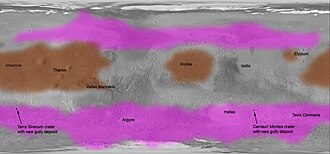
- 分布: 北緯39度から南緯28度の赤道地域(タルシス、アラビアテラ、アマゾニス平原など)に集中している。
- 発生頻度: 1日あたり約70本という驚異的なペースで形成されており、火星で最も活動的な地質現象の一つとされる。
- トリガー: 隕石衝突による衝撃波(ソニックブーム)や火星地震などが引き金となることがある。
形態と分布の特徴
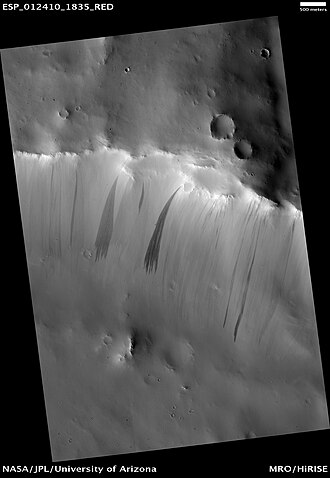
暗い斜面筋は、クレーターの縁や断崖などの急峻な地形に沿って形成されます。中解像度の画像では平行な細い線に見えますが、詳細に観察すると、下流に向かって扇状に広がり、先端が指のように分かれた形状(指状突起)をしていることがわかります。
幅は20メートルから200メートル、長さは数百メートルから1キロメートル以上に及びますが、2キロメートルを超えるものは稀です。また、これらの筋は平坦な地形まで到達せず、斜面上で途切れるのが一般的です。
地理的な分布を見ると、特に赤道付近の塵が多い地域に集中しています。興味深いことに、これらの筋は水が三重点(固体・液体・気体が共存する温度)に近い温度に達する地域とも関連しており、かつては液体の水の関与が強く疑われていました。
形成メカニズム:水か、それとも乾燥した崩落か
この現象の最大の論点は「水が関わっているか」という点です。一部の研究では、塩分濃度の高い塩水(ブライイン)の浸透や湧水の可能性が指摘されており、中性子分光計のデータから水素含有量が高い地域で筋が発生しやすいという報告もあります。
しかし、火星の厳しい熱力学的環境では液体の水は不安定であるため、現在は乾燥した粒状の流れ、つまり塵の雪崩であるという説が有力です。明るい塵の層が不安定になり、一気に崩れ落ちることで、その下に隠れていた暗い基盤岩や土壌が露出して黒い筋に見えるという仕組みです。
![Dark slope streaks in Arabia Terra as seen by Mars Orbital Camera (MOC) on Mars Global Surveyor spacecraft. The darkest streaks are only about 10% darker than their surroundings. The greater apparent contrast in the image is due to contrast enhancement[1] Image is 1.65 km (1 mi) across. North is at bottom.](/images/19/f1/19f17a9eb60e34a2ace44b5990794de154efb273e38b74b32c4531561ed68233.jpg)
外部刺激によるトリガー
最近の研究では、自然発生的な崩落だけでなく、外部からの衝撃が引き金になることが判明しています。例えば、超音速で飛来した隕石が作り出す衝撃波(エアブラスト)が、急斜面の塵を揺さぶり、雪崩を誘発させることがあります。実際に、衝突地点から翼のように広がるパターンで多数の筋が形成された事例が確認されています。

また、オリンポス山付近では、新たなクレーターの形成と同時に斜面筋が現れた例があり、衝突が直接的な原因となったと考えられています。さらに、Insight着陸機が検知した火星地震(marsquake)の後に、斜面筋が増加したという報告もあり、地殻変動も影響を与えている可能性があります。
時間的変化とライフサイクル
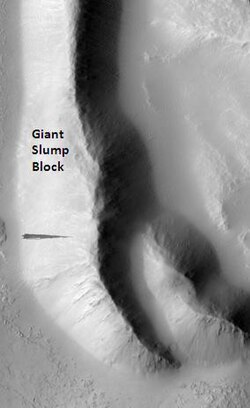
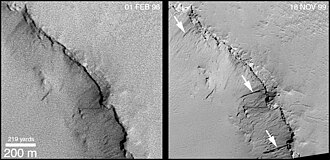
暗い斜面筋は、現代の火星で進行している数少ない地質活動の一つです。過去の画像と比較すると、数年から数十年という短いスパンで新しい筋が現れ続けていることがわかります。
形成される速度に比べ、消滅する速度は非常に緩やかです。数十年前に観測された筋が今も残っているケースが多く、形成速度は消滅速度の約10倍に達すると推測されています。ただし、数十年(約40年)かけて徐々に薄れ、最終的には再び降り積もる塵によって覆い隠されると考えられています。また、極めて激しい全惑星的な塵嵐が起きた際には、一度にリセットされる可能性も示唆されています。
類似現象との違い
火星には他にも似たような筋状の地形がありますが、性質は大きく異なります。特に注目されるのが反復性斜面線(RSL: Recurring Slope Lineae)です。RSLは幅が数メートルと非常に狭く、暖かい季節に現れて寒い季節に消えるという明確な季節性を持っています。これは液体の塩水の流れである可能性が高いとされており、不定期に発生し季節に依存しない「暗い斜面筋」とは根本的に異なる現象です。
| 特徴 | 暗い斜面筋 (Dark Slope Streaks) | 反復性斜面線 (RSL) |
|---|---|---|
| 主な原因 | 塵の雪崩(乾燥した流れ) | 塩水の流れ(液体の関与) |
| 発生タイミング | 不定期(衝撃や地震など) | 季節的(暖かい時期に成長) |
| サイズ(幅) | 20m 〜 200m | 0.5m 〜 5m |
| 分布地域 | 赤道付近の塵に覆われた斜面 | 南半球の急斜面(岩盤露出地) |
Frequently Asked Questions
暗い斜面筋は水でできているのですか?
かつては水が関与しているという説がありましたが、現在の主流な見解では、表面の明るい塵が崩落して下の暗い層が見える「乾燥した雪崩」であると考えられています。
なぜ「暗い」色に見えるのでしょうか?
火星の表面を覆っている細かい塵は光を反射して明るく見えますが、その下の基盤となる物質はより暗い色をしています。雪崩によって上の塵が取り除かれるため、コントラストによって黒い筋として観察されます。
隕石が落ちるとなぜ筋ができるのですか?
隕石が超音速で大気圏を通過する際に発生する衝撃波(ソニックブーム)が、斜面にある不安定な塵の層を激しく揺さぶるため、それがトリガーとなって雪崩が発生します。
これらの筋はどれくらいの間、表面に残りますか?
個々の筋の寿命は研究によって異なりますが、約40年ほどで消滅するという報告があります。新しい塵が降り積もることで、徐々に周囲の色と同化していきます。
火星の塵のサイクルにどのような影響を与えていますか?
斜面筋が占める面積は全表面の0.1%未満とわずかですが、1火星年あたりに輸送される塵の量は膨大であり、惑星規模の塵の循環において重要な役割を果たしている可能性があります。
References
- Sullivan, R. et al. (2001). Mass Movement Slope Streaks Imaged by the Mars Orbiter Camera. J. Geophys. Res., 106(E10), 23,607–23,633.
- Chuang, F.C.; Beyer, R.A.; Bridges, N.T. (2010). Modification of Martian Slope Streaks by Eolian Processes. Icarus, 205 154–164.
- "HiRISE | Slope Streaks on a Dusty Planet (ESP_040386_1915)". www.uahirise.org. Retrieved 2025-03-09.
- Schorghofer, N.; Aharonson, O.; Khatiwala, S. (2002). Slope Streaks on Mars: Correlations with Surface Properties and the Potential Role of Water. Geophys. Res. Lett., 29(23), 2126, :10.1029/2002GL015889.
- Morris, E.C. (1982). Aureole Deposits of the Martian Volcano Olympus Mons. J. Geophys. Res., 87(B2), 1164–1178.
- Ferguson, H.M.; Lucchitta, B.K. (1984). "Dark Streaks on Talus Slopes, Mars" (PDF). Reports of the Planetary Geology Program 1983, NASA Tech. Memo. (TM-86246): 188–190. :1984pggp.rept..188F.
- Chuang, F.C. et al. (2007). HiRISE Observations of Slope Streaks on Mars. Geophys. Res. Lett., 34 L20204, :10.1029/2007GL031111.
- Bickel, Valentin Tertius (2025-11-06). "Dust, sand and wind drive slope streaks on Mars". Nature Communications. 16 (1): 9583. :10.1038/s41467-025-65522-4. 2041-1723. 12592399. 41198689.
- Sullivan, R.; Daubar, I.; Fenton, L.; Malin, M.; Veverka, J. (1999). "Mass-Movement Considerations for Dark Slope Streaks Imaged by the Mars Orbiter Camera" (PDF). 30th Lunar and Planetary Science Conference, Abstract #1809. Retrieved 2025-03-21.
- Barlow, 2008, p. 141.
📸 フォトギャラリー