地球の唯一の天然衛星である月は、地球とは全く異なる地質学的特性を持っています。大気がほとんど存在せず、液体の水による浸食もないため、月面には数十億年前の記憶がそのまま保存されています。地球のようなプレートテクトニクスも存在しませんが、激しい隕石の衝突やかつての火山活動が、現在の独特な景観を作り上げました。
月の地質研究は、地上からの観測だけでなく、探査機によるデータ、そしてアポロ計画やソ連のルナ計画、中国の嫦娥5号によってもたらされた貴重な月岩サンプルの分析によって進展してきました。特にアポロ計画では約382kgもの試料が回収され、月の成り立ちを解明する鍵となりました。
Key Facts
- 大気の欠如: 風化や浸食が極めて遅く、微小隕石による衝突が主な表面変化の要因である。
- 内部構造: 地殻、マントル、そして半径約450km未満の小さな鉄の核(コア)で構成される。
- 火山活動: かつては広範囲で活動していたが、最新の研究では5,000万年前まで活動していた可能性が示唆されている。
- 地殻の不均一性: 表側(地球に見える側)と裏側では地殻の厚さが異なり、表側の方が薄い傾向にある。
月の形成と初期の進化
月の歴史において最も重要な出来事は、全地球規模で発生したマグマオーシャン(溶融岩石の海)の結晶化です。深さ500km以上に及んだとされるこの海では、まず密度が高いオリビンや輝石などの鉱物が結晶化して底へ沈み、マントルを形成しました。
結晶化が約75%まで進むと、密度の低い斜長石(アノーサイト)が海面に浮上し、厚さ約50kmの地殻を作り上げました。このプロセスにより、月は成分の分化した天体となりました。
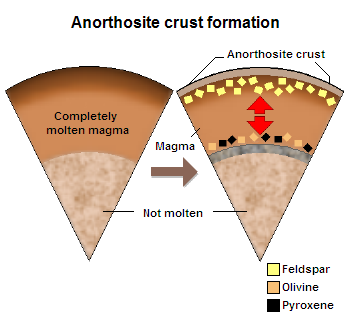
この結晶化の最終段階で、不適合元素や熱生成元素が濃縮されたKREEP(カリウム、希土類元素、リンの頭文字)と呼ばれるマグマが残りました。これらは主に「嵐の大洋」や「雨の海」などの特定の地域に集中し、後の地質活動に影響を与えました。
![A map of the Moon coloured in terms of crust thickness and its types of regions marked: the KREEP rich magma terrane is hatch-marked and labeled on the left map hemisphere, the near side of the Moon, in its most prominent part as the Mare Procellarum KREEP Terrane (PKT); on the right (the far side), the gray circle marks the South Pole-Aitken Terrane (SPAT); on each hemispheres the 12 crater basins with crustal thinng larger than 200 km (120 mi) are marked with black circles; the rest is Felspathic Highlands Terrane (FHT), with the region of high-thickness (in red and white) being the inner FHT.[36]](/images/6c/79/6c791592361846be5ccd2a1f7fa76f46b6c94bcf8ed0ce8b8f37e5512847aef6.jpg)
月面の主要な地形と特徴
高地(ハイランド)と海(マリア)
月面は、明るくクレーターが多い「高地」と、暗く平坦な「海」に大きく分かれます。高地は主に斜長石からなる古い地殻で構成されています。一方、「海」はかつての巨大衝突によってできた盆地に、低粘度の玄武岩質溶岩が流れ込んで固まったものです。
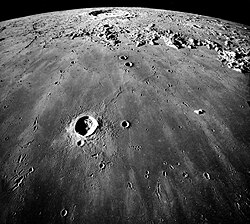
これらの玄武岩は鉄分を多く含み、一部にはチタンに富むイルメナイトという鉱物が含まれています。多くの溶岩流は30億〜35億年前に発生しましたが、一部の地域では比較的最近まで火山活動があった証拠が見つかっています。
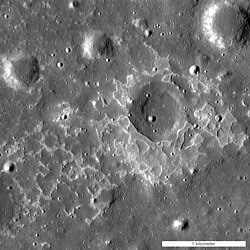
衝突クレーターとレゴリス
月面を象徴するクレーターは、隕石や彗星の衝突によって形成されました。直径数メートルの小さな穴から、直径約2,500kmに及ぶ南極・エイトケン盆地のような巨大なものまで多様です。地質学的な「重ね合わせの原理」を用いることで、どのクレーターがより新しいかを判断し、月の年代測定が行われています。
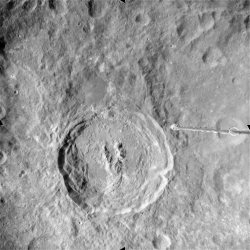
数十億年にわたる絶え間ない衝突により、岩石は粉砕され、レゴリスと呼ばれる細かい砂のような層が月面を覆っています。この層の厚さは、若い「海」の地域では約2m、古い高地では最大20mに達します。
多様な地質構造
月面には、溶岩の流動や地殻の変動を示す様々な構造が見られます。例えば、溶岩が流れた跡であるリル(溝)や、溶岩が盛り上がってできたドーム、地殻の圧縮によって生じたしわ状の嶺(リンクルリッジ)などが挙げられます。
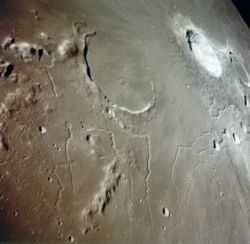
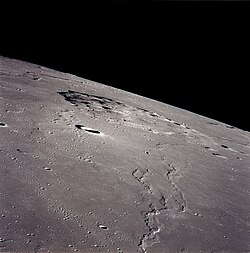
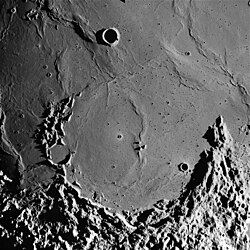
また、地殻が引っ張られてできた溝であるグラベン(地溝)も確認されており、これらは月の内部応力の歴史を物語っています。
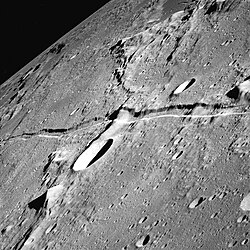
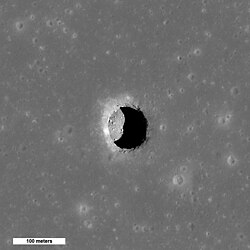
さらに、溶岩チューブの崩落によってできたと考えられるピット(穴)も存在し、これらは将来的な月面基地の候補地としても注目されています。
化学組成と物質的特性
月の組成は地球と似ていますが、揮発性成分が少なく、特定の元素の分布に偏りがあります。特に高地と海では、アルミナや酸化鉄の含有量に顕著な差があります。
| 化合物名 | 化学式 | 海 (Maria) | 高地 (Highlands) |
|---|---|---|---|
| シリカ | SiO2 | 45.4% | 45.5% |
| アルミナ | Al2O3 | 14.9% | 24.0% |
| 石灰 | CaO | 11.8% | 15.9% |
| 酸化鉄(II) | FeO | 14.1% | 5.9% |
| 酸化マグネシウム | MgO | 9.2% | 7.5% |
| 二酸化チタン | TiO2 | 3.9% | 0.6% |
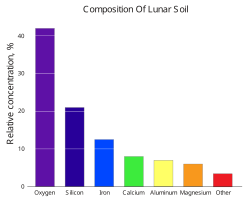
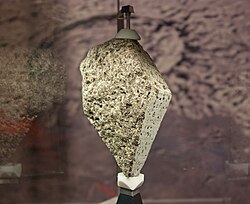
回収された月岩からは、地球にも存在するオリビンや輝石のほか、アポロ11号の乗組員にちなんで名付けられた新鉱物「アルマルコライト」などが発見されました。
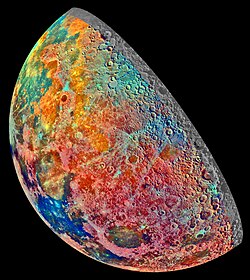
視覚的な分析では、偽色画像を用いることで地質学的な特徴を強調して捉えることができますが、実際の色は地表の物質に依存した落ち着いたトーンとなっています。
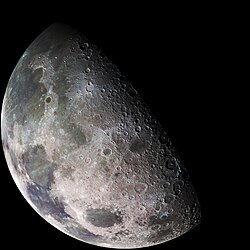
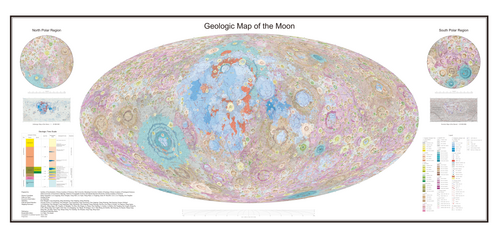
また、地質図を用いることで、ピンク(エイトケニアン)から黄色(コペルニカン)まで、時代の経過に伴う地表の変化を体系的に理解することが可能です。
Frequently Asked Questions
月の火山活動は完全に停止しているのですか?
長らく10億年前までと考えられていましたが、近年の研究では5,000万年前という地質学的にごく最近まで、小規模な火山活動(不規則な海パッチなど)があった可能性が示されています。
なぜ月の「海」は黒く見えるのですか?
「海」は水ではなく、鉄分を多く含んだ玄武岩質の溶岩で覆われているためです。周囲の明るい高地に比べて反射率(アルベド)が低いため、地球から見ると暗い色に見えます。
レゴリスとは具体的にどのようなものですか?
数十億年にわたる隕石の衝突によって岩石が粉砕され、堆積した細かい塵や破片の層のことです。いわば「月の土壌」のようなもので、表面を厚く覆っています。
月の内部にはどのような構造がありますか?
月は分化した天体であり、外側から地殻、マントル、そして中心に小さな鉄の核(コア)を持っています。コアは半径約450km未満と推定されており、現在も液体状態であると考えられています。
KREEPとは何のことですか?
カリウム(K)、希土類元素(REE)、リン(P)が濃縮された物質のことで、マグマオーシャンの結晶化の最終段階で形成されました。これらは熱を生成する元素を含んでおり、月の地質活動に重要な役割を果たしました。
References
- Kenneth R. Lang (2003). The Cambridge Guide to the Solar System. Cambridge University Press. p. 170. .
- , p. 91.
- , p. 93.
- , p. 13.
- Scientific and Technical Information Branch (1986). Status and Future of Lunar Geoscience. . p. 13. .
- Imster, Eleanor (12 October 2014). "Active moon volcanos in geologically recent times". earthsky.org. . Archived from the original on 25 January 2023. Retrieved 25 January 2023.
- , p. 10.
- Taylor, S. Ross (1982). Lunar Geoscience: A Collected View from Apollo. Pergamon Press.
- "Lunar Rocks and Soils from Apollo Missions". NASA. Archived from the original on 23 July 2011. Retrieved 21 November 2022.
- Ivankov, A. "Luna 16". National Space Science Data Center Catalog. . Archived from the original on 24 May 2019. Retrieved 13 October 2018.
The drill was deployed and penetrated to a depth of 35 cm before encountering hard rock or large fragments of rock. The column of regolith in the drill tube was then transferred to the soil sample container... the hermetically sealed soil sample container, lifted off from the Moon carrying 101 grams of collected material
📸 フォトギャラリー