私たちの周囲には、目に見えないエネルギーの波や粒子が飛び交っています。その中でも、物質に当たった際に原子から電子を弾き飛ばし、「イオン化(電離)」させる能力を持つものを電離放射線と呼びます。このプロセスにより、物質の化学的性質が変化し、生物学的組織に影響を与える可能性があります。
電離放射線は、非常に高いエネルギーを持つため、光速の99%に近い速度で移動する粒子や、電磁スペクトルの高エネルギー領域に属する波として存在します。
電離放射線の種類とメカニズム
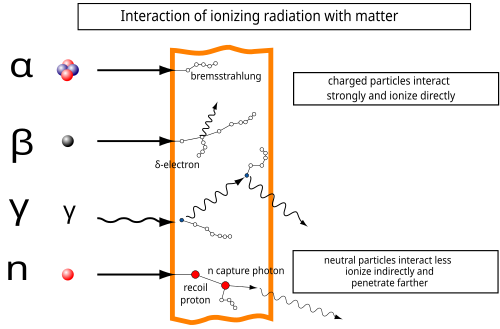
放射線は、その正体によって「粒子線」と「電磁波(光子線)」に大別されます。また、物質を直接電離させるものと、間接的に電離を引き起こすものに分けられます。
直接電離させる粒子線
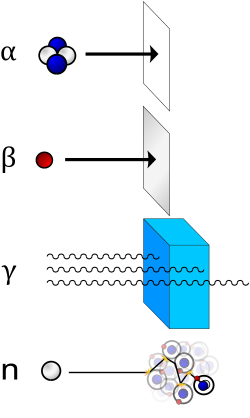
- アルファ線(α線):ヘリウム4の原子核からなり、透過力は弱く紙一枚で遮断できます。
- ベータ線(β線):高速の電子(または陽電子)であり、アルミニウム板などで遮断可能です。
- 中性子線:電荷を持たない自由中性子であり、水素などの軽い元素を含む物質で減速・吸収されます。
- 重イオン:陽子やヘリウム核、さらに電荷の高いHZEイオンなどが含まれます。
間接電離させる電磁波(光子線)
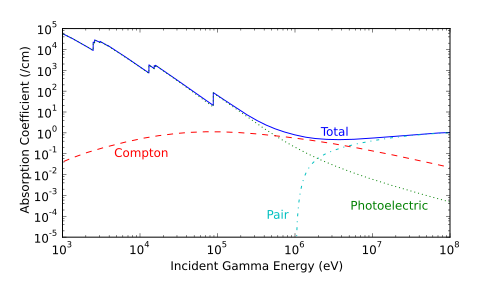
X線やガンマ線(γ線)は、電荷を持たない光子であり、物質中の電子と相互作用することで間接的に電離を引き起こします。かつては波長によってX線とガンマ線を区別していましたが、現代ではどちらも機能的に同一であり、主に「発生源がどこか」で区別されています(天文学などの分野では依然としてエネルギー閾値による定義が用いられています)。
これらの放射線が物質に当たると、光電効果やペア生成(電子・陽電子対生成)などの現象が起こり、エネルギーが吸収されます。
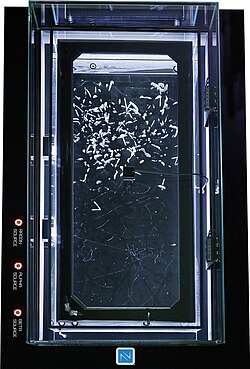
また、雲室などの装置を用いることで、これらの粒子が空気中の水蒸気を凝結させ、目に見える「軌跡」として可視化することが可能です。
放射線が物質と相互作用する様子は、電荷を持つ粒子が直線的に、光子が波状に動きながら電離を引き起こすプロセスとして説明されます。
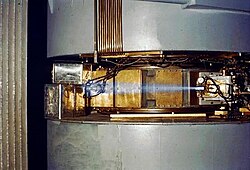
非常に強力な粒子線が空気を通過すると、電離した空気が青白く光る現象が見られることもあります。
Key Facts
- 電離の定義:原子や分子から電子を分離させ、イオン化させるのに十分なエネルギー(概ね10eV以上)を持つ放射線のこと。
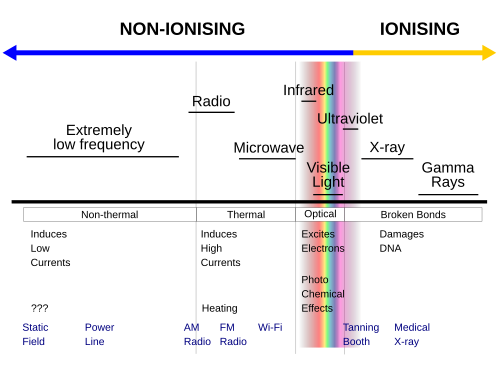
- 非電離放射線との違い:可視光、赤外線、マイクロ波、ラジオ波などはエネルギーが低いため、電離能力を持ちません。
- 遮蔽能力:アルファ線は紙、ベータ線はアルミ、ガンマ線やX線は鉛などの高密度物質で遮断されます。
- 中性子の特性:中性子線は物質に吸収されると、その原子核を放射化させ、新たな放射性同位元素を生成することがあります。
放射線の測定と単位
放射線の量は、その「発生量」「物質への届き方」「人体への影響」など、何を測りたいかによって異なる単位が使い分けられます。検出器にはガイガーカウンターやシンチレーター、電離箱などが用いられます。
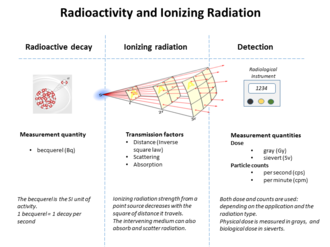
単位の変換や関係性は複雑ですが、物理的なエネルギー量(グレイ)に、放射線の種類による影響の強さを掛け合わせたものが、生物学的影響を示す「シーベルト」となります。
![Relation between some ionizing radiation units[30]](/images/49/9c/499c4d1391877059aba5b6318690bd676087959fde5ca5527031969432efc2c3.webp)
| 測定対象 | SI単位 | その他の単位 | 主な検出器 |
|---|---|---|---|
| 崩壊速度(放射能) | ベクレル (Bq) | キュリー (Ci) | - |
| 吸収線量 | グレイ (Gy) | ラド (rad) | カロリメーター、電離箱 |
| 等価線量・実効線量 | シーベルト (Sv) | レム (rem) | 個人線量計、フィルムバッジ |
日常生活における被曝とリスク
私たちは意識せずとも、常に自然界からの放射線にさらされています。これを自然背景放射線と呼びます。その量は地域によって異なり、宇宙線や地殻に含まれる放射性物質、空気中のラドンガスなどが要因となります。
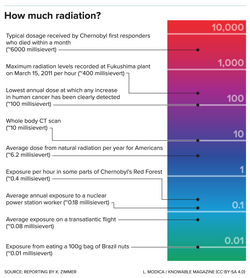
例えば、航空機の乗務員や乗客は、高度が上がるにつれて遮蔽物が少なくなるため、地上よりも多くの宇宙線に曝露されます。また、医療目的のX線検査やCTスキャンは、人工的な被曝の主要な要因の一つです。
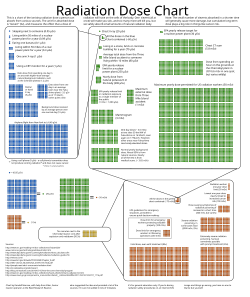
日常生活における被曝量の目安を比較すると、多くの活動による被曝は極めて微量であり、健康への影響は限定的であることがわかります。
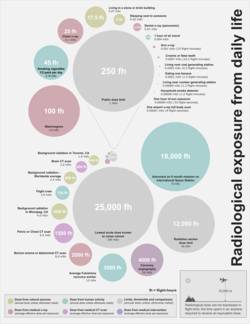
被曝を抑える3つの基本原則
- 距離:放射線源から離れることで、被曝量を劇的に減らすことができます。
- 時間:曝露される時間を短くすることで、総被曝量を抑えられます。
- 遮蔽:鉛やコンクリートなどの適切な遮蔽物を間に置くことで、放射線を遮断します。
Frequently Asked Questions
電離放射線と非電離放射線の決定的な違いは何ですか?
最大の違いは「原子から電子を剥ぎ取る(電離させる)エネルギーを持っているか」です。電離放射線(X線、ガンマ線など)は化学結合を破壊して細胞に直接的なダメージを与える可能性がありますが、非電離放射線(可視光、電波など)はそのエネルギーを持っていません。
自然に存在する放射線で健康被害はありますか?
地域によっては自然背景放射線が非常に高い場所(例:イランのラムサールなど)がありますが、そうした環境で暮らす人々において、明確な健康リスクの増大が証明された例は少ないとされています。安全基準は保守的に設定されており、過度な不安を持つ必要はありません。
飛行機に乗ると放射線量が増えるというのは本当ですか?
本当です。高度が高くなるほど大気による遮蔽効果が薄れるため、宇宙線への曝露量が増加します。特に極圏ルートを飛行する場合に顕著であり、航空業界では乗務員の被曝管理が行われています。
放射線警告マーク(赤いシンボル)の意味は何ですか?
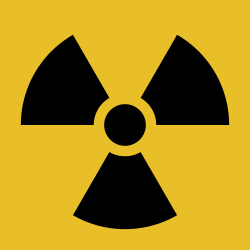
ISO 21482で定義された赤い警告シンボルは、死亡や深刻な負傷を招く恐れのある非常に危険な放射線源(がん治療用装置や工業用放射線照射装置など)に貼付されます。これは、装置を分解したり不用意に近づいたりしないよう警告するためのものです。
References
- "Ionizing radiation, health effects and protective measures". World Health Organization. Archived from the original on 29 March 2020. Retrieved 22 January 2020.
- Robert F. Cleveland, Jr.; Jerry L. Ulcek (August 1999). "Questions and Answers about Biological Effects and Potential Hazards of Radiofrequency Electromagnetic Fields" (PDF) (4th ed.). Washington, D.C.: OET (Office of Engineering and Technology) Federal Communications Commission. Archived (PDF) from the original on 2011-10-20. Retrieved 2011-12-07.
- Woodside, Gayle (1997). Environmental, Safety, and Health Engineering. US: John Wiley & Sons. p. 476. . Archived from the original on 2015-10-19.
- Stallcup, James G. (2006). OSHA: Stallcup's High-voltage Telecommunications Regulations Simplified. US: Jones & Bartlett Learning. p. 133. . Archived from the original on 2015-10-17.
- "Ionizing Radiation - Health Effects | Occupational Safety and Health Administration". www.osha.gov. Retrieved 2022-06-23.
- Ryan, Julie (5 January 2012). "Ionizing Radiation: The Good, the Bad, and the Ugly". The Journal of Investigative Dermatology. 132 (3 0 2): 985–993. :10.1038/jid.2011.411. 3779131. 22217743.
- Herrera Ortiz, Andrés Felipe; Fernández Beaujon, Lorena Josefina; García Villamizar, Sandra Yulitza; Fonseca López, Freddy Fernando (2021). "Magnetic resonance versus computed tomography for the detection of retroperitoneal lymph node metastasis due to testicular cancer: A systematic literature review". European Journal of Radiology Open. 8 100372. :10.1016/j.ejro.2021.100372. 8377546. 34458506.
- One kg of water per cm squared is 10 meters of water Archived 2016-01-01 at the
- "Beta Decay". Lbl.gov. 9 August 2000. Archived from the original on 3 March 2016. Retrieved 10 April 2014.
- Contribution of High Charge and Energy (HZE) Ions During Solar-Particle Event of September 29, 1989 Kim, Myung-Hee Y.; Wilson, John W.; Cucinotta, Francis A.; Simonsen, Lisa C.; Atwell, William; Badavi, Francis F.; Miller, Jack, NASA Johnson Space Center; Langley Research Center, May 1999.
📸 フォトギャラリー