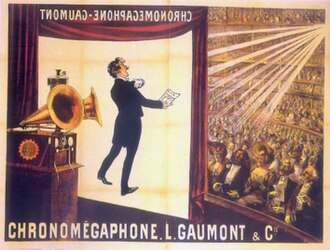
Illustration of a theater from the rear of the stage. At the front of the stage, a screen hangs. In the foreground is a gramophone with two horns. In the background, a large audience is seated at orchestra level and on several balconies. The words "Chronomégaphone" and "Gaumont" appear at both the bottom of the illustration and, in reverse, at the top of the projection screen.
← ホームへ戻る

トーキー映画の歴史サイレントから音響映画への技術革新

🗓 2026年8月14日

映画の歴史において、映像に同期した音声が加わった「トーキー(Talking Pictures)」の登場は、単なる技術的な更新ではなく、表現形式そのものを根本から変えた革命でした。かつてのサイレント映画時代、劇場ではピアノやオルガンの生演奏が物語を彩っていましたが、映像と音が完全に一体化したことで、映画はより没入感のある体験へと進化しました。

音響映画への道は平坦ではありませんでした。1900年のパリで初の公開上映が行われて以降、商業的な実用化までには数十年を要しました。初期のシステムでは、映像と音声の同期を正確に保つことが極めて困難であり、録音品質や増幅技術も不十分だったためです。

Key Facts

  • 初の公開上映: 1900年にパリで実施された。
  • 技術的対立: 「サウンドオンディスク(盤録音)」と「サウンドオンフィルム(フィルム録音)」の2方式が競った。
  • 転換点: 1927年公開の『ジャズ・シンガー』が世界的なトーキーブームを巻き起こした。
  • 業界への影響: ハリウッドの世界的地位を確立させた一方、俳優の「声」がキャリアを左右する時代となった。
  • グローバル展開: インドでは映画産業の急拡大を招いたが、日本では「弁士」の文化があったため浸透に時間を要した。

音響技術の進化:2つのアプローチ

初期の音響映画は、大きく分けて2つの方式で開発が進められました。一つは、レコード盤のようなディスクに音声を記録し、それを映写機と同期させる「サウンドオンディスク」方式です。1890年代には、エジソンのキネトスコープと蓄音機を組み合わせた実験的な試みがなされていました。
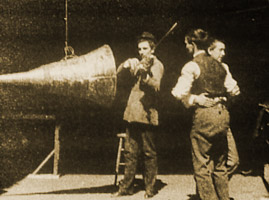
On the left is a large acoustical horn, suspended from a cord that rises out of the frame. A man plays a violin in front of it. To the right, two men dance together.

もう一つは、光の波として音声をフィルム自体に直接記録する「サウンドオンフィルム」方式です。1907年にはユージン・ロステがこの技術の特許を取得し、後にエリック・タイガステットなどの先駆者たちがこの方向性を発展させました。
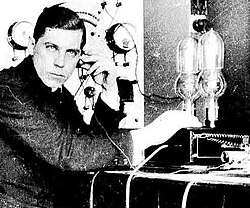
Eric M. C. Tigerstedt (1887–1925) was one of the pioneers of sound-on-film technology. Tigerstedt in 1915.

ディスク方式とフィルム方式の比較

当初、音質面ではディスク方式に分がありましたが、運用面ではフィルム方式が圧倒的に有利でした。ディスク方式は、盤の破損や同期ズレのリスクが高く、配送コストや管理の手間もかかったためです。一方、フィルム方式は映像と音が物理的に一体化しているため、同期が完璧に保たれ、流通も簡便でした。

Vertical section of filmstrip, showing four-and-a-half frames, each of which reads, "Sea Power for Security. The End." Alongside the frames runs a continuous vertical white band of continuously fluctuating width.
音響方式の比較まとめ
比較項目 サウンドオンディスク サウンドオンフィルム
記録媒体 外部ディスク(レコード盤) セルロイドフィルム上
同期の安定性 低(ズレが発生しやすい) 高(物理的に固定されている)
流通・配送 複雑(ディスクの同梱が必要) 容易(フィルムのみで完結)
初期の音質 比較的良好 発展途上だった

商業的成功と「トーキー」の黄金時代

1920年代半ばになると、短編映画を中心に音声付き作品が登場し始めます。1923年にはサウンドオンフィルムによる短編の商業上映が始まり、その後、長編映画へと移行していきました。初期の長編は音楽や効果音のみの同期でしたが、ついに台詞を含む「トーキー」が登場します。

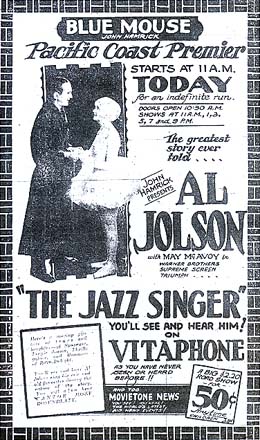
1927年に公開された『ジャズ・シンガー』は、ヴィタフォン(Vitaphone)というディスク方式を採用し、限定的ながらも台詞と歌を導入して大ヒットを記録しました。これが起爆剤となり、映画界は急速に音響化へと突き進みます。
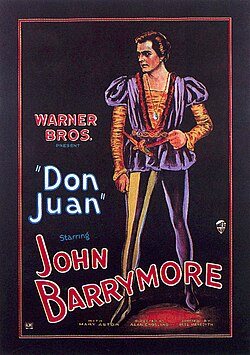
Illustration of a man dressed in an orange-and-purple Elizabethan costume with puffy shoulders and sheer leggings. Accompanying text provides film credits, dominated by the name of star John Barrymore.

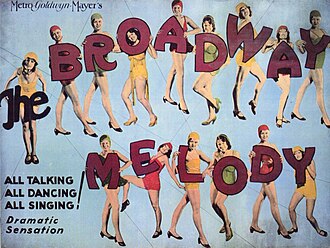
その後、1929年にはMGMの『ブロードウェイ・メロディ』がアカデミー賞作品賞を受賞するなど、大手スタジオが次々と参入。1926年の『ドン・ファン』のように、フルレングスの同期サウンドトラックを持つ作品も登場しました。
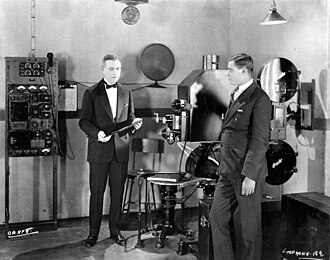
Two suited men stand in a studio with a large film projector and other electrical equipment. The man on the left is holding a large phonograph record.

しかし、この技術革新は残酷な側面も持っていました。サイレント時代に「美貌」で人気を博した俳優たちが、いざ声を出すとイメージと乖離していたり、強い訛りがあったりして、キャリアを失うケースが相次いだのです。
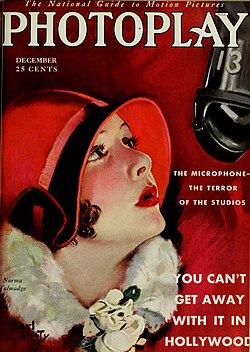

Magazine cover with illustration of a young woman wearing a form-fitting red hat staring up at a suspended microphone. Accompanying text reads, "The Microphone—The Terror of the Studios", and, in larger type, "You Can't Get Away With It in Hollywood".
An advertisement for the movie Blackmail featuring a young woman in lingerie holding a garment over one arm looks toward camera. Surrounding text describes the film as "A Romance of Scotland Yard" and "The Powerful Talking Picture"

世界各地への波及と文化的反応

トーキーの波はアメリカのみならず世界中に広がりました。しかし、その受け止め方は国によって異なりました。

アジアでの展開

インドでは、音声の導入が映画産業の爆発的な成長を後押ししました。1931年の『アラム・アーラ』は、警察が出動するほどの社会現象となりました。一方の日本では、サイレント映画に生の声で解説を加える「弁士」という独自の文化が根付いていたため、トーキーの浸透は緩やかなものとなりました。それでも1931年には、溝口健二らの時代を切り拓く『妻と女房』などの商業的成功作が登場しています。
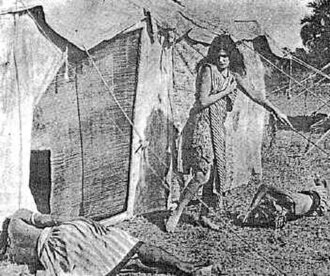
A young woman with long dark hair walks outside of a tent, looking down at one of two men asleep on the ground. She wears only a shawl and a knee length dress, leaving her arms, lower legs, and feet exposed.
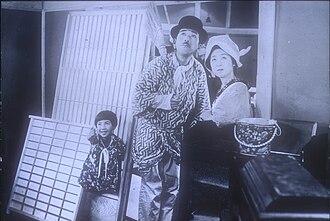
A young girl, man, and woman standing outside of a house, all looking up in the sky. The girl, on the left, is smiling and pointing skyward. The man wears a bowler hat and holds a short broom over his shoulder; the woman wears a kerchief around her head. They are surrounded by domestic objects as if just moving into or out of the house.

ヨーロッパとその他の地域

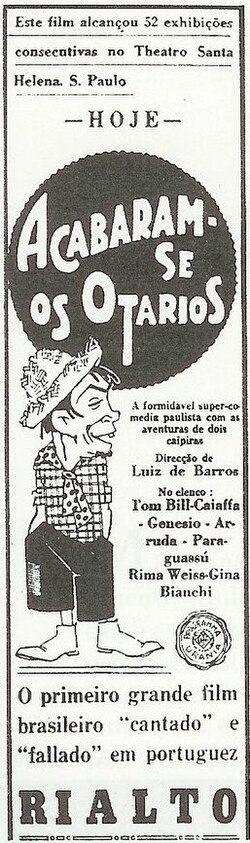
ヨーロッパの映画制作者や批評家の中には、台詞への依存がサイレント映画特有の視覚的な美学を損なうと危惧する声もありました。しかし、ソ連では1931年の『人生への切符』のように、社会問題を扱う作品に音が活用されました。また、ブラジルでは1929年にポルトガル語による初のトーキーが制作されるなど、言語の壁を超えて普及していきました。

A movie poster with text in Cyrillic. A red band spirals through the center of the image, over a green background. Around the spiral are arrayed five black-and-white photographs of male faces at various angles. Three, in a cluster at the top left, are smiling; two, at the top left and at bottom right (a young boy) look pensive.
Movie poster featuring an illustration of a goateed man wearing a straw hat, plaid shirt, short polka-dotted tie, short pants, and boots. The accompanying text is in Portuguese.

制作現場の変化と表現の深化

音の導入は、撮影現場の風景を一変させました。初期の録音機材は巨大で、カメラの駆動音がマイクに入らないよう、カメラを防音ブース(ブース)に閉じ込めて撮影する必要がありました。これにより、サイレント時代に自由だったカメラワークが一時的に制限されることになります。
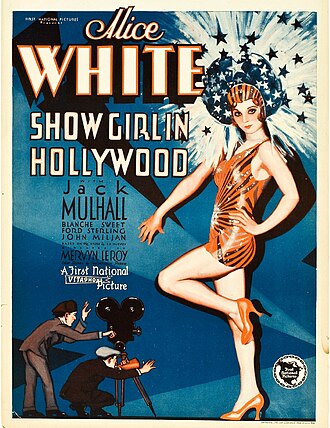
Movie poster featuring a large illustration of a young woman wearing a short orange-red dance outfit, high heels, and headdress. Her head is surrounded by shooting stars and sparkles. At her feet, much smaller-scaled, are two men—one is shouting through a megaphone, the other is operating a movie camera. The accompanying text is dominated by the name of star Alice White.

しかし、技術の向上とともに、音は単なる「台詞の伝達手段」から「表現の道具」へと進化しました。例えば、戦場の恐怖を表現するために、見えない手榴弾の不気味な風切り音を再現した『西線1918年』のように、音響効果による心理的演出が可能になったのです。
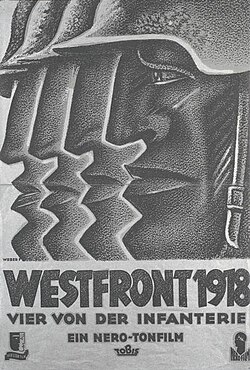
Black-and-white movie poster featuring a stylized illustration of the profiled head of a helmeted man on the right, facing left. Behind him, and progressively to the left, are the front parts of three more such profiles, with nearly identical helmet tips, noses, lips, and chins. The title below is followed by the line "Vier von der Infanterie".

また、世界各地の多様な音をコラージュのように組み合わせた『世界のメロディー』のような作品が現れ、映画は視覚と聴覚の両面から世界を切り取る新しい芸術形式へと到達しました。
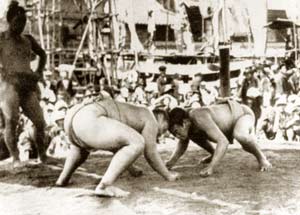
Two sumo wrestlers confront each other on a platform, their heads touching and their fists on the ground. To the side, a third man, also in a wrestling outfit, looks on. In the background, a crowd watches.

Frequently Asked Questions

なぜサウンドオンフィルムが最終的に勝利したのですか?

最大の理由は、映像と音声が物理的に同じフィルムに記録されているため、同期が完璧に保たれ、配送や上映の管理が格段に簡単だったからです。ディスク方式は盤の破損や同期ズレのリスクが高く、商業的な運用コストもかかりました。

『ジャズ・シンガー』は完全なトーキー映画だったのでしょうか?

いいえ、映画全体が台詞で構成されていたわけではなく、限定的な音声シーケンスが含まれていました。しかし、それが当時の観客に与えた衝撃は絶大であり、実質的なトーキー時代の幕開けとなりました。

トーキー化によって俳優にどのような影響がありましたか?

外見だけで評価されていたサイレント時代のスターの中には、声質や訛りが役柄に合わず、人気を落とした人々が多くいました。一方で、舞台経験があり、声の演技に長けた俳優たちが新たな主役として台頭しました。

日本でトーキーの普及が遅れたのはなぜですか?

日本では「弁士」という、映画の内容をリアルタイムで解説・実演する独自の文化が非常に人気だったため、映像に固定された音声よりも、生身の人間によるパフォーマンスが好まれたことが要因の一つとされています。

初期のトーキー撮影で苦労した点は何ですか?

録音機材の騒音対策が最大の課題でした。カメラの回転音がマイクに拾われないよう、カメラを大きな防音箱に入れる必要があり、その結果、サイレント時代のような自由なカメラの動きが制限されてしまいました。

(以下、関連資料として1900年のパリ万博での展示
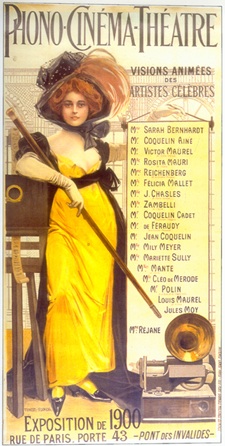
Illustration of a red-haired woman wearing a large hat, an ankle-length yellow dress, and high heels. She is holding a long baton or swagger stick and leaning against a film projector. A gramophone sits at her feet. The top of the illustration reads "Phono-Cinéma-Théâtre". Text to the left of the woman reads "Visions Animées des Artistes Celèbres", followed by a list of performers.
や、1908年のガウモン社の広告
Illustration of a theater from the rear of the stage. At the front of the stage, a screen hangs. In the foreground is a gramophone with two horns. In the background, a large audience is seated at orchestra level and on several balconies. The words "Chronomégaphone" and "Gaumont" appear at both the bottom of the illustration and, in reverse, at the top of the projection screen.
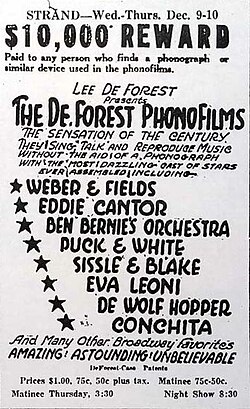
、1925年のフォノフィルム広告
All-text advertisement from the Strand Theater, giving dates, times, and performers' names. At the top, a tagline reads, "$10,000 reward paid to any person who finds a phonograph or similar device used in the phonofilms." The accompanying promotional text describes the slate of sound pictures as "the sensation of the century ... Amazing! Astounding! Unbelievable".
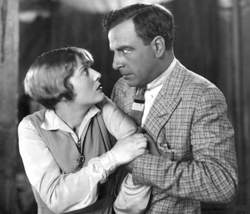
、1928年のファースト・ナショナル社作品
A middle-aged man wearing a plaid jacket and boldly striped tie grabs a younger woman wearing a sweater vest by the arm. Her hand tugs at his as they gaze into each other's eyes, he fiercely, she with surprise or concern.
、1929年の『ブロードウェイ・メロディ』
Movie poster featuring fifteen young women in dance outfits. The first appears to hold the word "The" in large letters. The other fourteen hold up the individual letters that spell out "Broadway Melody". Accompanying text reads, "All Talking, All Dancing, All Singing! Dramatic Sensation."
、そしてタコマの劇場での上映広告
Advertisement from the Blue Mouse Theater announcing the Pacific Coast premiere of The Jazz Singer, billed as "The greatest story ever told". A photo of stars Al Jolson and May McAvoy accompanies extensive promotional text, including the catchphrase "You'll see and hear him on Vitaphone as you've never seen or heard before". At the bottom is an announcement of an accompanying newsreel.
などが、この激動の時代を物語っています。)

References

  1. Wierzbicki (2009), p. 74; "Representative Kinematograph Shows" (1907).The Auxetophone and Other Compressed-Air Gramophones Archived September 18, 2010, at the explains pneumatic amplification and includes several detailed photographs of Gaumont's Elgéphone, which was apparently a slightly later and more elaborate version of the Chronomégaphone.
  2. The first talkie - "The Jazz Singer", Jolsonville, Oct. 9, 2013
  3. Robinson (1997), p. 23.
  4. Robertson (2001) claims that German inventor and filmmaker began projecting sound motion pictures at 21 Unter den Linden in September 1896 (p. 168), but this seems to be an error. Koerber (1996) notes that after Messter acquired the Cinema Unter den Linden (located in the back room of a restaurant), it reopened under his management on September 21, 1896 (p. 53), but no source beside Robertson describes Messter as screening sound films before 1903.
  5. Altman (2005), p. 158; Cosandey (1996).
  6. Lloyd and Robinson (1986), p. 91; Barnier (2002), pp. 25, 29; Robertson (2001), p. 168. Gratioulet went by his given name, Clément-Maurice, and is referred to thus in many sources, including Robertson and Barnier. Robertson incorrectly states that the Phono-Cinéma-Théâtre was a presentation of the Gaumont Co.; in fact, it was presented under the aegis of Paul Decauville (Barnier, ibid.).
  7. Sound engineer Mark Ulano, in "The Movies Are Born a Child of the Phonograph" (part 2 of his essay "Moving Pictures That Talk"), describes the Phono-Cinéma-Théâtre version of synchronized sound cinema:
    This system used an operator adjusted non-linkage form of primitive synchronization. The scenes to be shown were first filmed, and then the performers recorded their dialogue or songs on the Lioretograph (usually a Le Éclat concert cylinder format phonograph) trying to match tempo with the projected filmed performance. In showing the films, synchronization of sorts was achieved by adjusting the hand cranked film projector's speed to match the phonograph. the projectionist was equipped with a telephone through which he listened to the phonograph which was located in the orchestra pit.
  8. Crafton (1997), p. 37.
  9. Barnier (2002), p. 29.
  10. Altman (2005), p. 158. If there was a drawback to the Elgéphone, it was apparently not a lack of volume. Dan Gilmore describes its predecessor technology in his 2004 essay "What's Louder than Loud? The Auxetophone": "Was the Auxetophone loud? It was painfully loud." For a more detailed report of Auxetophone-induced discomfort, see The Auxetophone and Other Compressed-Air Gramophones Archived September 18, 2010, at the .

📸 フォトギャラリー

Illustration of a theater from the rear of the stage. At the front of the stage, a screen hangs. In the foreground is a gramophone with two horns. In the background, a large audience is seated at orchestra level and on several balconies. The words "Chronomégaphone" and "Gaumont" appear at both the bottom of the illustration and, in reverse, at the top of the projection screen.
On the left is a large acoustical horn, suspended from a cord that rises out of the frame. A man plays a violin in front of it. To the right, two men dance together.
Eric M. C. Tigerstedt (1887–1925) was one of the pioneers of sound-on-film technology. Tigerstedt in 1915.
Illustration of a red-haired woman wearing a large hat, an ankle-length yellow dress, and high heels. She is holding a long baton or swagger stick and leaning against a film projector. A gramophone sits at her feet. The top of the illustration reads "Phono-Cinéma-Théâtre". Text to the left of the woman reads "Visions Animées des Artistes Celèbres", followed by a list of performers.
All-text advertisement from the Strand Theater, giving dates, times, and performers' names. At the top, a tagline reads, "$10,000 reward paid to any person who finds a phonograph or similar device used in the phonofilms." The accompanying promotional text describes the slate of sound pictures as "the sensation of the century ... Amazing! Astounding! Unbelievable".
Illustration of a man dressed in an orange-and-purple Elizabethan costume with puffy shoulders and sheer leggings. Accompanying text provides film credits, dominated by the name of star John Barrymore.
Two suited men stand in a studio with a large film projector and other electrical equipment. The man on the left is holding a large phonograph record.
Advertisement from the Blue Mouse Theater announcing the Pacific Coast premiere of The Jazz Singer, billed as "The greatest story ever told". A photo of stars Al Jolson and May McAvoy accompanies extensive promotional text, including the catchphrase "You'll see and hear him on Vitaphone as you've never seen or heard before". At the bottom is an announcement of an accompanying newsreel.
A middle-aged man wearing a plaid jacket and boldly striped tie grabs a younger woman wearing a sweater vest by the arm. Her hand tugs at his as they gaze into each other's eyes, he fiercely, she with surprise or concern.
An advertisement for the movie Blackmail featuring a young woman in lingerie holding a garment over one arm looks toward camera. Surrounding text describes the film as "A Romance of Scotland Yard" and "The Powerful Talking Picture"
A movie poster with text in Cyrillic. A red band spirals through the center of the image, over a green background. Around the spiral are arrayed five black-and-white photographs of male faces at various angles. Three, in a cluster at the top left, are smiling; two, at the top left and at bottom right (a young boy) look pensive.
A young girl, man, and woman standing outside of a house, all looking up in the sky. The girl, on the left, is smiling and pointing skyward. The man wears a bowler hat and holds a short broom over his shoulder; the woman wears a kerchief around her head. They are surrounded by domestic objects as if just moving into or out of the house.
A young woman with long dark hair walks outside of a tent, looking down at one of two men asleep on the ground. She wears only a shawl and a knee length dress, leaving her arms, lower legs, and feet exposed.
Movie poster featuring a large illustration of a young woman wearing a short orange-red dance outfit, high heels, and headdress. Her head is surrounded by shooting stars and sparkles. At her feet, much smaller-scaled, are two men—one is shouting through a megaphone, the other is operating a movie camera. The accompanying text is dominated by the name of star Alice White.
Vertical section of filmstrip, showing four-and-a-half frames, each of which reads, "Sea Power for Security. The End." Alongside the frames runs a continuous vertical white band of continuously fluctuating width.
Magazine cover with illustration of a young woman wearing a form-fitting red hat staring up at a suspended microphone. Accompanying text reads, "The Microphone—The Terror of the Studios", and, in larger type, "You Can't Get Away With It in Hollywood".
Movie poster featuring fifteen young women in dance outfits. The first appears to hold the word "The" in large letters. The other fourteen hold up the individual letters that spell out "Broadway Melody". Accompanying text reads, "All Talking, All Dancing, All Singing! Dramatic Sensation."
Movie poster featuring an illustration of a goateed man wearing a straw hat, plaid shirt, short polka-dotted tie, short pants, and boots. The accompanying text is in Portuguese.
Black-and-white movie poster featuring a stylized illustration of the profiled head of a helmeted man on the right, facing left. Behind him, and progressively to the left, are the front parts of three more such profiles, with nearly identical helmet tips, noses, lips, and chins. The title below is followed by the line "Vier von der Infanterie".
Two sumo wrestlers confront each other on a platform, their heads touching and their fists on the ground. To the side, a third man, also in a wrestling outfit, looks on. In the background, a crowd watches.