A graph of lynchings in the U.S. by victim race and year[1]
← ホームへ戻る

リンチの歴史米国における人種的テロリズムと超法規的殺害

🗓 2026年8月16日

米国におけるリンチとは、法的な手続きを経ずに集団によって行われた超法規的な殺害を指します。1830年代の南北戦争前の南部で始まったこの凄惨な慣習は、1950年代から60年代の公民権運動期にかけて概ね終息しましたが、定義によっては1980年代や90年代に至るまで散発的に発生していました。

特に南北戦争後に約400万人のアフリカ系アメリカ人が解放されると、白人至上主義を維持しようとする南部の人々による標的となりました。リンチは単なる処罰ではなく、少数民族を威嚇し、社会的な支配体制を強固にするための「人種的テロリズム」としての側面を持っていました。

A graph of lynchings in the U.S. by victim race and year[1]

主要な事実(Key Facts)

  • 主な被害者: アフリカ系アメリカ人が最大多数であったが、メキシコ系、先住民、中国人、白人移民なども標的となった。
  • ピーク時期: 1890年代から1920年代にかけて最盛期を迎えた。
  • 発生地域: 南部で最も多かったが、中西部や南西部の国境地帯でも発生した。
  • 目的: 白人至上主義の強制と、人種的な階級秩序の維持。
  • 残酷な慣習: 絞首刑以外に、焼殺や銃撃が行われ、その様子が写真に撮られポストカードとして販売されることもあった。

リンチのメカニズムと正当化の口実

リンチを行う暴徒は、しばしば「正義」を口実にしましたが、その実態は極めて恣意的なものでした。最も多く使われた口実は殺人や殺人未遂の疑いであり、次いで強姦や性的暴行の告発が利用されました。しかし、実際にはジム・クロウ時代(人種隔離政策時代)の厳格なエチケットに反したことや、白人と経済的に競合したことなどが、これらの告発の裏にある真の理由である場合が多くありました。
The body of George Meadows, lynched near the Pratt Mines in Jefferson County, Alabama, on January 15, 1889

殺害方法は多岐にわたり、公開処刑としての絞首刑だけでなく、生きたまま火にかけられる焼殺、橋からの投下、車で引きずり回されるなどの残虐な手法が用いられました。また、情報を引き出すために首に縄をかける「擬似リンチ」という拷問手法も存在しました。

Lynching of John Willie Clark in Cartersville, Georgia, September 1930, after killing Police Chief J. B. Jenkins[2]

Lynching of Jesse Washington in Waco, Texas, on May 15, 1916. He was repeatedly lowered and raised onto a fire for about two hours. A professional photographer took pictures of the lynching as it unfolded.

見世物としてのリンチと記憶の商品化

一部のリンチは、大衆が集まる「見世物」として行われました。プロの写真家がその様子を撮影し、被害者の死体写真がポストカードとして販売されるという、信じがたいほど残酷な文化が存在していました。これらは当時の米国の一部で「土産物」として人気を博していました。
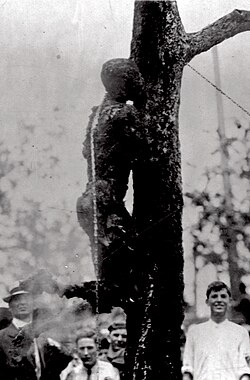
The 1893 public lynching of black teenager Henry Smith in Paris, Texas

The lynching of African American William "Froggie" James in Cairo, Illinois, on November 11, 1909. A crowd of thousands watched the lynching.[77]

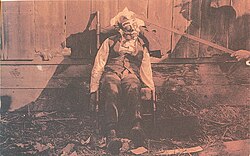
Body of a lynched Black male, propped up in a rocking chair for a photograph, c. 1900. Paint has been applied to his face, circular disks glued to his cheeks, cotton glued to his face and head, while a rod props up the victim's head.

The front and back of a postcard showing the charred corpse of Will Stanley in Temple, Texas, in 1915. Joe Meyers marked the back of the postcard to show his parents he was in the crowd: "This is the Barbecue we had last night.. my picture is to the left with a cross over it.. your son Joe".[96]

Postcard of the 1920 Duluth, Minnesota lynchings. Two of the Black victims are still hanging while the third is on the ground. Postcards of lynchings were popular souvenirs in the U.S.[101]

歴史的背景と組織的暴力

再建期からジム・クロウ時代へ

南北戦争後の再建期(1865-1877年)から、南部では黒人の権利を剥奪し、再び支配下に置こうとする動きが加速しました。ク・クラックス・クラン(KKK)のような秘密結社や自警団が組織され、暴力的な手段で黒人や彼らを支援する人々を排除しました。
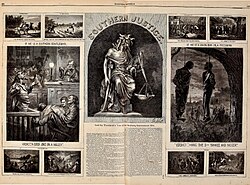
This 1867 Thomas Nast cartoon called Southern Justice advocates for military intervention to prevent white terrorism in the South.

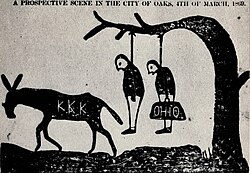
An 1869 cartoon published in The Independent Monitor of Tuscaloosa, Alabama, threatening the lynching of carpetbaggers by the Ku Klux Klan

Mississippi Ku-Klux in the Disguises in Which They Were Captured, 1872. They were arrested in Tishomingo County, Mississippi, for attempted murder. (Wood engraving from photograph, Harper's Weekly, January 27, 1872, Prints and Photographs Division, Library of Congress)[37]

大移動と暴力の拡大

20世紀初頭、多くの黒人が南部を離れて北部や中西部へ移住する「大移動(Great Migration)」が起こりましたが、リンチの脅威もそれに伴って移動しました。1919年の「赤い夏(Red Summer)」には、全米で人種暴動が多発し、退役軍人を含む多くの黒人が犠牲となりました。
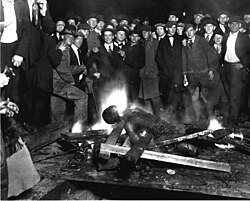
A group of white men pose for a 1919 photograph as they stand over the Black victim Will Brown who had been lynched and had his body mutilated and burned during the Omaha race riot of 1919 in Omaha, Nebraska.

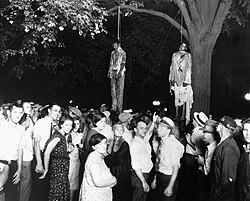
Lynching of J. Thomas Shipp and Abraham S. Smith in Marion, Indiana, August 7, 1930

大規模虐殺の事例

個別のリンチだけでなく、コミュニティ全体を標的にした大規模な虐殺も発生しました。1921年のタルサ人種虐殺では、黒人街グリーンウッド地区が焼き払われ、最大300人が殺害されたとされています。また、アーカンソー州のエレイン虐殺や、1871年のロサンゼルス中国人虐殺なども歴史的な惨劇として記録されています。
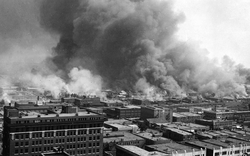
In the 1921 Tulsa race massacre thousands of Whites rampaged through the Black community, killing men and women, burning and looting stores and homes. Up to 300 Blacks were killed.

統計で見るリンチの実態

タスキーギ大学などの調査に基づくと、被害者の人種構成や地域的な偏りが顕著に現れています。特にフロリダ州やミシシッピ州などの深南部で被害率が高くなっていました。

州別被害率および殺害理由の統計
州名 人口10万人あたりの被害者数
フロリダ 79.8
ミシシッピ 52.8
ケンタッキー 45.7
ルイジアナ 43.7
アーカンソー 42.6
ジョージア 41.8
テネシー 38.4
アラバマ 32.4
サウスカロライナ 18.8
ノースカロライナ 11.0

また、殺害の理由として挙げられた割合は以下の通りです。

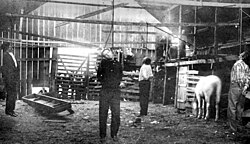
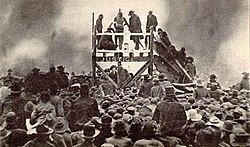
From left to right, the lynching of killer-for-hire Jim Miller and three others in Ada, Oklahoma, on April 19, 1909
  • 殺人:38%
  • 強姦:16%
  • 強姦未遂:7%
  • 窃盗:7%
  • 重過失傷害:6%
  • 白人への侮辱:2%
  • その他・罪状なし:24%

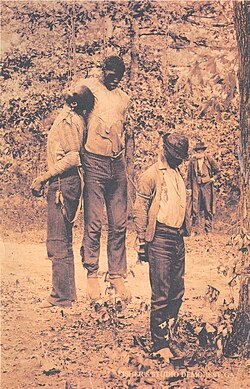
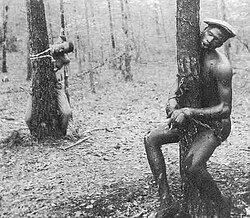
Bodies of three African-American men (Jim Redmond, Gus Roberson, and Bob Addison) lynched in Habersham County, Georgia, on May 17, 1892

抵抗と法的な闘い

このような惨状に対し、アイダ・B・ウェルズのような活動家がリンチの実態を国際的に告発し、NAACP(全米黒人地位向上協会)が結成されました。彼らは反リンチ法(Anti-Lynching Bill)の制定を連邦政府に求めましたが、南部民主党員による議会での妨害(フィリバスター)などにより、長らく法制化は阻まれました。
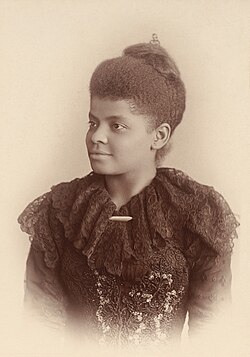
Ida B. Wells exposed lynching in the early 1890s to an international audience.

NAACP flag against lynching, displayed in front of their offices from 1920 to 1938 after each lynching[110]

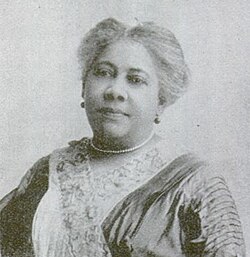
Mary Burnett Talbert served as National Director of the NAACP Anti-Lynching Campaign in 1921.

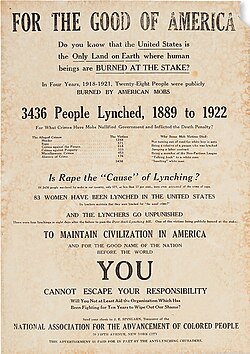
Anti-lynching broadside by the NAACP stating "The United States is the Only Land on Earth where Human Beings are Burned at the Stake"

地域的な広がりと多様な被害者

リンチは南部だけの問題ではありませんでした。南西部ではメキシコ系住民が、西海岸では中国人やその他の移民が標的となりました。例えばテキサス州では、1885年から1942年の間に468人が犠牲となり、その中には多くのヒスパニック系が含まれていました。
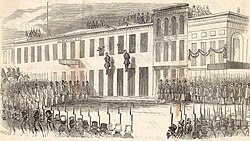
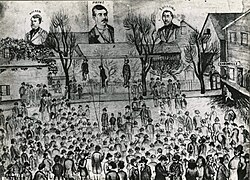
The 1856 lynching of Charles Cora and James Casey by the Committee of Vigilance in San Francisco, California

Illustration drawn by A. W. Piper depicting the January 18, 1882, lynching of James Sullivan, William Howard, and Benjamin Payne in Seattle, Washington

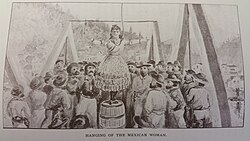
The hanging of Josefa Segovia (Juanita) in Downieville, 1851

また、白人であっても、社会的な規範から外れた者や特定の政治的信条を持つ者が犠牲になるケースがありました。レオ・フランクの事件のように、ユダヤ系住民が標的となった事例も記録されています。
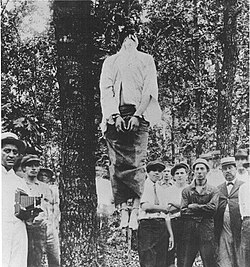
The lynching of Leo Frank in Marietta, Georgia, on August 17, 1915. Judge Morris, who organized the crowd after the lynching, is on the far right and he is wearing a straw hat.

文化的な影響と記憶

リンチの恐怖と記憶は、映画や文学などのポップカルチャーにも深く刻まれています。1915年の映画『国民の誕生』はKKKを美化したことで知られますが、一方で『Strange Fruit(奇妙な果実)』のような楽曲は、木に吊るされた犠牲者の姿を歌い、人種差別の残酷さを世界に訴えました。
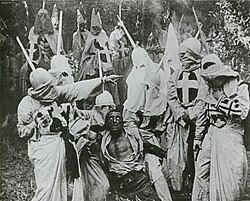
A scene from the 1915 movie, The Birth of a Nation, showing an African-American character, Gus (played by white actor Walter Long, in blackface), about to be killed by the Ku Klux Klan

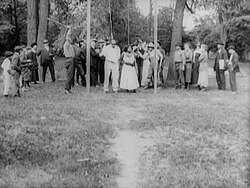
A scene from the 1920 movie, Within Our Gates, showing the lynching of film characters, Jasper Landry and his wife

Pictures of the lynching of Roosevelt Townes and Robert McDaniels in 1937 were the first photos of lynchings to be published by the national press.

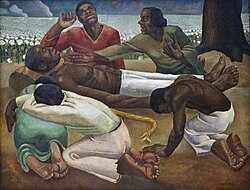
Lynch Law (1934), by Santos Zingale for the Public Works of Art Project

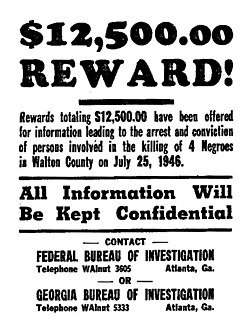
An FBI poster asking the public for information on the 1946 Moore's Ford lynchings in rural Georgia

現代においても、これらの歴史は人種間の緊張や構造的な差別の根源として議論され続けており、過去の悲劇を忘れないための博物館や記念碑が全米各地に設置されています。

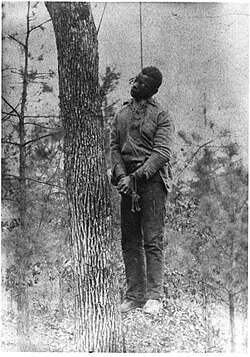
The lynching of Laura Nelson in Okemah, Oklahoma, on May 25, 1911[49][50]

Frequently Asked Questions

リンチの主な目的は何でしたか?

単なる犯罪への処罰ではなく、白人至上主義を維持し、アフリカ系アメリカ人やその他の少数民族を恐怖で支配し、社会的な地位を固定化させるためのテロリズムとしての目的がありました。

被害者はアフリカ系アメリカ人のみでしたか?

いいえ。圧倒的多数はアフリカ系アメリカ人でしたが、メキシコ系、中国人、先住民、イタリア系移民、ユダヤ系など、様々な民族的マイノリティが犠牲となりました。

なぜリンチを止める法律がすぐに作られなかったのですか?

連邦政府に法案を提出しても、南部出身の政治家たちが強い権限を持ち、議会で激しく反対したため、実効性のある連邦法が制定されるまでには非常に長い時間がかかりました。

「見世物としてのリンチ」とはどのようなことですか?

大勢の群衆が集まる中で公開処刑を行い、その様子を写真に撮ってポストカードとして販売するなど、残酷な行為を娯楽や記念品のように扱う文化があったことを指します。

リンチはいつ頃に終わったのでしょうか?

1950年代から60年代の公民権運動によって組織的なリンチは激減しましたが、定義によっては1980年代や1990年代まで、憎悪犯罪としての超法規的殺害が発生していました。

References

  1. Wade, 1987, gave a similar account, but suggested that the meeting was a regular Klan one. An interview with Truman's friend Hinde at the Truman Library's web site portrayed the meeting as one-on-one at the Hotel Baltimore with a Klan organizer named Jones. Truman's biography, written by his daughter Margaret, agreed with Hinde's version but did not mention the $10 initiation fee. The biography included a copy of a telegram from O.L. Chrisman stating that reporters from the papers had questioned him about Truman's past with the Klan. He said he had seen Truman at a Klan meeting, but that "if he ever became a member of the Klan I did not know it."

📸 フォトギャラリー

A graph of lynchings in the U.S. by victim race and year[1]
The body of George Meadows, lynched near the Pratt Mines in Jefferson County, Alabama, on January 15, 1889
Lynching of John Willie Clark in Cartersville, Georgia, September 1930, after killing Police Chief J. B. Jenkins[2]
Lynching of Jesse Washington in Waco, Texas, on May 15, 1916. He was repeatedly lowered and raised onto a fire for about two hours. A professional photographer took pictures of the lynching as it unfolded.
This 1867 Thomas Nast cartoon called Southern Justice advocates for military intervention to prevent white terrorism in the South.
An 1869 cartoon published in The Independent Monitor of Tuscaloosa, Alabama, threatening the lynching of carpetbaggers by the Ku Klux Klan
Mississippi Ku-Klux in the Disguises in Which They Were Captured, 1872. They were arrested in Tishomingo County, Mississippi, for attempted murder. (Wood engraving from photograph, Harper's Weekly, January 27, 1872, Prints and Photographs Division, Library of Congress)[37]
The 1893 public lynching of black teenager Henry Smith in Paris, Texas
The lynching of Laura Nelson in Okemah, Oklahoma, on May 25, 1911[49][50]
Bodies of three African-American men (Jim Redmond, Gus Roberson, and Bob Addison) lynched in Habersham County, Georgia, on May 17, 1892
A scene from the 1915 movie, The Birth of a Nation, showing an African-American character, Gus (played by white actor Walter Long, in blackface), about to be killed by the Ku Klux Klan
A scene from the 1920 movie, Within Our Gates, showing the lynching of film characters, Jasper Landry and his wife
The lynching of African American William "Froggie" James in Cairo, Illinois, on November 11, 1909. A crowd of thousands watched the lynching.[77]
From left to right, the lynching of killer-for-hire Jim Miller and three others in Ada, Oklahoma, on April 19, 1909
The lynching of Leo Frank in Marietta, Georgia, on August 17, 1915. Judge Morris, who organized the crowd after the lynching, is on the far right and he is wearing a straw hat.
Body of a lynched Black male, propped up in a rocking chair for a photograph, c. 1900. Paint has been applied to his face, circular disks glued to his cheeks, cotton glued to his face and head, while a rod props up the victim's head.
The front and back of a postcard showing the charred corpse of Will Stanley in Temple, Texas, in 1915. Joe Meyers marked the back of the postcard to show his parents he was in the crowd: "This is the Barbecue we had last night.. my picture is to the left with a cross over it.. your son Joe".[96]
Postcard of the 1920 Duluth, Minnesota lynchings. Two of the Black victims are still hanging while the third is on the ground. Postcards of lynchings were popular souvenirs in the U.S.[101]
Ida B. Wells exposed lynching in the early 1890s to an international audience.
NAACP flag against lynching, displayed in front of their offices from 1920 to 1938 after each lynching[110]
In the 1921 Tulsa race massacre thousands of Whites rampaged through the Black community, killing men and women, burning and looting stores and homes. Up to 300 Blacks were killed.
Mary Burnett Talbert served as National Director of the NAACP Anti-Lynching Campaign in 1921.
A group of white men pose for a 1919 photograph as they stand over the Black victim Will Brown who had been lynched and had his body mutilated and burned during the Omaha race riot of 1919 in Omaha, Nebraska.
Lynching of J. Thomas Shipp and Abraham S. Smith in Marion, Indiana, August 7, 1930
Pictures of the lynching of Roosevelt Townes and Robert McDaniels in 1937 were the first photos of lynchings to be published by the national press.
Lynch Law (1934), by Santos Zingale for the Public Works of Art Project
An FBI poster asking the public for information on the 1946 Moore's Ford lynchings in rural Georgia
The 1856 lynching of Charles Cora and James Casey by the Committee of Vigilance in San Francisco, California
Illustration drawn by A. W. Piper depicting the January 18, 1882, lynching of James Sullivan, William Howard, and Benjamin Payne in Seattle, Washington
The hanging of Josefa Segovia (Juanita) in Downieville, 1851
Anti-lynching broadside by the NAACP stating "The United States is the Only Land on Earth where Human Beings are Burned at the Stake"