紀元前202年から紀元220年にかけて繁栄した漢王朝は、中国の歴史において国家のアイデンティティを確立した極めて重要な時代です。秦の統一後、混乱を経て誕生したこの王朝は、広大な領土と高度な統治システムを構築し、現代に至るまで「漢民族」という言葉が使われるほどの深い影響を後世に残しました。
主要な歴史的事実
- 王朝の構成:前漢(紀元前202年〜紀元9年)、新(紀元9年〜23年)、後漢(紀元25年〜220年)の三つの時期に分かれます。
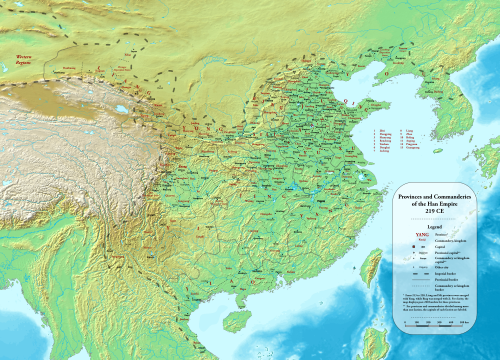
- 領土の拡大:最盛期には約600万〜650万平方キロメートルに及び、中央アジアやベトナム方面まで勢力を広げました。
- 人口規模:紀元2年時点の推計人口は約5,767万人という巨大な国家でした。
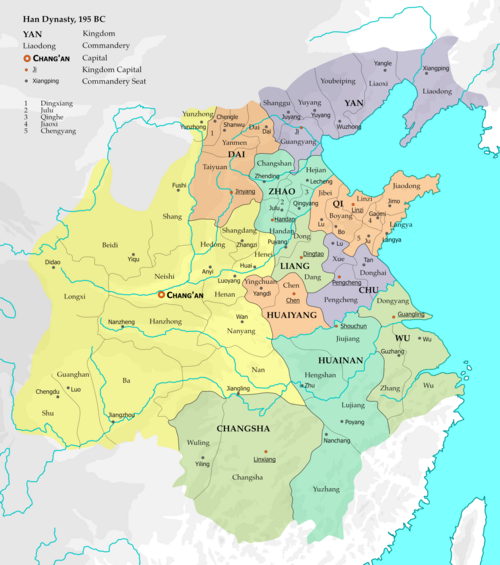
- 政治体制:皇帝を頂点とする君主制を採用し、郡県制と封建制を組み合わせた統治を行いました。
- 文化の融合:儒教を国教化し、道教や外来の仏教が浸透し始めた時代でもあります。
王朝の変遷と政治的展開
前漢の成立と拡大
秦の崩壊後、楚漢戦争を勝ち抜いた劉邦(高祖)によって建国されました。初期は地方の王への権限を認める封建的な要素が強かったものの、次第に中央集権化が進みました。特に武帝の時代には、北方の強敵である匈奴(きょうど)との激しい戦争を展開し、領土を大幅に拡張しました。
軍事的な成功は、単なる領土拡大に留まりませんでした。匈奴との戦いを通じて、中国は西域への道を切り開き、東西貿易の動脈となるシルクロードの基礎を築いたのです。
![Statue of a horse trampling a Xiongnu warrior, at the mausoleum of Western Han general Huo Qubing (d. 117 BC), who fought in the Han–Xiongnu War. This is the first known monumental stone statue in China.[36]](/images/a8/59/a85915032c6d0750862c7c7a2abd9ec488f6938308c43c8d08846f302a9c55f9.jpg)
新王朝の挿入と後漢の再興
前漢の末期、王莽(おうもう)が権力を掌握し、一時的に「新」という王朝を建てましたが、社会不安と反乱により短期間で崩壊しました。その後、光武帝によって漢王朝が再興され、後漢時代へと移行します。後漢は前漢に比べて地方勢力の台頭が目立ちましたが、依然として東アジアの覇権を維持しました。
後漢時代には、外交関係も多角化しました。匈奴の首長に印章を授与して懐柔策を講じる一方、クシャーナ朝などの西方の勢力とも接触し、文化的な交流が深まりました。
![Bronze seal of a Xiongnu chieftain with impression and transcription, conferred by the Eastern Han government and inscribed with the following text: 漢匈奴,歸義親,漢長 ("The Chief of the Han Xiongnu, who have returned to righteousness and embraced the Han")[91]](/images/1e/4e/1e4ea04cf8ef392bf5407cfb0963b5cdb6fba97efb5b4ef7b0933d6ad8f83fde.jpg)
![Eastern Han inscriptions on a lead ingot, using the Greek alphabet in the style of the Kushans, excavated in Shaanxi, 1st–2nd centuries AD – Gansu Provincial Museum[104]](/images/d2/cd/d2cdbdecf4dcb8a8dc27f0456125049bfe87d8e3cc7b0f27e08f152803459fcd.jpg)
社会構造と日常生活
階級社会と家族観
漢代の社会は厳格な階級制に基づいていました。官僚、農民、職人、商人の順に社会的地位が定められており、特に農業が国家の基盤として重視されました。また、家族の絆や親孝行を尊ぶ儒教的な価値観が社会の隅々まで浸透し、婚姻や親族関係の規範となりました。
衣食住と娯楽
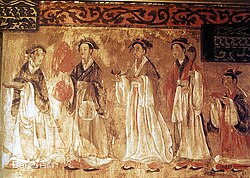
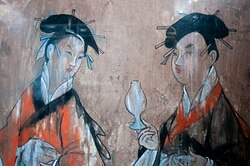
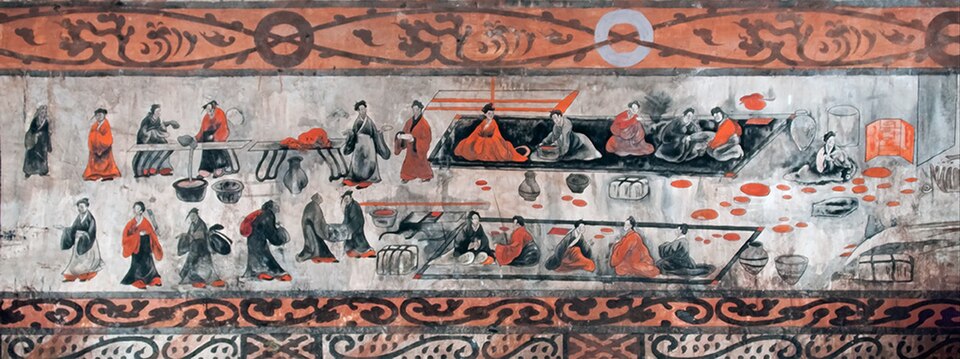
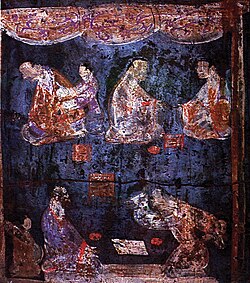
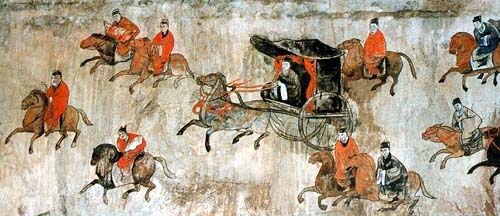
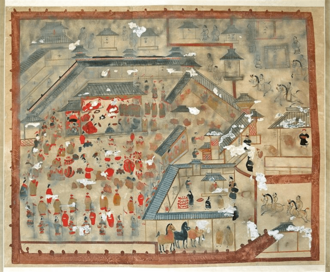
衣服においては、絹(シルク)の生産が盛んになり、貴族階級は豪華な漢服(かんふく)を身にまといました。食生活や住居も発展し、都市部では賑やかな市場や娯楽が展開されていました。壁画などの史料からは、宴会や音楽、舞踊、さらにはレスリングのような格闘技に興じる人々の姿が見て取れます。
科学技術と芸術の到達点
工学と発明
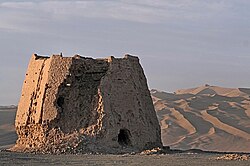
漢代の技術力は驚異的でした。土を突き固めて作る「版築(はんちく)」による強固な城壁や倉庫が建設され、国境警備の要となる監視塔が各地に配置されました。
![These rammed earth ruins of a granary in Hecang Fortress (河仓城; Hécāng chéng), located approximately 11 km (7 mi) northeast of the Western Han-era Yumen Pass, were built during the Western Han (202 BC – 9 AD) and was significantly rebuilt during the Western Jin (280–316 AD).[67]](/images/ec/a4/eca48bd3590d652773700a0818f98fd33f2849313f6f96f5bb02a5a5e52bd219.jpg)
また、機械工学や天文学も発展しました。張衡(ちょうこう)による世界初の地震計の考案や、高度な水利施設、製鉄技術の向上などが挙げられます。これらの技術革新は、農業生産性の向上と国家の安定に大きく寄与しました。
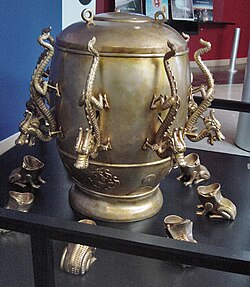
芸術と精神世界
美術面では、写実的な彫刻や精巧な青銅器が制作されました。特に馬の躍動感を表現した彫刻は有名であり、当時の高い芸術水準を物語っています。また、死後の世界への信仰から、豪華な副葬品を伴う墳墓が築かれました。
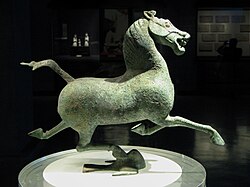
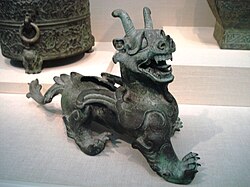
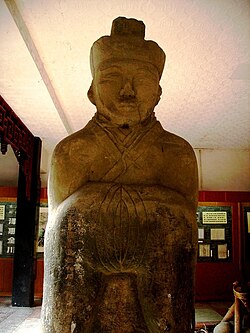
![A gilded bronze oil lamp in the shape of a kneeling female servant, dated to the 2nd century BC, found in the tomb of Dou Wan, wife of Liu Sheng, Prince of Zhongshan; its sliding shutter allows for adjustments in the direction and brightness in light while it also traps smoke within the body.[73][358]](/images/d3/d5/d3d53927913a73de41dbe4d278ad21735383ffb2d4b8c1e8baff4f24d8f9a438.jpg)
精神面では、太極や導引(どういん)といった身体鍛錬や、道教的な不老不死への憧憬が広まりました。また、蔡邕(さいよう)らによって儒教の経典が石に刻まれ、学問の標準化が図られました。
![A fragment of the Xiping Stone Classics; these stone-carved Five Classics installed during Emperor Ling's reign along the roadside of the imperial university right outside Luoyang, were made at the instigation of Cai Yong (132–192 AD), who feared the Classics housed in the imperial library were being interpolated by University Academicians.[218][219][220]](/images/97/88/978826ac6efc08d6daab825a73c2e6c4ec27a03e064d6573fe4638529a62c95a.jpg)
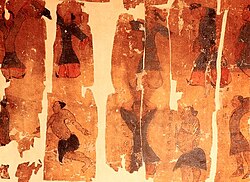
![A silk banner from Mawangdui, draped over the coffin of Lady Dai (d. 168 BC), wife of the Marquess Li Cang (利蒼) (d. 186 BC), chancellor for the Kingdom of Changsha.[235]](/images/83/b3/83b39925985f5cf948dd0592e92477932cc335f49376f2933de9bb62ca0589f8.jpg)
軍事と経済の基盤
軍事力と防衛
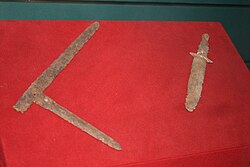
漢の軍隊は、戦車から騎兵への転換を遂げ、機動力の高い作戦を展開しました。鉄製の武器(戟や短剣)の普及により、武装レベルが飛躍的に向上し、広大な国境線を維持することが可能となりました。
![Eastern Han tombs sometimes have depiction of battles between Hu barbarians, with bows and arrows and wearing pointed hats (left), against Han troops; Eastern Han-era, Tsangshan tomb, Linyi; also visible in the Yinan tombs.[144]](/images/f4/d7/f4d7345e4081078eb13020720f9115a13e0d2337360dfea6cd0bca615474d681.png)
経済システムと通貨
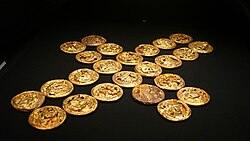
経済面では、半両銭や五銖銭(ごしゅせん)といった統一通貨が流通し、商業活動が活性化しました。政府は塩や鉄の専売制を導入して財政基盤を強化し、それによって大規模な軍事遠征や公共事業の資金を調達しました。
| 項目 | 前漢 (Western Han) | 後漢 (Eastern Han) |
|---|---|---|
| 期間 | 紀元前202年 〜 紀元9年 | 紀元25年 〜 220年 |
| 首都 | 長安 | 洛陽 |
| 主要皇帝 | 高祖、武帝、宣帝 | 光武帝、献帝 |
| 特徴 | 中央集権化、領土の急拡大 | 地方勢力の台頭、文化の成熟 |
Frequently Asked Questions
前漢と後漢の最大の違いは何ですか?
最大の違いは首都と政治的傾向です。前漢は長安を首都とし、強力な中央集権体制を築きましたが、後漢は洛陽を首都とし、地方の豪族や有力者の影響力が強まった傾向にあります。また、その間には王莽による「新」という短期間の王朝が存在していました。
シルクロードはどのようにして形成されましたか?
前漢の武帝が、北方の匈奴に対抗するために西域(中央アジア)へ使節を派遣し、同盟を模索したことがきっかけです。これにより、中国から中央アジア、さらにはローマ帝国に至る交易路が整備され、絹などの物資や仏教などの文化が伝播しました。
漢代にどのような科学的発見がありましたか?
代表的なものに、張衡による地震計の発明があります。また、製紙法の改良(蔡倫による)や、高度な数学(九章算術)、天文学、医学(張仲景など)の発展があり、実用的な科学技術が大きく前進しました。
漢王朝が滅亡した理由は何ですか?
後漢末期、宦官(かんがん)と外戚(がいせき)の激しい権力争いにより政治が腐敗し、統治能力が低下しました。そこに「黄巾の乱」などの大規模な農民反乱が起き、各地で軍閥( warlords)が割拠したことで、最終的に三国の時代へと移行しました。
References
- See also , pp. 21–22
- See also , p. 112.
- See also , p. 76; see , Plate V, Fig. 15, for a photo of a Han-era fortress in Dunhuang, Gansu that has rammed earth ramparts with defensive crenellations at the top.
- See also , p. 36.
📸 フォトギャラリー