私たちが日常的に感じている「重力」とは一体何なのでしょうか。アルベルト・アインシュタインが提唱した一般相対性理論は、重力を単なる「引き合う力」ではなく、質量を持つ物体によって引き起こされる「時空の歪み」として定義しました。この革命的な視点は、天体の運行から宇宙の始まりに至るまで、現代物理学の根幹を支えています。
Key Facts
- 重力は、質量やエネルギーが時空(時間と空間の統合体)を湾曲させることで発生する。
- 光は重力によって曲げられ、時間の進み方は重力が強い場所ほど遅くなる。
- ブラックホールや重力波など、極端な時空の歪みから生じる現象を理論的に予言した。
- ニュートン力学では説明できなかった水星の近日点移動などの現象を正確に解明した。
重力の正体:等価原理と時空の幾何学
一般相対性理論の出発点は、等価原理という洞察にあります。これは、「加速している系の中で感じる慣性力」と「重力場の中で感じる力」は、観測者にとって区別がつかないという考え方です。例えば、宇宙船が一定の加速度で上昇しているとき、内部にいる人は地球上に立っているときと同じ感覚を覚えます。
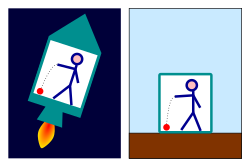
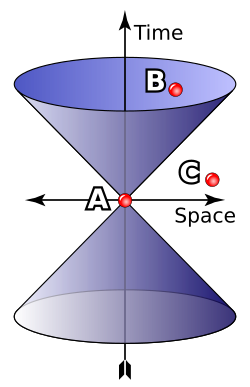
この原理に基づき、アインシュタインは重力を幾何学的な問題へと変換しました。質量を持つ物体が存在すると、その周囲の時空はゴムシートの上に重い球を置いたときのように沈み込みます。物体はこの歪みに沿って移動するため、結果として互いに引き寄せ合っているように見えるのです。この時空の構造を記述するために、擬リマン多様体などの高度な数学的枠組みが用いられます。
理論が予言した驚異的な現象
光の屈曲と重力レンズ
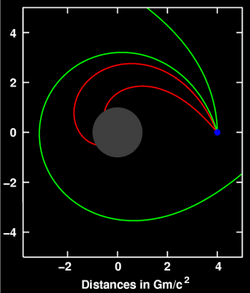
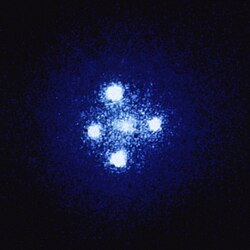
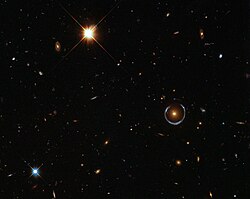
光は質量を持たないため、ニュートン力学では重力の影響を受けないと考えられていました。しかし、一般相対性理論では「空間そのものが曲がっている」ため、光もその湾曲に沿って進みます。これにより、遠方の天体から届く光が手前の巨大質量天体によって曲げられ、像が歪んだり複数に見えたりする重力レンズ現象が発生します。
時間の遅れと赤方偏移
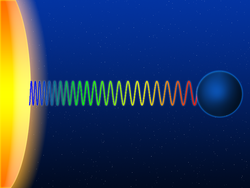
重力は時間にも影響を与えます。重力が強い領域(時空の歪みが激しい場所)では、時間の進みが緩やかになります。これを重力時間遅延と呼びます。また、強い重力場から脱出する光はエネルギーを失い、波長が伸びて赤くなる重力赤方偏移という現象が起こります。
重力波の放射
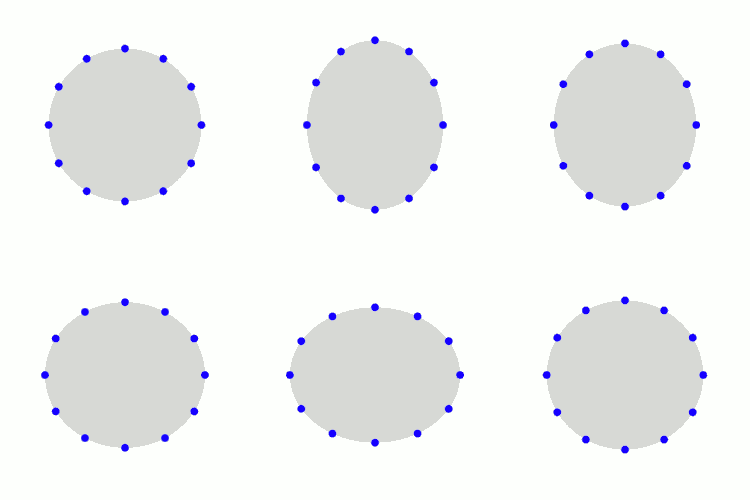
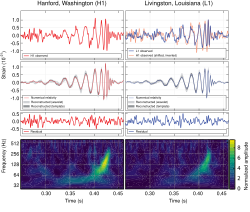
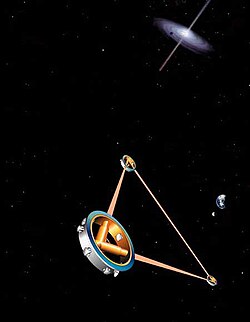
巨大な質量を持つ物体が激しく加速運動をすると、時空の歪みが波として周囲に伝播します。これが重力波です。ブラックホールの合体などの激しいイベントによって発生し、地球に届く頃には極めて微小な振動となりますが、現代の観測技術(LIGOなど)によってその検出に成功しています。
極限状態の天体:ブラックホールと特異点
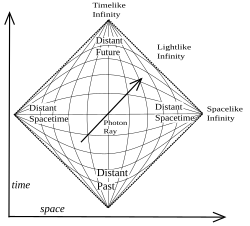
質量が極めて狭い領域に集中すると、時空の歪みが無限大に近づく特異点が形成されます。その周囲には、光ですら脱出できない境界線である事象の地平線(イベントホライズン)が存在し、この領域全体をブラックホールと呼びます。
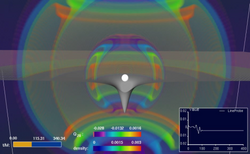
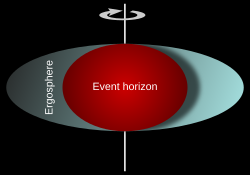
回転するブラックホールの場合、事象の地平線の外側にエルゴ球と呼ばれる領域が存在し、ここでは時空そのものが回転に引きずり込まれる「フレーム・ドラッギング」という現象が起こります。この領域を利用してエネルギーを取り出す理論的な可能性も研究されています。
宇宙のダイナミクスと検証
一般相対性理論は、単一の天体だけでなく宇宙全体の進化(宇宙論)にも適用されます。フリードマン方程式などの解を用いることで、宇宙の膨張や加速膨張のモデルが構築されました。また、連星パルサーの軌道減衰の観測などは、理論の正しさを裏付ける強力な証拠となっています。
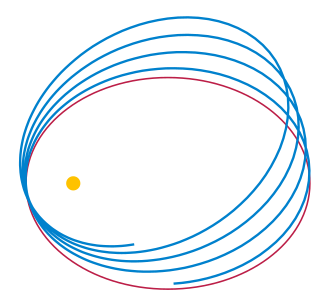
![Orbital decay for PSR J0737−3039: time shift, tracked over 16 years (2021).[96]](/images/9e/b7/9eb7f0618da31a2647f760777b91e83052eb54ecec6d18be65eb46281b9d9404.png)
| 現象 | 理論的予測 | 観測・検証例 |
|---|---|---|
| 光の屈曲 | 重力場により光路が曲がる | 日食時の星の位置ずれ、重力レンズ |
| 時間の遅れ | 重力が強いほど時間は遅く進む | GPS衛星の時計補正 |
| 軌道変動 | 近日点などの歳差運動が発生 | 水星の近日点移動の解明 |
| 時空の波 | 質量加速により時空の波が伝播 | LIGOによる重力波検出 |
量子力学との統合へ:現代の挑戦
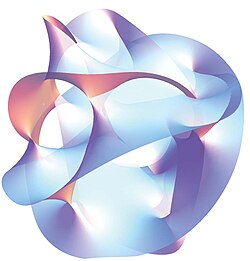
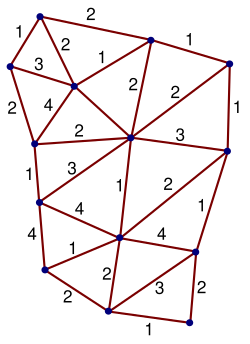
一般相対性理論はマクロな宇宙を完璧に記述しますが、ミクロな世界を扱う量子力学とは根本的に相容れません。この矛盾を解消し、すべてを統合する「量子重力理論」の構築が現代物理学の最大の目標の一つです。超弦理論やループ量子重力理論などのアプローチが提案されており、高次元空間やスピンネットワークといった概念を用いて研究が進められています。
Frequently Asked Questions
一般相対性理論と特殊相対性理論の違いは何ですか?
特殊相対性理論は「加速していない(慣性系)」かつ「重力がない」状況を扱い、光速不変の原理から時間や空間の相対性を説きました。一方、一般相対性理論はこれに「加速」と「重力」を組み込み、重力を時空の幾何学的な歪みとして一般化した理論です。
ブラックホールに入るとどうなりますか?
事象の地平線を越えると、理論上は中心の特異点に向かって不可避的に落下します。外部の観測者からは、時間の遅延により地平線に近づくにつれて停止し、次第に赤くなって消えていくように見えますが、落下する本人は短時間で中心に到達します。
重力波を検出することで何が分かりますか?
光(電磁波)では観測できないブラックホールの合体や、宇宙誕生直後の極初期宇宙の状態など、時空の激しい変動を直接観測できるため、宇宙の歴史を解明する新しい「目」となります。
GPSに相対性理論が使われているというのは本当ですか?
本当です。GPS衛星は高度が高いため地球表面より重力が弱く(一般相対性理論による時間の加速)、かつ高速で移動しているため(特殊相対性理論による時間の遅延)という2つの効果を受けます。これらを補正しないと、位置情報に大きな誤差が生じます。
References
- "GW150914: LIGO Detects Gravitational Waves". Black-holes.org. 11 February 2016. Retrieved 18 April 2016.
- , p. 228 "... the general theory of relativity ... was established by Einstein, and represents probably the most beautiful of all existing physical theories."
- O'Connor, J.J.; Robertson, E.F. (May 1996). "General relativity". History Topics: Mathematical Physics Index, Scotland: School of Mathematics and Statistics, , archived from the original on 4 February 2015, retrieved 4 February 2015
- , ch. 9 to 15, ; an up-to-date collection of current research, including reprints of many of the original articles, is ; an accessible overview can be found in , pp. 110ff. Einstein's original papers are found in Digital Einstein, volumes 4 and 6. An early key article is , cf. , ch. 9. The publication featuring the field equations is , cf. , ch. 11–15
- Moshe Carmeli (2008).Relativity: Modern Large-Scale Structures of the Cosmos. pp. 92, 93.World Scientific Publishing
- Grossmann for the mathematical part and Einstein for the physical part (1913). Entwurf einer verallgemeinerten Relativitätstheorie und einer Theorie der Gravitation (Outline of a Generalized Theory of Relativity and of a Theory of Gravitation), Zeitschrift für Mathematik und Physik, 62, 225–261. English translate
- , and (later complemented in )
- , cf. , ch. 15e
- Hubble's original article is ; an accessible overview is given in , ch. 2–4
📸 フォトギャラリー