太陽系以外の恒星を周回する「系外惑星」の探索は、現代天文学における最もエキサイティングな挑戦の一つです。しかし、惑星を直接見つけることは極めて困難です。なぜなら、主星である恒星の輝きが圧倒的に強く、惑星が反射するわずかな光は、太陽のような星の場合、主星の10億分の1程度に過ぎないからです。この強烈な光のコントラストが壁となり、多くの検出手法は惑星そのものではなく、惑星が主星に与える影響を観測する「間接的な戦略」に頼っています。
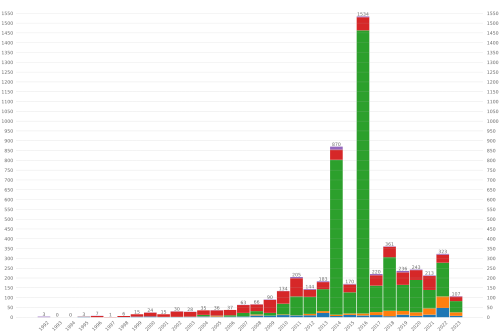
近年、観測技術の向上により、検出される惑星の数は飛躍的に増加しています。検出手法ごとの発見数の推移を見ると、特定の時期に特定の技術が主導的な役割を果たしてきたことがわかります。
Key Facts
- 間接検出が主流: 主星の眩しさにより、惑星の存在を主星の挙動や光の変化から推測する手法が一般的である。
- 多様な検出法: トランジット法や視線速度法などの確立された手法から、アストロメトリや直接撮像まで多岐にわたる。
- 観測の相補性: 異なる手法を組み合わせることで、惑星の質量や半径、軌道特性をより正確に特定できる。
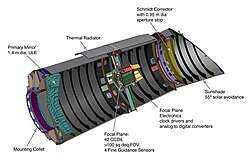
- 技術の進化: ケプラー宇宙望遠鏡などの専用ミッションにより、地球サイズの惑星やスーパーアースの発見が加速した。
主要な検出メソッドとその仕組み
トランジット法(食検出法)
惑星が主星の前を横切る際、主星の光がわずかに遮られ、明るさが周期的に低下する現象を利用する方法です。この明るさの変化(減光)の深さから惑星の大きさを、周期から軌道半径を割り出すことができます。特に多くの惑星を効率的に発見できるため、NASAのケプラー宇宙望遠鏡などで広く採用されました。
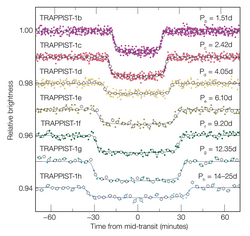
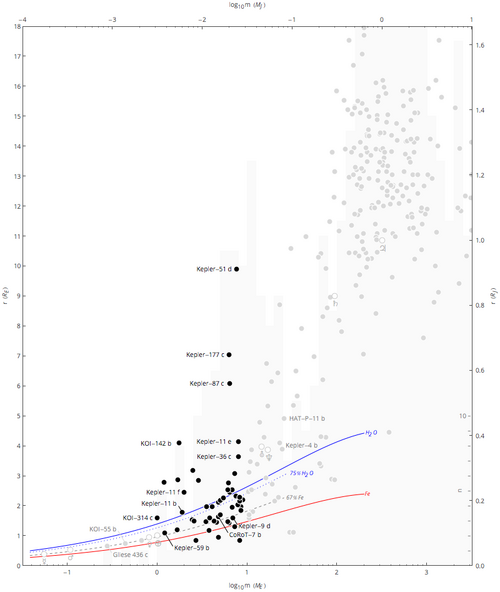
この手法では、地球より大きく海王星より小さい「スーパーアース」などの多様なサイズの惑星が検出されています。また、惑星が主星を横切る際の光のスペクトルを分析することで、大気成分を推定する透過分光法への応用も可能です。
視線速度法(ドップラー法)
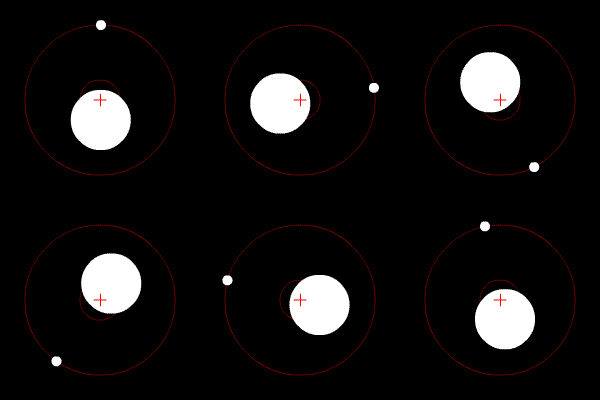
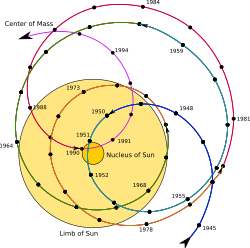
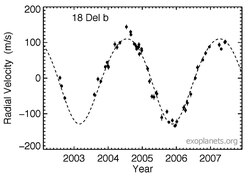
惑星の重力によって主星がわずかに揺さぶられる現象を利用します。惑星と主星は共通の重心を中心に公転しているため、主星が地球に近づいたり遠ざかったりすることで、光の波長が変化する「ドップラー効果」が生じます。この速度変化を精密に測定することで、惑星の最小質量を推定できます。
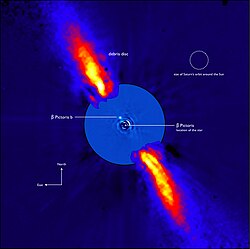
直接撮像法
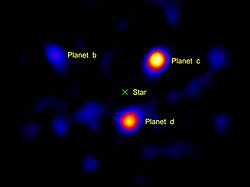
主星の強い光をコロナグラフなどで遮り、惑星から放射される赤外線や反射光を直接捉える手法です。非常に困難な技術ですが、主星から遠く離れた巨大惑星の観測に適しています。最新の望遠鏡やデータ処理技術により、実際に惑星の姿を画像として捉えることに成功しています。
![ESO VLT image of exoplanet HD 95086 b[85]](/images/da/05/da05d4e98400169fa057a7cff06d1fcbb073c4595cd95e6ff8f1850296248552.jpg)
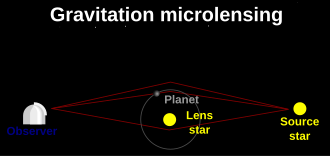
重力マイクロレンズ法
遠方の恒星の手前を別の星(レンズ星)が通過する際、一般相対性理論に基づき光が曲げられ、増幅される現象を利用します。レンズ星に惑星が伴っている場合、光の増幅パターンに特有の乱れが生じ、それによって惑星の存在を検知します。この方法は、主星から遠い軌道にある惑星や、主星を持たない浮遊惑星の発見に有効です。
その他の特殊な検出法
- アストロメトリ: 主星の空における位置の微小な変動を直接測定し、惑星の重力による揺れを検知します。
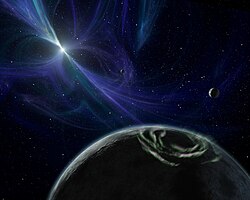
- パルサータイミング法: 極めて正確な周期で電波を出すパルサーの信号の乱れから、周囲の惑星を検出します。
- タイミング変動(TTV): 複数の惑星が存在する場合、互いの重力干渉でトランジットの時刻がずれる現象を利用します。
![The large central object is the star CVSO 30; the small dot up and to the left is exoplanet CVSO 30c. This image was made using astrometry data from VLT's NACO and SINFONI instruments.[67]](/images/eb/33/eb33c6de6e3f2da231c2b9de05517354fa05e292144eae4065aaf5632f7a3e53.jpg)
惑星の分類と特性の判別
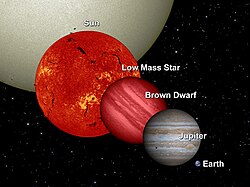
検出された天体が、ガス惑星なのか、岩石惑星なのか、あるいは恒星に近い「褐色矮星」なのかを判別することは重要です。質量と半径のデータを組み合わせることで、その天体の正体を明らかにします。
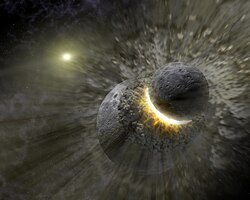
また、一部の系では惑星同士の衝突などの激しいイベントが想定されることもあり、天文学的なシミュレーションと観測データの照合が進められています。
観測インフラと今後の展望
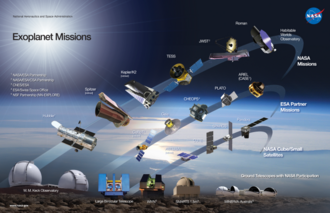
地上望遠鏡だけでなく、宇宙空間に設置された望遠鏡が決定的な役割を果たしています。赤外線観測に特化した設備や、高精度な分光器を備えたシステムが導入されており、より小さな惑星や、生命が存在しうる環境(ハビタブルゾーン)にある惑星の探索が続いています。
![The ExTrA telescopes at La Silla observes at infrared wavelengths and adds spectral information to the usual photometric measurements.[66]](/images/7f/00/7f00f8d026fca279c5be7b990026a36640b3bdb2dc5f0144a44a86ccb34402ef.jpg)
| 手法 | 検出原理 | 得られる主な情報 | 得意な対象 |
|---|---|---|---|
| トランジット法 | 主星の減光 | 惑星の半径、軌道周期 | 主星に近い惑星 |
| 視線速度法 | 主星の揺れ(ドップラー効果) | 惑星の最小質量 | 質量の大きい惑星 |
| 直接撮像法 | 惑星からの光を直接観測 | 光度、温度、大気 | 主星から遠い巨大惑星 |
| 重力マイクロレンズ法 | 光の屈折による増幅 | 質量、軌道半径 | 遠方の惑星、浮遊惑星 |
| アストロメトリ | 主星の絶対位置の変動 | 真の質量、軌道傾斜角 | 近傍の重い惑星 |
Frequently Asked Questions
なぜ惑星を直接写真に撮るのが難しいのですか?
主星である恒星が惑星に比べてあまりにも明るいため、惑星の微弱な光が主星の眩しさに飲み込まれてしまうからです。これを防ぐために、主星の光だけを遮る特殊な装置(コロナグラフ)などが使用されます。
「スーパーアース」とはどのような惑星ですか?
地球よりも質量が大きいものの、天王星や海王星のようなガス惑星よりは小さい岩石主体の惑星を指します。地球の数倍の質量を持つことが多く、多くの系外惑星系で発見されています。
トランジット法で惑星の大きさがわかるのはなぜですか?
惑星が主星の前を横切る際、惑星の面積に比例して主星の光が遮られるためです。遮られる光の割合(減光率)を測定することで、主星に対する惑星の相対的なサイズを算出できます。
視線速度法でわかるのは「最小質量」だけなのですか?
はい。この手法では、惑星の軌道面が地球から見てどの程度の角度に傾いているか(軌道傾斜角)が不明な場合が多く、観測される速度変化から導き出されるのは、理論上の最小質量となります。
パルサーの周りにも惑星は存在するのですか?
はい。パルサー(中性子星)の周囲に惑星が存在することが確認されています。これは、超新星爆発の後でも惑星が生き残ったか、あるいは爆発後の残骸から新たに形成されたと考えられています。
References
- Lindegren, Lennart; Dravins, Dainis (31 January 2003). "The fundamental definition of "radial velocity"". Astronomy & Astrophysics. 401 (3): 1185–1201. :astro-ph/0302522. :2003A&A...401.1185L. :10.1051/0004-6361:20030181.
- "Externally Dispersed Interferometry". SpectralFringe.org. /. June 2006. Retrieved 6 December 2009.
- D.J. Erskine; J. Edelstein; D. Harbeck & J. Lloyd (2005). "Externally Dispersed Interferometry for Planetary Studies" (PDF). In Daniel R. Coulter (ed.). . Vol. 5905. pp. 249–260.
- Rajpaul, Vinesh; Aigrain, Suzanne; Osborne, Michael A.; Reece, Steven; Roberts, Stephen J. (24 June 2015), "A Gaussian process framework for modelling stellar activity signals in radial velocity data", Monthly Notices of the Royal Astronomical Society, 452 (3): 2269–2291, :1506.07304, :10.1093/mnras/stv1428
- Auriere, Michel; Konstantinova-Antova, Renada; Espagnet, Olivier; Petit, Pascal; Roudier, Thierry; Charbonnel, Corinne; Donati, Jean-Francois; Wade, Gregg A. (2013). "Pollux: A stable weak dipolar magnetic field but no planet ?". Proceedings of the International Astronomical Union. 9: 359–362. :1310.6907. :2014IAUS..302..359A. :10.1017/S1743921314002476. 85549247.
- Stevens, Daniel J.; Gaudi, B. Scott (2013). "A Posteriori Transit Probabilities". Publications of the Astronomical Society of the Pacific. 125 (930): 933–950. :1305.1298. :2013PASP..125..933S. :10.1086/672572. 118494470.
- Rodler, Florian; Lopez-Morales, Mercedes; Ribas, Ignasi (2012). "Weighing the Non-Transiting Hot Jupiter Tau BOO b". The Astrophysical Journal. 753 (1): L25. :1206.6197. :2012ApJ...753L..25R. :10.1088/2041-8205/753/1/L25. 119177983.
- "5 Ways to Find a Planet". exoplanets.nasa.gov. Retrieved 20 November 2018.
- Johnson, John (2015). How Do You Find an Exoplanet?. Princeton, NJ: Princeton University Press. pp. 60–68. .
- Hidas, M. G.; Ashley, M. C. B.; Webb, J. K.; et al. (2005). "The University of New South Wales Extrasolar Planet Search: methods and first results from a field centred on NGC 6633". . 360 (2): 703–717. :astro-ph/0501269. :2005MNRAS.360..703H. :10.1111/j.1365-2966.2005.09061.x. 197527136.
- Santerne, A.; Díaz, R. F.; Moutou, C.; Bouchy, F.; Hébrard, G.; Almenara, J. -M.; Bonomo, A. S.; Deleuil, M.; Santos, N. C. (2012). "SOPHIE velocimetry of Kepler transit candidates". Astronomy & Astrophysics. 545: A76. :1206.0601. :2012A&A...545A..76S. :10.1051/0004-6361/201219608. 119117782.
📸 フォトギャラリー