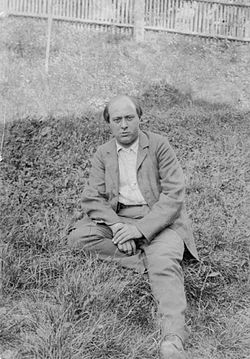
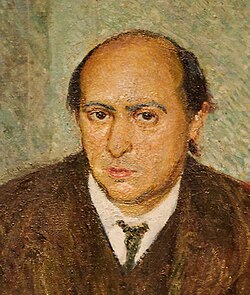
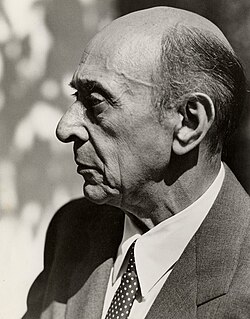
20世紀の音楽史において、最も議論を呼び、かつ影響を与えた人物の一人がアルノルト・シェーンベルクです。彼は単なる作曲家にとどまらず、音楽理論家、そして後進を育成した教育者として、西洋音楽の伝統的な枠組みを根本から覆しました。特に「不協和音の解放」や「十二調技法」の確立は、現代音楽の方向性を決定づける歴史的な転換点となりました。
Key Facts
- 新ウィーン楽派の中心人物であり、無調音楽から十二調音楽への移行を主導した。
- 伝統的な調性(キー)に縛られない不協和音の解放を提唱した。
- 12の異なる音を均等に扱う十二調技法を考案し、音楽構造に新たな秩序をもたらした。
- ナチス・ドイツの迫害を逃れ、アメリカへ亡命。UCLAで教鞭を執った。
- 作曲だけでなく、『和声論』などの重要な音楽理論書を執筆した。
音楽的進化の軌跡:ロマン派から十二調へ
シェーンベルクの音楽的旅路は、大きく分けて3つの段階に分類されます。初期の彼は、後期ロマン派の豊かな色彩感を持つスタイルで活動していました。しかし、次第に既存の調性体系では表現しきれない感情の深淵に突き当たり、伝統的なルールを脱ぎ捨てる道を選びます。
1908年頃から、彼は特定の中心音を持たない無調音楽(Atonality)へと踏み出しました。これは、それまで「解決されるべき不安定な音」とされていた不協和音を、独立した表現手段として認める「不協和音の解放」という思想に基づいています。
その後、無調音楽における形式的な混乱を克服するため、1923年以降に開発したのが十二調技法(Twelve-tone technique)です。これは、オクターブ内の12個の音を重複させずに一列に並べた「音列」を基本単位とし、それを変形・反転させることで楽曲を構成する厳格なシステムです。これにより、調性なき世界に新たな論理的構造を構築することに成功しました。
![In Schoenberg's Variations for Orchestra, Op. 31, tone row form P1's second half has the same notes, in a different order, as the first half of I10: "Thus it is possible to employ P1 and I10 simultaneously and in parallel motion without causing note doubling".[120]](/images/41/72/417280dae2c7eda1e670d83161e634d21d500b362ed1b131c62f2137b7cc534d.png)
![Featuring hexachordal combinatoriality between its primary forms, P1 and I6, Schoenberg's Piano Piece, Op. 33a, tone row contains three perfect fifths, which is the relation between P1 and I6, and a source of contrast between "accumulations of 5ths" and "generally more complex simultaneity".[121] For example, group A consists of B♭-F-C-B♮, while the "more blended" group B consists of A-F♯-C♯-D♯](/images/88/b7/88b771e38642d216115b4716502ef2e68daffb37e9282e87536823285a49b79d.png)
激動の生涯と亡命の道
シェーンベルクの人生は、当時のヨーロッパの政治的混乱と密接に結びついていました。ウィーンで活動し、その後ベルリンのプロイセン芸術アカデミーで教鞭を執りましたが、1930年代に台頭したナチスによる公務員制限を予見し、職を辞しています。
彼は自身のユダヤ人としてのアイデンティティを強く意識し、誇りを持って表明した上で、1930年代半ばにアメリカ合衆国へ移住しました。ロサンゼルスに定住した彼は、カリフォルニア大学ロサンゼルス校(UCLA)で1936年から1944年まで教え、晩年まで創作と研究に没頭しました。
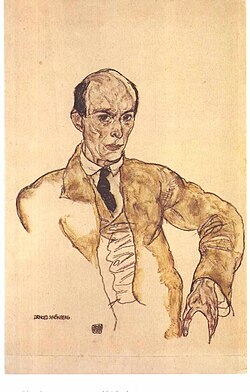
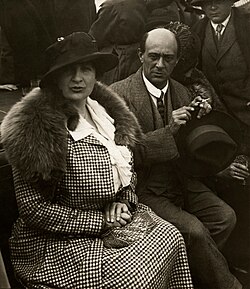
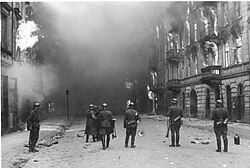
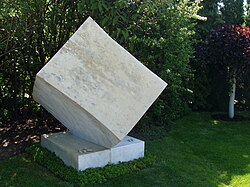
彼の作品には、ホロコーストの悲劇を記憶に刻んだ『ワルシャワの生存者』など、歴史的な痛みを反映した重要な楽曲も含まれています。1951年に76歳で没し、現在はウィーン中央墓地に埋葬されています。
シェーンベルクの主要な業績まとめ
彼の多才な活動を以下の表にまとめます。
| 役割 | 主な貢献・成果 | 代表的な概念・作品 |
|---|---|---|
| 作曲家 | 音楽形式の革新と現代音楽の基礎構築 | 『月に照らされたピエロ』『モーゼとアロン』 |
| 理論家 | 和声学の再定義と新しい作曲システムの提唱 | 『和声論』『十二調技法』 |
| 教育者 | 新ウィーン楽派の育成と後世への影響 | アルバン・ベルク、アントン・ウェーベルンへの指導 |
Frequently Asked Questions
十二調技法とは具体的にどのような仕組みですか?
1オクターブにある12個の半音すべてを一度ずつ使い、特定の順番で並べた「音列」を作成します。この音列を基本とし、逆行(後ろから読む)や反転(上下を鏡合わせにする)などの操作を加えることで、特定の調に依存しない統一感のある楽曲を構成する手法です。
「不協和音の解放」とはどういう意味ですか?
伝統的な音楽では、不協和音は一時的な緊張状態であり、最終的に心地よい協和音に「解決」される必要がありました。シェーンベルクは、不協和音を単独で成立する表現として扱い、解決させる義務をなくしたことを指します。
新ウィーン楽派とは何ですか?
シェーンベルクを中心に、その弟子であるアルバン・ベルクとアントン・ウェーベルンの3名からなる作曲家グループのことです。彼らは伝統的な調性音楽から脱却し、無調や十二調といった前衛的な音楽言語を追求しました。
なぜ彼はアメリカへ亡命したのですか?
ナチス・ドイツによるユダヤ人迫害と、芸術分野における思想統制(退廃芸術の排除など)から逃れるためです。彼は自身の信仰と芸術的自由を守るため、米国への移住を決断しました。
References
- , US also ; German:
- Among were , , , and in Europe; in the US, , , , , , , and .
- His views also influenced pianists , , , , and .
- Text: "Die Trauung von »Samuel Schönberg aus Pressburg mit der Jgf. Pauline Nachod aus Prag« wurde in der »Wochenschrift für politische, religiöse und Cultur-Interessen« angezeigt. Diese Angaben divergieren vom Aufgebot, das die Kultusgemeinde veröffentlichte: 17. März (1872) 12 ½ Samuel Schönberg Kaufmann aus Szécsény Sohn d. H. Abraham und Fr. Theresia geb Löwy 15. Sept, 1838 II, Taborstr. 4 Pauline Nachod aus Preßburg, Tochter d. H. Josef und d. Fr. Karoline geb. Jontow. 8. März 1843. II Taborstraße 4. Aufgebotsz. u. Deleg. Pressburg 2. März 1872."
- For [de], Schoenberg's turns, from tonality to atonality and twelve-tone technique, exemplified .
- Schoenberg hoped for a of Balzac's as tried around 1928 or 1929, he recalled in 1940.
- Straus argued that "preoccupation with motivic coherence characterizes a whole range of early ", ascribing it to "much of the work" of and . He noted his argument's reliance on while admitting the theory's inadequacy to analysts' aspiration to a "true unified-field theory of post-tonal music" à la .
📸 フォトギャラリー