水のようにさらさらとした液体から、ハチミツやケチャップのようにどろりとした物質まで、流体にはそれぞれ異なる「流れにくさ」が存在します。この物理的な特性を粘度(Viscosity)と呼びます。粘度は単なる感覚的な「ねばりけ」ではなく、流体内部で発生する摩擦力や、分子レベルでの運動量輸送によって定義される重要な物理量です。
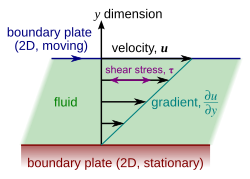
流体が移動する際、隣接する層の間には速度差が生じます。この速度差を打ち消そうとする内部摩擦が粘性の正体であり、この力が強いほど流体は動きにくくなります。例えば、2枚の平行な板の間にある流体において、上の板を動かそうとする際に必要な力は、その流体の粘度に比例します。
Key Facts
- 粘度の本質: 流体内部で発生する摩擦(せん断応力)の強さを表す指標である。
- 温度の影響: 一般的に液体は温度が上がると粘度が下がり、気体は温度が上がると粘度が上昇する。
- 動粘度と粘度: 粘度(絶対粘度)を密度で割ったものが「動粘度」であり、流動性の評価に用いられる。
- 極端な例: ピッチのような物質は、水に比べて約2,300億倍という驚異的な粘度を持つ。
粘度の定義と物理的メカニズム
動粘度と運動学的粘度
物理学では、粘度を大きく2つの視点から定義します。一つは粘性係数(絶対粘度) $\mu$ で、これは流体がせん断応力に対してどれだけ抵抗するかを示します。もう一つは動粘度 $\nu$ で、これは粘性係数を流体の密度 $\rho$ で除した値($\nu = \mu / \rho$)であり、流体がどれだけ速く拡散するかという運動学的な性質を表します。
一般的な平行流においては、せん断応力は速度勾配(速度の変化率)に比例します。この比例定数がまさに粘度にあたります。

ニュートン流体と非ニュートン流体
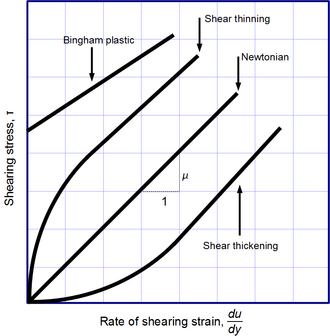
流体は、せん断速度と応力の関係によって2種類に分類されます。水や空気のように、せん断速度に関わらず粘度が一定であるものをニュートン流体と呼びます。一方で、加える力や速度によって粘度が変化する物質(ケチャップやペースト状の物質など)は非ニュートン流体に分類されます。
物質によってこの粘性の傾きは大きく異なり、それが流体としての個性を決定づけています。
物質の状態と粘度の変動
温度による変化
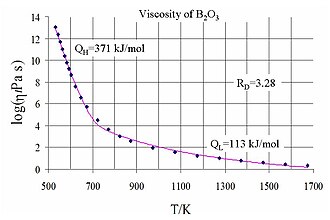
粘度は温度に極めて敏感です。特にガラスのようなアモルファス(非晶質)材料では、温度変化に伴い粘度が劇的に変動します。このような挙動は、特定の経験式(Vogel-Fulcher-Tammann式など)で近似されることが多いです。
![Common glass viscosity curves[64]](/images/5c/fc/5cfc4549a5e61c14a914661e432238a90d8319a81f5462eb432787b0eb6bfc1b.png)
また、酸化ホウ素($\text{B}_2\text{O}_3$)のように、温度域によって異なる粘性挙動(レジーム)を示す物質も存在します。
極端な粘性を持つ物質の例
私たちの身近な物質でも、粘度の差は数桁に及びます。例えば、ハチミツは水よりも遥かに高い粘度を持ち、ゆっくりと滴り落ちます。

さらに極端な例が「ピッチ」という物質です。クイーンズランド大学で行われている有名な実験では、1927年から漏斗に詰められたピッチが滴り落ちる様子が観察されており、約10年に1滴という極めて遅い速度で落下しています。この観測から、ピッチの粘度は水の約2,300億倍であると推定されています。
![In the University of Queensland pitch drop experiment, pitch has been dripping slowly through a funnel since 1927, at a rate of one drop roughly every decade. In this way the viscosity of pitch has been determined to be approximately 230 billion (2.3×10¹¹) times that of water.[87]](/images/18/8b/188b55a9927dfde7aecc9ec3e1a6b97ab46d35ef005c343efc7e876e77b13493.jpg)
主要物質の粘度比較まとめ
以下に、代表的な物質の粘度特性をまとめます。温度条件によって値は変動しますが、相対的な差を確認する指標となります。
| 物質名 | 粘度 (mPa·s) | 温度 (°C) | 特徴 |
|---|---|---|---|
| 空気 | 約 0.018 | 20 | 極めて低い(気体) |
| 水 | 1.0016 | 20 | 基準となる液体 |
| オリーブオイル | 56.2 | 26 | 中程度の粘性 |
| ハチミツ | 2,000 ~ 10,000 | 20 | 高い粘性 |
| ケチャップ | 5,000 ~ 20,000 | 25 | 非ニュートン流体 |
| ピッチ | $2.3 \times 10^{11}$ | - | 超高粘性(準固体) |
Frequently Asked Questions
粘度と密度の違いは何ですか?
密度は単位体積あたりの「質量(重さ)」を示す指標ですが、粘度は流体の「流れにくさ(内部摩擦)」を示す指標です。例えば、水とオイルを比較すると、密度が近くても粘度が大きく異なる場合があります。
なぜ温度が上がると液体の粘度は下がるのですか?
温度が上昇すると、液体分子の熱運動が激しくなり、分子間の相互作用(結合力)が弱まるため、層同士が滑りやすくなり、結果として粘度が低下します。
「非ニュートン流体」とは具体的にどのような性質ですか?
力を加える速さによって粘度が変化する流体です。例えば、ケチャップは容器を振る(せん断速度を上げる)ことで粘度が下がり、注ぎやすくなる性質を持っています。
動粘度(Kinematic Viscosity)はどのような場面で使われますか?
主に潤滑油の性能評価や、配管内の流動計算などで利用されます。密度を考慮することで、重力下での流体の挙動をより正確に把握できるためです。
気体の粘度は温度が上がるとどうなりますか?
液体とは逆に、気体は温度が上がると粘度が上昇します。これは、温度上昇に伴い分子の衝突頻度が増え、運動量の輸送が活発になるためです。
References
- The discussion which follows draws from , pp. 232–237
- These materials are highly .
📸 フォトギャラリー