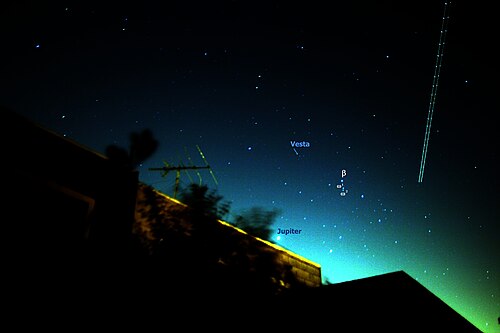
火星と木星の間に広がる小惑星帯の中で、ひときわ異彩を放つ天体があります。それがベスタ(Vesta)です。単なる岩石の塊ではなく、かつて惑星になろうとしていた「原始惑星」としての特徴を色濃く残しており、太陽系の誕生直後の激動の歴史を今に伝えています。
1807年にハインリヒ・ヴィルヘルム・オルベレスによって発見されて以来、ベスタは天文学者たちの関心を集めてきました。特に、地球に降り注ぐ特定の隕石(HED隕石)の故郷であると考えられていることから、その正体を解明することは太陽系全体の進化を知る鍵となります。
主要な事実(Key Facts)
- 正体: 小惑星帯に位置する、地球型惑星に近い構造を持つ大型小惑星。
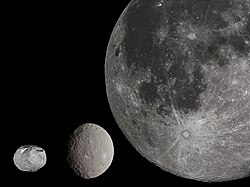
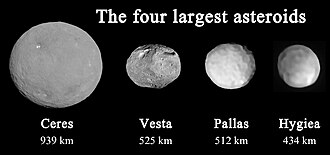
- サイズ: 平均直径は約525kmで、小惑星帯で2番目に大きな天体。
- 内部構造: 金属の核(コア)、マントル、地殻という分化構造を持つ。
- 最大の特徴: 南極付近に存在する巨大クレーター「レアシルビア」。
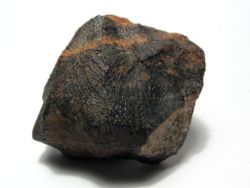
- 隕石との関係: エウクライト、ダイオジェナイト、ホワードライト(HED隕石)の供給源とされる。
天体としての特性と軌道
ベスタは、太陽から平均して約2.36天文単位(AU)の距離を公転しています。その公転周期は約3.63年であり、自転周期はわずか5.34時間という非常に速い回転速度を持っているのが特徴です。
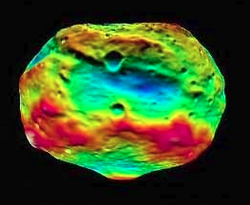
形状は完全な球体ではなく、やや扁平な楕円体となっています。平均密度は3.456 g/cm³と高く、これは内部に重い金属成分が集中していることを示唆しています。

| 項目 | 詳細数値 |
|---|---|
| 平均直径 | 約 525.4 km |
| 質量 | 約 2.59 × 10²⁰ kg |
| 自転周期 | 約 5.34 時間 |
| 表面重力 | 0.22 m/s² (地球の約 2.2%) |
| アルベド(反射率) | 0.423 |
地質学的進化:惑星への階段
ベスタの最も驚くべき点は、その内部構造にあります。誕生から数百万年という極めて短い期間に、放射性元素(アルミニウム26など)の崩壊熱によって内部が完全に溶融しました。これにより、重い鉄などの金属が中心に沈んで核(コア)となり、軽い岩石成分が外側に押し上げられてマントルと地殻を形成するという「分化」が起こりました。
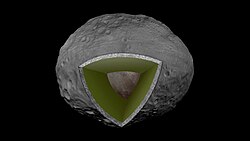
このプロセスは、地球や火星などの岩石惑星が辿った進化過程と酷似しています。つまり、ベスタは惑星になる途中で成長が止まってしまった「凍結された原始惑星」と言えるのです。
表面のダイナミズムと巨大衝突の痕跡
ベスタの表面は、激しい衝突の歴史を物語るクレーターで埋め尽くされています。特に南半球に位置するレアシルビア(Rheasilvia)は、天体全体のサイズに匹敵するほどの衝撃を与えた巨大衝突によって形成されました。この衝突はあまりに激しく、ベスタの地殻を深く突き破り、内部のマントル物質を表面に露出させたと考えられています。
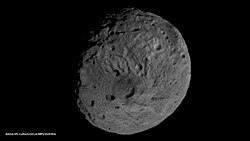
また、レアシルビアに次いで大きな衝突跡であるヴェネネイア(Veneneia)も存在し、これら二つの巨大衝突がベスタの現在の姿を決定づけました。さらに、赤道付近には「ディヴァリア・フォッサ」や「サトゥルナリア・フォッサ」と呼ばれる巨大な溝(トラフ)が走っており、これらは巨大衝突による衝撃波が天体全体を駆け巡った際に生じた地殻の割れ目であると推測されています。
![Geologic map of Vesta (Mollweide projection).[71] The most ancient and heavily cratered regions are brown; areas modified by the Veneneia and Rheasilvia impacts are purple (the Saturnalia Fossae Formation, in the north)[72] and light cyan (the Divalia Fossae Formation, equatorial),[71] respectively; the Rheasilvia impact basin interior (in the south) is dark blue, and neighboring areas of Rheasilvia ejecta (including an area within Veneneia) are light purple-blue;[73][74] areas modified by more recent impacts or mass wasting are yellow/orange or green, respectively.](/images/fb/8b/fb8bd36876adc7c51a557194d1ee14982084d0e7f4917be8c88bf3094730227f.jpg)
![Northern (left) and southern (right) hemispheres. The "Snowman" craters are at the top of the left image; Rheasilvia and Veneneia (green and blue) dominate the right. Parallel troughs are seen in both. Colors of the two hemispheres are not to scale,[j] and the equatorial region is not shown.](/images/59/32/59324df5de016ce8cb777633767627e54ac32e48f911101c0f53789b507ac242.jpg)
その他の特徴的な地形として、北半球に見られる「スノーマン(雪だるま)」のような形状のクレーター群や、古く風化した盆地であるフェラリア平原などが挙げられます。
探査機「ドーン」が明かした真実
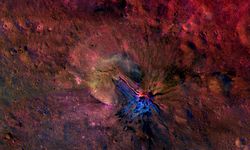
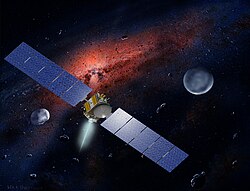
2011年から2012年にかけて、NASAの探査機ドーン(Dawn)がベスタの周回軌道に入り、詳細な観測を行いました。ドーンによる高解像度画像と分光データにより、ベスタの表面組成が地球に落下するHED隕石の組成と一致することが科学的に裏付けられました。
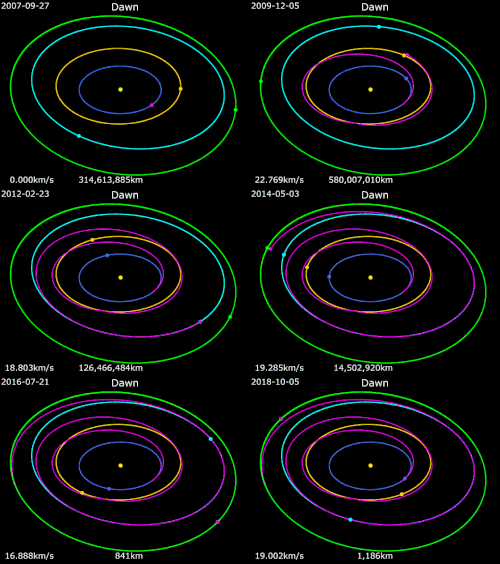
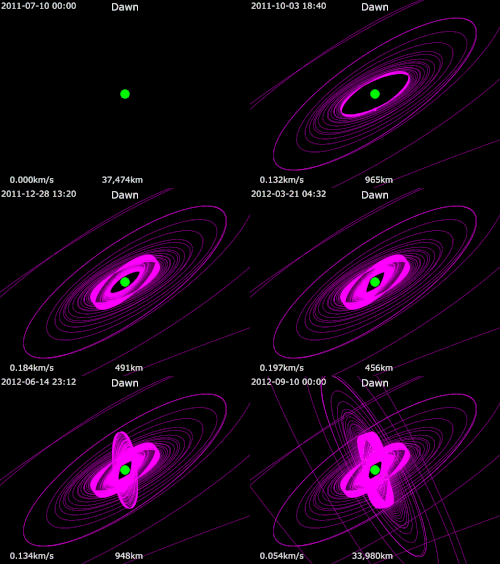
ドーンは、ベスタが単なる岩石の集まりではなく、複雑な地質学的プロセスを経て形成された天体であることを証明しました。また、表面に揮発性物質に由来すると思われる「ピット(小さな穴)」のような地形を発見し、乾燥した岩石の世界であるベスタにも、かつて何らかの揮発成分が存在した可能性を示唆しました。
![SPHERE image is shown on the left, with a synthetic view derived from Dawn images shown on the right for comparison.[49]](/images/b6/d1/b6d1bd6dc3605fb501c84147773baefba782012860a2cf8324fd455223913981.jpg)
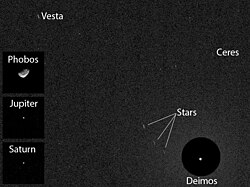
地球からの観測では、火星探査機キュリオシティが捉えた画像や、ハッブル宇宙望遠鏡による解析など、多角的なアプローチでその姿が追われてきました。
Frequently Asked Questions
ベスタはなぜ「惑星」と呼ばれないのですか?
ベスタは非常に大きく、内部構造も惑星に近いですが、その軌道が小惑星帯にあることや、自らの重力で完全に球形になるほどの質量を持っていない(扁平である)ため、現在は小惑星(または準惑星に近い天体)として分類されています。
HED隕石とは何ですか?
エウクライト(Eucrite)、ダイオジェナイト(Diogenite)、ホワードライト(Howardite)の頭文字を取った隕石の総称です。これらはベスタの地殻やマントルから飛散し、地球に到達したと考えられています。
レアシルビア・クレーターはどれくらい大きいですか?
ベスタの南極付近に位置し、直径は約500kmに及びます。ベスタ自体の平均直径が約525kmであることを考えると、天体の半分近くを占めるほどの極めて巨大な構造です。
ベスタの表面には水はありますか?
液体としての水は存在しませんが、探査機ドーンの観測により、レゴリス(表面の堆積層)の中に外来性の水素が含まれていることや、揮発性物質に関連すると見られる地形が確認されています。
ベスタの自転速度が速いのはなぜですか?
詳細な理由は完全には解明されていませんが、過去に受けた巨大な衝突による衝撃が、回転速度を加速させた(スピンアップさせた)可能性が高いと考えられています。
References
- Marc Rayman of the JPL Dawn team used "Vestian" (analogous to the Greek cognate ) a few times in 2010 and early 2011 in his Dawn Journal, and the continued to use that form for a few more years. The word had been used elsewhere, e.g. in (1960) The call of the cosmos. However, otherwise the shorter form "Vestan" has been used by JPL. Most modern print sources also use "Vestan".
Note that the related word "Vestalian" refers to people or things associated with Vesta, such as the , not to Vesta herself. - Calculated using the known dimensions assuming an .
- Calculated using (1) the known rotation period (5.342 h) and (2) the equatorial radius Req (285 km) of the best-fit biaxial ellipsoid to Asteroid 4 Vesta.
- topocentric coordinates computed for the selected location: Greenwich, United Kingdom
- On 10 February 2009, during Ceres , Ceres was closer to the Sun than Vesta, because Vesta has an distance greater than Ceres's perihelion distance. (10 February 2009: Vesta 2.56 AU; Ceres 2.54 AU)
- 維斯塔 wéisītǎ is the closest Chinese approximation of the Latin pronunciation westa.
- Some sources contemporaneous to Gauss invented more elaborate forms, such as and . A simplification of the latter from c. 1930, , never caught on.
- This symbol can be seen in the top of the most elaborate of the earlier forms, . It dates from 1973, at the beginning of astrological interest in asteroids.
- The data returned will include, for both asteroids, full surface imagery, full surface spectrometric mapping, elemental abundances, topographic profiles, gravity fields, and mapping of remnant magnetism, if any.
- that is, blue in the north does not mean the same thing as blue in the south.
📸 フォトギャラリー