Size comparison of major celestial objects in the Solar System, including the Sun. Distances are not to scale.
← ホームへ戻る
太陽恒星太陽系核融合光球

太陽の構造と進化:太陽系を支配する恒星の全貌

🗓 2026年8月10日

私たちの地球に光と熱をもたらし、生命の根源となる太陽。それは単なる光り輝く球体ではなく、極限の状態にある物理現象の集積体です。太陽は太陽系の全質量の大部分を占め、その強力な重力によって惑星や小惑星を繋ぎ止めています。本記事では、この巨大な恒星の内部構造から、ダイナミックな活動、そして数十億年という壮大な時間軸での進化について詳しく解説します。

太陽の規模を地球と比較すると、その圧倒的な大きさが分かります。半径は約69万5,500kmに達し、地球の約109倍というサイズを誇ります。また、体積にいたっては地球の約130万倍、質量は約33万倍という桁違いのスケールで存在しています。
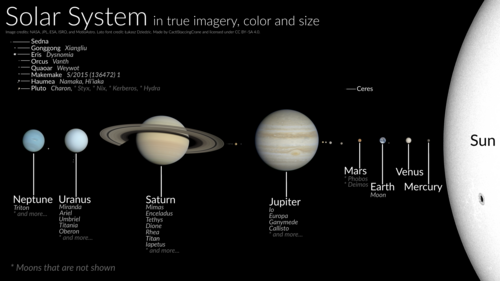
Size comparison of major celestial objects in the Solar System, including the Sun. Distances are not to scale.

Key Facts

  • 分類: G2V型(黄色の主系列星)
  • 年齢: 約46億年
  • 中心温度: 約1,570万ケルビン
  • 表面温度: 約5,777ケルビン(光球)
  • 主成分: 水素(約73.46%)とヘリウム(約24.85%)
  • 地球からの距離: 平均約1億4,960万km(光速で約8分19秒)

太陽の内部構造とエネルギー生成

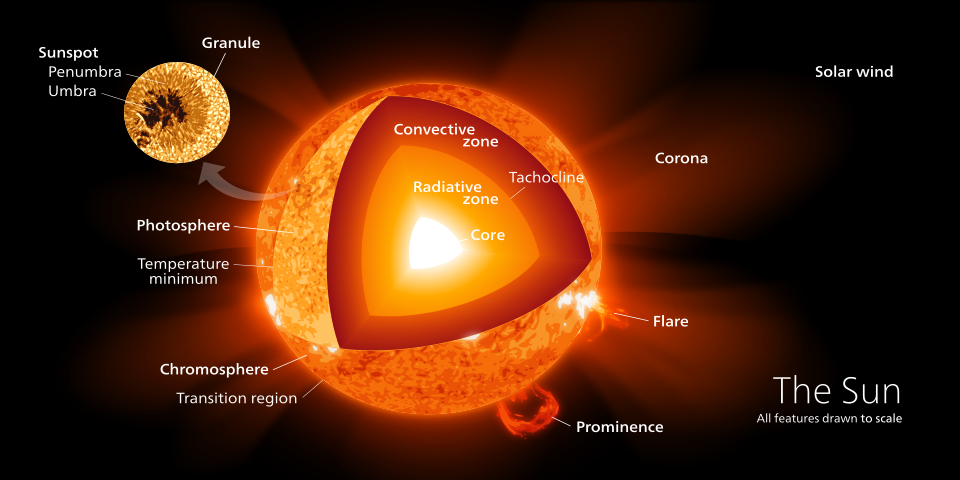
太陽は均一な球体ではなく、役割の異なる複数の層で構成されています。エネルギーの源となるのは、中心部のコア(核)です。ここでは超高圧・超高温の状態により、水素原子が融合してヘリウムに変わる「核融合反応」が起きており、膨大なエネルギーが放出されています。
See caption

この核融合の主経路である「陽子-陽子連鎖反応」により、水素から重水素、ヘリウム3を経て、最終的にヘリウム4が生成されます。この過程で放出されたエネルギーは、まず放射層を通じてゆっくりと外側へ運ばれます。
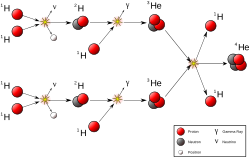
circles and arrows showing protons combining in a series of fusion reactions yielding helium-3 which breaks down tow helium-4

放射層のさらに外側には、熱対流によってエネルギーを運ぶ対流層が存在します。恒星の質量によって内部構造は異なりますが、太陽のような中質量星では、内側に放射帯、外側に対流帯を持つという特徴があります。
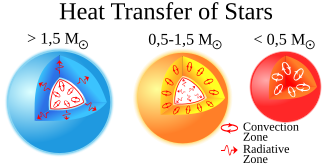
See caption

太陽の組成(質量比)

太陽の光球における化学組成
元素 含有率(質量比)
水素 (H) 73.46%
ヘリウム (He) 24.85%
酸素 (O) 0.77%
炭素 (C) 0.29%
鉄 (Fe) 0.16%

太陽の大気と外部領域

私たちが目にする太陽の「表面」は光球と呼ばれます。ここは対流層の最上部にあたり、プラズマの対流によって「粒状構造」と呼ばれる小さな細胞状の模様が形成されています。
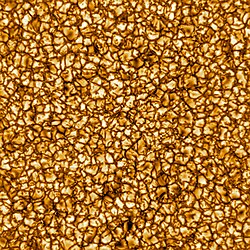
A false-colour image of the solar photosphere

光球の上方には、さらに希薄な大気層である彩層が広がっています。そしてその最外殻に位置するのがコロナです。コロナは数百万度という極めて高い温度に達しており、皆既日食の際に白い後光のように観測されることで知られています。
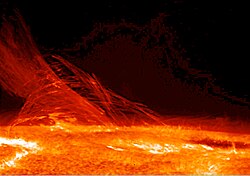
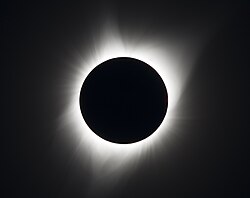
A photograph of the surface of the sun, with flares terminating from the surface on the left.
A photograph of a solar eclipse

太陽の影響力は可視光だけではありません。太陽から絶えず放出されるプラズマの粒子流(太陽風)は、巨大な泡のような領域ヘリオスフィア(太陽圏)を形成し、星間物質から太陽系を保護しています。
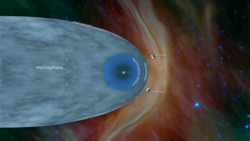
Depiction of the heliosphere

観測と磁気活動

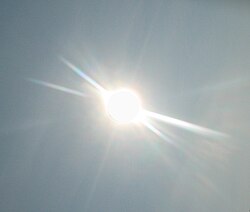
太陽は地球から見ると黄色やオレンジ色に見えますが、これは大気による散乱の影響です。実際には全波長をバランスよく放射しており、本来の色は白に近いと考えられています。

A photograph of the sun with a layer of fog visible in front of it.
See caption

太陽の表面には、周囲より温度が低いために黒く見える太陽黒点が現れます。これは強力な磁場によって対流が妨げられた領域であり、黒点の活動状況は太陽の活動周期(約11年周期)と密接に関係しています。
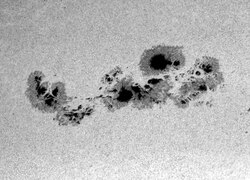
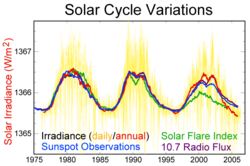
A black-and-white photograph of a group of sunspots.
See caption

また、太陽は水素アルファ線などの特定の波長で観測することで、そのダイナミックなプラズマの動きを詳細に捉えることが可能です。
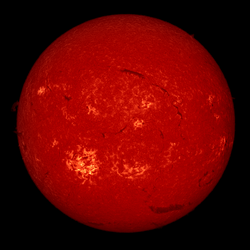
A photograph of the sun

恒星としてのライフサイクル

太陽は約46億年前に巨大な分子雲が重力崩壊し、原始星として誕生しました。現在は、中心部で水素を燃焼させる「主系列星」という安定した段階にあります。
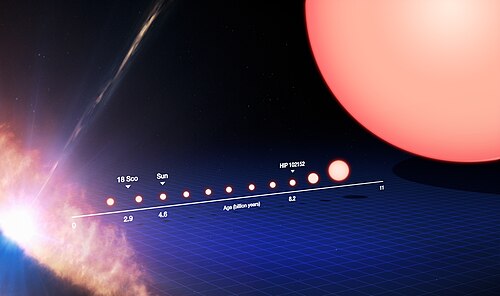
See caption
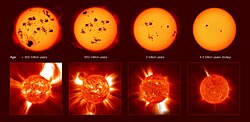
The violent youth of stars like the Sun

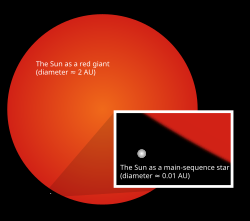
しかし、将来的に中心部の水素が枯渇すると、太陽は膨張を始め、赤色巨星へと進化します。この段階になると、現在のサイズを遥かに超えて膨れ上がり、内側の惑星を飲み込む可能性があります。
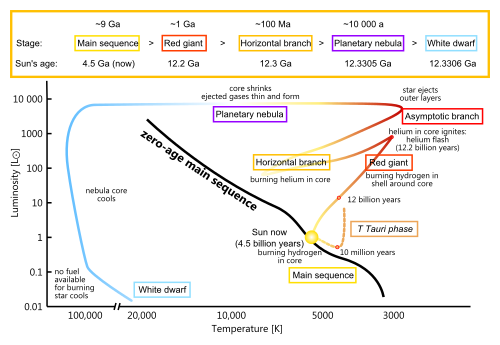
See caption
See caption

宇宙における太陽の位置と運動

太陽の重力圏は非常に広く、最も外縁にあるオールトの雲(約12.5万〜23万天文単位)まで及びます。
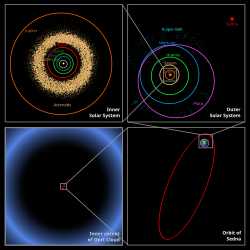
Location of the Sun within the Solar System, which extends to the edge of the Oort cloud where, at 125,000 to 230,000 au (2.0 to 3.6 ly), the Sun's gravitational sphere of influence ends.

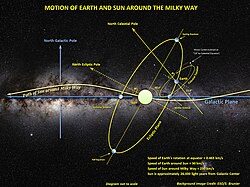
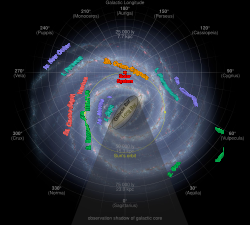
太陽系全体は静止しているわけではなく、銀河系中心の周りを秒速約251kmという猛烈な速度で公転しています。銀河系を一周するのにかかる時間は約2億2,500万年から2億5,000万年と推定されています。
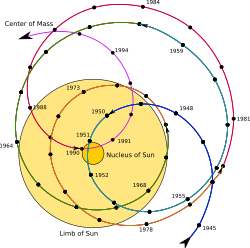
Apparent motion of the Solar System barycentre with respect to the Sun
Diagram of the Local Interstellar Cloud, the G-Cloud and surrounding stars. As of 2022[update], the exact position of the Solar System within the interstellar clouds remains an unresolved question in astronomy.[176]
The general motion and orientation of the Sun, with Earth and the Moon as its Solar System satellites
The Sun's idealised orbit around the Galactic Centre in an artist's top-down depiction of the current layout of the Milky Way

文化的な側面と探査の歴史

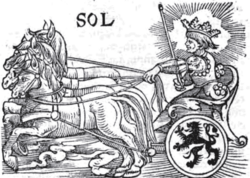
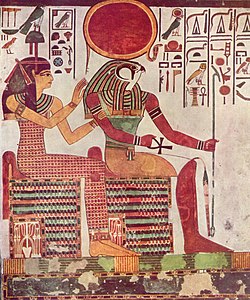
古来より太陽は神格化され、北欧神話の太陽馬やエジプトのラー神など、世界各地の文化で重要な象徴となってきました。
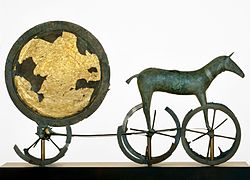
A sculpture of the sun in a chariot being pulled by a horse that has wheels instead of hoofs.
A drawing of a man wearing a crown in a chariot, being pulled by horses.
A painting of Ra and Nefertari

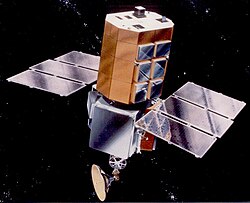
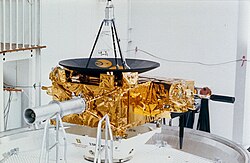
近代に入り、人類は直接的な探査を開始しました。パイオニア計画やユリシーズ、そして最新のパーカー・ソーラー・プローブに至るまで、多くの探査機が太陽の謎を解き明かすために派遣されています。
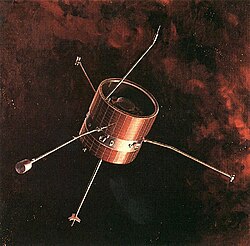
Pioneer 6, 7, 8, and 9
See caption
A photograph of Ulysses spacecraft

太陽系全体の構造を俯瞰すると、太陽を中心に惑星、衛星、そして太陽系外縁天体が調和して配置されていることが分かります。

The Sun, the planets, their moons, and several trans-Neptunian objects

Frequently Asked Questions

太陽の色は本当は何色ですか?

地球の大気を通してみると黄色やオレンジ色に見えますが、宇宙空間から観測すると、すべての可視光をほぼ均等に放射しているため、実際には白く見えます。

太陽の寿命はあとどれくらいありますか?

太陽は現在、全寿命の約半分を過ぎた主系列星の段階にあります。あと約50億年ほど経つと、中心部の水素が尽きて赤色巨星へと移行すると考えられています。

太陽黒点が増えると何が起こりますか?

黒点数が増えることは太陽活動が活発であることを意味します。これにより、太陽フレアやコロナ質量放出(CME)が発生しやすくなり、地球ではオーロラの増加や通信障害などの磁気嵐が起こることがあります。

コロナの温度が光球より高いのはなぜですか?

これは「コロナ加熱問題」として知られる天文学の大きな謎の一つです。磁気リコネクションやプラズマ波によるエネルギー輸送が原因であると考えられていますが、完全な解明には至っていません。

太陽は銀河系の中でどのように動いていますか?

太陽は銀河系中心の周りを円に近い軌道で公転しており、その周期(銀河年)は約2億年以上かかります。同時に、周囲の星々に対しても相対的に移動しています。

References

  1. All numbers in this article are . One billion is 109, or 1,000,000,000.
  2. In , the term heavy elements (or metals) refers to all chemical elements except hydrogen and helium.
  3. Counterclockwise is also the direction of revolution around the Sun for objects in the Solar System and is the direction of axial spin for most objects.
  4. Earth's atmosphere near sea level has a particle density of about 2×1025 m−3.

📸 フォトギャラリー

Size comparison of major celestial objects in the Solar System, including the Sun. Distances are not to scale.
See caption
circles and arrows showing protons combining in a series of fusion reactions yielding helium-3 which breaks down tow helium-4
See caption
A false-colour image of the solar photosphere
A photograph of the surface of the sun, with flares terminating from the surface on the left.
A photograph of a solar eclipse
Depiction of the heliosphere
A photograph of the sun with a layer of fog visible in front of it.
See caption
A black-and-white photograph of a group of sunspots.
See caption
See caption
The violent youth of stars like the Sun
See caption
See caption
Location of the Sun within the Solar System, which extends to the edge of the Oort cloud where, at 125,000 to 230,000 au (2.0 to 3.6 ly), the Sun's gravitational sphere of influence ends.
Apparent motion of the Solar System barycentre with respect to the Sun
Diagram of the Local Interstellar Cloud, the G-Cloud and surrounding stars. As of 2022[update], the exact position of the Solar System within the interstellar clouds remains an unresolved question in astronomy.[176]
The general motion and orientation of the Sun, with Earth and the Moon as its Solar System satellites
The Sun's idealised orbit around the Galactic Centre in an artist's top-down depiction of the current layout of the Milky Way
A sculpture of the sun in a chariot being pulled by a horse that has wheels instead of hoofs.
A drawing of a man wearing a crown in a chariot, being pulled by horses.
A photograph of the sun
Pioneer 6, 7, 8, and 9
See caption
A photograph of Ulysses spacecraft
A painting of Ra and Nefertari
The Sun, the planets, their moons, and several trans-Neptunian objects