1898年に勃発した米西戦争(Spanish–American War)は、単なる二国間の紛争ではなく、大西洋と太平洋という二つの舞台で展開された歴史的な転換点でした。この戦争により、かつて世界を席巻したスペイン帝国は北米およびアジアの植民地を喪失し、一方でアメリカ合衆国は世界的な強国としての地位を確立することになります。
この紛争の背景には、キューバやフィリピンにおける独立への強い渇望と、それに対するスペインの強硬な姿勢、そしてカリブ海地域への影響力を拡大しようとするアメリカの戦略的意図が複雑に絡み合っていました。
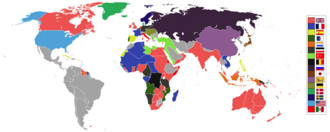
Key Facts
- 期間: 1898年4月21日 〜 8月13日(約3ヶ月強)
- 主要戦域: キューバ、プエルトリコ(カリブ海)、グアム、フィリピン(太平洋)
- 結果: アメリカの勝利。スペインは主要な海外領土を放棄。
- 影響: アメリカがプエルトリコ、グアム、フィリピンを領有し、帝国主義的な拡大へ舵を切った。
- 人的被害: 疾病による死者が戦闘による死者を大幅に上回った。
戦争への道:独立への情熱と外交の破綻
19世紀末、スペインの植民地であったキューバでは独立運動が激化していました。スペイン当局はこれを武力で鎮圧しようとしましたが、その過酷な統治はアメリカ国内で強い反感を呼び起こしました。当時のアメリカメディアはスペインの残虐性を強調して報じ、国民の間でキューバ支援の声が高まりました。
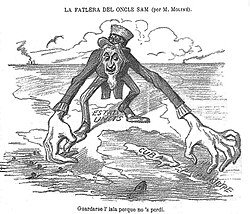
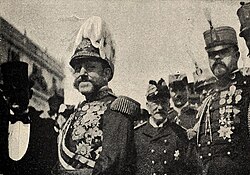
アメリカ政府は当初、慎重な姿勢を崩しませんでしたが、民衆の圧力と人道的な懸念、そして戦略的な利害が一致し、介入へと向かいます。当時の風刺画に見られるように、アメリカ国民は抑圧されたキューバを救うべきだと考えていましたが、政府の対応に不満を持つ層も存在していました。
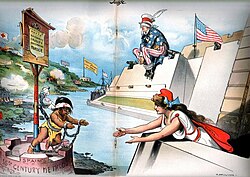
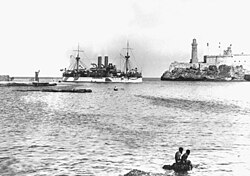
決定的な引き金となったのは、ハバナ港に派遣されていたアメリカ戦艦メイン号の爆発事故です。この事件により、アメリカ世論は一気に開戦へと傾き、1898年4月に正式に宣戦布告が行われました。
二つの戦域:太平洋とカリブ海での展開
太平洋戦域:電撃的な勝利
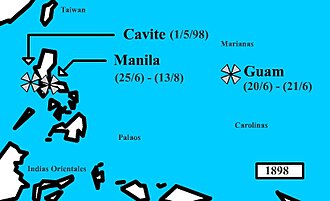
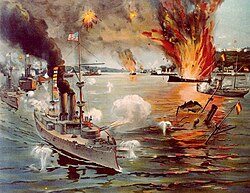
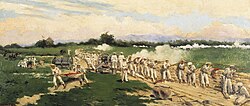
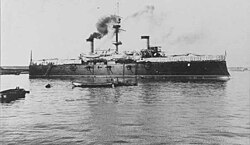
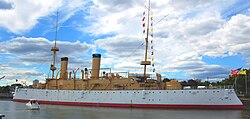
アメリカ軍はまず太平洋で行動を開始しました。ジョージ・デューイ提督率いる艦隊はマニラ湾でスペイン艦隊を壊滅させ、フィリピンの支配権を急速に掌握しました。また、戦略的拠点であるグアムも速やかに占領されました。
カリブ海戦域:キューバとプエルトリコ
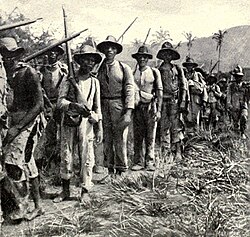
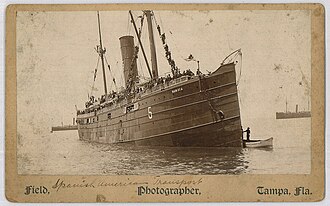
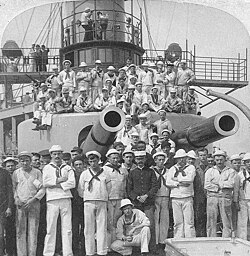
カリブ海では、キューバ独立軍と連携したアメリカ軍が展開しました。特に注目を集めたのが、セオドア・ルーズベルトが率いた義勇兵部隊ラフ・ライダーズ(Rough Riders)によるサンフアン・ヒルの戦いです。激しい地上戦を経て、アメリカ軍はサンティアゴ・デ・キューバを包囲し、スペイン艦隊を撃破しました。
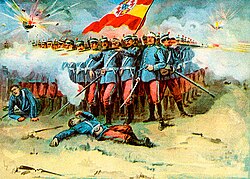
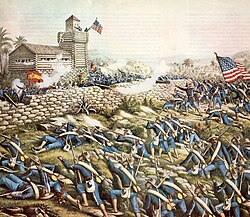
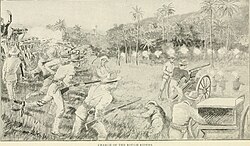
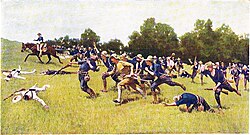
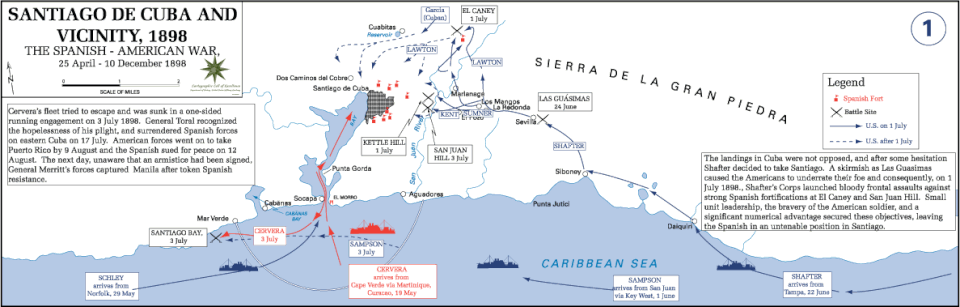
プエルトリコにおいてもアメリカ軍が侵攻し、スペイン軍は次第に追い詰められていきました。スペイン側は最新のモーゼル銃を装備していましたが、物量と戦略で勝るアメリカ軍を止めることはできませんでした。
![The Mauser Model 1893 rifle, used by the Spanish infantry and perceived to be superior to the Springfield Model 1892–99 used by the U.S. Army.[139] Because of this, the U.S. Army later developed the M1903 Springfield.[k]](/images/61/32/61320d8971aec6383a7b2a86ec40f5fdec37c74cd5d7d95234557c314ff12aa0.png)
終戦と新たな秩序の形成
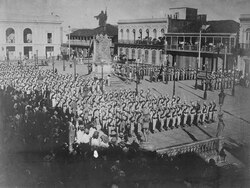
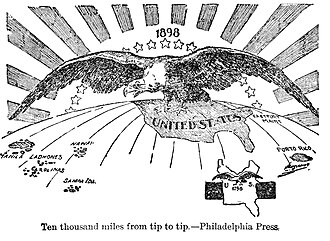
スペインは絶望的な状況に陥り、1898年12月にパリ条約を締結しました。これにより、スペインはキューバの独立を認め、プエルトリコ、グアム、フィリピンをアメリカに譲渡することとなりました。スペインにとってこの敗北は「98年の災厄(Desastre colonial de 1898)」として記憶されるほどの衝撃でした。
![The Spanish East Asia Rescue Squadron, which never saw engagement; oil on canvas painted around 1897[m]](/images/14/91/14916c96adc3ac9d5600cfa09c43f577b3b108c0636a666e0edd65f0910b989a.jpg)
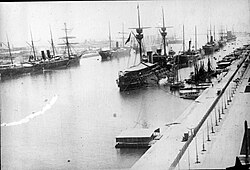
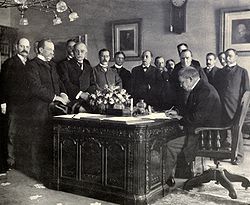
しかし、この結果はアメリカに新たな課題をもたらしました。特にフィリピンでは、独立を望んでいた革命軍がアメリカによる新たな支配に反発し、後のフィリピン・アメリカ戦争へと発展することになります。
戦争の代償:医学的悲劇と軍事的教訓
この戦争の特筆すべき点は、戦死者よりも疾病による死者が圧倒的に多かったことです。特に集結キャンプでのチフス流行は深刻で、死亡率が7.7%に達するなど、衛生管理の不備が多くの兵士の命を奪いました。
また、軍事面ではスペイン軍のモーゼル銃の性能がアメリカ軍に衝撃を与え、後のM1903スプリングフィールド銃の開発へとつながるなど、兵器体系の近代化を促す結果となりました。
米西戦争の概要まとめ
| 項目 | アメリカ合衆国 | スペイン王国 |
|---|---|---|
| 主要指導者 | ウィリアム・マッキンリー、セオドア・ルーズベルト | パスカル・セルベラ、マヌエル・デ・ラ・カマラ |
| 動員兵力 | 約300,000人 | 約339,783人(実戦可能者は限定的) |
| 死者数(合計) | 約4,119人(多くが疾病死) | 約56,400〜56,600人(多くが疾病死) |
| 得られた結果 | プエルトリコ、グアム、フィリピンの領有 | 植民地の喪失、帝国としての衰退 |
Frequently Asked Questions
なぜアメリカはキューバの独立を支援したのですか?
人道的な理由に加え、カリブ海における経済的利害と、モンロー主義に基づく欧州勢力の排除という戦略的な目的があったためです。
メイン号事件とは何ですか?
ハバナ港に停泊していたアメリカ戦艦メイン号が爆発し、多くの死者が出た事件です。これが開戦の直接的な口実となりました。
ラフ・ライダーズとはどのような部隊でしたか?
セオドア・ルーズベルトが組織した義勇兵部隊で、カウボーイやアイビーリーグ出身者などが混在した個性的な部隊として知られています。
戦争後、フィリピンはどうなりましたか?
パリ条約によりスペインからアメリカへ譲渡されましたが、独立を求めるフィリピン人による抵抗が激化し、フィリピン・アメリカ戦争へと移行しました。
この戦争で最も多くの死因となったのは何ですか?
戦闘による負傷よりも、チフスなどの感染症や疾病による死亡者が圧倒的に多く、当時の軍陣衛生の不備が浮き彫りとなりました。
References
- Alternative names:
- :
- Guerra hispano-estadounidense
- Desastre colonial de 1898
- : Digmaang Espanyol–Amerikano
- : The War of 1898
- The Spanish War
- :
- The on Spain on April 25. However, it was also mentioned that a state of war between the U.S. and Spain had existed since April 21, the day the blockade of Cuba had begun.
- Article 3 of the peace protocol provided: "The United States will occupy and hold the city, bay, and harbour of Manila, pending the conclusion of a treaty of peace which shall determine the control, disposition, and government of the Philippines."
- The state of war between the United States and Spain was scheduled to be halted on August 12, with the signing in Washington of a Protocol of Peace. However, after hostilities resumed on August 13 in both Puerto Rico and the Philippines, there were no further conflicts. Later on, after over two months of , the formal peace treaty, the Treaty of Paris, was signed in Paris on December 10.
- Number is the total for all Cuban rebels active from 1895 to 1898.
- In 1898, Spain officially reported nearly half a million men under arms across its empire: 278,447 in Cuba, 10,005 in Puerto Rico, 51,331 in the Philippines, and 152,284 in Spain. However, corruption had grossly inflated these figures. The actual strength in Cuba was estimated at about 80,000 men, with proportionally fewer troops elsewhere.
- The higher naval losses may be attributed to the disastrous naval defeats inflicted on the Spanish at and .
- Clodfelter describes the U.S. capturing 30,000 prisoners (plus 100 cannons, 19 machine guns, 25,114 rifles, and various other equipment) in the Oriente province and around Santiago. He also states that the 10,000-strong Puerto Rican garrison capitulated to the U.S. after only minor fighting.
- Text of the document which appeared in the Manila Gazette on April 23, 1898Further Notes:
- 1. This is the English language text of the document as published by the supporting source cited, possibly as translated from the original Spanish or Tagalog. In 1898, Spanish, Tagalog, and English were official languages in the Spanish colonial Philippines.
- 2. In the Spanish colonial Philippiines, the term Filipino was reserved for full-blooded Spaniards born in the Philippines (insulares). Full-blooded Spaniards born in the Spanish peninsula were termed peninsulares. The Filipinos that we know today were then termed indios.
OFFICE OF THE GOVERNMENT AND OF THE CAPTAIN-GENERAL OF THE PHILIPPINES Fellow Spaniards, Hostilities between Spain and the United States have broken out. The moment has come for us to show the world that we are more than courageous to triumph over those, who, feigning to be loyal friends, took advantage of our misfortunes and capitalized on our nobility by making use of the means civilized nations consider as condemnable and contemptible. The Americans, gratified with their social progress, have drained off our patience and have instigated the war through wicked tactics, treacherous acts, and violations of human rights and internal agreements. Fighting will be short and decisive. God of victories will render this victory glorious and complete as demanded by reason and justice to our cause. Spain, counting on the sympathies of all nations, will come out in triumph from this new test, by shattering and silencing the adventurers of those countries which, without cohesiveness and post, offer to humanity shameful traditions and the ungrateful spectacle of some embassies within which jointly dwell intrigues and defamation, cowardice and cynicism. A US squadron, manned by strangers, by ignorant undisciplined men, is coming into the Archipelago for the purpose of grabbing from us what we consider to be our life, honor freedom. It tries to inspire (motivate) American sailors by saying that we are weak, they are encouraged to keep on with an undertaking that can be accomplished; namely of substituting the Catholic religion with Protestantism, they consider you as a people who impedes growth; they will seize your wealth as if you do not know your rights to property; they will snatch away from you those they consider as useful to man their ships, to be exploited as workers in their fields and factories. Useless plans! Ridiculous boastings! Your indomitable courage suffices to hold off those who dare to bring it to reality. We know you will not allow them to mock the faith you are professing, their feet to step on the temple of the true God, incredulity to demolish the sacred images you honor; you will not allow the invaders to desecrate the tombs of your forefathers; to satisfy their immodest passions at the expense of your wives and daughters' honor; you will not allow them to seize all the properties you have put up through honest work in order to assure your future; you will not allow them to commit any of those crimes inspired by their wickedness and greed, because your bravery and patriotism suffice in scaring them away and knocking down the people who, calling themselves civilized and cultured, resort to the extermination of the natives of North America instead of trying to attract them to live a civilized life and of progress. Filipinos! Prepare yourself for the battle and united together under the glorious Spanish flag, always covered with laurels, let us fight, convinced that victory will crown our efforts and let us reply the intimations of our enemies with a decision befitting a Christian and patriot, with a cry of "Long live Spain!" Manila, April 23, 1898 Your general BASILO AUGISTIN
- The American squadron consisted of nine ships: Olympia (flagship), , , , , , , Zapphire, and Nashan. The Spanish squadron consisted of seven ships: (flagship), , , , , , and Marques del Duero. The Spanish ships were of inferior quality to the American ships; Castilla was unpowered and had to be towed into position by the transport ship Manila.
📸 フォトギャラリー