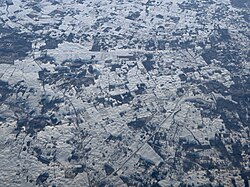
The Red Lake sinkhole in Croatia
← ホームへ戻る
シンクホールカルスト地形地盤沈下石灰岩地質学

シンクホール地表が崩落するメカニズムと世界的な事例

🗓 2026年8月11日

足元の地面が突然消え、巨大な穴が開く。このような現象をシンクホール(陥没穴)と呼びます。シンクホールは、地表の層が何らかの原因で崩落し、窪地や穴が形成される現象です。これらは世界中で見られ、数メートル程度の小さな窪みから、数百メートルに及ぶ巨大な深淵まで、その規模は多岐にわたります。

専門的には、閉鎖的な窪地を「ドリーネ」、地表水が地下通路へ流れ込む開口部を「ポノール」や「スワレット」と呼び分けます。また、地下水が露出したタイプのシンクホールは「セノーテ」として知られています。

Key Facts

  • 主因: 多くのシンクホールは、石灰岩などの炭酸塩岩が化学的に溶解する「カルストプロセス」によって発生します。
  • 形状と規模: 一般的に円形であり、直径や深さは数十メートルから数百メートルに及びます。
  • 発生速度: 数千年かけてゆっくり形成されるものから、一瞬にして地表が崩落するものまであります。
  • 人的要因: 地下水位の変動や排水システムの不備など、人間活動が崩落を加速させることがあります。

シンクホールが形成される仕組み

自然な地質プロセス(カルスト化)

多くのシンクホールは、水に溶けやすい石灰岩などの岩石地帯で発生します。雨水や地表水が岩石の割れ目に浸透し、炭酸塩岩を徐々に溶解させることで、地下に空洞が作られます。
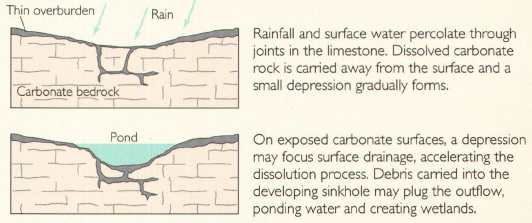
Rainfall and surface water percolate through joints in the limestone. Dissolved carbonate rock is carried away from the surface, and a small depression gradually forms. On exposed carbonate surfaces, a depression may focus surface drainage, accelerating the dissolution process. Debris carried into the developing sinkhole may plug the outflow, ponding water and creating wetlands.

この溶解プロセスが進むと、地表に緩やかな窪みが形成されます。ここにさらに水が集まることで溶解が加速し、最終的に地下の空洞が拡大して地表まで到達します。

堆積物の移動と崩落(パイピング現象)

岩石だけでなく、上層の堆積物が地下の空洞へ流れ込むことで穴が開く場合もあります。これを「パイピング」と呼び、堆積物が少しずつ下方へ移動することで、地表に小さな窪みが現れます。
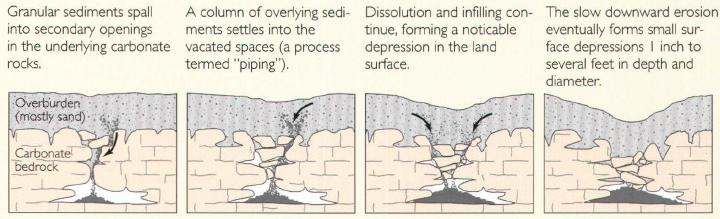
Granular sediments spall into secondary openings in the underlying carbonate rocks. A column of overlying sediments settles into the vacated spaces (a process termed "piping"). Dissolution and infilling continue, forming a noticeable depression in the land surface. The slow downward erosion eventually forms small surface depressions 1 inch to several feet in depth and diameter.

さらに進行すると、堆積物がアーチ状の構造を形成しますが、この構造が耐えきれなくなった瞬間に天井が崩落し、劇的なシンクホールとなります。
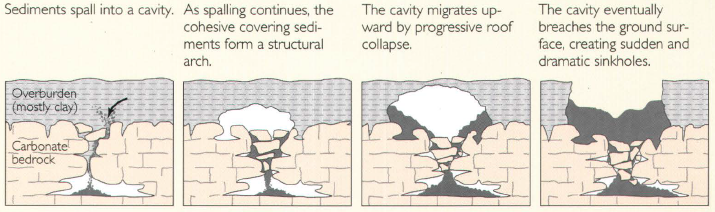
Sediments spall into a cavity. As spalling continues, the cohesive covering sediments form a structural arch. The cavity migrates upward by progressive roof collapse. The cavity eventually breaches the ground surface, creating sudden and dramatic sinkholes.

特殊な環境での形成

塩分を含む岩石が淡水によって溶解する場合や、惑星などの天体表面でも同様の崩落現象が確認されています。また、死海周辺では海面低下に伴い、地下の岩塩が溶解してシンクホールが形成される事例が見られます。
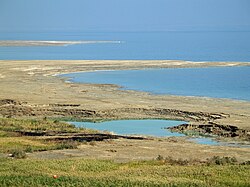
Sinkholes near the Dead Sea, formed when underground salt is dissolved by freshwater intrusion, due to continuing sea-level drop.

人間活動による影響とリスク

自然現象だけでなく、人間の活動がシンクホールの発生を早めることがあります。地下水の過剰な汲み上げや、土地改変による水位変動は、地盤の安定性を損なわせます。
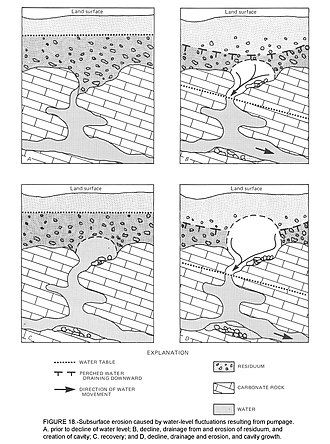
Four panels illustrate the growth of soil cavities above a rock cavity. Rising water softens soil. Downward moving water carries softened soil down into rock cavity.

例えば、都市部の不適切な排水システムや配管の破損から水が漏れ出し、周囲の土壌を押し流すことで、突如として道路や駐車場に穴が開くことがあります。
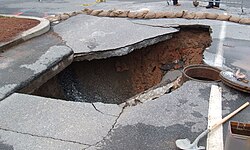
A 32-foot-deep (9.8-meter) collapse formed by rainwater leaking through pavement and carrying soil into a ruptured sewer pipe in the parking lot at Georgia Tech in Atlanta, Georgia in 2005

米国では、フロリダ州、テキサス州、アラバマ州などで多くの被害が報告されており、米国地質調査所(USGS)の推計では、カルスト関連の被害修復費は年間少なくとも3億ドルに達するとされています。

世界各地の著名なシンクホール

北米・中米の事例

フロリダ州は石灰岩層が厚いため、頻繁に崩落が発生します。また、アラバマ州の「ディセンバー・ジャイアント(12月の巨人)」は、採石場による水位低下が原因で形成された、長さ130m、深さ45mに及ぶ巨大な穴として知られています。
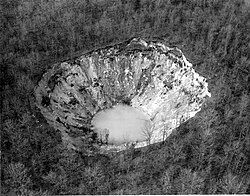
More than three acres of trees are missing in a forest after collapsing into a funnel shaped pit with water at the bottom.

中米のグアテマラシティでは、2010年に熱帯低気圧による豪雨と排水不良が重なり、3階建てのビルを飲み込む幅20m、深さ30mの穴が出現しました。

ヨーロッパ・アフリカ・アジアの事例

クロアチアの「レッドレイク」は、垂直に近い壁を持つ深さ約530mの深い穴に湖が形成された幻想的なスポットです。
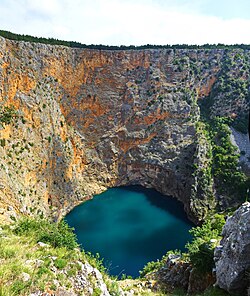
The Red Lake sinkhole in Croatia

フランスの「パディラック洞窟」は、直径33m、深さ103mの開口部から地下の巨大な河川システムへと繋がっており、観光地として整備されています。
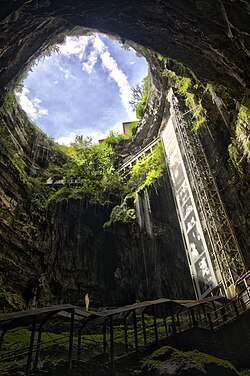
Gouffre de Padirac in France known since the 3rd century and explored in 1889

また、オマーンの「タイク・シンクホール」は体積において世界最大級であり、深さは250mに達し、複数の滝が流れ込む壮観な景色を作り出しています。
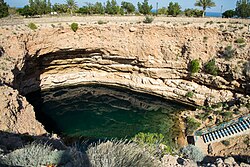
Bimmah or Falling Star Sinkhole in Oman

海洋・水中シンクホール

海中にも巨大なシンクホールが存在します。ベリーズの「グレート・ブルーホール」は世界的に有名であり、また、タム・ジャ・ブルーホールは世界で最も深いブルーホールとして知られています。
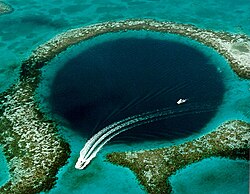
The Great Blue Hole near Ambergris Caye, Belize

チェコ共和国の「フラニツェ・アビス」は、水深473mに達する世界最深の水中洞窟として記録されています。

シンクホールの概要まとめ

シンクホールの種類と特徴
種類 形成メカニズム 発生速度 主な特徴
溶解型 (Solution) 岩石の化学的溶解 緩やか 緩やかなボウル状の窪地
沈下型 (Subsidence) 堆積物の下方移動 中速 徐々に地表が下がる
崩落型 (Collapse) 地下空洞の天井崩壊 急激 突発的な深い穴の形成
擬似カルスト (Pseudokarst) 非炭酸塩岩の溶解や浸食 多様 塩岩の溶解やパイピング現象

その他の事例として、スペインのチンチョンで発生した崩落や、ケンタッキー州の広大な地域に見られる多数の窪地などが挙げられます。
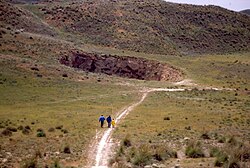
Collapse sinkhole in Chinchón, Spain.
Various depressions and sinkholes visible from the air in Meade County, Kentucky

また、フロリダ州の「デビルズ・ミルホッパー」のように、底に池があり複数の湧水が流れ込む自然のランドマークとなるケースもあります。一方で、ルイジアナ州のレイク・ピニョーのように、塩鉱山の崩落によって水深400mまで急激に深くなった事例もあります。

さらに、フロリダ州のジェニングス付近では、アラパハ川の全流量がシンクホールを通じてフロリダ帯水層へと流れ込むという、地表水と地下水のダイレクトな接点となる場所も存在します。
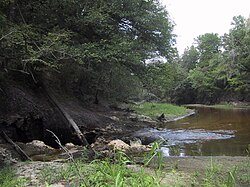
The entire surface water flow of the Alapaha River near Jennings, Florida goes into a sinkhole leading to the Floridan Aquifer groundwater

Frequently Asked Questions

シンクホールはどこで発生しやすいですか?

石灰岩やドロマイト、岩塩などの水に溶けやすい岩石(可溶性岩石)が地下に広く分布している地域で発生しやすくなります。特にカルスト地形と呼ばれる地域が代表的です。

人間がシンクホールを作ることはありますか?

直接的に「作る」わけではありませんが、地下水の過剰な汲み上げ、不適切な排水、採石活動などによって地盤のバランスを崩し、自然な崩落プロセスを劇的に加速させることがあります。

シンクホールとセノーテの違いは何ですか?

セノーテはシンクホールの一種で、特に崩落によって地下水面が露出し、天然の井戸のような状態になったものを指します。主にメキシコのユカタン半島などでよく見られます。

シンクホールの発生を事前に予知することはできますか?

地盤レーダー(GPR)や電気比抵抗イメージングなどの地質調査を用いて、地下の空洞を検知することでリスクを評価することが可能です。ただし、突発的な崩落を完全に予知することは困難な場合があります。

世界で最も深いシンクホールはどこですか?

環境によって異なりますが、水中ではチェコのフラニツェ・アビス(473m)が非常に深く、陸上ではベネズエラのセロ・ドゥイダにある複合的な峡谷内のシンクホールが最大950mの総深さに達するとされています。

References

  1. Williams, Paul (2004). "Dolines". In Gunn, John (ed.). Encyclopedia of Caves and Karst Science. Taylor & Francis. pp. 628–642.  .
  2. Kohl, Martin (2001). "Subsidence and sinkholes in East Tennessee. A field guide to holes in the ground" (PDF). State of Tennessee. Archived from the original (PDF) on 14 July 2015. Retrieved 18 February 2014.
  3. Thomas, David; Goudie, Andrew, eds. (2009). The Dictionary of Physical Geography (3rd ed.). Chichester: John Wiley & Sons. p. 440.  .
  4. Monroe, Watson Hiner (1970). "A glossary of Karst terminology". U.S. Geological Survey Water Supply Paper. 1899-K: 77. :1970usgs.rept...77M. :10.3133/wsp1899k.
  5. "Caves and karst – dolines and sinkholes". British Geological Survey.
  6. Breining, Greg (5 October 2007). "Getting Down and Dirty in an Underground River in Puerto Rico". The New York Times.  0362-4331. Retrieved 31 March 2016.
  7. Palmer, Arthur N. (1 January 1991). "Origin and morphology of limestone caves". Geological Society of America Bulletin. 103 (1): 1–21. :1991GSAB..103....1P. :10.1130/0016-7606(1991)103<0001:oamolc>2.3.co;2.  0016-7606.
  8. Friend, Sandra (2002). Sinkholes. Pineapple Press Inc. p. 11.  . Retrieved 7 June 2010.
  9. , p. 181.
  10. "Quarrying and the environment". bgs. Retrieved 3 June 2018.

📸 フォトギャラリー

The Red Lake sinkhole in Croatia
Sinkholes near the Dead Sea, formed when underground salt is dissolved by freshwater intrusion, due to continuing sea-level drop.
Collapse sinkhole in Chinchón, Spain.
A 32-foot-deep (9.8-meter) collapse formed by rainwater leaking through pavement and carrying soil into a ruptured sewer pipe in the parking lot at Georgia Tech in Atlanta, Georgia in 2005
Rainfall and surface water percolate through joints in the limestone. Dissolved carbonate rock is carried away from the surface, and a small depression gradually forms. On exposed carbonate surfaces, a depression may focus surface drainage, accelerating the dissolution process. Debris carried into the developing sinkhole may plug the outflow, ponding water and creating wetlands.
Granular sediments spall into secondary openings in the underlying carbonate rocks. A column of overlying sediments settles into the vacated spaces (a process termed "piping"). Dissolution and infilling continue, forming a noticeable depression in the land surface. The slow downward erosion eventually forms small surface depressions 1 inch to several feet in depth and diameter.
Sediments spall into a cavity. As spalling continues, the cohesive covering sediments form a structural arch. The cavity migrates upward by progressive roof collapse. The cavity eventually breaches the ground surface, creating sudden and dramatic sinkholes.
Four panels illustrate the growth of soil cavities above a rock cavity. Rising water softens soil. Downward moving water carries softened soil down into rock cavity.
More than three acres of trees are missing in a forest after collapsing into a funnel shaped pit with water at the bottom.
The entire surface water flow of the Alapaha River near Jennings, Florida goes into a sinkhole leading to the Floridan Aquifer groundwater
Gouffre de Padirac in France known since the 3rd century and explored in 1889
Various depressions and sinkholes visible from the air in Meade County, Kentucky
The Great Blue Hole near Ambergris Caye, Belize
Bimmah or Falling Star Sinkhole in Oman