木材は、人類が古くから利用してきた最も汎用性の高い天然素材の一つです。単なる建築資材としてだけでなく、芸術作品や燃料、さらには化学原料としても不可欠な役割を果たしています。木材の性質を理解することは、適切な樹種の選択や、耐久性の高い製品作りにおいて極めて重要です。
Key Facts
- 二次成長により、樹木は毎年新しい層を加え、幹や根を太くしていきます。
- 木材の乾燥重量の約25%を占めるリグニンが、構造的な強度と特性を決定づけています。
- 心材(中心部の古い部分)と辺材(外側の新しい部分)では、機能と性質が異なります。
- 含水率は、細胞壁内部の結合水と、細胞腔にある自由水の2つの形態で存在します。
- 木材の密度や強度は、樹種だけでなく、成長速度や含水率によって大きく変動します。
木材の生物学的構造と成長
樹木の幹が太くなる現象は「二次成長」と呼ばれます。成長シーズンごとに新しい木層が追加されることで、茎や枝、根が厚みを増していきます。

この成長の過程で形成されるのが年輪です。年輪は季節による成長速度の違いを反映しており、樹齢の推定だけでなく、当時の気候条件を知る手がかりにもなります。
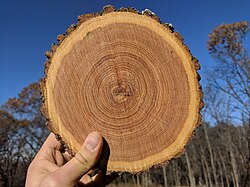
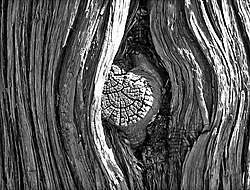
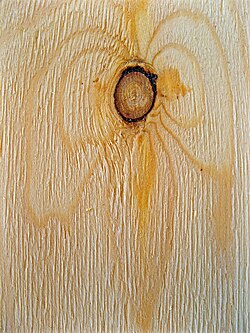
また、枝が幹に埋もれた際に形成されるのが節(ふし)です。節は木材の見た目に影響を与えるだけでなく、構造的な強度にも変化をもたらします。
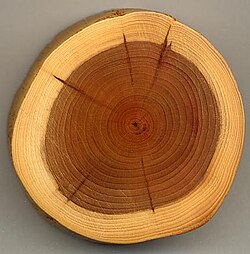
断面を見ると、中心部の暗い色の心材と、外側の明るい色の辺材に分かれていることがわかります。心材は水分輸送機能を失い、樹脂などが蓄積して耐久性が高まっている領域です。
物理的特性と化学組成
木材の物理的な性質は、その化学組成に深く依存しています。特にリグニンという複雑な高分子化合物が、細胞壁を強固に結びつけ、木材特有の剛性を生み出しています。
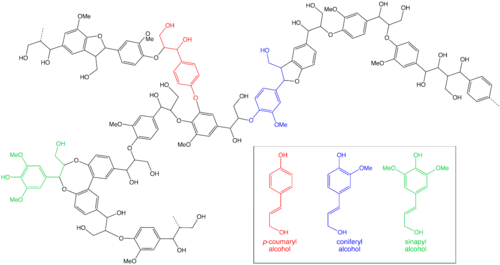
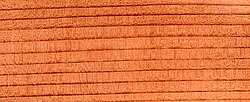
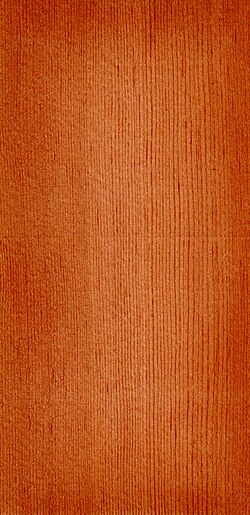
また、木材の色は樹種によって多様です。例えば、コーストレッドウッドのように鮮やかな赤色を呈するものもあります。
含水率の影響
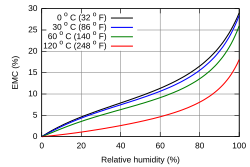
木材に含まれる水分は、その物理的安定性に直結します。水分は細胞壁の中にある「結合水」と、細胞の隙間に溜まっている「自由水」として存在します。周囲の湿度とバランスが取れた状態を平衡含水率と呼びます。
密度と比重の定義
木材の重さは、測定時の状態(生材か、完全に乾燥させたオーブンドライ状態か)によって異なります。比重(G)や密度(ρ)を定義する際は、12%の含水率を基準にするなど、厳格な基準が設けられています。
組織構造の分類
木材の内部構造は、導管の配置によって大きく3つのタイプに分類されます。
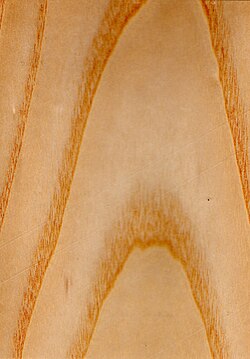
- 環孔材:年輪の始まりに大きな導管が集中して並ぶタイプ(例:アッシュなど)。
- 散孔材:導管が年輪全体に均等に分布しているタイプ。
- 中間的なタイプ:導管のサイズが徐々に変化するタイプ(例:ブラックウォールナットなど)。
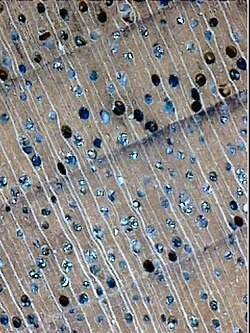
また、成長のタイミングによって、春に形成される早材(細胞が大きく壁が薄い)と、夏から秋に形成される晩材(細胞が小さく壁が厚い)に分かれます。このコントラストが年輪の模様を作ります。
木材の多様な利用と産業
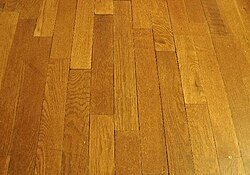
木材は、その強度や加工性に応じて幅広く利用されています。構造材としての利用はもちろん、フローリングなどの内装材、家具、楽器、さらには芸術作品へと形を変えます。
現代では、CLT(直交集成板)やLVL(単板積層材)などのエンジニアードウッド(エンジニアリング木材)の開発により、天然木以上の強度やサイズを実現した建築が可能になっています。
![The Saitta House, Dyker Heights, Brooklyn, New York built in 1899 is made of and decorated in wood.[52]](/images/9b/ee/9bee11db75f3a419e51ab3b52dc1badd0759e4ea1b2c263d3c9819504c120538.jpg)
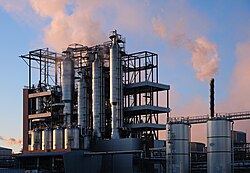
また、木材は化学工業の原料としても重要です。パルプ製造や、トールオイルのような副産物の精製が行われています。
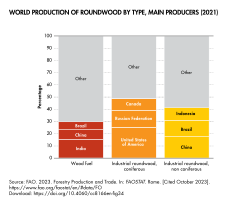
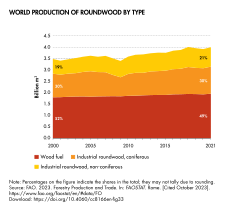
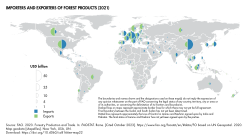
世界的な流通においても、木材は重要な貿易品であり、地域ごとに主要な生産樹種が異なります。
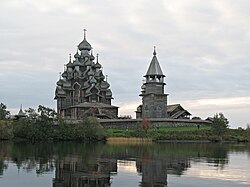
文化的な価値においても、金属接合部を一切使わずに建てられたロシアのキジ島のような世界遺産や、精巧な箱根寄木細工のような工芸品など、木材は人類の文化を象徴する素材です。
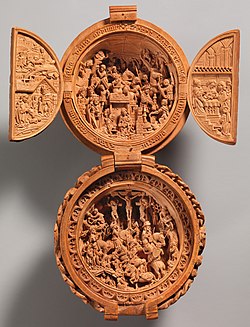
さらに、木材への書き込みやすさは、浸透深さによって文字の濃淡が変わるなど、物理的な特性が直接的に表現に影響します。

なお、見た目は樹木に似ていますが、ヤシの木のような単子葉植物は、双子葉植物や針葉樹とは異なる構造を持っています。
主要樹種の物理的特性まとめ
| 一般名 | 学名 | 状態 | 密度 (kg/m³) | 圧縮強度 (MPa) | 曲げ強度 (MPa) |
|---|---|---|---|---|---|
| ホワイトアッシュ | Fraxinus americana | 12%含水 | 600 | 51.1 | 103 |
| シュガーメイプル | Acer saccharum | 12%含水 | 630 | 54.0 | 109 |
| ホワイトオーク | Quercus alba | 12%含水 | 680 | 51.3 | 105 |
| コーストダグラスファー | Pseudotsuga menziesii | 12%含水 | 480 | 49.9 | 85 |
| 日本竹(孟宗竹等) | Phyllostachys edulis | 12.5%含水 | 603 | 60.3 | 83 |
Frequently Asked Questions
心材と辺材の決定的な違いは何ですか?
辺材は樹木の外側に位置し、水分や養分を運ぶ生きた組織ですが、心材は中心部の死んだ組織であり、樹脂や抽出物が蓄積して腐朽しにくくなっているのが特徴です。
木材の「比重」を測る際に含水率が重要なのはなぜですか?
木材は水分を吸収・放出することで体積と重量が大きく変化するためです。正確な比較を行うには、12%などの一定の含水率に調整して測定する必要があります。
針葉樹(ソフトウッド)と広葉樹(ハードウッド)の構造的な違いは?
一般的に針葉樹は構造が単純で、主に仮道管で構成されています。一方、広葉樹は導管、道管伴細胞などより複雑な組織を持っており、これが密度や強度の差につながります。
リグニンは木材においてどのような役割を果たしていますか?
リグニンは細胞壁を硬化させ、樹木が自立して高く成長するための構造的な支持力を提供します。また、水を通しにくい性質があるため、効率的な水分輸送を助けます。
竹は植物学的に「木」に含まれますか?
竹はイネ科の単子葉植物であり、生物学的な構造は一般的な樹木(双子葉植物や針葉樹)とは根本的に異なります。しかし、物理的な強度が高いため、産業的に木材と同様に利用されています。
References
- Brinkman, Eddy (August 27, 2021). "Wood, a sustainable natural composite material". Betase BV. Retrieved November 3, 2025. "Wood is a natural composite material, with cellulose fibres embedded in a matrix of lignin and hemicelluloses – all three components composed of natural polymers. Lignin is the glue that holds the cellulose fibres together."
- Rowell, Roger M., ed. (September 6, 2012). Handbook of Wood Chemistry and Wood Composites. CRC Press. :10.1201/b12487. .
- Hickey, M.; King, C. (2001). The Cambridge Illustrated Glossary of Botanical Terms. Cambridge University Press.
- Global Forest Resources Assessment 2025 (Report). of the (FAO). 2025.
- "The EPA Declared That Burning Wood is Carbon Neutral. It's Actually a Lot More Complicated". Archived from the original on June 30, 2021. Retrieved June 3, 2022.
- "Global wood production is at record levels, at about 4 billion m³ per year". FAO Knowledge Repository. December 29, 2023. Retrieved November 3, 2025. 2023: World roundwood removals have amounted to about 4 billion m³ annually in recent years, around half of which has been used for fuel, either directly (as fuelwood) or in the production of charcoal and pellets.
- "N.B. fossils show origins of wood". . August 12, 2011. Archived from the original on August 13, 2011. Retrieved August 12, 2011.
- Philippe Gerrienne; et al. (August 12, 2011). "A Simple Type of Wood in Two Early Devonian Plants". Science. 333 (6044): 837. :2011Sci...333..837G. :10.1126/science.1208882. :2268/97121. 21836008. 23513139.[]
- Woods, Sarah (July 18, 2016). "A History of Wood from the Stone Age to the 21st Century". EcoBUILDING. A Publication of The American Institute of Architects. Archived from the original on March 29, 2017. Retrieved March 28, 2017.
- Briffa, K.; Shishov, V.V.; Melvin, T.M.; Vaganov, E.A.; Grudd, H.; Hantemirov (2008). "Trends in recent temperature and radial tree growth spanning 2000 years across northwest Eurasia". Philosophical Transactions of the Royal Society B: Biological Sciences. 363 (1501): 2271–2284. :10.1098/rstb.2007.2199. 2606779. 18048299.
📸 フォトギャラリー