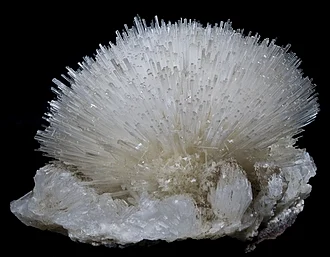
Crystals of serandite, natrolite, analcime, and aegirine from Mont Saint-Hilaire, Quebec, Canada
← ホームへ戻る
鉱物結晶構造モース硬度ケイ酸塩鉱物地質学

鉱物の基礎知識:化学組成から結晶構造、分類までを解説

🗓 2026年8月10日

地球の表面を構成する物質の中で、鉱物とは、自然界に存在する純粋な状態で、明確な化学組成と特定の結晶構造を持つ固体を指します。地質学的な定義では、一般的に生物体の中だけで生成される化合物は除外されますが、方解石のような生物由来の鉱物(生物鉱物)や、骨や歯を構成するヒドロキシアパタイトのように、岩石の中にも存在し、かつ生物が合成する無機鉱物も存在します。

よく混同される「岩石」とは、大規模な視点から見て比較的均質な地質材料のことを指します。岩石は単一の鉱物から成ることもあれば、複数の異なる鉱物が混ざり合って構成されることもあります。
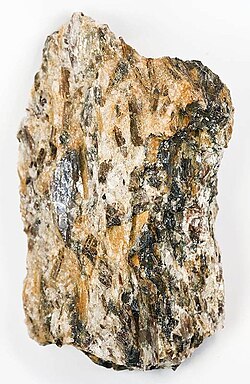
Schist is a metamorphic rock characterized by an abundance of platy minerals. In this example, the rock has prominent sillimanite porphyroblasts as large as 3 cm (1.2 in).

Key Facts

  • 地球の地殻の約90%はケイ酸塩鉱物で構成されている。
  • 鉱物は化学組成と内部の結晶構造によって定義される。
  • モース硬度は、ダイヤモンド(10)を最大とする相対的な硬さの指標である。
  • 比重は、構成元素の原子量に依存し、金属光沢を持つ鉱物は比重が高い傾向にある。
  • 結晶系は、軸の長さと角度によって6つの主要なグループに分類される。

鉱物の物理的特性と識別

結晶構造と形態(晶癖)

鉱物の外形は、内部の原子配列である結晶構造によって決まります。軸の長さ(a, b, c)と軸間の角度(α, β, γ)に基づき、等軸晶系、正方晶系、斜方晶系、六方晶系、単斜晶系、三斜晶系の6つの結晶系に分類されます。
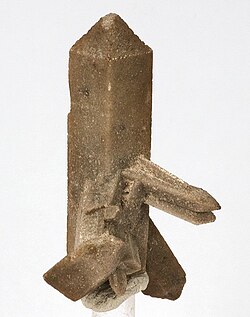
Topaz has a characteristic orthorhombic elongated crystal shape.

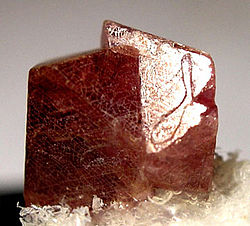
Contact twins, as seen in spinel

Natrolite is a mineral series in the zeolite group; this sample has a very prominent acicular crystal habit.

硬度とモーススケール

鉱物の硬さはその構造に依存しており、方向によって異なる場合があります(例:カイヤナイト)。一般的に、相対的な硬さを測るためにモース硬度が用いられます。
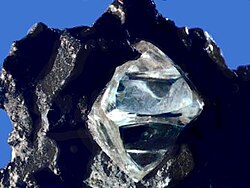
Diamond is the hardest natural material, and has a Mohs hardness of 10.

Mohs Scale versus Absolute Hardness

比重と光沢

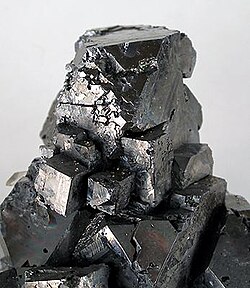
比重は鉱物を特定する重要な診断特性です。一般に、酸化物や硫化物のように原子量の大きい元素を含む鉱物は比重が高くなります。また、金属光沢や金剛光沢を持つものは、非金属光沢のものよりも比重が高い傾向にあります。例えば、金は15から19.3という非常に高い比重を示します。
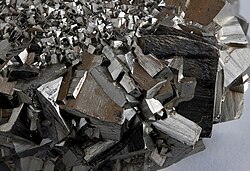
Pyrite has a metallic lustre.

Galena, PbS, is a mineral with a high specific gravity.

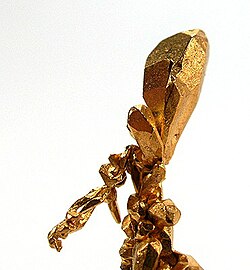
Native gold. Rare specimen of stout crystals growing off of a central stalk, size 3.7 x 1.1 x 0.4 cm, from Venezuela.

その他の物理的性質

鉱物には、特定の方向に沿って割れやすい劈開(へきかい)や、表面の光沢、色、条痕色などの特徴があります。また、ある鉱物が別の鉱物に置き換わりながら元の形状を維持する「仮晶」という現象も見られます。
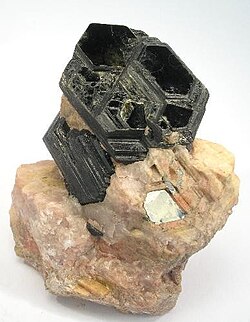
Perfect basal cleavage as seen in biotite (black), and good cleavage seen in the matrix (pink orthoclase).

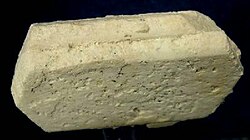
When minerals react, the products will sometimes assume the shape of the reagent; the product mineral is termed a pseudomorph of (or after) the reagent. Illustrated here is a pseudomorph of kaolinite after orthoclase. Here, the pseudomorph preserved the Carlsbad twinning common in orthoclase.

鉱物の化学的分類

鉱物は主要な化学成分に基づいて分類され、主にダナ分類やストルンズ分類が用いられています。特に地殻の大部分を占めるケイ酸塩鉱物は、その構造によってさらに細分化されます。

ケイ酸塩鉱物の詳細

  • 独立四面体(正ケイ酸塩):[SiO4]四面体が独立して存在。ガーネットやオリビンが含まれます。
  • 鎖状ケイ酸塩:四面体が鎖状に結合。単鎖の輝石や、複鎖の角閃石があります。
  • 層状ケイ酸塩:四面体がシート状に結合。雲母などが代表的です。
  • 環状ケイ酸塩:四面体がリング状に結合。電気石(トルマリン)や緑柱石が含まれます。
  • 網状ケイ酸塩:三次元的に結合。石英や長石などが該当します。
  • 二量体ケイ酸塩:2つの四面体が1つの酸素を共有。エピドートなどが代表的です。
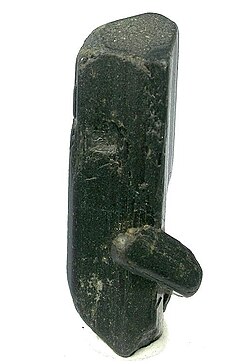
Aegirine, an iron-sodium clinopyroxene, is part of the inosilicate subclass.

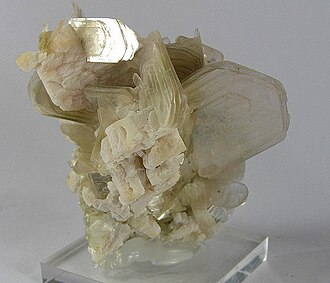
Muscovite, a mineral species in the mica group, within the phyllosilicate subclass

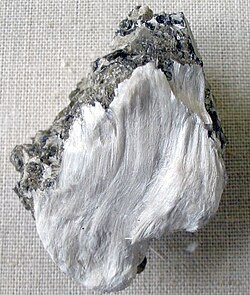
Asbestiform tremolite, part of the amphibole group in the inosilicate subclass

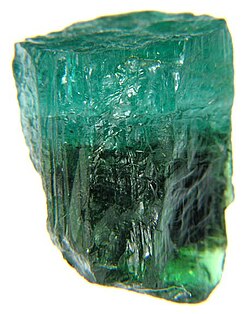
An example of elbaite, a species of tourmaline, with distinctive colour banding.

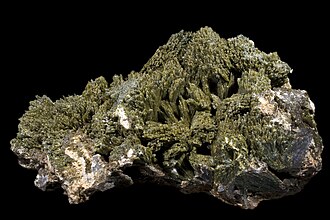
Epidote often has a distinctive pistachio-green colour.

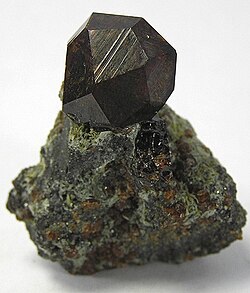
Black andradite, an end-member of the orthosilicate garnet group.

非ケイ酸塩鉱物

ケイ酸塩以外の重要なグループには、単一元素からなる自然元素、硫化物、酸化物、ハロゲン化物、炭酸塩、硫酸塩、リン酸塩などがあります。リン酸塩の代表であるアパタイトグループは、脊椎動物の骨や歯の主成分となっています。
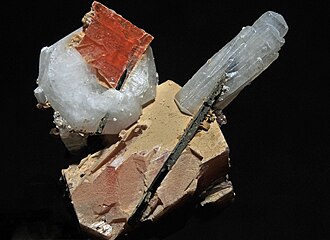
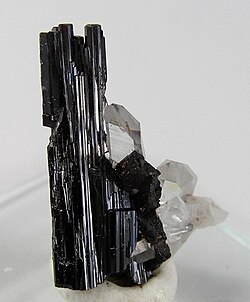
Crystals of serandite, natrolite, analcime, and aegirine from Mont Saint-Hilaire, Quebec, Canada

Hübnerite, the manganese-rich end-member of the wolframite series, with minor quartz in the background

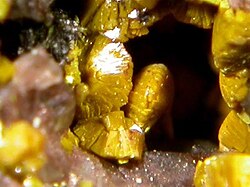
Carnotite (yellow) is a radioactive uranium-bearing mineral.

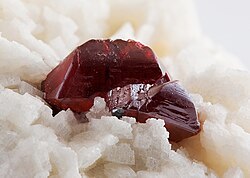
Red cinnabar (HgS), a mercury ore, on dolomite.

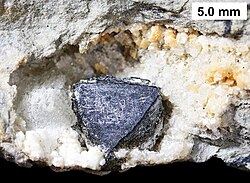
Sphalerite crystal partially encased in calcite from the Devonian Milwaukee Formation of Wisconsin

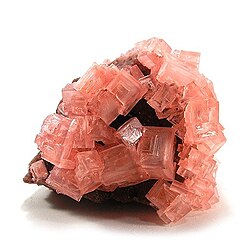
Pink cubic halite (NaCl; halide class) crystals on a nahcolite matrix (NaHCO3; a carbonate, and mineral form of sodium bicarbonate, used as baking soda).

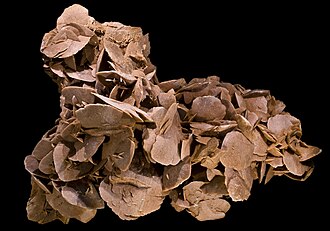
Gypsum desert rose

鉱物特性まとめ

以下に、主要な結晶系とモース硬度の代表例をまとめます。

主要な鉱物特性の概要
分類項目 特徴・例 代表的な鉱物
等軸晶系 a = b = c, 全角90° ガーネット、方塩岩、黄鉄鉱
六方晶系 a = b ≠ c, γ = 120° 石英、方解石、電気石
低硬度 (モース1-3) 非常に柔らかい 滑石、石膏、方解石
高硬度 (モース8-10) 非常に硬い トパーズ、剛玉、金剛石
高比重鉱物 重い金属元素を含む 方鉛鉱、金、赤鉄鉱

Frequently Asked Questions

鉱物と岩石の違いは何ですか?

鉱物は特定の化学組成と結晶構造を持つ単一の物質ですが、岩石は一つまたは複数の鉱物が集まってできた、より大きな地質学的単位のことを指します。

生物が作るものは鉱物に含まれますか?

はい。生物によって合成されたものであっても、化学組成と結晶構造が定義されていれば「生物鉱物」として認められます。例えば、骨の主成分であるヒドロキシアパタイトなどが挙げられます。

モース硬度とは具体的に何を測定しているのですか?

ある鉱物が別の鉱物によって傷つけられるかどうかという、相対的な「ひっかき傷への耐性」を測定しています。数値が大きいほど硬いことを示します。

なぜケイ酸塩鉱物が地殻の多くを占めているのですか?

ケイ素(Si)と酸素(O)が地球の地殻に非常に豊富に存在し、それらが多様な結合形態(四面体構造)をとることができるため、極めて多くの種類の鉱物を形成しやすいからです。

準結晶(クアジクリスタル)は鉱物ですか?

はい。例えばイコサヘドライトのような準結晶は、周期的な繰り返し構造は持ちませんが、秩序ある構造を持っているため、現代の定義では鉱物として認められています。

References

  1. John P. Rafferty, ed. (2011): Minerals; p. 1. In the series Geology: Landforms, Minerals, and Rocks. Rosen Publishing Group.  
  2. Wenk, Hans-Rudolf; Bulakh, Andrei (2004). Minerals: Their Constitution and Origin. Cambridge University Press. p. 10.  .
  3. Stephenson, Tim; Stephenson, Carolyn. "Rocks & Minerals". Creetown Gem Rock Museum. Archived from the original on 18 July 2019. Retrieved 18 July 2019.
  4. Austin Flint Rogers and Paul Francis Kerr (1942): Optical mineralogy, 2nd ed., p. 374. McGraw-Hill;  . Archived 2023-01-17 at the .
  5. Pasero, Marco; et al. (May 2025). "IMA List of Minerals" (PDF). Commission on New Minerals, Nomenclature and Classification. Archived (PDF) from the original on 4 June 2025. Retrieved 8 June 2025.
  6. "Definition of mineral variety". mindat.org. Archived from the original on 2 March 2018. Retrieved 1 March 2018.
  7. The Ultimate Family Visual Dictionary. New Delhi: 2012. p. 268–271.  .
  8. "Mineral properties - The Australian Museum". Australian Museum. Retrieved 21 December 2024.
  9. Klein, Cornelis; Hurlbut, Cornelius S. Jr. (1993). Manual of mineralogy: (after James D. Dana) (21st ed.). New York: Wiley. p. 440.  .
  10. Klein, Cornelis (14 October 2019). "Mineral – Silicates". Encyclopedia Britannica. Archived from the original on 25 October 2017. Retrieved 20 April 2021.

📸 フォトギャラリー

Crystals of serandite, natrolite, analcime, and aegirine from Mont Saint-Hilaire, Quebec, Canada
Schist is a metamorphic rock characterized by an abundance of platy minerals. In this example, the rock has prominent sillimanite porphyroblasts as large as 3 cm (1.2 in).
Hübnerite, the manganese-rich end-member of the wolframite series, with minor quartz in the background
When minerals react, the products will sometimes assume the shape of the reagent; the product mineral is termed a pseudomorph of (or after) the reagent. Illustrated here is a pseudomorph of kaolinite after orthoclase. Here, the pseudomorph preserved the Carlsbad twinning common in orthoclase.
Topaz has a characteristic orthorhombic elongated crystal shape.
Contact twins, as seen in spinel
Diamond is the hardest natural material, and has a Mohs hardness of 10.
Mohs Scale versus Absolute Hardness
Pyrite has a metallic lustre.
Perfect basal cleavage as seen in biotite (black), and good cleavage seen in the matrix (pink orthoclase).
Galena, PbS, is a mineral with a high specific gravity.
Carnotite (yellow) is a radioactive uranium-bearing mineral.
Aegirine, an iron-sodium clinopyroxene, is part of the inosilicate subclass.
Natrolite is a mineral series in the zeolite group; this sample has a very prominent acicular crystal habit.
Muscovite, a mineral species in the mica group, within the phyllosilicate subclass
Asbestiform tremolite, part of the amphibole group in the inosilicate subclass
An example of elbaite, a species of tourmaline, with distinctive colour banding.
Epidote often has a distinctive pistachio-green colour.
Black andradite, an end-member of the orthosilicate garnet group.
Native gold. Rare specimen of stout crystals growing off of a central stalk, size 3.7 x 1.1 x 0.4 cm, from Venezuela.
Red cinnabar (HgS), a mercury ore, on dolomite.
Sphalerite crystal partially encased in calcite from the Devonian Milwaukee Formation of Wisconsin
Pink cubic halite (NaCl; halide class) crystals on a nahcolite matrix (NaHCO3; a carbonate, and mineral form of sodium bicarbonate, used as baking soda).
Gypsum desert rose