南アジアに位置するインド共和国は、世界最大級の人口を抱え、極めて多様な言語、宗教、文化が共存するダイナミックな国家です。古代文明の揺籃の地から、英国による植民地時代を経て、現在は世界経済の重要な一翼を担う連邦制議会共和国として発展を続けています。
主要ファクト(Key Facts)
- 人口: 2026年予測で約14.8億人と世界第1位。
- 経済規模: PPPベースのGDPで世界第3位、名目GDPで第6位。
- 政治体制: 連邦制議会共和国(大統領および首相による統治)。
- 公用語: ヒンディー語および英語(その他、多くの地域言語を認定)。
- 宗教: ヒンドゥー教(79.8%)が主流で、イスラム教(14.2%)などが続く。
- 面積: 約328万平方キロメートルで世界第7位。
悠久の歴史:古代から現代まで
インドの歴史は、紀元前400年から紀元後300年頃に成立した叙事詩『ラーマーヤナ』に象徴されるような、豊かな精神文化と文学の伝統から始まります。
![Manuscript illustration, c. 1650, of the Sanskrit epic Ramayana, composed in story-telling fashion c. 400 BCE – c. 300 CE[71]](/images/8e/1a/8e1a98dde80961d5c34164fcd204dcf3c307612c2971d0e7f4380d0995a04342.jpg)
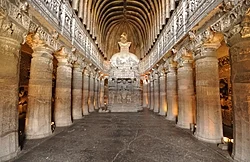
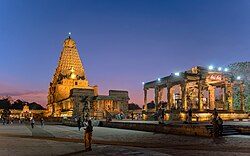
古代から中世にかけては、仏教の聖地であるアジャンター石窟群のような壮大な宗教建築や、11世紀初頭にチョーラ朝のラージャラージャ1世によって建立されたブリハディーシュヴァラ寺院など、高度な建築技術が花開きました。
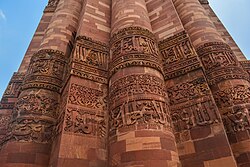
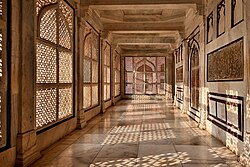
その後、デリー・スルタン朝やムガル帝国による統治時代に入ると、イスラム文化が融合し、クトゥブ・ミナールの精緻なカリグラフィーや、アクバル帝が建立したサリム・チシュティーのダルガー(聖廟)など、独特の建築様式が確立されました。
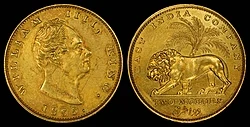
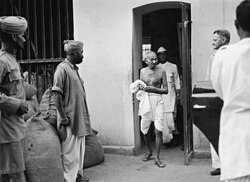
近代に入ると、東インド会社による支配を経て英国の植民地となります。しかし、マハトマ・ガンディーらによる非暴力・不服従運動などの独立闘争を経て、1947年8月15日に独立を達成しました。
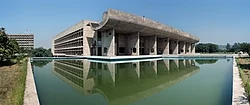
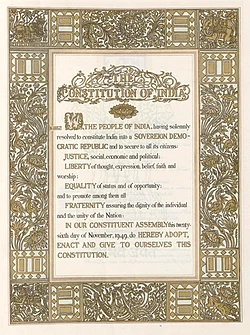
1950年1月26日には共和国として憲法を制定し、民主主義国家としての歩みを始めました。その後、ジャワハルラール・ネルー首相のもとで非同盟運動を主導し、国際社会での存在感を高めていきました。
![In the 1950s and 60s, India played a pivotal role in the Non-Aligned Movement.[239] From left to right: Gamal Abdel Nasser of United Arab Republic (now Egypt), Josip Broz Tito of Yugoslavia and Jawaharlal Nehru in Belgrade, September 1961.](/images/e2/96/e2962097cd2fd2b1ba9ba003f7fcb525ee8b9d363a4f5266ccc6ae5fea47d453.jpg)
地理的特性と行政区分
インドは広大な国土を持ち、北部のヒマラヤ山脈から南部の海岸線、西部のタール砂漠まで多様な地形に恵まれています。行政的には28の州と8つの連邦直轄領で構成されています。
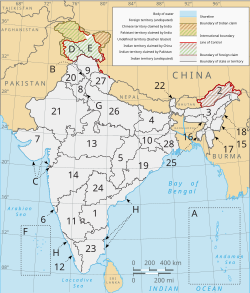
気候も多様で、南西季節風(モンスーン)がもたらす豊かな雨が農業を支える一方、地域によっては極端な乾燥地帯や積雪地帯が存在します。また、マングローブ林や多様な野生動物が生息する豊かな生物多様性の宝庫でもあります。
社会と文化の多様性
インドの最大の特徴は、その圧倒的な多様性です。言語面では、インド・ヨーロッパ語族(インド・アーリア語派)が約78%を占め、次いでドラヴィダ語族が約19.6%を話しています。紙幣の裏面には、ヒンディー語と英語以外に15の言語が併記されており、多言語社会であることが伺えます。
![On the reverse of each of India's paper money notes, the denomination is listed in a panel on the left in 15 languages, in addition to Hindi and English, which appear more prominently elsewhere. These are from top to bottom: 1. Assamese, 2. Bengali, 3. Gujarati, 4. Kannada, 5. Kashmiri, 6. Konkani, 7. Malayalam, 8. Marathi, 9. Nepali, 10. Oriya, 11. Punjabi, 12. Sanskrit, 13. Tamil, 14. Telugu, 15. Urdu.[316]](/images/d0/99/d09922c9c2b714b190ce80fd5f3a23d977e78f8e4600685a11c222e731e3bb89.jpg)
宗教面ではヒンドゥー教が多数派ですが、イスラム教、キリスト教、シク教、仏教、ジャイナ教などが共存しており、それぞれが独自の寺院や聖地を保持しています。
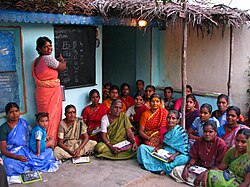
芸術分野では、古典舞踊が非常に発達しています。タミル・ナードゥ州のバラタナティヤムや、ケーララ州のカタカリなど、地域ごとに異なる伝統的な舞踊が受け継がれています。
現代インドの経済と発展
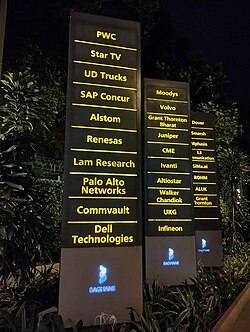
現代のインドは、IT産業や研究開発(R&D)の世界的拠点として急成長しています。バンガロールなどの都市には、世界的なテック企業のセンターが集積しています。
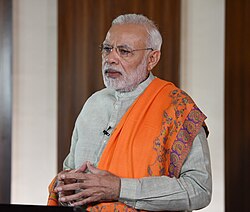
また、公衆衛生の改善にも注力しており、WHOによるポリオ根絶宣言を勝ち取るなど、医療インフラの整備が進んでいます。政治的には、2014年から就任しているナレンドラ・モディ首相のもとで、経済成長と近代化を推進しています。
![Immunisation health workers in 2006. Eight years later, and three years after India's last case of polio, the WHO declared India to be polio-free.[340]](/images/77/5e/775e49061ec3e348f1391b69ddf6f741ada5bbbbb768d0497ec1a751e5cfa6cc.jpg)
インドの基本データまとめ
| 項目 | 詳細 |
|---|---|
| 首都 | ニューデリー |
| 最大都市 | ムンバイ(市域人口)、デリー(都市圏人口) |
| 通貨 | インド・ルピー (₹ / INR) |
| 主要産業 | IT、農業、医薬品、自動車、宇宙開発 |
| 主要国際組織 | BRICS, G20, SAARC, Commonwealth |
Frequently Asked Questions
インドの公用語は何ですか?
連邦政府の公用語はヒンディー語と英語です。ただし、インド国内には400以上の言語が存在し、憲法の第8附則では22の主要言語が認定されています。
インドの政治体制はどのような仕組みですか?
連邦制議会共和国であり、国家元首である大統領と、行政の実権を持つ首相による統治が行われています。立法府は上院(ラージヤ・サバー)と下院(ロク・サバー)の二院制です。
インドの経済的な立ち位置はどうなっていますか?
購買力平価(PPP)ベースのGDPでは世界第3位に位置しており、急速な経済成長を遂げている新興経済国です。特にITサービスや製薬分野で強い競争力を持っています。
インドの宗教構成はどうなっていますか?
2011年の統計によると、ヒンドゥー教が約79.8%と圧倒的に多く、次いでイスラム教(14.2%)、キリスト教(2.3%)、シク教(1.7%)などが続いています。
インドの独立はいつ、どのようにして達成されましたか?
1947年8月15日に英国から独立しました。その後、1950年1月26日に共和国としての憲法が施行され、完全な主権国家となりました。
References
- Originally written in and adopted as the national anthem in its Hindi translation
- Written in a mixture of Sanskrit and
- "[...] Jana Gana Mana is the National Anthem of India, subject to such alterations in the words as the Government may authorise as occasion arises; and the song Vande Mataram, which has played a historic part in the struggle for Indian freedom, shall be honoured equally with Jana Gana Mana and shall have equal status with it."
- According to , in the script is the of the Union, along with as an additional official language. can have a different official language of their own other than Hindi or English.
- Not all the state-level official languages are in the eighth schedule and not all the scheduled languages are state-level official languages. For example, the is an 8th scheduled but not a state-level official language.
- and are the official languages of which is currently a and no longer the .
-
- According to , there are 426 living indigenous languages in India, in contrast to 11 extinct indigenous languages. In addition, there are 32 living non-indigenous languages.
- Different sources give widely differing figures, primarily based on how the terms "language" and "dialect" are defined and grouped.
- "The country's exact size is subject to debate because some borders are disputed. The Indian government lists the total area as 3,287,260 km2 (1,269,220 sq mi) and the total land area as 3,060,500 km2 (1,181,700 sq mi); the United Nations lists the total area as 3,287,263 km2 (1,269,219 sq mi) and total land area as 2,973,190 km2 (1,147,960 sq mi)."
- See .
- : Bhārat Gaṇarājya
📸 フォトギャラリー