An early use of the word racism by Richard Henry Pratt in 1902: "Association of races and classes is necessary to destroy racism and classism."
← ホームへ戻る

人種差別の構造と歴史偏見が社会に与える影響

🗓 2026年8月14日

人種差別とは、特定の身体的特徴や継承された属性に基づいて、人間を異なるグループに分け、ある人種や民族が他よりも優れている、あるいは劣っていると信じる思想です。これは単なる個人の偏見にとどまらず、異なる背景を持つ人々への敵意や差別的な行動、さらには社会的な制度として現れます。現代における人種差別は、生物学的な差異があるという誤った認識に基づいていることが多く、それが社会的な慣習や政治体制に組み込まれることで、構造的な不平等を生み出しています。

かつては、こうした差別を正当化するために「科学的人種主義」という手法が用いられ、学術的な装いで人種間の格差を証明しようとする試みがありました。しかし、現代の科学において、人種による能力や価値の差は完全に否定されています。
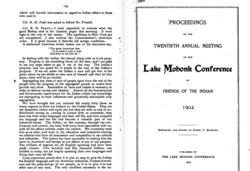
An early use of the word racism by Richard Henry Pratt in 1902: "Association of races and classes is necessary to destroy racism and classism."

Key Facts

  • 定義:継承された属性に基づき、人種や民族間に優劣があるとする信念や、それに基づく差別・偏見のこと。
  • 科学的根拠:人種による優劣を主張する科学的人種主義は、根拠がないことが証明されている。
  • 国際的な見解:国連は、人種差別を科学的に虚偽であり、道徳的に非難されるべき危険な行為と定義している。
  • 歴史的要因:欧州の帝国主義、資本主義、大西洋奴隷貿易などが人種差別概念の発展に深く関わっている。
  • 影響:ホロコーストやルワンダ虐殺などのジェノサイド、南アフリカのアパルトヘイトなどの制度的差別の要因となった。

人種とエスニシティの概念的な違い

現代の社会科学では、「人種(Race)」と「エスニシティ(Ethnicity)」は区別して考えられています。一般的に人種は身体的な特徴に重点を置くのに対し、エスニシティは共有された祖先、文化、言語などの社会的属性に基づいたグループ分けを指します。しかし、歴史的にこの二つは混同されて使われてきました。

国連の「あらゆる形態の人種差別撤廃に関する国際条約」では、人種に基づいた差別かエスニシティに基づいた差別かに関わらず、そのどちらも正当化される理由はなく、等しく排除されるべきであるとしています。
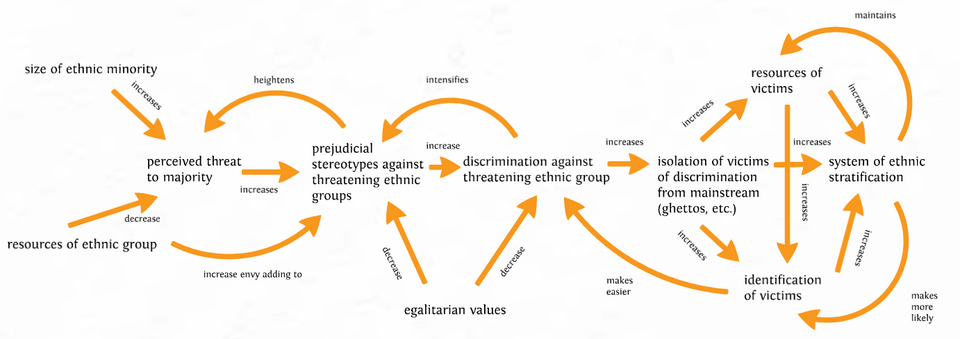
Sociological model of ethnic and racial conflict

人種差別の歴史的展開と正当化のメカニズム

人種差別という概念は、比較的近代に形成されたと考えられています。特に欧州の帝国主義時代、植民地支配や奴隷貿易を正当化するために、「支配する側」と「支配される側」を分ける論理が必要とされました。この過程で、宗教的な解釈や擬似科学的な理論が利用されました。

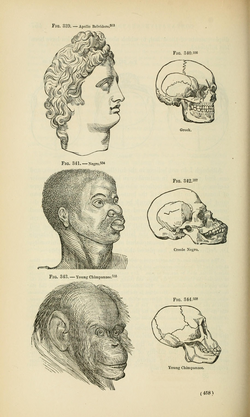
例えば、19世紀のアメリカでは聖書の記述を誤解し、特定の民族への呪いとして奴隷制を正当化する論理が展開されました。また、身体的な特徴を分析して知能の差を主張する図解などが作成され、黒人を白人とチンパンジーの中間に位置づけるといった極めて不当な格付けが行われました。

The Book of Genesis's biblical curse on Canaan, which was often misinterpreted as a curse on his father Ham, was used to justify slavery in 19th century America.[117]

Drawings from Josiah C. Nott and George Gliddon's Indigenous races of the earth (1857), which suggested black people ranked between white people and chimpanzees in terms of intelligence

制度化された差別と国家による弾圧

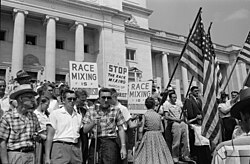
差別は個人の意識だけでなく、法律や制度として組み込まれることで強力な抑圧手段となりました。アメリカにおける人種隔離政策や、南アフリカ共和国で実施されたアパルトヘイト(人種隔離政策)がその典型です。これにより、住居、教育、公共施設などの利用が人種によって厳格に制限されました。
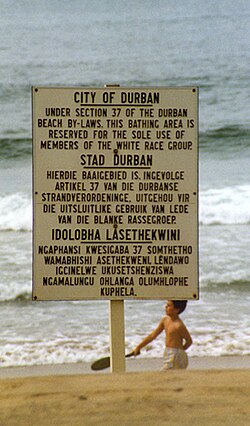
A sign on a racially segregated beach during Apartheid in South Africa, stating that the area is for the "sole use of members of the white race group"

A rally against school integration in Little Rock, Arkansas, 1959

極端な形態としてのジェノサイド

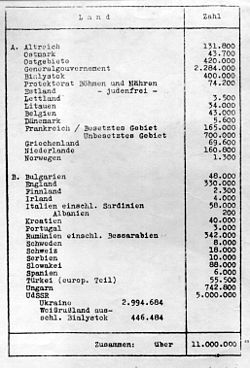
人種差別的な思想が極限まで突き詰められた結果、特定の集団を根絶やしにするジェノサイド(集団殺害)へと発展しました。ナチス・ドイツによるホロコーストでは、ユダヤ人を組織的に抹殺するためのリストが作成され、国家規模で虐殺が実行されました。また、アルメニア虐殺やルワンダ虐殺、クロアチア独立国でのセルビア人虐殺なども、人種や民族的な憎悪に基づいた悲劇です。
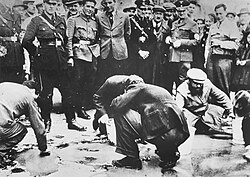
Austrian Nazis and local residents watch as Jews are forced to scrub the pavement, Vienna, March 1938

Eichmann's list of the Jewish population in Europe, drafted for the Wannsee Conference, held to ensure the cooperation of various levels of the Nazi government in the Final Solution

差別がもたらした社会的悲劇の事例

世界各地で、人種差別は暴力や不当な扱いとして現れました。アメリカでは先住民に対する虐殺や強制移住が行われ、南アフリカでは黒人層の権利が徹底的に剥奪されました。また、アジアやオセアニアにおいても、特定の民族を排除する政策や、人種的な偏見に基づく暴力事件が発生しています。
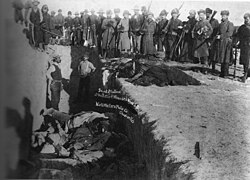
A mass grave being dug for frozen bodies from the 1890 Wounded Knee Massacre, in which the U.S. Army killed 150 Lakota people, marking the end of the American Indian Wars

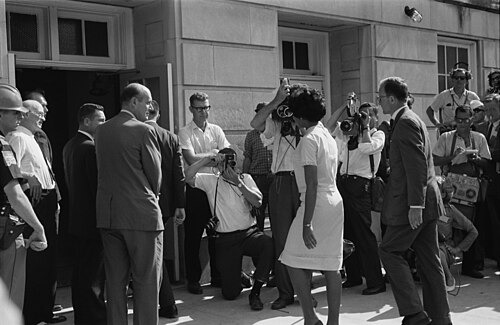
African American university student Vivian Malone entering the University of Alabama in the US to register for classes as one of the first African American students to attend the institution. Until 1963, the university was racially segregated and African American students were not allowed to attend.

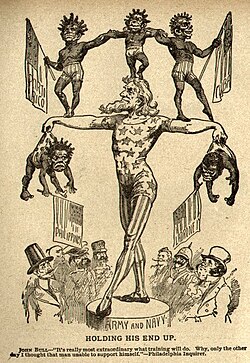
In 1899 Uncle Sam (a personification of the United States) balances his new possessions which are depicted as savage children. The figures are Puerto Rico, Hawaii, Cuba, Philippines and "Ladrones" (the Mariana Islands).

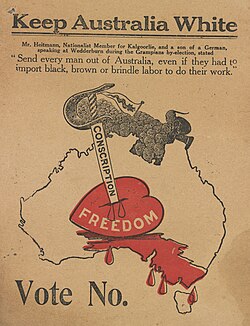
A 1917 anti-conscription propaganda leaflet imploring voters to "keep Australia white". A horde of Asians bearing a dragon flag is shown to the north.

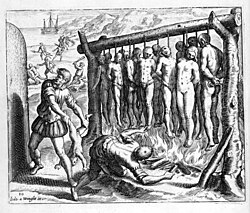
A 16th-century illustration by Flemish Protestant Theodor de Bry for Las Casas's Brevisima relación de la destrucción de las Indias, depicting Spanish atrocities during the conquest of Cuba

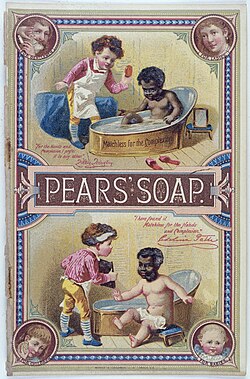
Advertisement for Pears' Soap Caption reads, "Matchless for the complexion..." Illustration of 'before and after' use of soap by black child in the bath; soap washes off his dark complexion.

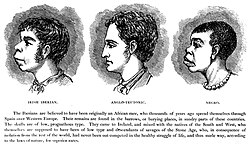
A late-19th-century illustration from Ireland from One or Two Neglected Points of View by H. Strickland Constable shows an alleged similarity between "Irish Iberian" and "Negro" features in contrast to the "higher" "Anglo-Teutonic".

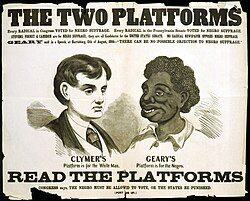
A pro–Hiester Clymer racist political campaign poster from the 1866 Pennsylvania gubernatorial election

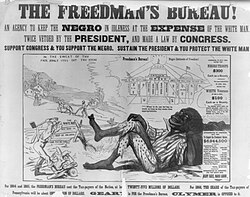
One in a series of posters attacking Radical Republicans on the issue of black suffrage, issued during the Pennsylvania gubernatorial election of 1866

The Golden Thirteen, photographed on 17 March 1944. The navy class consisted of 16 African American men who were selected for navy training.[198] Initially passing the training courses with outstanding scores, the group faced overt discrimination from by the US Navy and were forced to resit their exams due to pervasive racism.[198][199][200]

The burnt out remains of Govinda's Indian Restaurant in Fiji, May 2000

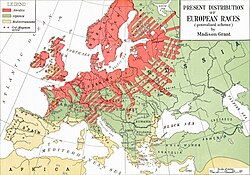
Madison Grant's map, from 1916, charting the "present distribution of European races", with the Nordics in red, the Alpines in green, and the Mediterraneans in yellow

人種差別への対抗と現代の取り組み

こうした不当な構造に対し、世界中で反人種差別運動が展開されてきました。ネルソン・マンデラのような指導者は、アパルトヘイトという強固な制度に立ち向かい、多民族が共生する民主主義の実現に尽力しました。現代では、教育や法整備を通じて、無意識の偏見(アンコンシャス・バイアス)を排除し、多様性を尊重する社会への移行が進められています。

Bust of Nelson Mandela erected on London's South Bank. Mandela is widely considered a global hero for his role in opposing the apartheid system and inaugurating a multiracial democracy.[275][276][277]

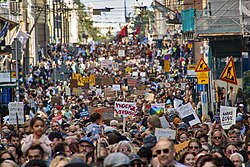
Demonstration against racism in Helsinki, Finland 2023

人種差別に関するまとめ

人種差別の構造と歴史的概要
項目 内容
根本的な誤解 身体的特徴に基づき、人種間に先天的な能力差や優劣があるとする考え。
正当化の手法 科学的人種主義、宗教的解釈、帝国主義的な支配論。
制度的形態 アパルトヘイト、人種隔離法、強制移住、差別的な入国制限。
最悪の結果 ホロコーストなどのジェノサイド、組織的な人権侵害。
現代の指針 国連条約に基づく差別の撤廃、多文化共生、人権の普遍的保障。

Frequently Asked Questions

人種とエスニシティは何が違うのですか?

人種は主に皮膚の色や骨格などの身体的な特徴に基づく分類を指しますが、エスニシティは言語、宗教、文化、共通の祖先といった社会的なアイデンティティに基づく分類を指します。現代ではこの二つは区別されていますが、どちらに基づいた差別であっても、人権侵害であることに変わりはありません。

「科学的人種主義」とは何ですか?

かつて、人種間の知能や能力の差を科学的に証明しようとした試みのことです。頭蓋骨の測定や遺伝的な解釈を悪用して、特定のグループが劣っていると主張しましたが、これらはすべて根拠のない誤った理論であることが現代の科学で証明されています。

制度的人種差別とはどのようなものですか?

個人の感情的な偏見ではなく、法律、行政、企業の慣習など、社会の仕組み自体に差別が組み込まれている状態を指します。例えば、特定の人種だけが利用できない公共施設を設ける法律や、居住区を強制的に分ける政策などがこれに当たります。

人種差別はなぜ近代になって強まったと考えられていますか?

欧州の帝国主義による植民地拡大や、大西洋奴隷貿易などの経済的利益を追求するシステムの中で、他者を支配することを正当化する論理として人種差別的な思想が利用・発展したためと考えられています。

国連は人種差別についてどのような立場をとっていますか?

国連は、人種による優劣の主張は科学的に虚偽であり、道徳的に非難されるべき不当なものであると断言しています。「あらゆる形態の人種差別撤廃に関する国際条約」などを通じ、理論的にも実践的にも、いかなる人種差別も正当化されないことを世界に示しています。

References

  1. Dennis, R. M. (2004). "Racism". In Kuper, A.; Kuper, J. (eds.). The Social Science Encyclopedia, Volume 2 (3rd ed.). London; New York: .  . Archived from the original on 26 September 2024. Retrieved 7 May 2020. Racism [is] the idea that there is a direct correspondence between a group's values, behavior and attitudes, and its physical features ... Racism is also a relatively new idea: its birth can be traced to the European colonization of much of the world, the rise and development of European capitalism, and the development of the European and US slave trade.
  2. Ghani, Navid (2008). "Racism". In Schaefer, Richard T. (ed.). Encyclopedia of Race, Ethnicity, and Society. Sage. pp. 1113–1115.  . Archived from the original on 26 September 2024. Retrieved 7 May 2020.
  3. Newman, David M. (2012). Sociology: Exploring the Architecture of Everyday Life (9th ed.). Thousand Oaks, Calif.: SAGE Publications. p. 405.  . Racism: Belief that humans are subdivided into distinct groups that are different in their social behavior and innate capacities and that can be ranked as superior or inferior.
  4. "International Convention on the Elimination of All Forms of Racial Discrimination". . 21 December 1965. Archived from the original on 2 July 2024. Retrieved 23 December 2011.
  5. Conroy, William (2024). "Race, Capitalism, and the Necessity/Contingency Debate". . 41: 39–58. :10.1177/02632764221140780.
  6. (1997). ""Race" 1997 and 2001: A Race Odyssey" (PDF). . p. 2. Archived from the original (PDF) on 3 April 2024. In the period since 1492, European overseas empires and colonies were established ... The establishment of mines and plantations enriched Europe while impoverishing and decimating the conquered and enslaved peoples in Africa and the New World. The race concept helped to give all this the appearance of scientific justification.
  7. (1988). The arrogance of race: historical perspectives on slavery, racism, and social inequality. Middletown, Conn: .
  8. Reilly, Kevin; Kaufman, Stephen; Bodino, Angela (2003). Racism: a global reader. Armonk, NY: . pp. 45–52.  .
  9. Martin, Terry (1998). "The Origins of Soviet Ethnic Cleansing" (PDF). . 70 (4): 813–861. :10.1086/235168.  10.1086/235168.  32917643. Archived from the original (PDF) on 21 May 2024.
  10. Webster's Ninth New Collegiate Dictionary. Merriam-Webster, Inc. 1983. p. 969.  .

📸 フォトギャラリー

An early use of the word racism by Richard Henry Pratt in 1902: "Association of races and classes is necessary to destroy racism and classism."
African American university student Vivian Malone entering the University of Alabama in the US to register for classes as one of the first African American students to attend the institution. Until 1963, the university was racially segregated and African American students were not allowed to attend.
In 1899 Uncle Sam (a personification of the United States) balances his new possessions which are depicted as savage children. The figures are Puerto Rico, Hawaii, Cuba, Philippines and "Ladrones" (the Mariana Islands).
A rally against school integration in Little Rock, Arkansas, 1959
A pro–Hiester Clymer racist political campaign poster from the 1866 Pennsylvania gubernatorial election
A sign on a racially segregated beach during Apartheid in South Africa, stating that the area is for the "sole use of members of the white race group"
A mass grave being dug for frozen bodies from the 1890 Wounded Knee Massacre, in which the U.S. Army killed 150 Lakota people, marking the end of the American Indian Wars
A 1917 anti-conscription propaganda leaflet imploring voters to "keep Australia white". A horde of Asians bearing a dragon flag is shown to the north.
The Book of Genesis's biblical curse on Canaan, which was often misinterpreted as a curse on his father Ham, was used to justify slavery in 19th century America.[117]
A 16th-century illustration by Flemish Protestant Theodor de Bry for Las Casas's Brevisima relación de la destrucción de las Indias, depicting Spanish atrocities during the conquest of Cuba
Advertisement for Pears' Soap Caption reads, "Matchless for the complexion..." Illustration of 'before and after' use of soap by black child in the bath; soap washes off his dark complexion.
A late-19th-century illustration from Ireland from One or Two Neglected Points of View by H. Strickland Constable shows an alleged similarity between "Irish Iberian" and "Negro" features in contrast to the "higher" "Anglo-Teutonic".
One in a series of posters attacking Radical Republicans on the issue of black suffrage, issued during the Pennsylvania gubernatorial election of 1866
Austrian Nazis and local residents watch as Jews are forced to scrub the pavement, Vienna, March 1938
Eichmann's list of the Jewish population in Europe, drafted for the Wannsee Conference, held to ensure the cooperation of various levels of the Nazi government in the Final Solution
The Golden Thirteen, photographed on 17 March 1944. The navy class consisted of 16 African American men who were selected for navy training.[198] Initially passing the training courses with outstanding scores, the group faced overt discrimination from by the US Navy and were forced to resit their exams due to pervasive racism.[198][199][200]
The burnt out remains of Govinda's Indian Restaurant in Fiji, May 2000
Drawings from Josiah C. Nott and George Gliddon's Indigenous races of the earth (1857), which suggested black people ranked between white people and chimpanzees in terms of intelligence
Madison Grant's map, from 1916, charting the "present distribution of European races", with the Nordics in red, the Alpines in green, and the Mediterraneans in yellow
Sociological model of ethnic and racial conflict
Bust of Nelson Mandela erected on London's South Bank. Mandela is widely considered a global hero for his role in opposing the apartheid system and inaugurating a multiracial democracy.[275][276][277]
Demonstration against racism in Helsinki, Finland 2023