Two divers wearing lightweight demand helmets stand back-to-back on an underwater platform holding on to the railings. The photo also shows the support vessel above the surface in the background.
← ホームへ戻る

潜水活動の生理学的影響と多様なダイビング形態

🗓 2026年8月12日

人間が水中という特殊な環境に身を置くとき、身体には地上とは全く異なる生理学的変化が起こります。水圧の変化や呼吸ガスの組成、温度低下といった要因が複雑に絡み合い、ダイバーの健康と安全性に直接的な影響を与えます。現代の潜水活動は、レジャーから産業、軍事、科学研究まで多岐にわたり、それぞれの目的に応じて高度に専門化された技術と装備が活用されています。

主要な事実(Key Facts)

  • 水圧の影響: 水深が深くなるにつれ周囲圧(環境圧)が増加し、身体の空洞内の圧力変化によるバーotrauma(圧迫症)のリスクが生じます。
  • 呼吸ガスの変化: 高圧下では窒素などの不活性ガスが血液や組織に溶け込み、急激な浮上時に気泡となって現れる減圧症の原因となります。
  • 潜水形態の多様性: 自身の肺活量のみで潜るフリーダイビングから、外部からガスを供給される表面供給潜水、さらには気圧を一定に保つ大気圧潜水まで存在します。
  • 安全管理の重要性: 潜水コンピュータや減圧テーブルを用いた厳格な時間・深度管理が、潜水病を防ぐための不可欠なプロセスです。

潜水の基本形態とアプローチ

潜水方法は、呼吸ガスの確保方法や水圧への対処法によって大きく分類されます。最も一般的なのは、タンクを背負って自立的に活動するスクーバダイビング(SCUBA)ですが、より深い海域や長時間の作業が必要な場合は、地上からホースでガスを供給する表面供給潜水が採用されます。
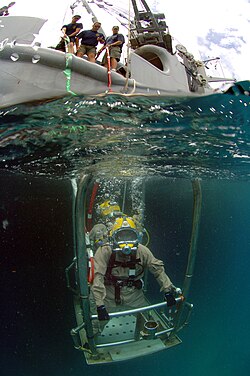
 Two divers wearing lightweight demand helmets stand back-to-back on an underwater platform holding on to the railings. The photo also shows the support vessel above the surface in the background.

一方で、装備を最小限に抑え、一回の呼吸で潜行するフリーダイビングは、身体の生理的限界に挑むスポーツとしての側面が強く、潜水反射などの生体反応を利用します。また、極めて深い海域での作業では、潜水服内部の圧力を地上の1気圧に保つ大気圧潜水という特殊な手法が用いられ、水圧による生理的影響を物理的に遮断します。
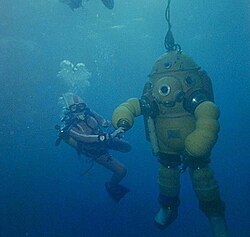
Two very different modes of diving: Ambient pressure open circuit scuba diving (left) and atmospheric pressure diving in a pressure resistant suit (right)

さらに、人間が直接潜らずに遠隔操作で作業を行うROV(遠隔操作潜水機)の活用が進んでおり、危険な環境下での構造物点検や深海調査において不可欠な存在となっています。
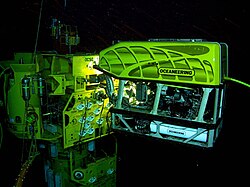
A work class remotely operated underwater vehicle working on a complex underwater installation using a manipulator arm.

潜水形態の比較まとめ

潜水モード別の特徴比較
潜水形態 ガス供給方法 主な目的 圧力への対処
フリーダイビング 単一呼吸(息止め) スポーツ・採取 身体的適応
スクーバダイビング 携帯タンク レジャー・調査 周囲圧への同調
表面供給潜水 地上からのホース供給 商業作業・建設 周囲圧への同調
大気圧潜水 内部循環・供給 超深海作業 1気圧を維持

水圧が身体に与える生理学的影響

水中では、深度が増すたびに水圧が上昇します。これにより、マスク内部や耳などの空洞部分に圧力差が生じ、バーotrauma(圧迫症)と呼ばれる組織損傷が起こることがあります。例えば、マスク内の圧力が外部より低くなると、顔面に吸引力が働き、毛細血管が破裂する「マスクスクイーズ」が発生します。
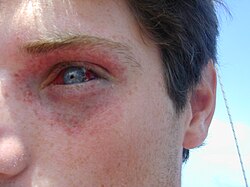
 Eye and surrounding skin of young male showing petechial and subconjunctival haemmorhages

視覚的な変化も顕著です。水中の屈折率が空気と異なるため、平面マスクを使用すると物体が実際よりも大きく、近くに見える現象が起こります。
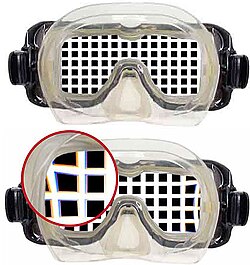
View of a rectangular grating through a flat-glazed diving half-mask, showing magnification and a detail of slight pincushion distortion and chromatic aberration in the through-water view.

また、高圧環境下で呼吸を続けると、窒素などのガスが組織に蓄積します。これを急激に排出(浮上)させると、組織内でガスが気泡化し、関節痛や神経症状を引き起こす減圧症を招きます。この理論を体系化したジョン・スコット・ハルダンなどの研究により、現代の減圧停止や減圧テーブルの基礎が築かれました。
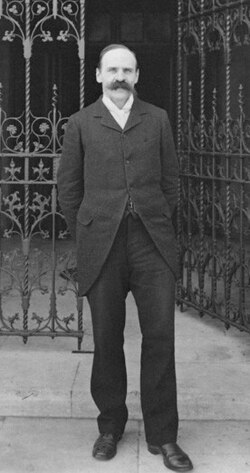
 A full height monochrome portrait of a middle-aged white man with a receding hairline and a bushy moustache.

高度な潜水技術とリスク管理

レクリエーションの枠を超えたテクニカルダイビングでは、空気以外の混合ガス(ナイトロックス、トリミックスなど)を使用して、窒素酔いや酸素中毒のリスクを軽減しながら深海へ挑みます。閉鎖回路リブリーザー(CCR)などの高度な装置を用いることで、ガスの効率的な利用と長時間の潜水が可能になります。
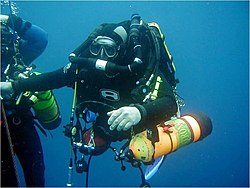
 A scuba diver in a wetsuit holds onto the shotline at a decompression stop. He is breathing from a rebreather and carrying a side-slung 80 cubic foot aluminium bailout cylinder on each side. A second diver is partly visible to the left.

安全性を確保するため、単独潜水であっても予備のガスシリンダー(ベイルアウトボトル)を携行し、機器故障時のリスクを分散させる管理体制が徹底されています。
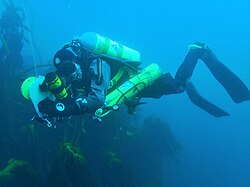
A diver is carrying two cylinders, one on his back and the other at his side.

特殊な環境下での潜水も行われており、氷の下を潜るアイスダイビングや、沈没船を探索するレックダイビングなどがあります。これらは低体温症や閉鎖空間での迷走といった特有の危険を伴うため、専門的なトレーニングが必須です。
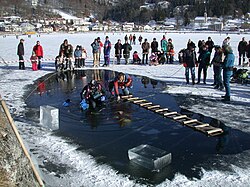
 A diver is visible underwater in a hole cut in the ice cover of a small lake. Blocks of ice cut to form the hole are stacked to one side, and a second diver sits on the edge of the hole with his legs in the water. A rough wooden ladder bridges the hole. The dive site is cordoned off with a red and white tape, and other members of the support team stand to the side, with onlookers outside the cordon.

潜水における専門的活動

  • 商業潜水: 船底のメンテナンスや海底パイプラインの敷設など、産業的なインフラ整備に従事します。
  • 軍事潜水: 特殊作戦や機雷除去、救難活動など、高度な戦術的潜水スキルが求められます。
  • 科学潜水: 海洋生物学や水中考古学の調査など、学術的なデータ収集を目的とします。
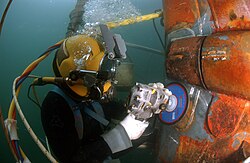
Diver wearing a diving helmet is sanding a repair patch on a submarine

これらの専門潜水では、万が一の事故に備え、再圧チャンバー(高圧酸素治療装置)を用いた治療手順の習得や、厳格な健康診断による適性の判断が行われています。
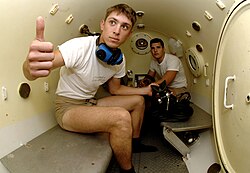
Photograph of the cramped interior of a cylinder containing two benches and two diver trainees

潜水環境の多様性とトレーニング

世界中には、エジプトのブルーホールのような有名なレクリエーションサイトから、訓練用のクォーリー(採石場)まで、多様な潜水環境が存在します。
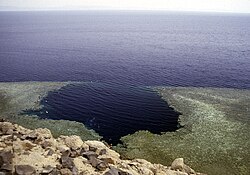
 View of the coastal waters from the top of a hill, showing an approximately circular hole in the shallow coastal reef tangent to the deeper water offshore.

潜水者が安全に活動するためには、基礎的なスキル(耳抜き、中性浮力の確保、バディシステム)から、緊急時の対処法まで、段階的な教育プログラムが必要です。多くのダイバーは、認定団体によるライセンス取得を通じて、理論と実践の両面からトレーニングを受けます。
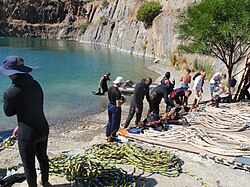
A group of about 12 divers on the shore of a flooded quarry preparing surface-supplied diving equipment for diver training exercises. Several umbilicals are laid out for use in figure 8 coils.

また、シンプルな装備で海産物を採取する伝統的な潜水(海女など)のような形態もあり、文化的な背景を持つ潜水活動も世界各地で見られます。
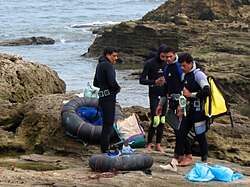
 A croup of three divers dressed in wetsuits standing on a rocky shore with the sea in the background. On the ground are inflated truck inner tube floats with nets to support their catch

Frequently Asked Questions

減圧症とはどのような現象ですか?

高圧環境で組織に溶け込んだ窒素が、浮上による減圧に伴って気泡となり、血管や組織を圧迫することで起こる疾患です。これを防ぐには、ゆっくりとした浮上と、適切な深度での減圧停止が必要です。

ナイトロックスやトリミックスを使うメリットは何ですか?

ナイトロックスは酸素比率を高めることで窒素の吸収を抑え、潜水時間を延長させます。トリミックスはヘリウムを混ぜることで、深海での窒素酔いを軽減し、呼吸ガスの密度を下げる効果があります。

バーotrauma(圧迫症)を防ぐにはどうすればよいですか?

潜行中に耳やマスクなどの空洞部分の圧力を、周囲の水圧と同等に保つ「耳抜き」などの圧力調整を適切に行うことが重要です。

リブリーザーとオープンサーキットの違いは何ですか?

オープンサーキットは吐いたガスをすべて水中に放出しますが、リブリーザーは二酸化炭素を除去してガスを再利用するため、ガスの消費量を劇的に抑え、潜水時間を大幅に延ばすことができます。

大気圧潜水服(ADS)の利点は何ですか?

服内部が常に1気圧に保たれているため、周囲の水圧に関わらず減圧症のリスクがなく、潜水後の長い減圧時間を必要とせずに深海から迅速に浮上できる点にあります。

References

  1. Engineering methods control the hazard at its source. When feasible, the work environment and the job itself are designed to eliminate hazards or reduce exposure to hazards: If feasible, the hazard is removed or substituted by something that is not hazardous. If removal is not feasible, the hazard is enclosed to prevent exposure during normal operations. Where complete enclosure is not feasible, barriers are established to limit exposure during normal operations.
  2. Safe work practices, appropriate training, medical screening and limiting exposure by rotation of workers, breaks and limits on shift length are forms of administrative controls. They are intended to limit the effect of the hazard on the worker when it cannot be eliminated.
  3. Personal protective clothing and equipment are required in diving operations as exposure to the inherent hazards cannot be engineered out of normal operations, and safe work practices and management controls cannot provide sufficient protection from exposure. Personnel protective controls assume the hazard will be present and the equipment will prevent injury to those exposed.

📸 フォトギャラリー

 Two divers wearing lightweight demand helmets stand back-to-back on an underwater platform holding on to the railings. The photo also shows the support vessel above the surface in the background.
 Eye and surrounding skin of young male showing petechial and subconjunctival haemmorhages
View of a rectangular grating through a flat-glazed diving half-mask, showing magnification and a detail of slight pincushion distortion and chromatic aberration in the through-water view.
Two very different modes of diving: Ambient pressure open circuit scuba diving (left) and atmospheric pressure diving in a pressure resistant suit (right)
 A croup of three divers dressed in wetsuits standing on a rocky shore with the sea in the background. On the ground are inflated truck inner tube floats with nets to support their catch
A work class remotely operated underwater vehicle working on a complex underwater installation using a manipulator arm.
 A full height monochrome portrait of a middle-aged white man with a receding hairline and a bushy moustache.
 A diver is visible underwater in a hole cut in the ice cover of a small lake. Blocks of ice cut to form the hole are stacked to one side, and a second diver sits on the edge of the hole with his legs in the water. A rough wooden ladder bridges the hole. The dive site is cordoned off with a red and white tape, and other members of the support team stand to the side, with onlookers outside the cordon.
 A scuba diver in a wetsuit holds onto the shotline at a decompression stop. He is breathing from a rebreather and carrying a side-slung 80 cubic foot aluminium bailout cylinder on each side. A second diver is partly visible to the left.
 View of the coastal waters from the top of a hill, showing an approximately circular hole in the shallow coastal reef tangent to the deeper water offshore.
A group of about 12 divers on the shore of a flooded quarry preparing surface-supplied diving equipment for diver training exercises. Several umbilicals are laid out for use in figure 8 coils.
Photograph of the cramped interior of a cylinder containing two benches and two diver trainees
A diver is carrying two cylinders, one on his back and the other at his side.
Diver wearing a diving helmet is sanding a repair patch on a submarine