周期表は、宇宙に存在するすべての化学元素を、その物理的・化学的な性質に基づいて体系的に整理した地図のようなものです。単なる元素のリストではなく、原子番号の増加に伴って性質が周期的に繰り返されるという法則性を視覚化したものであり、化学のあらゆる現象を理解するための基礎となります。
Key Facts
- 周期性: 元素は原子番号順に並んでおり、似た性質を持つ元素が同じ縦列(族)に配置されます。
- 構成要素: 縦の列を「族」、横の行を「周期」と呼び、電子配置によって「ブロック」に分けられます。
- 分類: 金属、非金属、そしてその中間的な性質を持つ準金属に大別されます。
- 予測可能性: 電子親和力やイオン化エネルギーなどの傾向から、未知の元素や化合物の性質を予測できます。
周期表の基本構造と分類
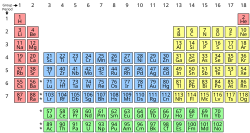
現代の周期表は、18列の構成が一般的です。縦の列である族(Group)は、最外殻電子の数が等しいため、化学的に類似した挙動を示します。例えば、1族のアルカリ金属や18族の希ガスなどが代表的です。一方、横の行である周期(Period)は、電子が入る主量子数(電子殻の数)に対応しています。
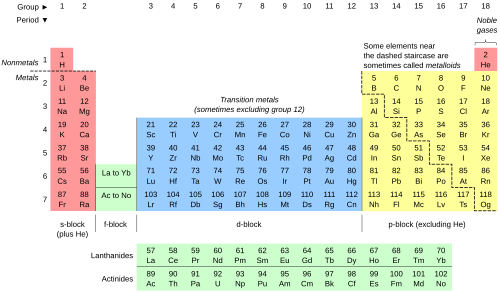
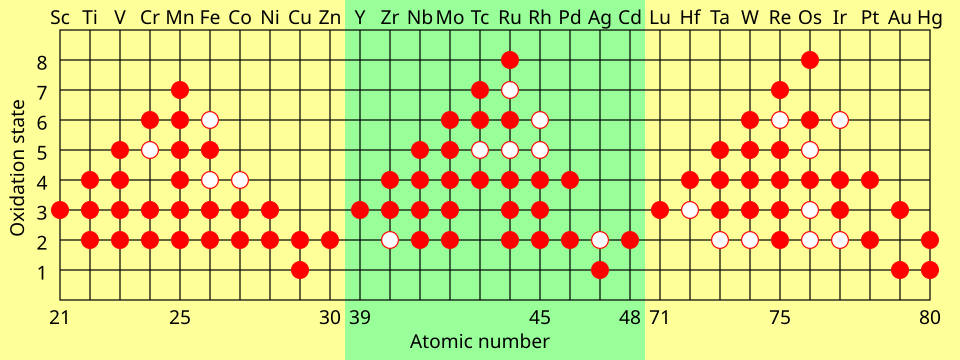
また、電子が充填される軌道の種類に応じて、sブロック、pブロック、dブロック、fブロックという4つの領域に区分されます。dブロックに属する元素は遷移金属と呼ばれ、多様な酸化状態を持つことが特徴です。
![A periodic table colour-coded to show some commonly used sets of similar elements. The categories and their boundaries differ somewhat between sources.[177] Lutetium and lawrencium in group 3 are also transition metals.[58] Alkali metals Alkaline earth metals Lanthanides Actinides Transition metals Other metals Metalloids Other nonmetals Halogens Noble gases](/images/a0/d0/a0d0d1115693ec16cb753d4f15b9a51f36ae54627419b005f4f192eacb554fc7.webp)
元素の化学的分類
元素はその性質により、大きく以下のカテゴリーに分けられます。
- 金属: アルカリ金属、アルカリ土類金属、遷移金属、ポスト遷移金属、ランタノイド、アクチノイドが含まれます。
- 準金属(メタロイド): 金属と非金属の両方の特性を併せ持つ元素です。
- 非金属: ハロゲン、希ガス、およびその他の非金属元素が含まれます。
電子配置と原子の物理的特性
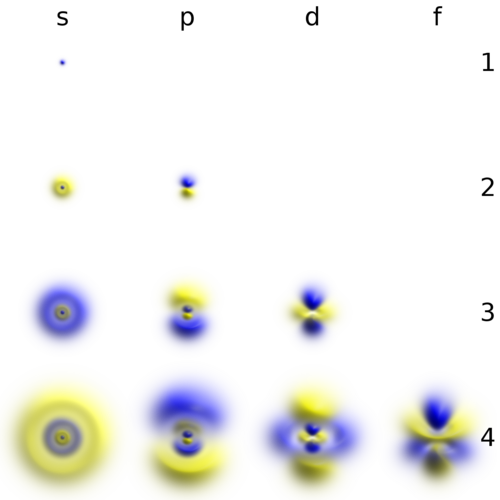
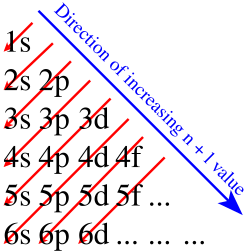
元素の性質を決定づけるのは、原子核の周囲にある電子の配置です。電子は特定のエネルギー準位を持つ原子軌道(s, p, d, f)に収容されます。この充填順序はマデルング則などの規則に従い、エネルギーの低い軌道から順に埋まっていきます。
電子配置は、物質の物理的な状態にも影響を与えます。例えば、水銀が標準状態で液体であるのは、相対論的効果による電子配置の影響を受けているためです。
![Liquid mercury. Its liquid state at standard conditions is the result of relativistic effects.[127]](/images/0f/4a/0f4a4195e64f50fd5cd3bc8bf6260b801340451ada335476df52a3fa57091b83.jpg)
結晶構造と結合の多様性
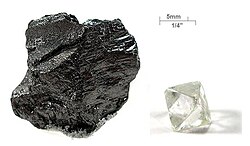
同じ元素であっても、原子の結合方式によって全く異なる性質を持つ「同素体」が存在します。炭素のダイヤモンドと黒鉛(グラファイト)がその典型例です。ダイヤモンドの正四面体構造は、強い共有結合による巨大分子構造を形成しており、これが極めて高い硬度を生み出します。
![The diamond-cubic structure, a giant covalent structure adopted by carbon (as diamond), as well as by silicon, germanium, and (grey) tin, all in group 14.(In grey tin, the band gap vanishes and metallization occurs.[149] Tin has another allotrope, white tin, whose structure is even more metallic.)](/images/06/62/0662b8aeef13b2b7a7a7088616814b82a270df0d8c10325ddfa48a42d87b3f04.gif)
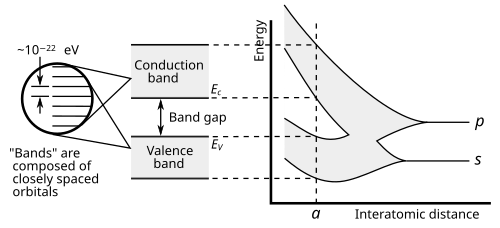
周期的な傾向(トレンド)
周期表上の位置を確認することで、元素の物理化学的な傾向を読み取ることができます。これらの傾向は、原子核の正電荷の増加と電子殻の数によって説明されます。
主要な物理化学的指標
- イオン化エネルギー: 原子から電子を1つ取り去るのに必要なエネルギーです。一般に右上にいくほど高くなります。
- 電子親和力: 原子が電子を取り込んで陰イオンになる際に放出されるエネルギーです。
- 電気陰性度: 分子内で電子を引き寄せる強さを示します。
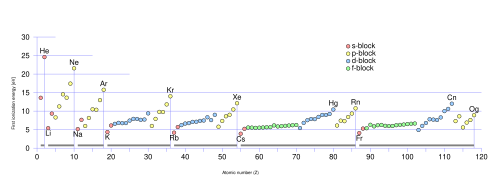
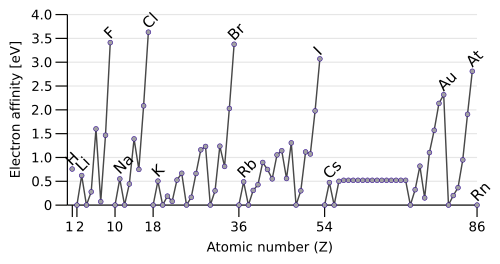
また、遷移金属においては、d軌道の電子が関与するため、単一の価数ではなく複数の酸化状態を取ることが一般的です。
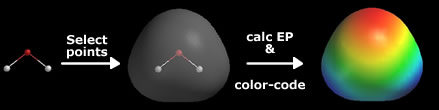
分子レベルでは、原子間の電気陰性度の差によって電荷の偏りが生じ、静電ポテンシャルの差が現れます。これは水の分子のように、極性を持つ物質の特性を決定づけます。
周期表の歴史と発展
周期表は、19世紀にドミトリ・メンデレーエフらによって確立されました。彼は元素を原子量順に並べることで、当時の未発見元素の性質を正確に予測したことで知られています。その後、ヘンリー・モーゼリーによって「原子番号(陽子数)」こそが周期性の本質であることが証明され、現在の形式へと進化しました。
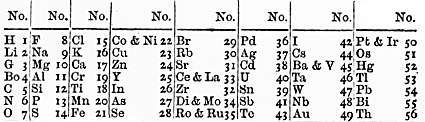
初期の試行錯誤として、ニューランズの法則や、後のアルフレッド・ヴェルナーによる長形式の導入など、多くの科学者が最適な配置を模索しました。また、グレン・シーボーグによるアクチノイド系列の再配置は、現代の周期表の完成に大きく寄与しました。
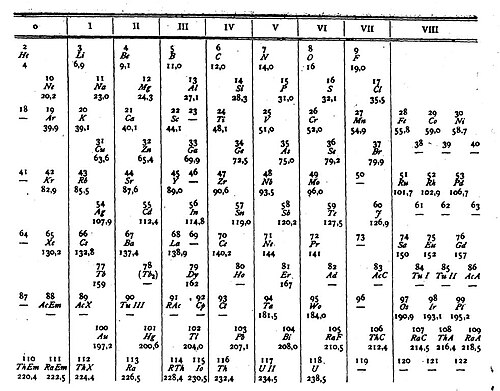
![Periodic table of Alfred Werner (1905), the first appearance of the long form[33]](/images/d3/b6/d3b6461e811984d65ce4cc1bdff903279c47f83688892c6e84c20e429b0534fe.gif)

現代では、超重元素の合成が進んでおり、ユーリ・オガネシアンらの研究によって第7周期の末端まで埋まりました。今後は第8周期以降の拡張や、相対論的効果による周期性の変化が議論の焦点となっています。

![Energy eigenvalues (in eV) for the outermost electrons of elements with Z = 100 through 172, predicted using Dirac–Fock calculations. The − and + signs refer to orbitals with decreased or increased azimuthal quantum number from spin–orbit splitting respectively: p− is p1/2, p+ is p3/2, d− is d3/2, d+ is d5/2, f− is f5/2, f+ is f7/2, g− is g7/2, and g+ is g9/2.[255] The spacing of energy levels up to Z = 120 is normal, and becomes normal again at Z = 157; between them, a very different situation is observed.[256]](/images/21/8b/218bfde9724cf2fdc6a831a84b908a2678d8ce67c02fe565c52daf06a6f26ced.webp)
また、標準的な形式以外にも、らせん状の配置など、元素の連続性をより強調した代替的な周期表も提案されています。
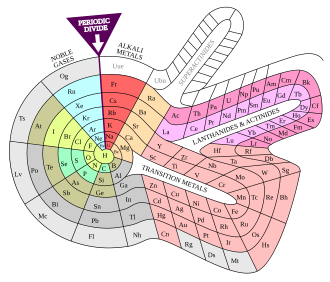
元素特性のまとめ
| グループ名 | 主な特徴 | 代表的な元素 |
|---|---|---|
| アルカリ金属 | 反応性が非常に高く、水と激しく反応する | Li, Na, K |
| アルカリ土類金属 | 比較的反応性が高く、硬い金属 | Be, Mg, Ca |
| 遷移金属 | 多様な酸化数と色付きの化合物を形成する | Fe, Cu, Au |
| ハロゲン | 強い酸化力を持ち、非金属として反応性が高い | F, Cl, Br, I |
| 希ガス | 化学的に極めて安定しており、単原子分子として存在 | He, Ne, Ar |
Frequently Asked Questions
なぜ元素は周期的に並んでいるのですか?
それは電子配置が周期的に繰り返されるためです。最外殻電子の数や軌道の種類が似ている元素は、化学反応における挙動が似るため、同じ族に配置されます。
原子番号と原子量の違いは何ですか?
原子番号は原子核に含まれる陽子の数であり、元素の正体を決定します。一方、原子量は陽子と中性子の合計質量に基づいた平均値であり、同位体の存在によって変動します。
準金属とはどのような性質を持つ元素ですか?
金属のような光沢や導電性を持ちつつ、非金属のような脆さや半導体的な性質を併せ持つ元素です。シリコン(ケイ素)などが代表例です。
超重元素とは何ですか?
天然には存在せず、加速器などで人工的に合成された原子番号の非常に大きい元素のことです。これらは非常に不安定で、短寿命である傾向があります。
電子配置の「s, p, d, f」とは何を意味していますか?
これらは電子が存在する空間的な広がり(形状)を示す軌道の種類です。sは球形、pはダンベル形など、それぞれ異なる形状とエネルギー準位を持っています。
References
- The question of how many natural elements there are is quite complicated and is not fully resolved. The heaviest element that occurs in large quantities on Earth is element 92, . However, uranium can undergo in nature, and the resulting neutrons can strike other uranium atoms. If then occurs, elements 93 and 94, and , are formed via ; these are in fact more common than some of the rarest elements in the first 92, such as , , and (see Abundance of elements in Earth's crust). Theoretically, neutron capture on the resulting plutonium might produce even higher-numbered elements, but the quantities would be too small to be observed. In the early Solar System, shorter-lived elements had not yet decayed away, and consequently there were more than 94 naturally occurring elements. (element 96) is the longest-lived element beyond the first 94, and is probably still being brought to Earth via , but it has not been found. Elements up to 99 () have been observed in Przybylski's Star. Elements up to 100 () probably occurred in the at , , but they have long since decayed away. Even heavier elements may be produced in the via or , but this has not been confirmed. It is not clear how far they would extend past 100 and how long they would last: calculations suggest that nuclides of mass number around 280 to 290 are formed in the r-process, but quickly to nuclides that suffer , so that 99.9% of the produced nuclides would decay within a month. If instead they were sufficiently long-lived, they might similarly be brought to Earth via cosmic rays, but again none have been found.
- Some isotopes currently considered stable are theoretically expected to be radioactive with extremely long half-lives: for instance, all the stable isotopes of elements 62 (), 63 (), and all elements from 67 () onward are expected to undergo or . However, the predicted half-lives are extremely long (e.g. the alpha decay of 208Pb to the ground state of 204Hg is expected to have a half-life greater than 10120 years), and the decays have never been observed.
- The half-life of 's most stable isotope is just long enough that it should also be a primordial element. A 1971 study claimed to have detected primordial plutonium, but a more recent study from 2012 could not detect it. Based on its likely initial abundance in the Solar System, present experiments as of 2022 are likely about an order of magnitude away from detecting live primordial 244Pu.
- Tiny traces of plutonium are also continually brought to Earth via cosmic rays.
- See for example the periodic table poster sold by Sigma-Aldrich.
- Strictly speaking, one cannot draw an orbital such that the electron is guaranteed to be inside it, but it can be drawn to guarantee a 90% probability of this for example.
- Authors differ on whether the n + ℓ rule has yet been derived from quantum mechanics. Scerri claims that it has not, despite several attempts to do so. On the other hand, Ostrovsky, who has claimed such justification from 1971, wrote "Some authors insist that 'still nobody has deduced the n+l rule from the principles of quantum mechanics', while others present quantum justification of the rule that was not ever disputed." Other authors argue that such a derivation is not necessary, because it admits exceptions.
-
Once two to four electrons are removed, the d and f orbitals usually become lower in energy than the s ones:
- 1s ≪ 2s < 2p ≪ 3s < 3p ≪ 3d < 4s < 4p ≪ 4d < 5s < 5p ≪ 4f < 5d < 6s < 6p ≪ 5f < 6d < 7s < 7p ≪ ...
- Cs0: 6s < 6p < 5d < 7s < 4f
- Ba+: 6s < 5d < 6p < 7s < 4f
- La2+: 5d < 4f < 6s < 6p < 7s
- Ce3+: 4f < 5d < 6s < 6p < 7s
- In fact, electron configurations represent a first-order approximation: an atom really exists in a superposition of multiple configurations, and electrons in an atom are indistinguishable. The elements in the d- and f-blocks have multiple configurations separated by small energies and can change configuration depending on the chemical environment. In some of the undiscovered g-block elements, mixing of configurations may become so important that the result can no longer be well-described by a single configuration.
- Compounds that would use the 6d orbitals of nihonium as valence orbitals have been theoretically investigated, but they are all expected to be too unstable to observe.
📸 フォトギャラリー