マンガンは、周期表の第7族に属する銀白色の遷移金属です。私たちの日常生活では、強力な合金鋼の材料や電池の電極、さらには人体に不可欠な微量元素として、目に見えないところで重要な役割を果たしています。古代の洞窟壁画から現代のハイテク産業まで、人類は古くからこの元素の特性を利用してきました。
化学的な視点で見ると、マンガンは非常に多様な酸化状態を持つことが最大の特徴です。これにより、強力な酸化剤としての機能や、複雑な生物学的触媒としての能力を発揮します。

Key Facts
- 原子番号25の遷移金属で、標準原子量は約54.938。
- 多様な酸化数(+2, +4, +7などが一般的)を持ち、化学反応性が高い。
- 鉄鋼業において不可欠な元素であり、耐摩耗性の高い合金(ハドフィールド鋼など)に使用される。
- 必須ミネラルとして、人間を含む生物の代謝や酵素反応に関与している。
- 天然存在では、主にパイロルサイト(二酸化マンガン)などの鉱物として地殻に含まれる。
物理的・化学的特性
マンガンは常温で固体であり、密度は7.476 g/cm³です。融点は1,246 °C、沸点は2,061 °Cと高く、堅牢な金属としての性質を備えています。また、モース硬度は6.0であり、比較的硬い金属に分類されます。
結晶構造においては、温度によって異なる相(アロトロープ)を示します。例えば、α-Mnは複雑な構造を持ちますが、1,130 °C以上に加熱されるとδ-Mnという体心立方構造へと変化します。
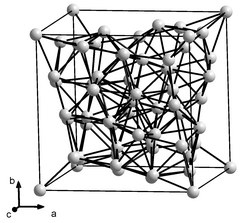
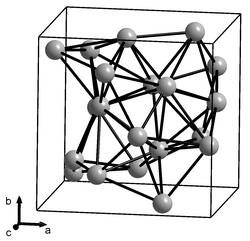
![Phase diagram of manganese[18]](/images/d0/4e/d04ee1f6b489de7f79a91e11a86f5b1a2105e5f23188921cf89354a3e48d7b3e.png)
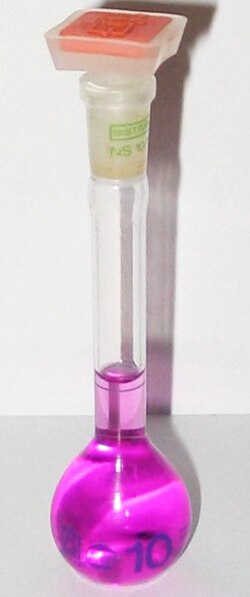
化学的には、酸化数が-3から+7までと極めて幅広く、これがマンガンの化学的汎用性を生んでいます。例えば、+2価の塩は淡いピンク色を呈し、+7価の過マンガン酸イオンは深い紫色を示すなど、酸化状態によって劇的に色が変化します。
![Manganese(II) chloride crystals – the pale pink color of Mn(II) salts is due to a spin-forbidden 3d transition.[27]](/images/60/b2/60b2acaab5e4cd0830f28b9c1c475d1abf64de3a238be4525bcb5074230fce55.jpg)
歴史と天然での存在
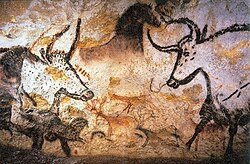
マンガンの利用は驚くほど古く、約2万4000年から3万年前のフランス・ラスコーなどの洞窟壁画において、二酸化マンガンをベースとした黒色顔料が使用されていたことが分かっています。
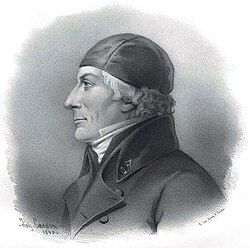
元素としての発見は1774年にカール・ヴィルヘルム・シェーレによってなされ、同年、ヨハン・ゴットリープ・ガーンによって初めて単体として分離されました。
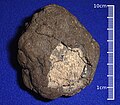
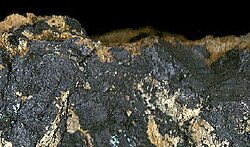
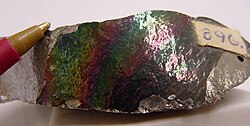
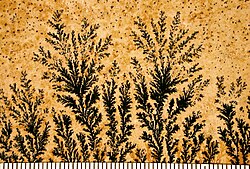
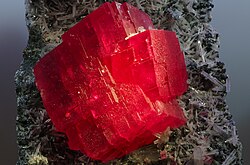
自然界では地殻の約0.1%を占めており、12番目に豊富な元素です。主な鉱石には、パイロルサイト(MnO₂)、ブラウン石、プシロメラン、ロードクロサイト(MnCO₃)などがあります。
産業利用と応用分野
鉄鋼および合金
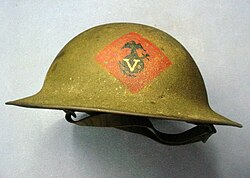
マンガンの最大の用途は鉄鋼業です。鉄にマンガンを添加することで、不純物である硫黄の影響を抑え、強度と耐摩耗性を飛躍的に向上させることができます。特に「ハドフィールド鋼」として知られるマンガン合金鋼は、極めて高い耐衝撃性を持ち、軍用ヘルメットや鉄道の分岐器などに利用されてきました。
エネルギーと化学
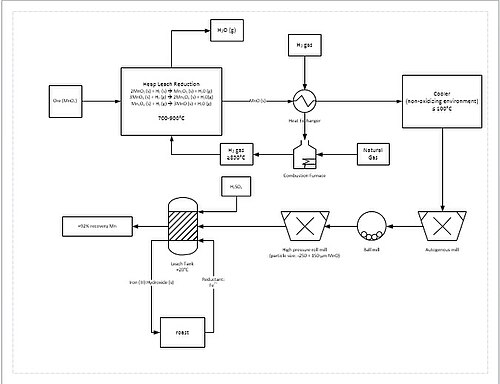
二酸化マンガン(MnO₂)は、アルカリ電池などの乾電池の正極材として不可欠です。化学反応を通じて電子をやり取りすることで、効率的な電力供給を可能にしています。また、精錬プロセスを経て様々な工業用化学物質へと加工されます。
その他の用途
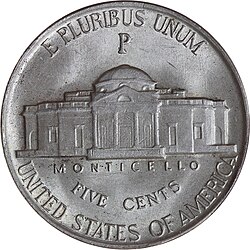
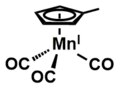
かつては貨幣の合金(例:第二次世界大戦中の米国5セント硬貨)に使用されたほか、肥料や飼料添加物としても利用されています。また、ガソリンのオクタン価を高める添加剤(MMT)としても知られています。
生物学的役割と健康への影響
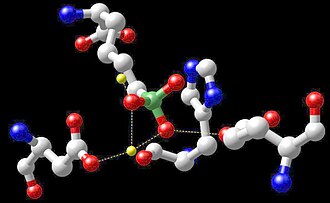
マンガンは人体にとって必須の微量元素であり、アルギナーゼなどの酵素の活性中心として機能し、代謝プロセスを支えています。
しかし、過剰に摂取すると毒性を示すことがあります。特に吸入による過剰曝露は、パーキンソン病に似た神経症状を引き起こす「マンガン中毒(Manganism)」の原因となるため、産業現場では厳格な管理が行われています。

推奨摂取量(AI)の目安
| 年齢層 | 男性 (mg/日) | 女性 (mg/日) |
|---|---|---|
| 1–3歳 | 1.2 | 1.2 |
| 4–8歳 | 1.5 | 1.5 |
| 9–13歳 | 1.9 | 1.6 |
| 14–18歳 | 2.2 | 1.6 |
| 19歳以上 | 2.3 | 1.8 |
![Percentage of manganese output in 2006 by countries[61]](/images/38/74/38746a8b3f04edddcb9e75ba0987d9e2cc2aba3ab46d24b796aa0b6cec287754.webp)
Frequently Asked Questions
マンガンが鉄鋼業で重要視される理由は何ですか?
マンガンを添加することで、鋼の硬度と耐摩耗性が向上し、また製造過程で脱硫剤として機能して鋼材の脆さを防ぐことができるためです。
人体にとってマンガンはどのような役割を果たしていますか?
マンガンは多くの酵素の構成成分となっており、アミノ酸代謝やエネルギー産生などの重要な生化学的反応を助ける触媒として機能しています。
マンガン中毒とはどのような状態を指しますか?
マンガンの過剰曝露により脳の基底核などが損傷し、震えや歩行障害など、パーキンソン病に似た神経学的症状が現れる状態を指します。
天然のマンガンはどのような形で存在していますか?
主に酸化物として存在しており、代表的な鉱物にはパイロルサイト(二酸化マンガン)や、ピンク色の結晶を持つロードクロサイト(炭酸マンガン)があります。
References
- "Standard Atomic Weights: Manganese". . 2017.
- Prohaska, Thomas; Irrgeher, Johanna; Benefield, Jacqueline; Böhlke, John K.; Chesson, Lesley A.; Coplen, Tyler B.; Ding, Tiping; Dunn, Philip J. H.; Gröning, Manfred; Holden, Norman E.; Meijer, Harro A. J. (4 May 2022). "Standard atomic weights of the elements 2021 (IUPAC Technical Report)". Pure and Applied Chemistry. :10.1515/pac-2019-0603. 1365-3075.
- Arblaster, John W. (2018). Selected Values of the Crystallographic Properties of Elements. Materials Park, Ohio: ASM International. .
- ; Earnshaw, Alan (1997). Chemistry of the Elements (2nd ed.). Butterworth-Heinemann. p. 28. :10.1016/C2009-0-30414-6. .
- Mn(–2) is known in Mn(cod)2−2; see John E. Ellis (2006). "Adventures with Substances Containing Metals in Negative Oxidation States". Inorganic Chemistry. 45 (8): 3167–3186. :10.1021/ic052110i.
- Weast, Robert (1984). CRC, Handbook of Chemistry and Physics. Boca Raton, Florida: Chemical Rubber Company Publishing. pp. E110. .
- Kondev, F. G.; Wang, M.; Huang, W. J.; Naimi, S.; Audi, G. (2021). "The NUBASE2020 evaluation of nuclear properties" (PDF). Chinese Physics C. 45 (3) 030001. :10.1088/1674-1137/abddae.
- Erikson, Keith M.; Ascher, Michael (2019). "Chapter 10. Manganese: Its Role in Disease and Health". In Sigel, Astrid; Freisinger, Eva; Sigel, Roland K. O.; Carver, Peggy L. (eds.). Essential Metals in Medicine:Therapeutic Use and Toxicity of Metal Ions in the Clinic. Metal Ions in Life Sciences. Vol. 19. Berlin: de Gruyter GmbH. pp. 253–266. :10.1515/9783110527872-016. . 30855111. 73725546.
- Emsley, John (2001). "Manganese". Nature's Building Blocks: An A-Z Guide to the Elements. Oxford, UK: Oxford University Press. pp. 249–253. .
- Roth, Jerome; Ponzoni, Silvia; Aschner, Michael (2013). "Manganese Homeostasis and Transport". In Banci, Lucia (ed.). Metallomics and the Cell. Metal Ions in Life Sciences. Vol. 12. Springer. pp. 169–201. :10.1007/978-94-007-5561-1_6. . 6542352. 23595673. Electronic-book .
📸 フォトギャラリー