宇宙から地球を眺めたとき、一部の宇宙飛行士は人生観を根底から覆すような劇的な認知の変化を経験します。これは概観効果(オーバービュー・エフェクト)と呼ばれ、単なる視覚的な感動を超え、人類や地球という存在に対する深い精神的な気づきを伴う現象です。本記事では、この心理的変容の正体と、それが私たちに問いかける意味について詳しく解説します。
概観効果の正体:何が意識を変えるのか
概観効果は、圧倒的な視覚刺激によって引き起こされる「自己超越的な畏敬の念」の状態であると定義されています。宇宙飛行士たちが共通して報告するのは、地球の比類なき美しさへの感動、予期せぬ激しい感情の昂ぶり、そして全人類や地球全体との一体感です。
心理学的な視点では、この体験は「知覚的な広大さ」(グランドキャニオンのような物理的な大きさ)と「概念的な広大さ」(無限という抽象的な概念)の両方が同時に刺激されることで生じると考えられています。これにより、個人の価値観や自己概念が書き換えられ、人生における優先順位が変化するほどの変容をもたらすことがあります。
![Astronaut Tracy Caldwell Dyson "Earth gazing" in the Cupola module of the International Space Station, a practice found to have positive psychological effects, one that is especially important in coping with the demands of spaceflight[5]](/images/2a/1a/2a1a94ed12773ab9928ae18df846b2c37a7a93265a8dc860e1ce25ffcf24033c.jpg)
多様な解釈と文化的背景
この体験は国籍や文化を問わず多くの飛行士に見られますが、その解釈は個人の背景によって異なります。ある人は宗教的な啓示として、ある人は精神的な充足として、またある人は社会的な義務感としてこの体験を捉えます。一方で、歴史学者のジョーダン・ビムは、この効果が単なる自然現象ではなく、冷戦時代の時代精神や西洋の技術至上主義といった文化的背景によって形作られた側面があるとも指摘しています。
歴史的な転換点と環境意識への影響
宇宙から地球を見た体験が社会に大きな影響を与え始めたのは、1960年代後半のことです。1968年にアポロ8号が撮影した「地球の出(アースライズ)」は、暗黒の宇宙に浮かぶ孤独で美しい地球の姿を世界に知らしめました。
![Earthrise (1968). Apollo 8 astronaut Bill Anders recalled, "When I looked up and saw the Earth coming up on this very stark, beat-up Moon horizon, I was immediately almost overcome with the thought, 'Here we came all this way to the Moon, and yet the most significant thing we're seeing is our own home planet, the Earth.'"[1]](/images/b1/36/b1365577175b723cb641b5306b04ab09f56c38bd3e8d3ea91698d63dfb36d484.jpg)
この視覚的な衝撃は、当時の人々にとって「地球は一つの有機的なシステムである」という認識を促し、1970年の第1回アースデー開催に象徴される環境保護運動の加速に寄与したと言われています。知的知識として「地球は大切だ」と知っていることと、実際にその脆さを視覚的に体験することの間には、決定的な差があることが示されました。
![The Blue Marble—Earth as seen by the crew of Apollo 17 in 1972. Early photos of Earth taken from space inspired a mild version of the overview effect in earthbound non-astronauts, and became prominent symbols of environmental concern.[1]](/images/72/22/7222653925b29f4db720d4e2a25fcfd26cef1ba8bf601a78ec47b6a265469024.webp)
「薄い青い線」が教える脆さ
多くの宇宙飛行士が強調するのは、地球を包む大気の驚くべき「薄さ」です。宇宙の過酷な真空状態と、生命を育む温かな地球を隔てているのは、わずか一筋の薄い青い層に過ぎません。この事実に直面したとき、地球がいかに壊れやすく、守るべき貴重な存在であるかという強烈な意識が芽生えます。
![The Thin Blue Line photograph was taken from the International Space Station in 2009.[15] Author Frank White's description of interviews with astronauts emphasized their perception of the "striking thinness of the atmosphere".[9]](/images/23/26/23266991db330cb9c29d3b7634f3a2e959e2ea56d48b3f1decd0949781751d62.jpg)
![Mission specialist Christina Koch experienced the overview effect in the 2026 Artemis II flight circumnavigating the moon—photo shown here—Koch saying, "every single person that you know is sustained and inside of that green line" of the Earth's atmosphere.[16]](/images/a5/9a/a59a54394a14be26cb9b85a0832db4e97dd892bfe2e24aee4dd423c93733f051.jpg)
宇宙飛行士たちの証言:歓喜から深い悲しみまで
概観効果による体験は、必ずしもポジティブな高揚感だけではありません。アポロ11号のマイケル・コリンズは地球の「脆さ」に驚き、アポロ14号のエドガー・ミッチェルは「意識の爆発」のような一体感を覚えたと述べています。
近年の民間宇宙旅行体験者であるウィリアム・シャトナーは、当初は深い感動に涙しましたが、後にその涙の正体が「地球への悲しみ」であったと振り返っています。宇宙の冷酷な暗闇と地球の温もりの対比を見たことで、人類の手によって破壊されつつある地球の現状に、葬儀に参列しているかのような深い絶望と恐怖を感じたといいます。
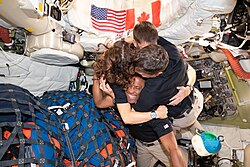
また、中国の宇宙飛行士である蔡旭哲(ツァイ・シュージェ)は、宇宙から見た青い惑星を「人類共通の家」と呼び、全員で保護すべきであると訴えています。
地上で概観効果を再現する試み
宇宙へ行く機会がない人々にもこの意識変容を促すため、VR(仮想現実)などのテクノロジーを用いたシミュレーションが開発されています。オランダの「Spacebuzz」プロジェクトでは、子供向けに宇宙飛行を擬似体験させるモジュールを提供しています。
![The touring Spacebuzz module uses virtual reality technology to simulate spaceflight for children.[39]](/images/2e/f8/2ef86959d7b9bb53cbe9ae7eee5f668bad108d20765430352f9abf804269243a.jpg)
また、ISS(国際宇宙ステーション)の360度映像を用いたVR体験「The Infinite」や、NASAの画像に基づいた巨大な地球模型の展示などを通じて、地上にいながらにして地球を客観視し、環境意識を高める取り組みが行われています。
![Images of Earth taken from space, which can cause a mild version of the overview effect, have become prominent symbols of environmental concern.[1] Shown: Earth Day demonstration, 2010.](/images/42/ce/42ce23ab8636d6efa8660d04eb81e997982af68e3b82cfc299055362c85e8440.jpg)
Key Facts
- 定義:宇宙から地球を俯瞰することで生じる、自己超越的な畏敬の念を伴う認知的な変容。
- 主な心理的影響:地球の美しさへの感動、全人類との一体感、地球の脆さに対する強い認識。
- 環境への影響:体験後、環境保護活動への関心が高まる傾向があることが調査で示されている。
- 多様な感情:単なる歓喜だけでなく、地球の破壊に対する深い悲しみや絶望を感じるケースもある。
- 再現への挑戦:VR技術や巨大模型を用いて、地上で概観効果に近い体験を創出する試みが進んでいる。
| 項目 | 概観効果 (Overview Effect) | ブレイクオフ現象 (Break-off Phenomenon) |
|---|---|---|
| 発生状況 | 宇宙から地球を俯瞰したとき | 高高度を単独で飛行しているとき |
| 主な感情 | 一体感、畏敬、地球への愛着 | 分離感、孤独、不安、あるいは高揚感 |
| 意識の変化 | 地球全体への責任感や価値観の変容 | 世界との接続を失った感覚、方向喪失 |
| 主な傾向 | 肯定的・統合的な体験 | 分離的・孤立的な体験 |
Frequently Asked Questions
概観効果は誰にでも起こるのでしょうか?
多くの宇宙飛行士が報告していますが、すべての人に同じように起こるわけではありません。個人の宗教観や社会的アイデンティティ、文化的な背景によって、体験のされ方や解釈は異なります。
この効果によって人生は劇的に変わるのですか?
人によって異なります。人道的な活動に身を投じたり芸術家になったりする人もいますが、多くの場合、劇的な変化よりも、地球を「大切にすべき脆い存在」として捉えるといった、より緩やかで持続的な意識の変化として現れます。
VRで体験しても本物と同じ効果が得られますか?
VRシミュレーションは概観効果に近い感覚を誘発し、環境意識を高める効果があると考えられています。しかし、実際の宇宙空間での身体的体験や、本物の地球の視覚的衝撃を完全に再現できるかは研究段階にあります。
「ブレイクオフ現象」とは何が違うのですか?
ブレイクオフ現象は、主に高高度飛行中のパイロットが感じる「地球から切り離された」という分離感や孤独感であり、地球との一体感や愛着を感じる概観効果とは対照的な心理状態です。
なぜ地球を見ると「悲しみ」を感じる人がいるのですか?
宇宙の圧倒的な暗闇と、生命を維持する唯一の場所である地球の対比が鮮明になるためです。その脆さを実感すると同時に、人類による環境破壊の現実を突きつけられ、深い喪失感や絶望感に襲われることがあります。
References
- The introduction to Stepanova et al. (2019) begins, "The overwhelmingly beautiful sight of our Earth triggers a profound emotional response in most astronauts, leading to a cognitive shift, making them realize the global interconnectedness of all life and feel responsibility for the future of our planet. ... This experience has the attributes of self-transcendence and awe (citing Yaden et al., 2016) and is a remarkable example of a transformative experience.
- Yaden et al. (2016) explain that "social psychologists characterize awe as an intense emotion resulting from the perception of something vast, as well as the subsequent need to accommodate the experience" (citing Keltner & Haidt, 2003). However, they observe that in addition to vastness, a distant view of Earth also suggests totality—with the wholeness of the Earth making it a symbol of almost all that is meaningful in human life, causing a tendency to think, quite literally, in global terms.
- Yaden et al. (2016) posit that the overview effect may trigger self-transcendent experiences (STEs)—"temporary feelings of unity characterized by reduced self- and increased feelings of connection" historically associated with practices such as prayer, meditation, religious rituals and psychedelic drug use—feelings that may "arouse visceral feelings of compassion and personal connection... that may encompass the entirety of the Earth and its inhabitants".
- Yaden et al. (2016) explain that a schema is "an organized conceptual framework through which individuals approach new information and make sense of old experiences. Each of an individual's schemas entails a set of memories, beliefs, and attitudes that create a general cognitive orientation, guiding individuals' interpretation of and response to incoming stimuli". When encountering new experiences, people must "accommodate" by expanding their self-schema framework to take new information into account.
📸 フォトギャラリー